A matter of angle

I am still testing the newest spindle design, even though I had a batch run, something was still off, but I couldn’t put my finger on what bothered me. I was having trouble getting a good spin. I thought maybe it was weight, but it didn’t improve as the cop of yarn increased. So I looked at the head, and decided to thin down the top. I used my oscillating drum sander, and with the curve of the drum was able to make just the top of the spindle concave rather than convex.

Photo description: Closeup of the head of my 3D printed spindle, showing a convex surface from tip to midline.
Photo description: Same spindle after some sanding with an oscillating drum sander to make the tip to midline concave.

This small change made a huge difference. My fingers now had more contact with the surface of the top of the spindle and I could get it spinning much easier. The grooves left by the rough sandpaper also aided my grip, so I think I will not sand that part smooth. I now need to be careful not to spin the spindle so fast that it flies up sideways, unwinds itself, and falls to the ground. I probably dropped the spindle a dozen times on my walk; there are a couple marks, but it did not break, even when hitting asphalt.
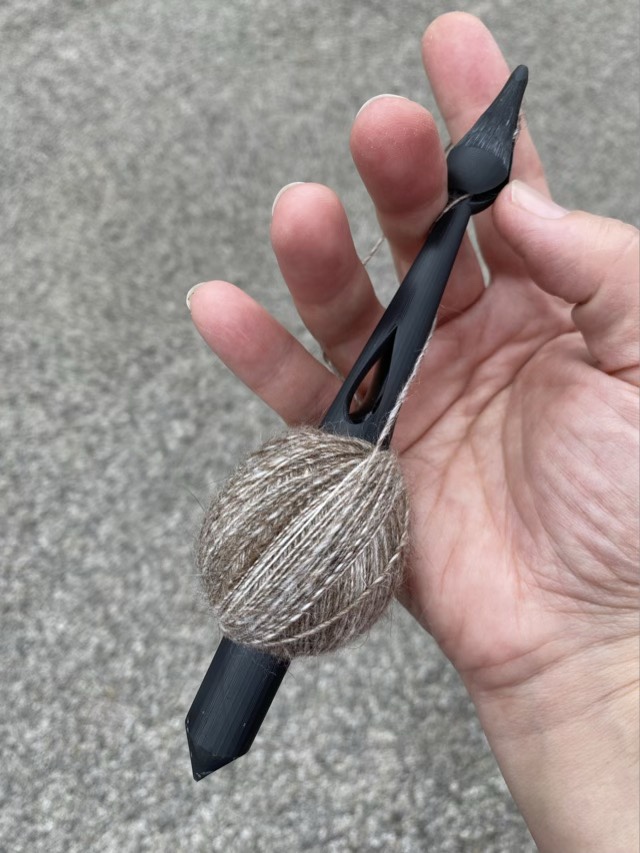
Photo description: 3D printed spindle with a ball of blended single spun yarn on the shaft, held in my hand with the road in the background.

I will sand down the rest of the spindles, then before posting them to Etsy, I still need to develop a decoration and packaging. Development is slow, but inching forward!
Toy field trip

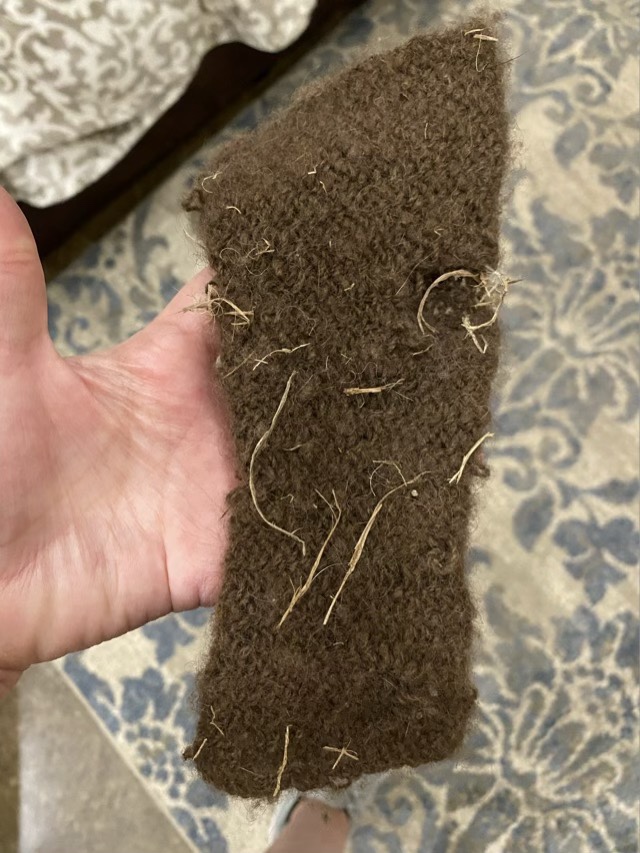
Thor the technical kitten (since he is still under a year old), likes to carry around his toys. One of his favorites is a wrist warmer that I nålbound from home spun bison down. Materials alone make it a pricey toy, but if time invested is considered, it vaults into precious territory. Apparently he took it on a field trip to the catio, then back inside, because I found it on the rug covered in dried grass.

Photo description: Brown wrist warmer made from American Bison fiber, covered with bits of dried grass. There is some felting, and a couple pulled loops in the fabric.

Allowing the wrist warmer to become a toy was a calculated event. The one donated to the cat was a tight fit and I wasn’t wearing the pair. Now it becomes a test of how durable I made the spinning and nålbinding. I’m actually quite amazed that it is holding up to kitten attentions as well as it is.

Restoration update

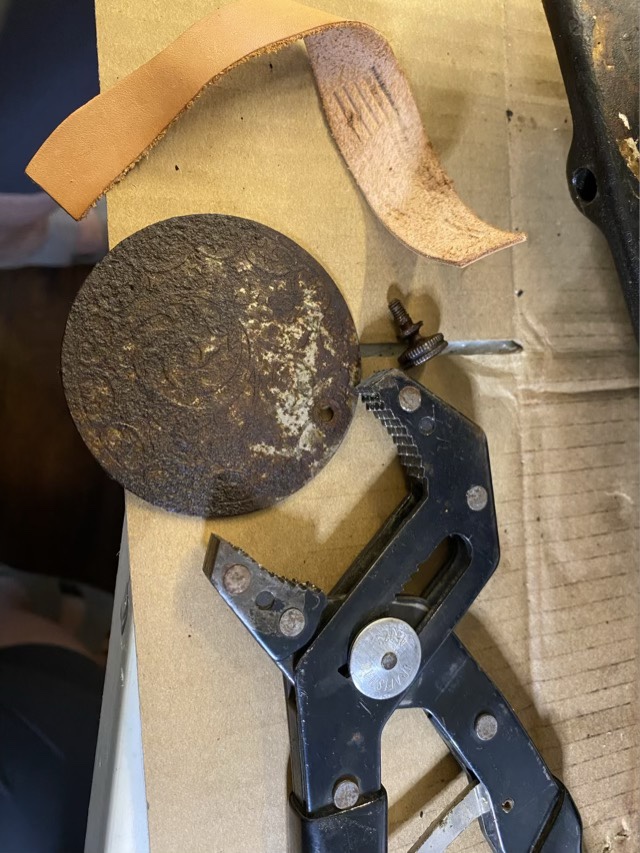
I’m still regularly oiling the Singer 27 treadle machine and attempting to remove more parts for cleaning. My husband has been helping, and he was able to free several bolts! I did take a tool to a thumb screw for the back plate; I figured if it was going to break, better that I’m the one that breaks it. I wrapped the knob in leather, then used an adjustable wrench, and slowly turned the screw. Success!

Photo description: Large adjustable wrench on the bottom, next to a very rusty back plate, next to a small knurled knob that held the plate in place on the machine, and at the top, a 1/2” strip of tooling leather

I photograph all the removed parts and put them in a labeled ziplock bag with a spray of PB blaster. When I get all the parts free, I’ll clean everything before putting it back together (fingers crossed).

Spinning demonstration

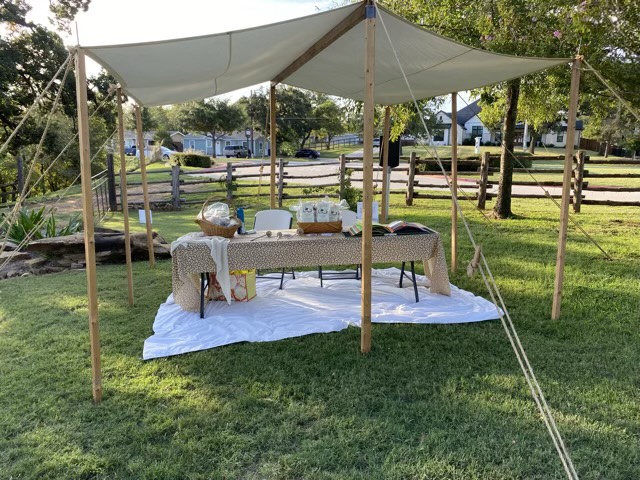
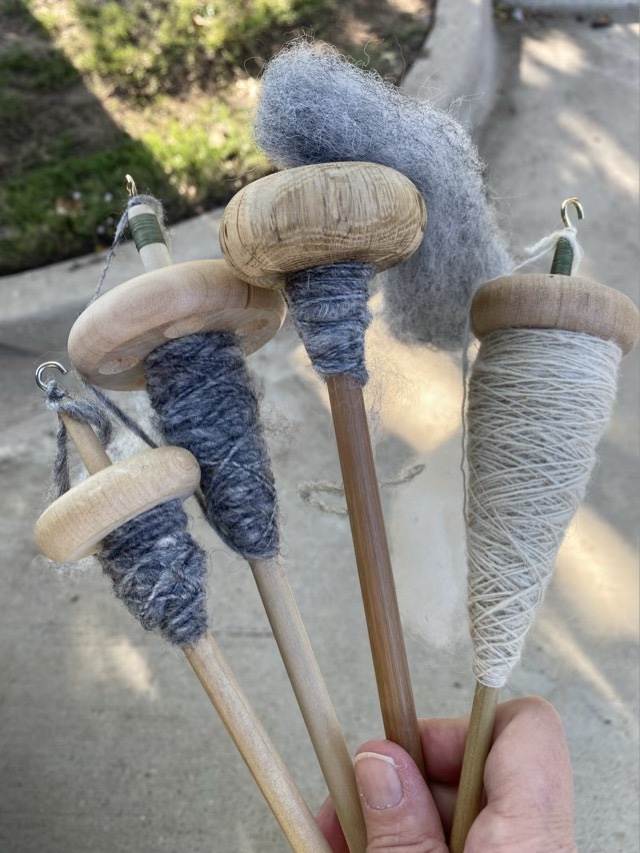
I volunteered at the Mansfield Founder’s Day Festival recently, demonstrating spinning on a drop spindle and helping people try it out for themselves. I even sold a few spinning starter kits! The Man House was setup beautifully, and I was quite spoiled with a tent, table, and chairs already setup for me. The hands-on spinning was popular, and there were wows over the animal-to-wearable knit alpaca shawl I brought, but the biggest hit was my fiber book. I’m glad I set it up consistently with multiple touchable swatches; it made it both visual and tactile friendly. My book held up great for the seven hours of the event!

Photo description: Canvas, 2×4, and rope canopy setup in mowed grass with a covered table and chairs setup underneath. On the table I put my alpaca shawl, a basket of wool nests, three practice spindles, a basket of starter kits, and my fiber book.
Photo description: Four drop spindles, the three on the left have Corriedale wool spun by many hands, the one on the right has Shetland wool spun by me between helping sessions.

Custom packaging

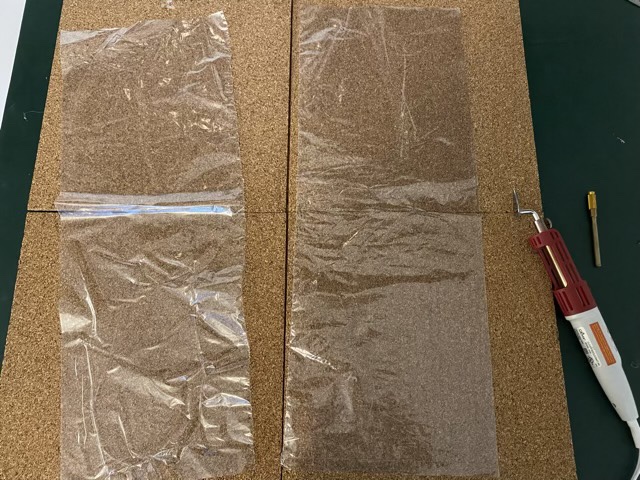
As much as I love cloth bags, sometimes you need packaging you can see through that is inexpensive. For my spinning starter kits I needed a long narrow plastic bag. I have a whole bundle of large clear plastic bags, but they are twice as wide as I needed for this application. I found that if I ran my quilting mini iron, set to high, down the center of the bags, it was enough to melt and separate the bag into two, with a well sealed seam. The iron does come with a blade attachment, but the blade cut the plastic too fast and didn’t heat the plastic up enough to melt it.

Photo description: Cork squares laid down on the table to protect the surface, two newly created long narrow plastic bags, with a mini iron to the side, blade assembly unused.
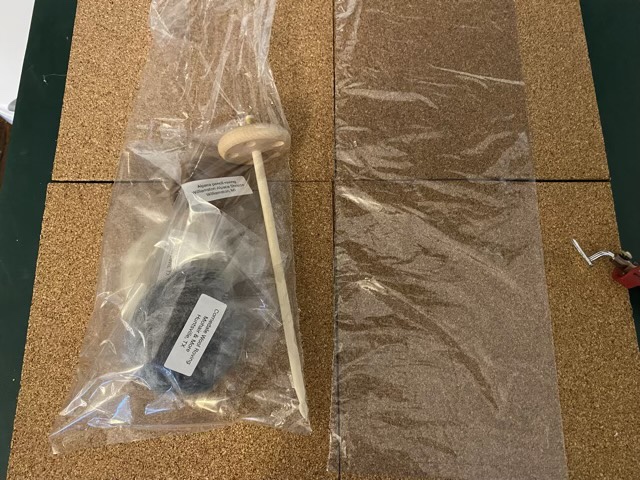
Photo description: Same table with one bag filled with a spindle and three samples of different animal fibers.
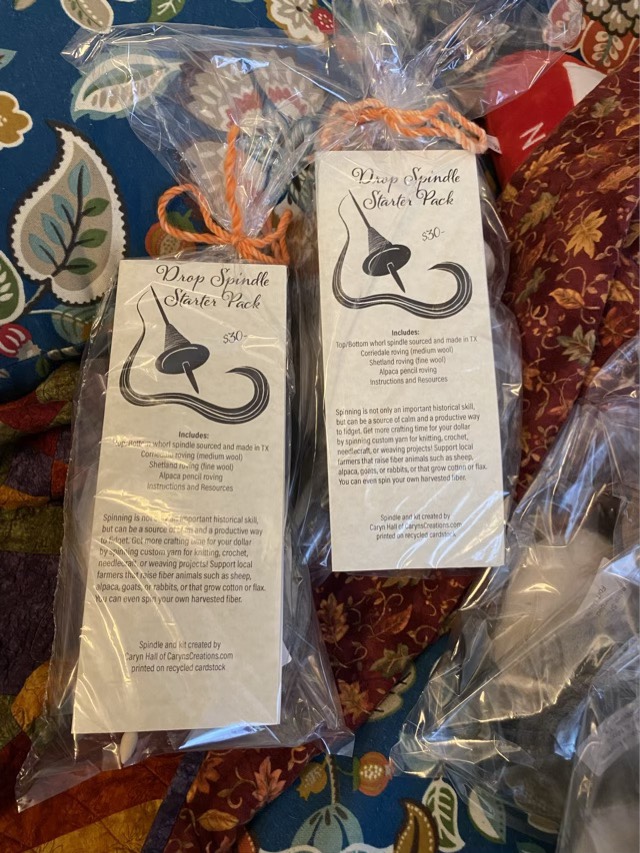
Photo description: Two completed Spinning starter packs, with insert containing instructions and resources.

I tied off my bags with some of my old hand-spun yarn oddments. Another good use for left-over yarn!