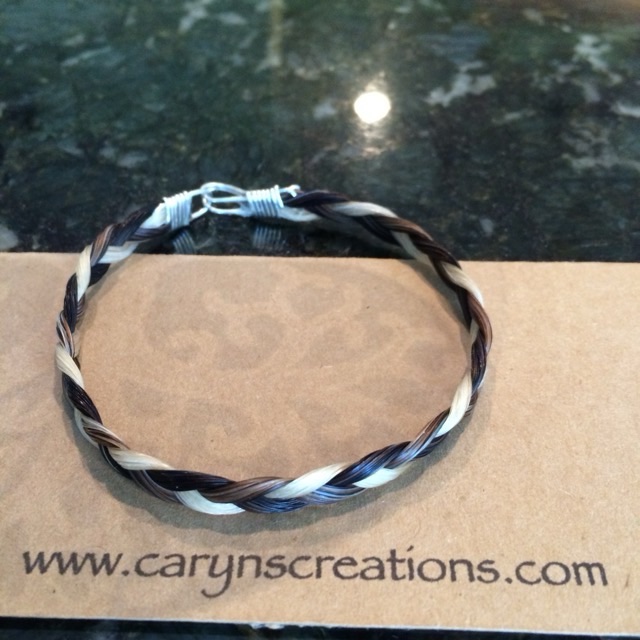
In September 2016 I made a braided horse hair bracelet for a friend with tail hairs from her three horses.
Photo description: three color three strand flat braid with sterling silver hand made clasp
There are other jewelry makers that glue the ends into metal caps. I don’t trust glue to hold, so prefer to pair glue with a mechanical join as well, in this case crimping down a wire wrap on the ends of the braids. When I do this again, I will do a different clasp, because the clip is difficult to get on, but easy to accidentally pop open.
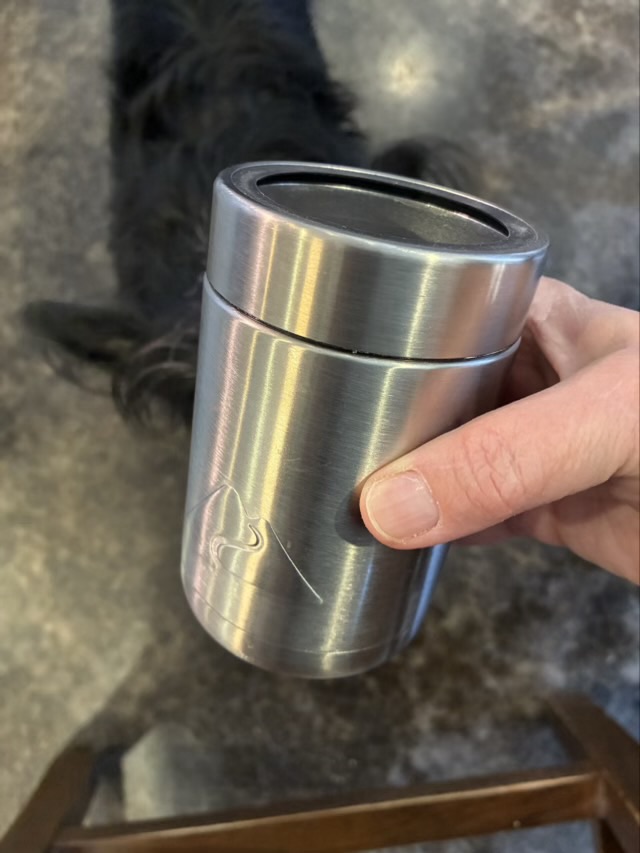
I wanted a travel case for my tiny Turkish style spindle, so went digging through my cupboards. I found a stainless steel can cozy that was just the right size, but didn’t have a lid.
Photo description: metal can cozy with open lid, curious dog in the background
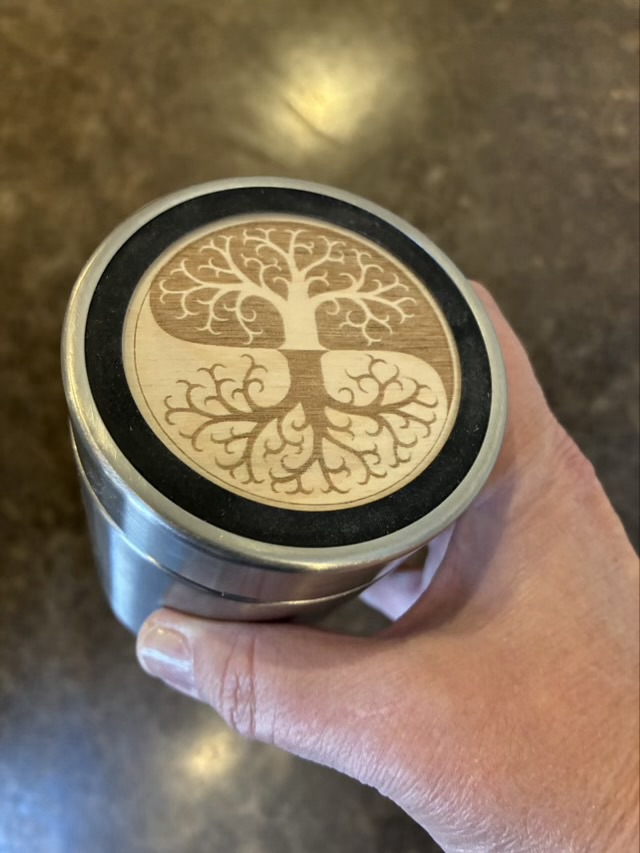
I measured the space and used my laser cutter to cut and engrave a piece of thin birch plywood. I sealed the wood with modge podge (white glue), which also holds the circle in place.
Photo description: same can cozy with a wood insert graved with my logo of a tree and roots
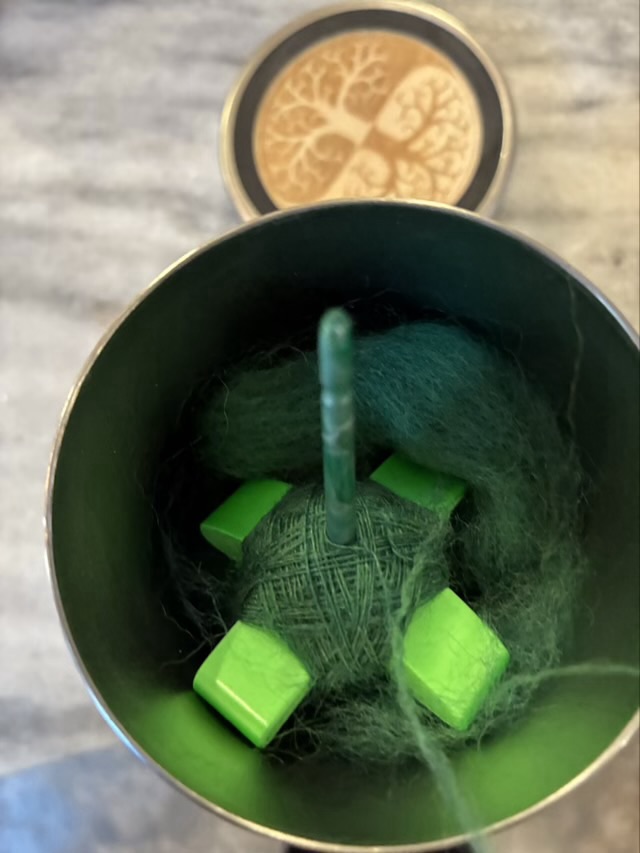
The can fits nicely in the bottle pocket on the side of my purse and fits a handful of wool and the spindle inside.
Photo description: Femto spindle by Turtle Made inside the repurposed can cozy
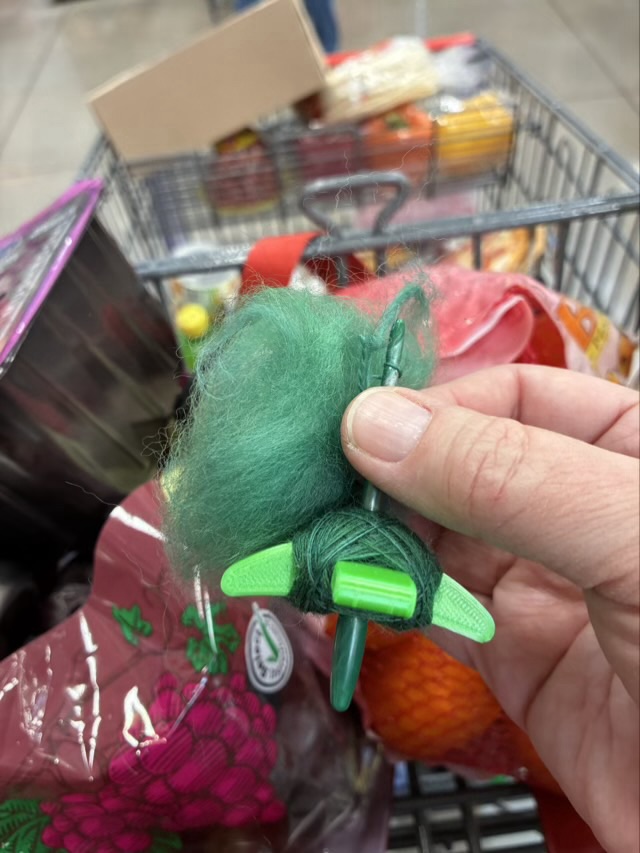
And yes, I really did pull it out and do some spinning waiting in the line at grocery store!
Photo description: spindle with in progress spinning with a grocery cart in the background
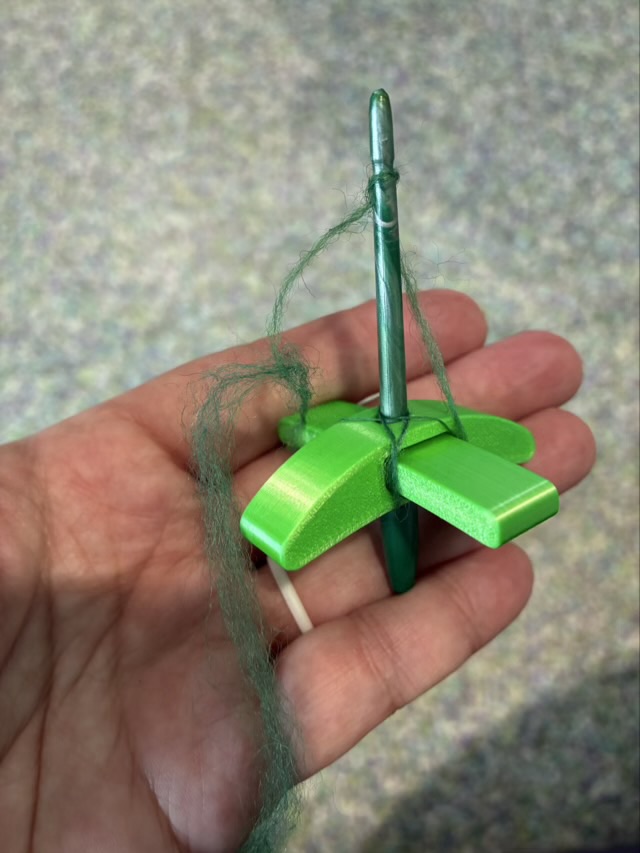
Squee! I ordered a femto spindle from Turtle Made on Etsy, which is a 3D printed Turkish style spindle that is teeny tiny!
Photo description: 3D printed spindle with dark green shaft and neon green arms sitting on my hand
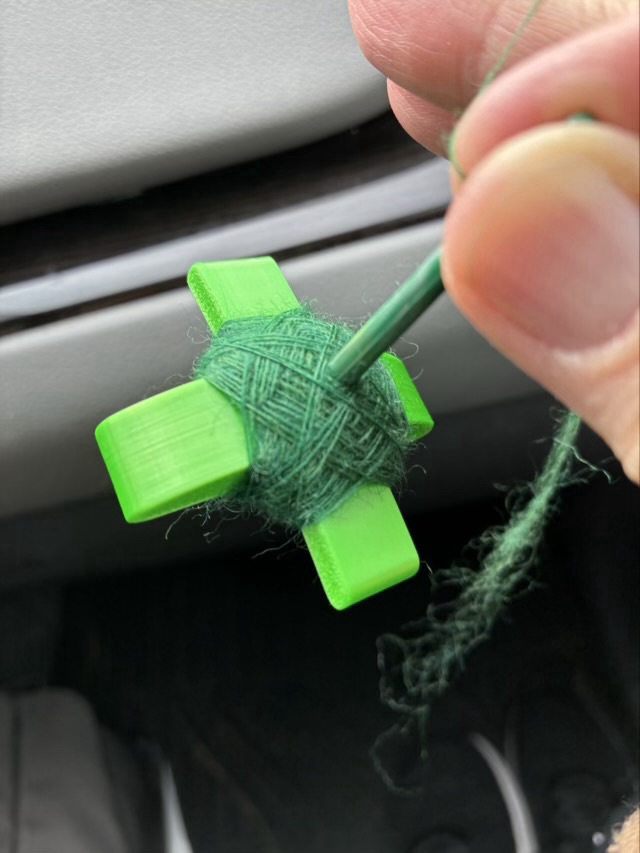
With a spindle this tiny, the obvious choice is to spin as thin as possible. I have some green dyed Corridale mix wool from AnnieWhere that I used to get started.
Photo description: same spindle, wrapped with single spun green wool thread
The spindle works amazingly well for something so small. I plan on finding a case for it and have it be my emergency spinning kit. The emergency would be if I am out and about without a project! Or need to meditatively spin anytime, anywhere.
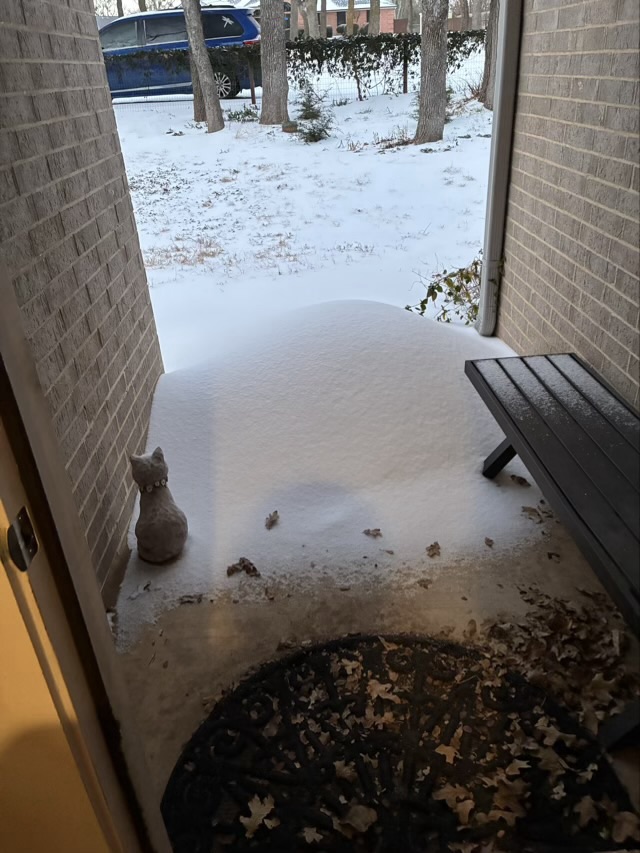
This is a Texas “snow” drift. My weather app says we received 10 inches of snow. I think that maybe, if this were small fluffy flakes instead of ice pellets, it might be 10”, but it is not. We have maybe 2 inches overall of hard pack. Yuck.
Photo description: looking out the front door at a small white mound in the entryway
Yes, that is a solid mound of ice, after I took the picture, I tested.
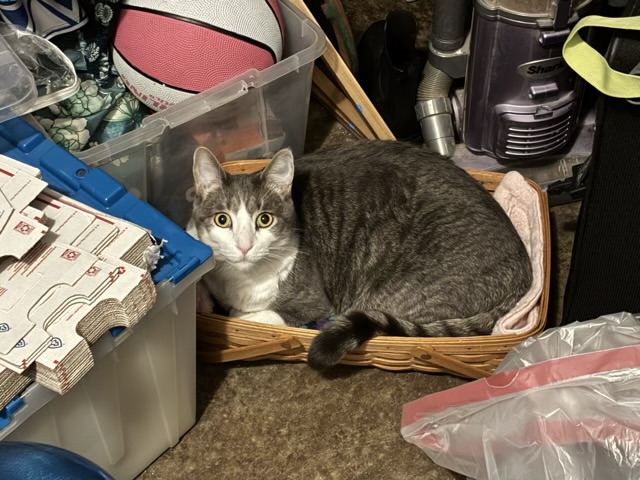
Photo description: large gray tabby in a blanket lined basket tucked into the closet
I deliberately put a basket in the closet as a cat bed. I found Thor the cat in the basket and he looked like I caught his paw in the cookie jar. Silly kitty.
We are hunkered down for the storm. It has been raining ice. Yuck.