I sigh because I spent almost four hours blowing all the leaves around the house into a big pile out past the fence, and although the pile is really big, pictures do it no justice. I’m pretty sure at least five children (maybe even adults) could hide in that pile, but in the picture it just looks like the lay of the land. Oh well. I know the work that went into shifting all those leaves. As an aside, I blew all of last years leaves into the same area, and this is one of the ways the water runs when it rains. Almost all the leaves were washed down by the spring rains. Neat. Natural recycling.
We were a little late on our monthly chicken health checks, but we got them done! The most surprising event is Navi’s recovery. She no longer has a pendulous crop, her comb is now red and getting larger, she is back in the flock weight wise, and she has started laying. Wha? I’m just going to take it and be glad we didn’t lose her. I don’t think Cockatrice is laying yet, which is interesting. Her vent still looks like a pullet vent. And it is easy to tell. I need to reweigh Cloud. Her weight is down over 200 grams. She has never been the biggest chicken, but that seems drastic. Or I could have written the number down wrong. However, the scale broke during weighing (the glass top popped off, probably because of the recent freeze). I have an idea how to not just fix it but make it better, but I actually have to implement my plan. Magic’s weight is back on track (it was down last check), which makes me hopeful for Cloud. I also need to keep an eye on Seashell’s foot. She has what looks like a healing wound and it is a little swollen, but it doesn’t effect her gait. We rinsed her foot well and put wound spray on it. We recently visited an alpaca farm and had some extra alpaca feed, so the chicken’s treat after checks was alpaca food. They loved it. (Apparently chickens can eat alpaca food, but alpacas shouldn’t eat chicken food. So there we go.)
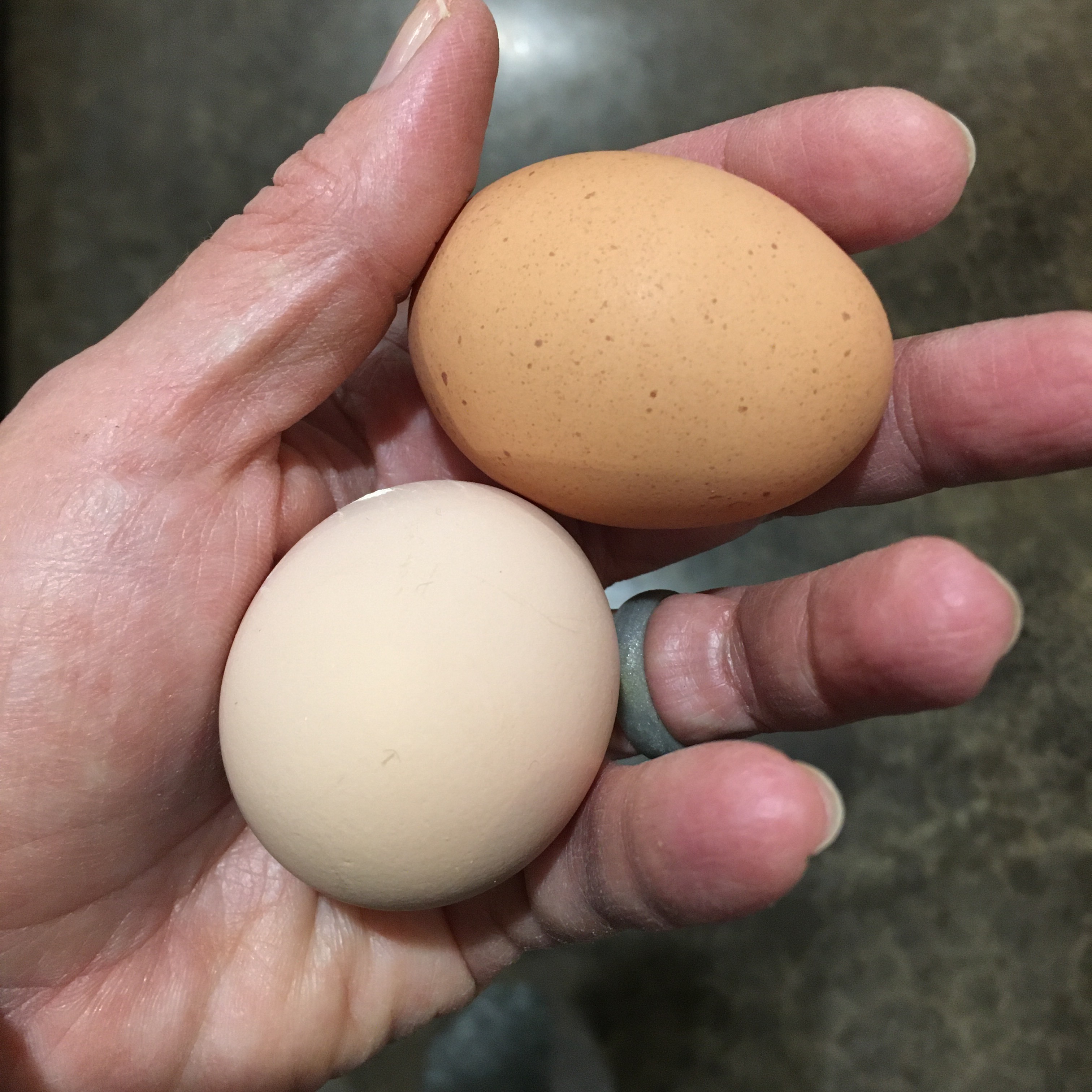
Faverolle hens should lay pink eggs. The egg on the bottom of the picture I consider to be pink. Not white, but ever so slightly tinted brown.
I do have hatchery quality Faverolles, and a wide spread of egg color, but honestly, I like the brown eggs with the dark speckles all over best. The look like they should be wild eggs.
My youngest likes to dance, and we are now in the sparkly costume part of the year gearing up for performance. The group costume this year is awesome: sassy yet covering, stretchy, easy on, one zipper (this is the big one for me, I’ve had to lace corsets on other costumes. No thank you.)
Hemming up sleeves
However, the sleeves are super long on her. I found some invisible thread (clear monofilament designed for sewing) and folded the sleeve inside out, and did a straight stitch around the existing cuff seam. I stretched the stitches out, but not enough. Oops. The stitches lasted through dress rehearsal, then popped. So I had to sew them again.
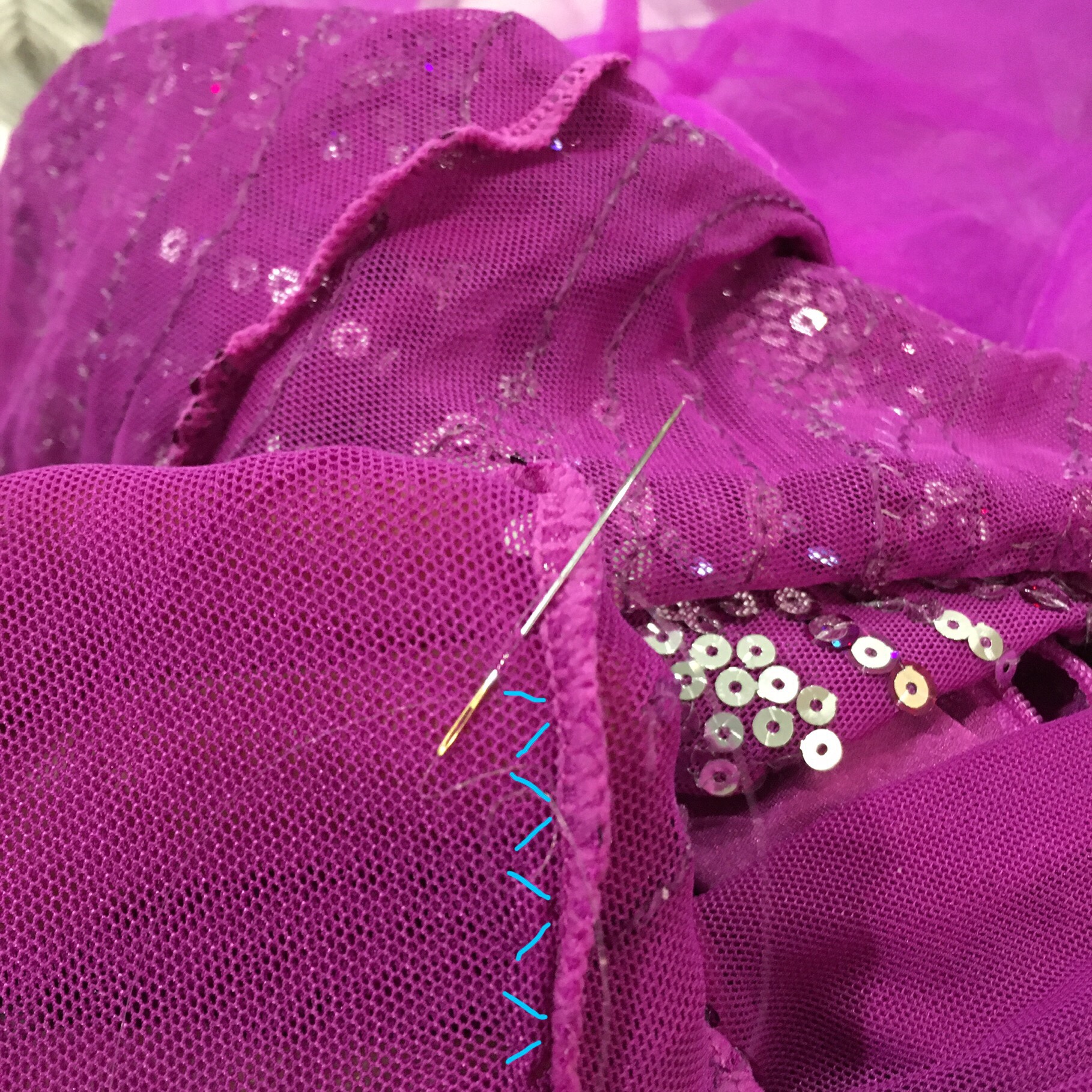
Zig zag stitch (with thread lines marked in blue)
This time, I used a zig zag stitch. Not with my machine, but by hand. The material is a stretchy net, no way was I going at this with my sewing machine especially with a slippery thread. We might need to let down the sleeves at some point, and I wanted to minimize potential damage both with the stitch going in, and eventually coming out. It took a little longer, I had to do the stitches one at a time, but the result is so much stretchier!
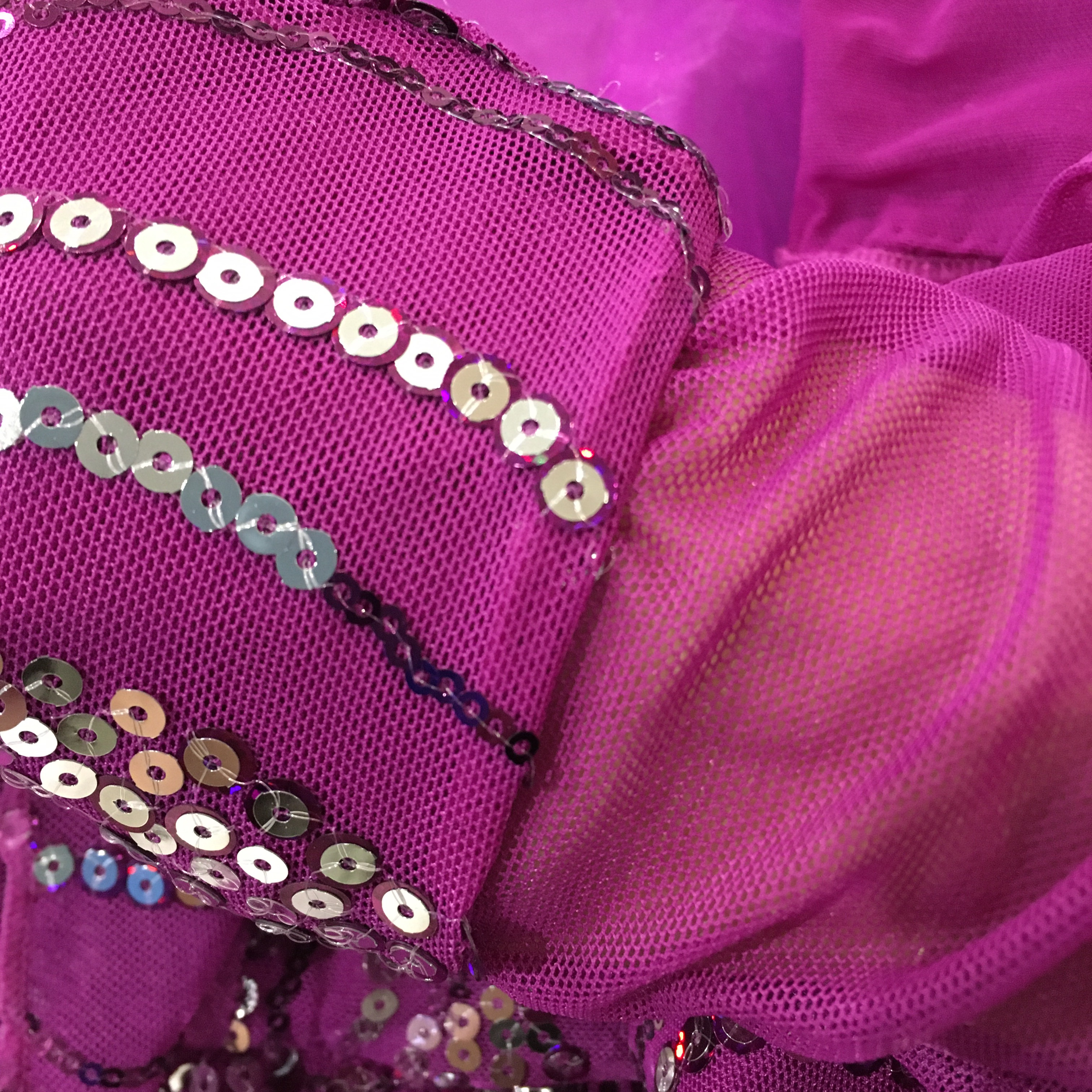
Cuff turned right side out
I also examined all the inside seams for partial sequins, and clipped them out. My daughter was much happier wearing the outfit without the scratchy bits of plastic poking her.
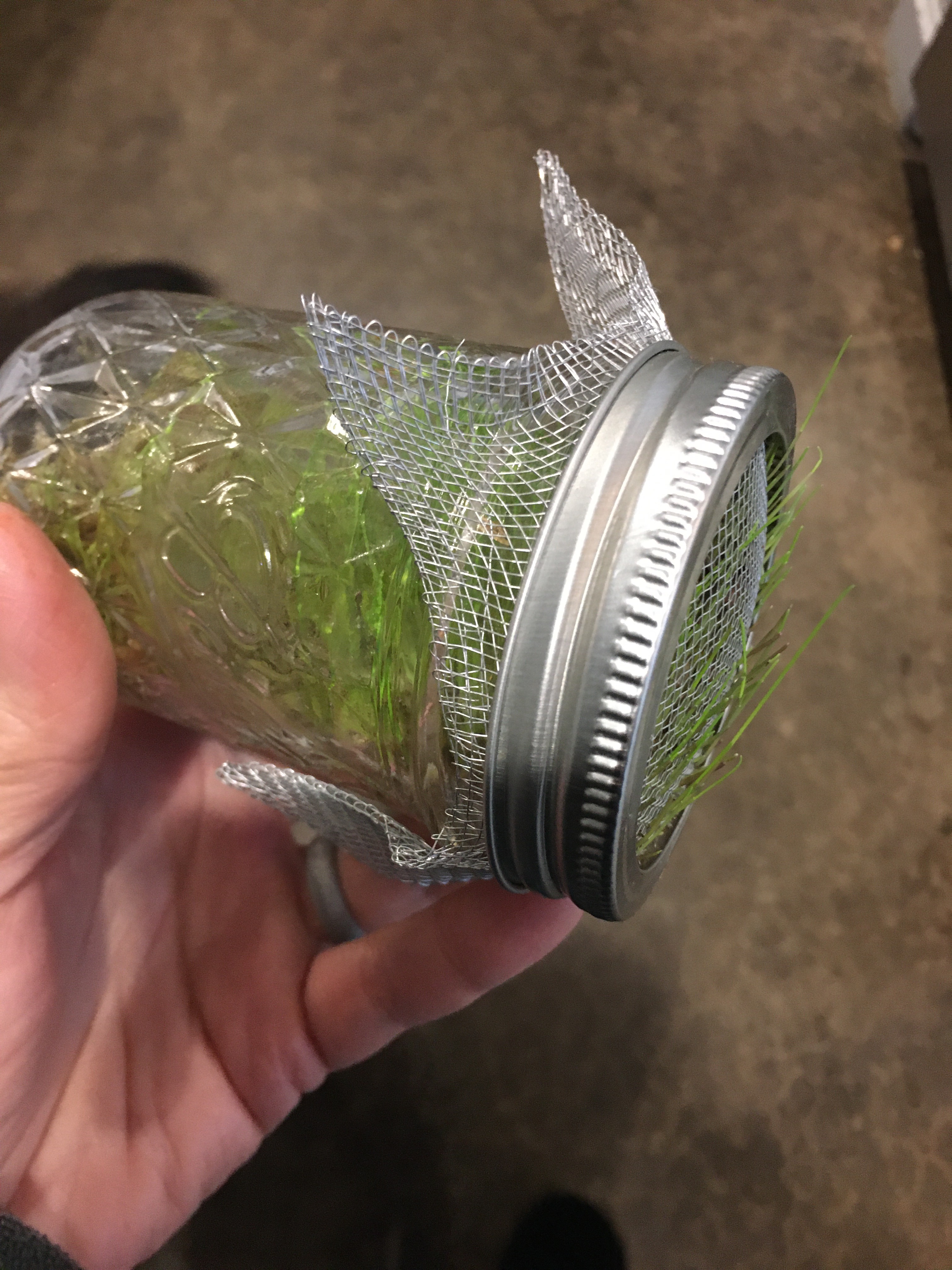
Since it is winter, and the grass is not growing well in the coop, I decided to give sprouting grain inside a try. I found a couple posts on sprouting grain in mason jars, and since I have some empty jars with rings, and some extra aluminum window screen, I’m trying this method first.
Scratch grains (left) and annual rye (right)
I tried two types of grain: scratch and annual rye (again because that is what I had). I put 3-4 Tablespoons of seed in each jar and covered them with water. I fit a square of window screen to the top of the jar, folded over the edges so they wouldn’t be as pokey, and screwed down the lid. I let the seeds soak overnight, then tipped them over the sink to drain off the water. I rinsed the seeds twice a day and left the jars on their sides in a low tray to drain.
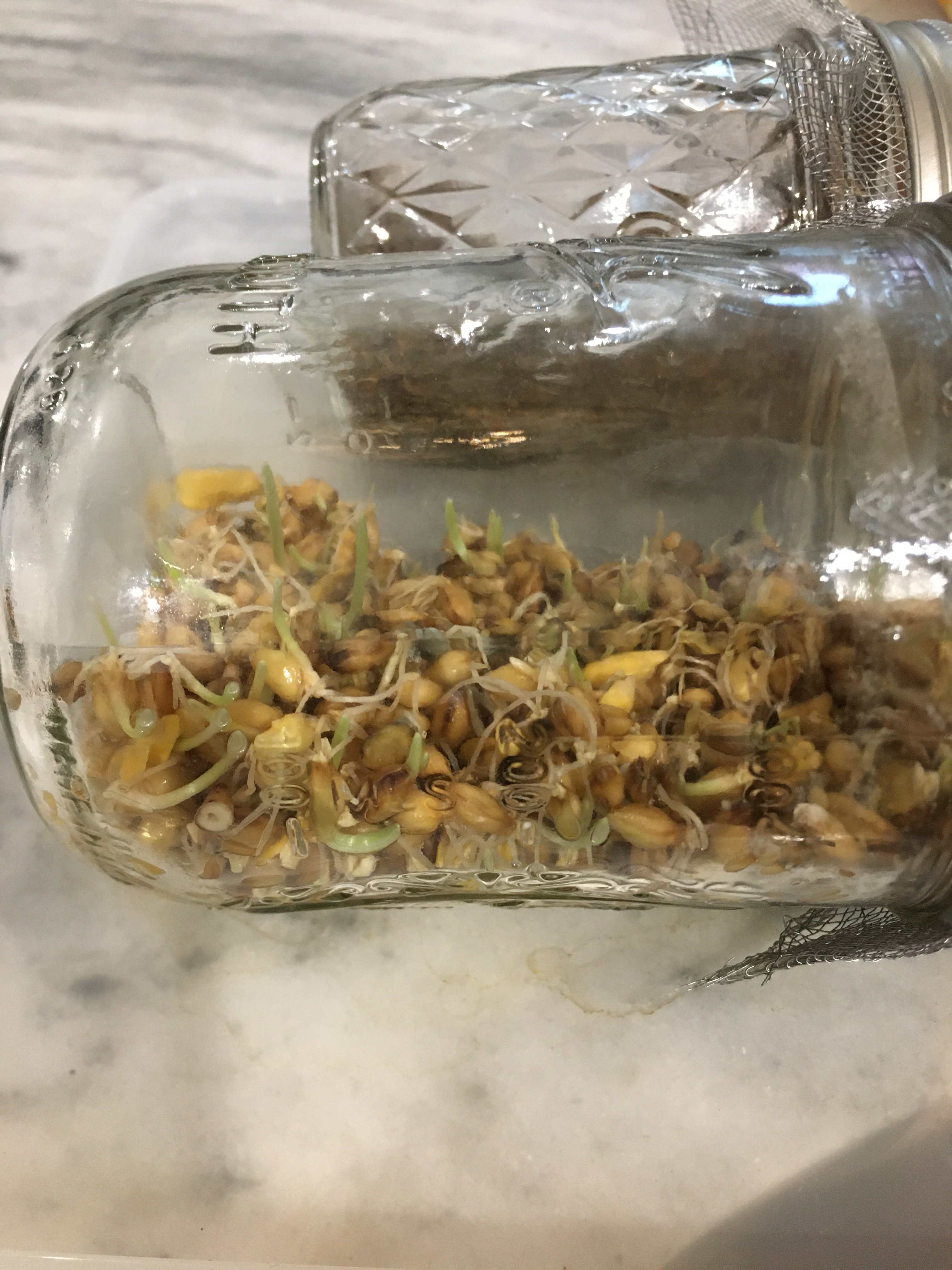
Sprouted scratch
After three days the scratch was sprouted and I fed it to the chickens. They loved it!
Annual rye sprouted
After 5 days, the rye had formed a mat of roots with 2-3” blades of grass. The chickens were not so keen on this, but eventually ate it up.