Clearing the path

We are getting a lovely cool stretch here in Texas, meaning the night temperatures are reaching down into the 60s, and the highs barely touch into the 90s. Cool enough in the morning that I was inspired to get out and clear some of my woodland paths with the trimmer earlier this week. I was able to reclaim the already established paths fairly readily, but I’ll need clippers and more time to open up more avenues.

Path cleared through the woods

I did find some surprising nasturtium patches in the middle of the lot. They are leggy, but the area is mostly shaded, so that isn’t surprising. They are in an area where I did not plant nasturtiums. Hm. Apparently they found a better location. Go flowers go.

Nasturtiums

The poison ivy and chiggers are thick in the woods and meadow, so a thorough shower and hot water wash of the clothes I wore was in order.
Back to it

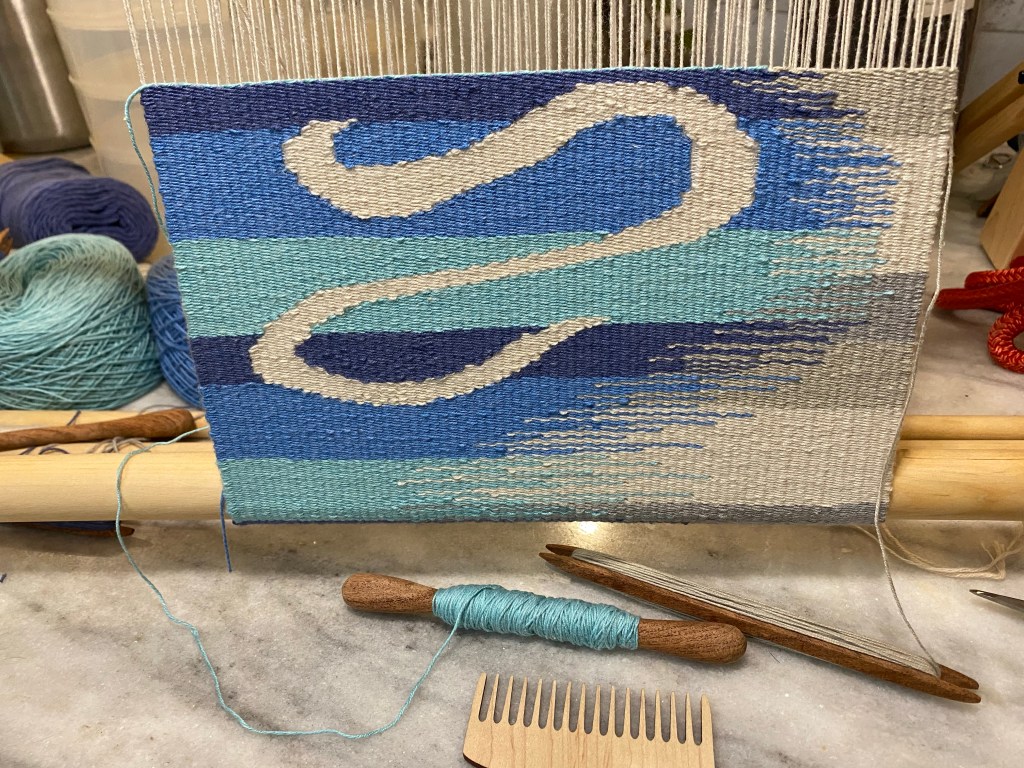
My tapestry loom has been sitting on the kitchen counter, idle, for months, with a partial project strung on the bars. I’m determined to get the project finished so I can reclaim the counter space, but it is slow going. Originally I intended to make a scarf as long as I could on the loom, but in the interests of finishing, ever, I think I shall shorten those aspirations and aim for material for a bag. Current optimism suggests a spindle bag, but even that might prove too much as we cycle into fall and it is much nicer to be outside.

Weaving in process. Original title: identity crisis scarf

My current ranking of fiber crafts has spinning on a drop spindle in firm first place, followed by nålbinding, which is slow going but very satisfying. Crochet probably comes next as I can make projects quite quickly with a hook, but I’m not as thrilled with the texture. Knitting makes a nice fabric, but ranks below crochet for me because it is so easy to drop stitches, and too hard to stop mid-row. Weaving currently occupies the bottom rung. I have the hardest time getting to work on these projects, both because it is stationary and it has a similar feel to color-by-number projects, even when I have full design control. I’m glad I live in a place and age where I can try all these things, and not be stuck in a single craft.

Nålbinding plastic

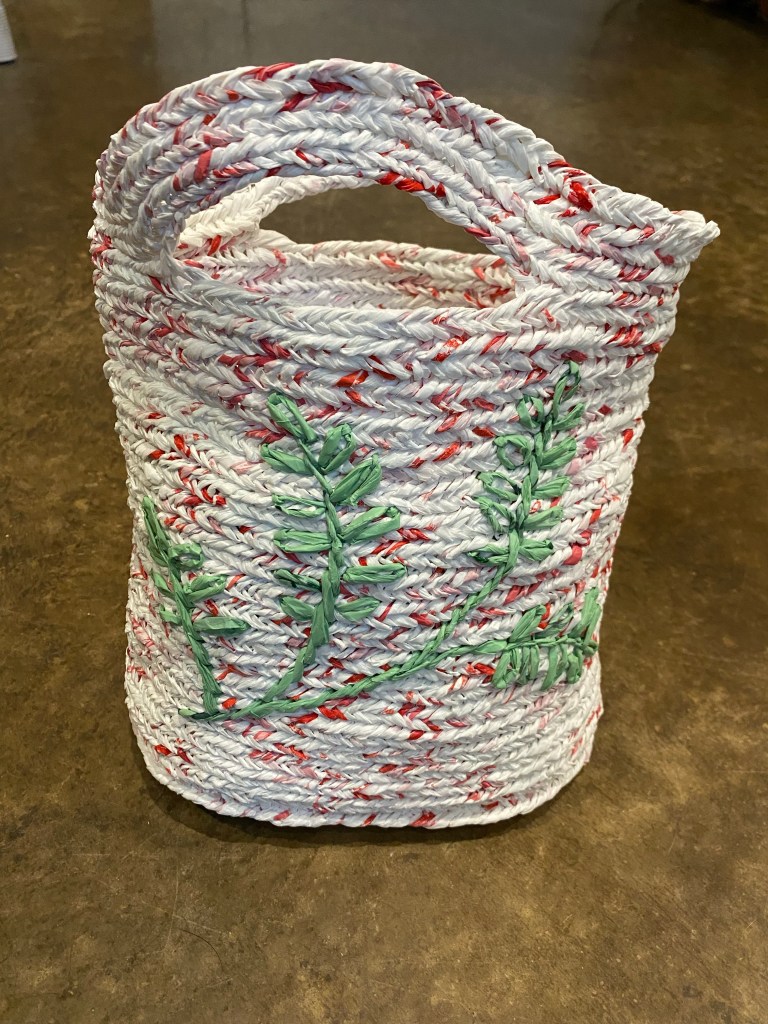
I finished another nålbound bag! I used loops of grocery bag plastic, and added some embroidery using loops from a different color bag. I learned that doubling the loops makes a very stiff fabric (the base was made as an oval with doubled loops, but is a bit wonky because of the stiffness). The sides were done with single loops thumb tensioned (meaning the loops are the diameter of my thumb) done in Finnish 2+2 with an F2 connection (here is an excellent resource site). The sides are much more flexible than the base, but still sturdy enough to stand tall on their own. (Although I did stuff the bag for the picture.)

Nålbound bag (9”x10”) made from plastic grocery bags

Wasp invasion

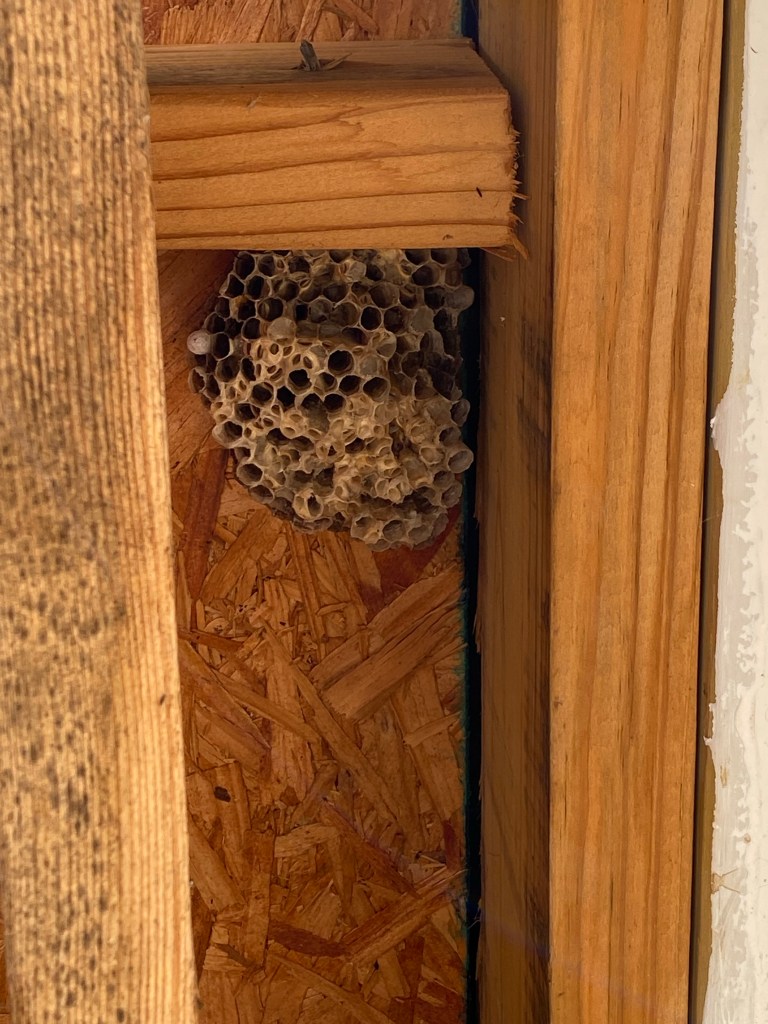
The wasps found a hidden area between the rafters in the overhang in the run to build their nest. I’m not sure how I didn’t disturb them before this, but when I went to fill the far hanging water for the chickens, they certainly let me know they were there now. (There might have been some hollering on my part as I ran.)

Looking up at a large wasp nest

Here is another good reason to have multiple watering stations. I abandoned the far water containers near the nest, knowing the chickens have access to water at three other spots. I waited until dusk, when the chickens were up for the night and the wasps were quiet, then soaked the nest with wasp spray. Thoroughly. In the morning the spray was dry and the wasps were gone. The instructions on the can recommend waiting 24 hours before removing the nest, but I’m going to wait until it falls down on its own. I’ve read that wasps are territorial and won’t nest where there is another nest. Some people even put up fake nests to deter wasp activity. I had an old nest up on the other side of the run for nearly a year and while it was there, no other wasps nested in the area.

Blueberry block

I made blueberry ice cream the other day and was left a pile of cooked blueberry hulls. What to do? The chickens might like them. It is hot out, so freezing them might be good. I put the strained skins in a paper bowl and popped it into the freezer. When I put out the block of frozen blueberry mash for the chickens and they devoured it. I was hoping for purple stained beaks (frozen blueberries stain my hands something awful), but they were quite clean. It does go right through them, though, so for the sake of their fluffy bum and digestive tracts, blueberries will be a sometimes treat.

Block of frozen blueberry mash for the hens