Uh oh, I left you without kitten pictures for two days. Let’s rectify that.
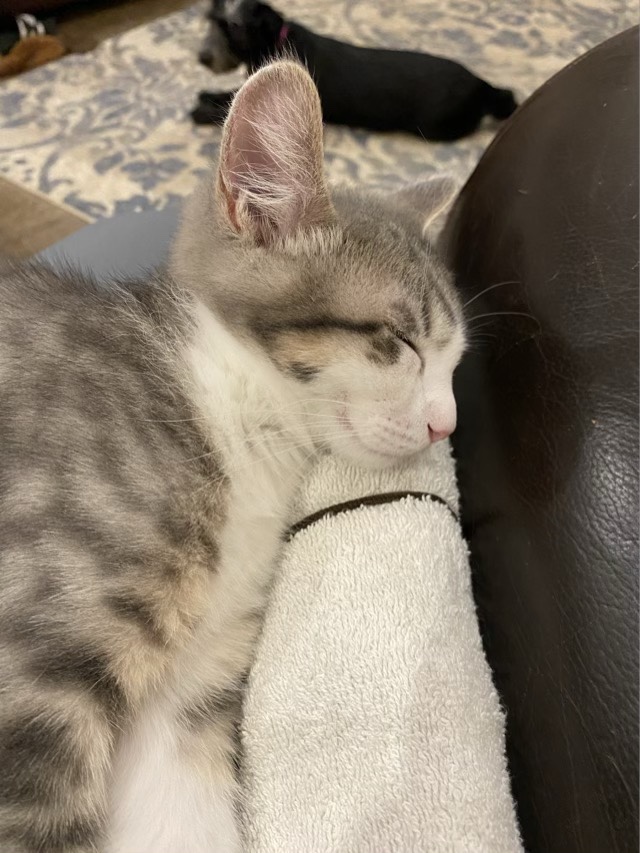
Today I present a DIY arm saver. A rolled terry cloth hand towel, secured with an elastic hairband, makes a good kitten kick and bite toy. Thor the kitten likes to wrestle and bite. For the most part he keeps his claws in for this play, but he is losing his kitten teeth and needs to bite. I would prefer he not lacerate my arm. When he jumps on my lap and gets feisty, I substitute the rolled towel. Everyone is happy.
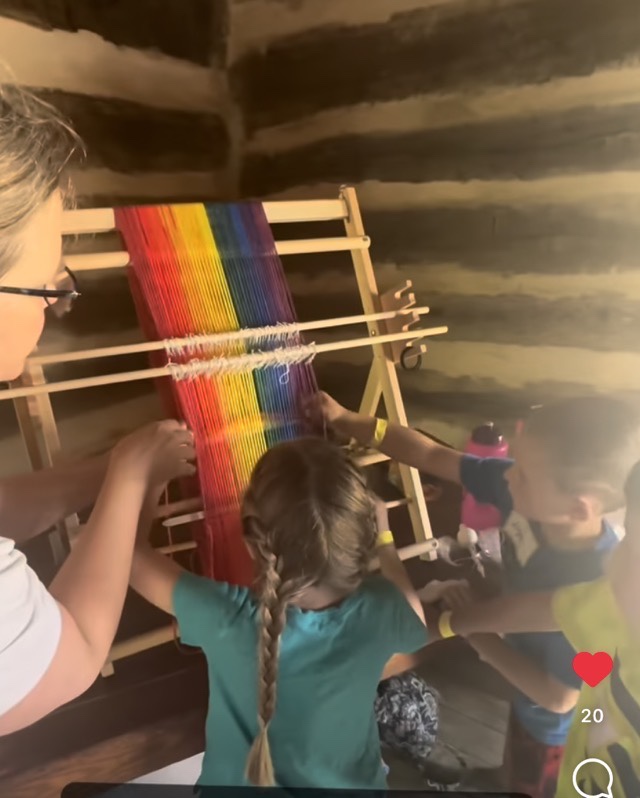
The prep I did for the weaving demonstration for a local kid’s camp was worth it. The demonstration went smoothly and most kids had a chance to pass the shuttle through and change the shed. Of course I completely forgot to take any pictures, so the still below was taken from the day summary video Doss Heritage posted.
Weaving in progress (still from Doss Heritage video)
I did take a picture with a skein of the yarn I used, but it was after the fact. I think we are going to do another camp, so I’ll leave the loom setup rather than finish this weaving.
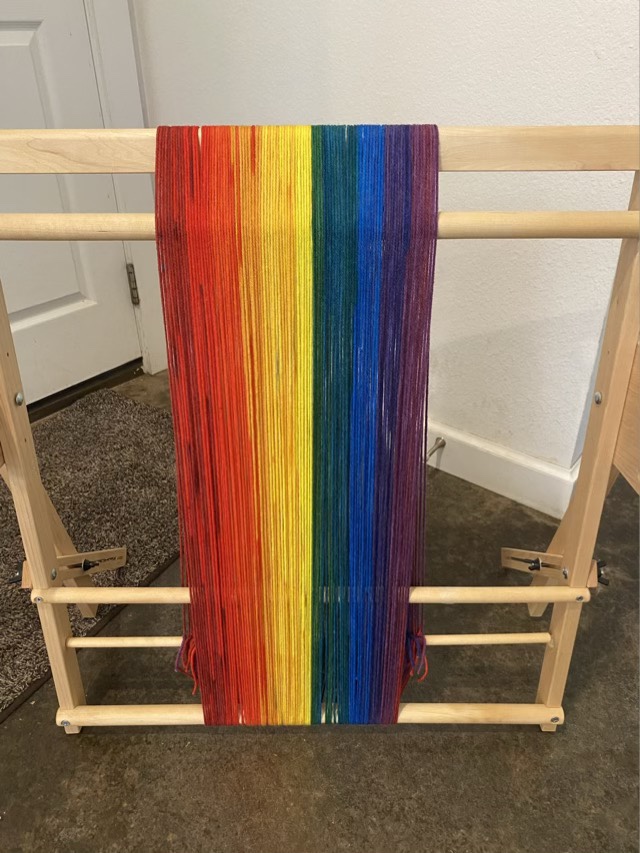
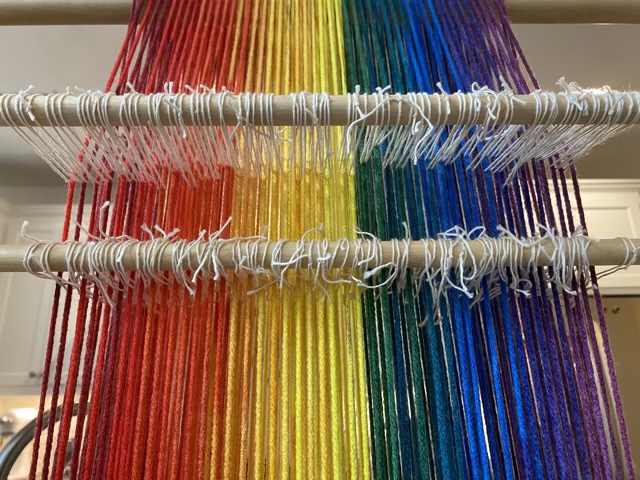
In quilting, when you cut a centered motif out of a printed fabric, it is called fussy cutting. Not sure what it is called when you do a similar thing with gradient yarn, but that’s what I did to warp my tapestry loom.
Tapestry loom warped by spectral color from a gradient ball of yarn
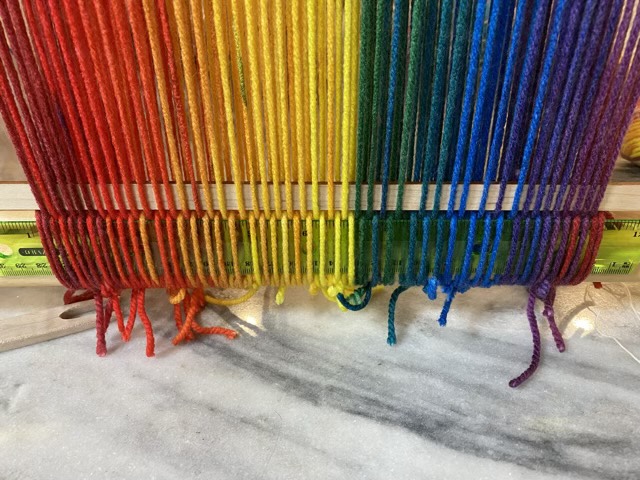
I needed a demonstration setup for a local kid’s camp. I was demonstrating weaving, a friend was spinning, and another was carding. I thought it would be neat to see color shift across the rainbow both in the warp and the weft. I setup string heddles because this is a step up from picking, which is what is usually demonstrated in art classes in school. String heddles are consistently sized loops of yarn that go around one warp thread, then around a heddle stick. Properly setup for plain weave, the heddles will lift every other warp thread. Switching heddles changes the shed, which is what the shuttle with the weft yarn passes through. I tested my heddles with a ruler and a pickup stick until I had everything correct. (I didn’t at first, and had to undo and redo.)
String heddles installedTesting the heddles with ruler and stick
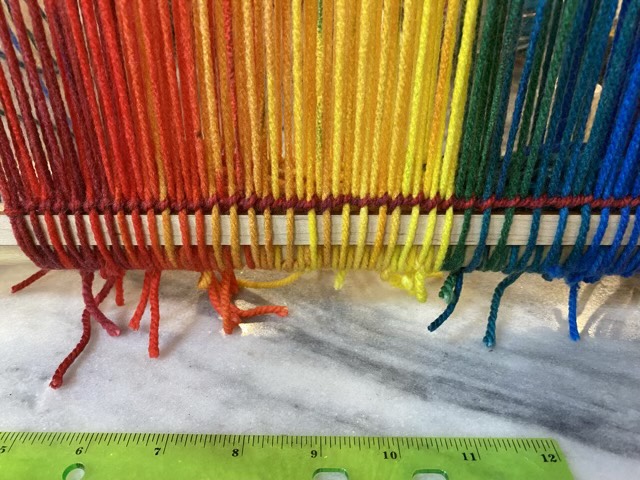
To set a secure first row and space the warp threads, I twined a row. Twining in weaving involves two threads twisting around each other and the warp threads.