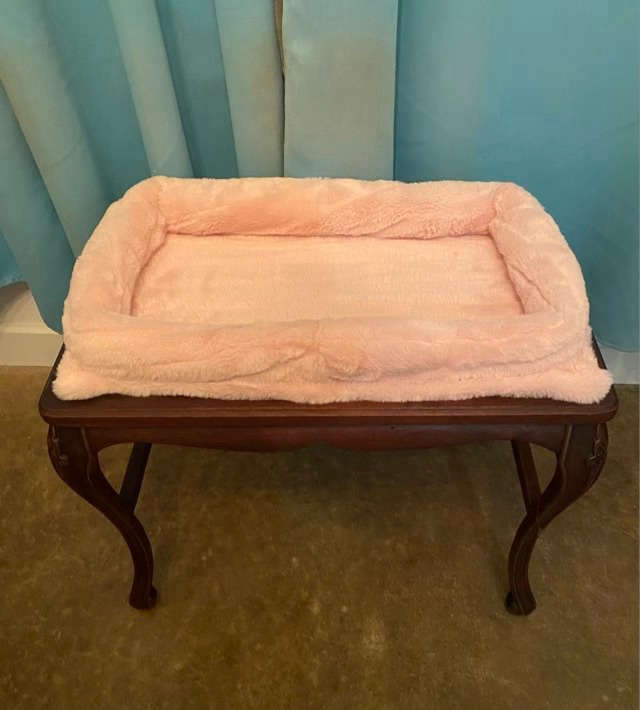
Ok, so this is probably the silliest I’ve ever made, and that’s saying something. I repaired the broken leg in an old side table that had been used as a bench (yesterday’s post), and rather than tempt fate by putting a solid top back on, I made it into a cat hammock.
Photo description: elegant wood table with curved legs with a light pink fuzzy padded edge cat hammock attached.
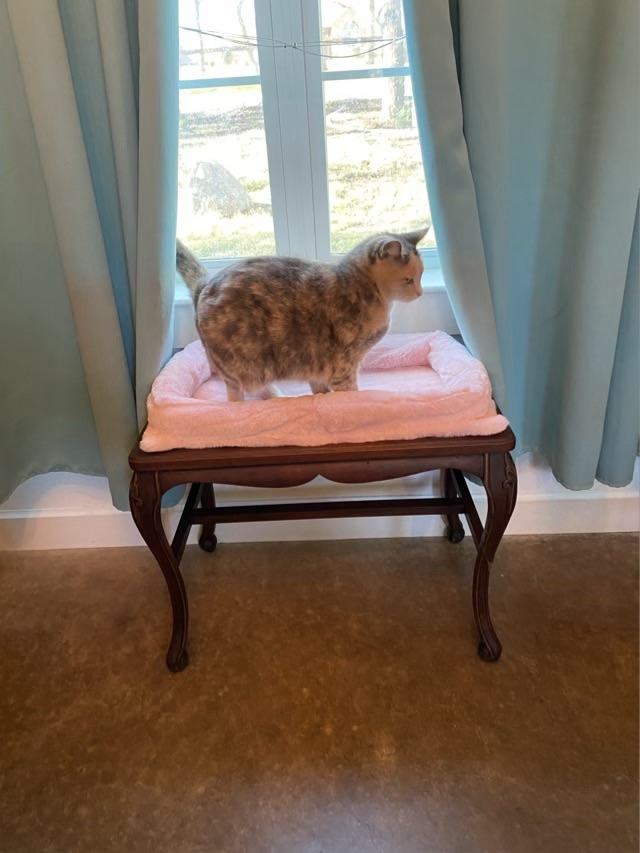
I had a pink fuzzy blanket that had already been cut into for another project (we couldn’t find the fabric by the yard, so bought a blanket), and sewed a two sided mat. I stapled the mat down to the table top, over the central opening. I then sewed a long tube of the fabric, stuffed it with polyfil and sewed that down on the mat. It is quite the sight. The cats are not too sure of it, so I put it beneath the front window where it will get some sunlight. I’ve sequentially put all three cats on the bed; all have rejected it. I’ll give it some time.
Photo description: Thor the gray tabby standing on the new fancy cat bed.Photo description: Sophie the dilute calico standing on the new fancy cat bed.Photo description: Izzy the calico sitting on the new fancy cat bed. After the photo she moved up to the window sill.
One of my neighbors put out an upholstered stool on the side of the road. It had elegant curved legs, but one of them was broken. I picked it up and glued the leg back on.
Photo description: clamp holding together the broken portion of the leg
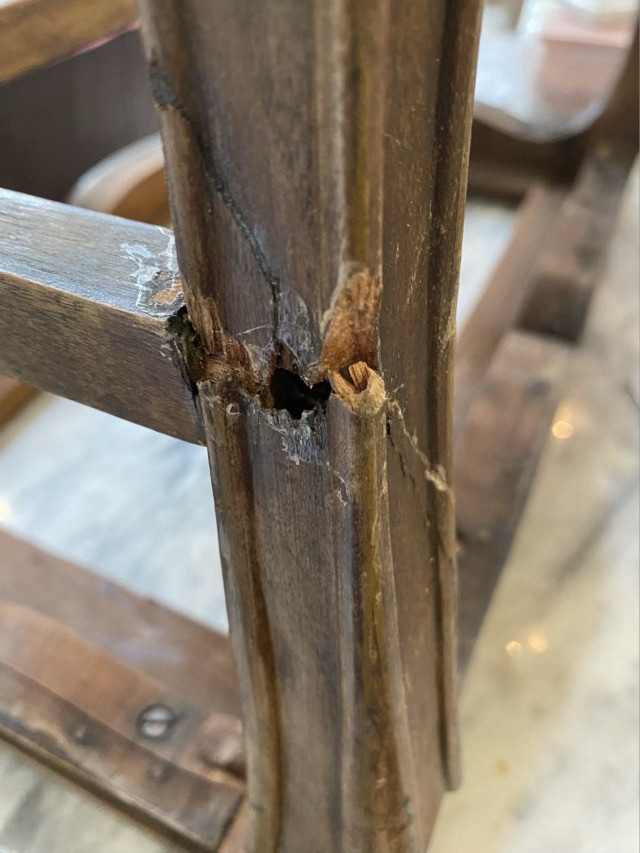
There was still a large gap in the leg after I fit it together.
Photo description: closeup of the wooden leg showing a deep hole and ragged gash.
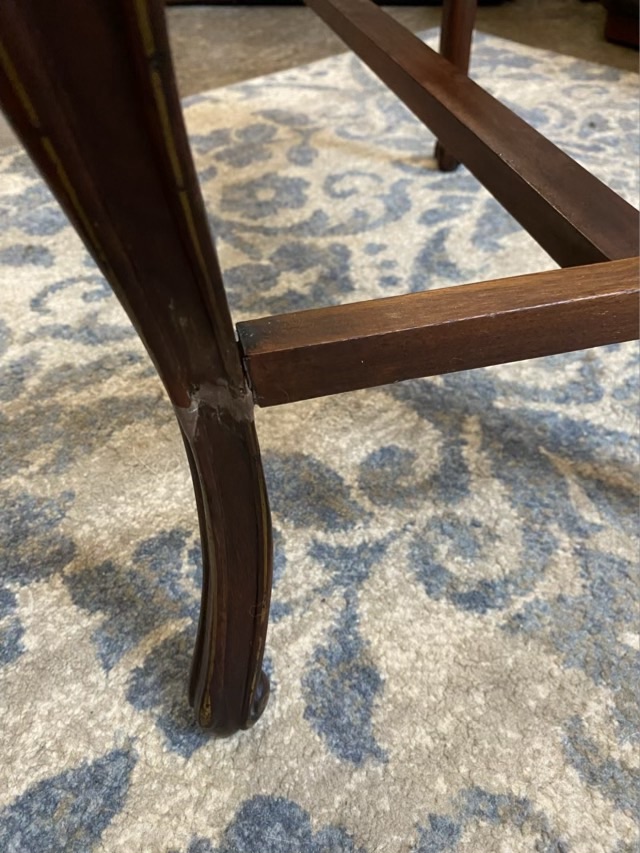
I bought some Apoxy sculpt modeling compound, which is a two-part epoxy clay that hardens without baking. I bought the color called “bronze” because I was inspired by the Japanese method of Kintsugi, or making a visible gold repair. The “bronze” was not metallic at all and actually was a fair match to the stained wood. Huh.
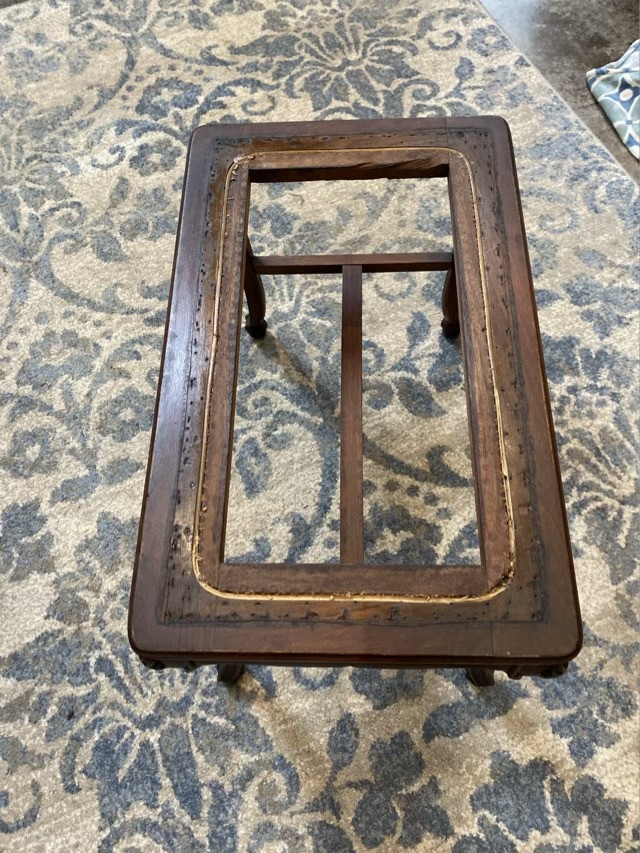
Photo description: same wood leg, but upright on a blue and gray rug, showing the filled hole, which is slightly lighter and more gray in color. I treated the whole base with Howard’s Feed and Wax (I love this stuff).
I removed the water stained upholstered top and found something interesting.
Photo description: top of the stool with the upholstery removed.
This little piece of furniture has been many things. At one point it had a rattan top that had been cut out. I’m guessing the rattan was original and this was intended to be a side table. Then there is a round of staple or tack marks around the old rattan groove, which I assume was the second and maybe even third life of the piece. When I picked it up, it had green velvet fabric stapled to a plywood board, that was then screwed in place from underneath.
I have no doubt that those legs would break again if someone sat on it. So what to do with elegant legs that can’t take much weight? Oh, I came up with something, and it is probably the silliest thing I’ve ever made. I’ll share the results tomorrow.
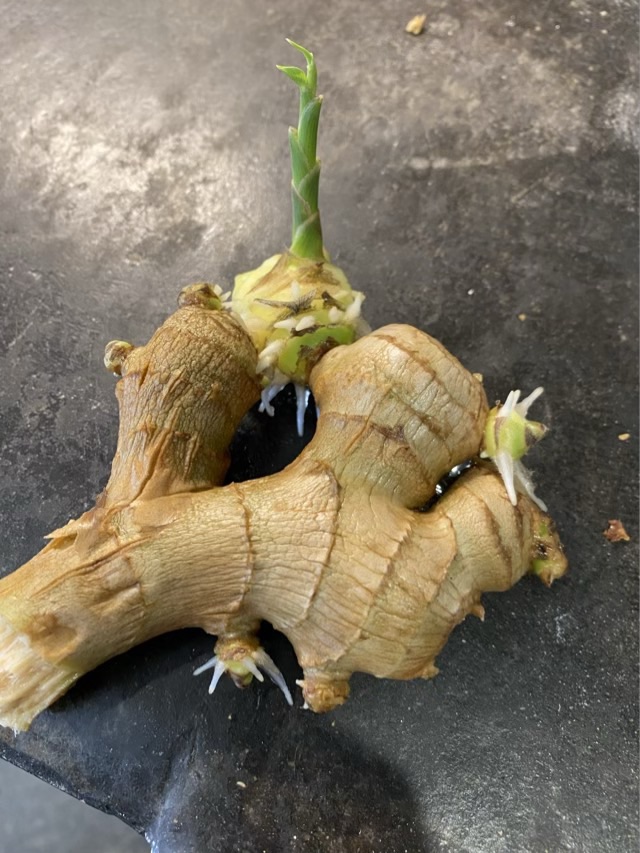
I bought ginger root intending to make Singer’s Tea, but left it in the plastic bag for too long and it started to grow.
Photo description: ginger root with green sprout and white root shoots.
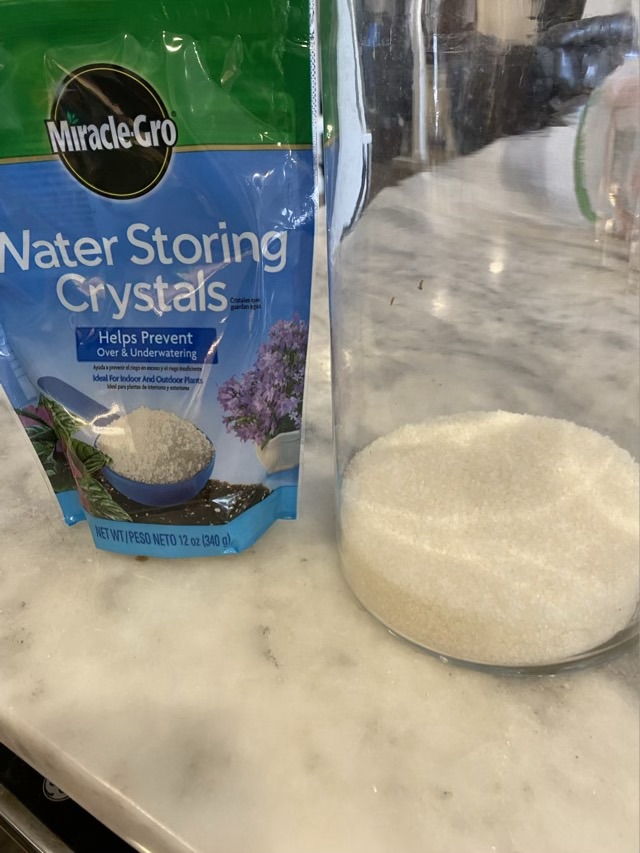
I have tried placing the root in water (yeah, this has happened before) but the water quickly grew mold and the root didn’t do well. This time I thought I would do an experiment with water storing crystals, with the idea that it might keep the root moist without drowning it. And it looks cool.
Photo description: bag of Miracle Gro water storing crystals and a clear cylindrical glass jar with about a half in of dry crystals in the bottom (this is too much, by the way)
Wow do the “crystals” absorb large quantities of water. I thought I was being conservative with the amount of dry crystals, but they absorbed all the water I put in the container, and I had to scoop some off the top. I did add some Miracle Gro fertilizer so there are nutrients in the medium. I placed the root into the container and placed the container in the front window.
Photo description: top of container filled with hydrated water “crystals” with the green ginger root shoot sticking out.
I’m not holding much hope on this experiment. The ginger shoot is not radiating happiness in its new container, but we’ll stay the course for a couple weeks to see what happens.
Update: this does not work. The ginger starts to grow, then withers.
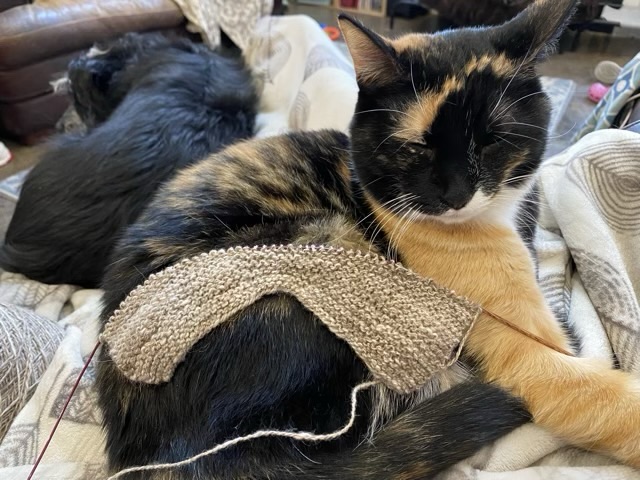
Photo description: beginning of a knitted scarf with short rows lying on a calico cat with a small black dog in the background.
I have cast on the Helix scarf from Spin Off magazine! I did make a modification, casting on thirty seemed very narrow, so I ripped out (only a couple rows) and cast on 50 instead. I adjusted the short rows to alternating 20 and 10. It turns out that I really like short rows, and the wrap and turn method. Izzy the cat doesn’t mind being on my lap as I knit, but Thor the cat thinks the yarn smells really good and keeps trying to take off with it, or chew on my circular needle.
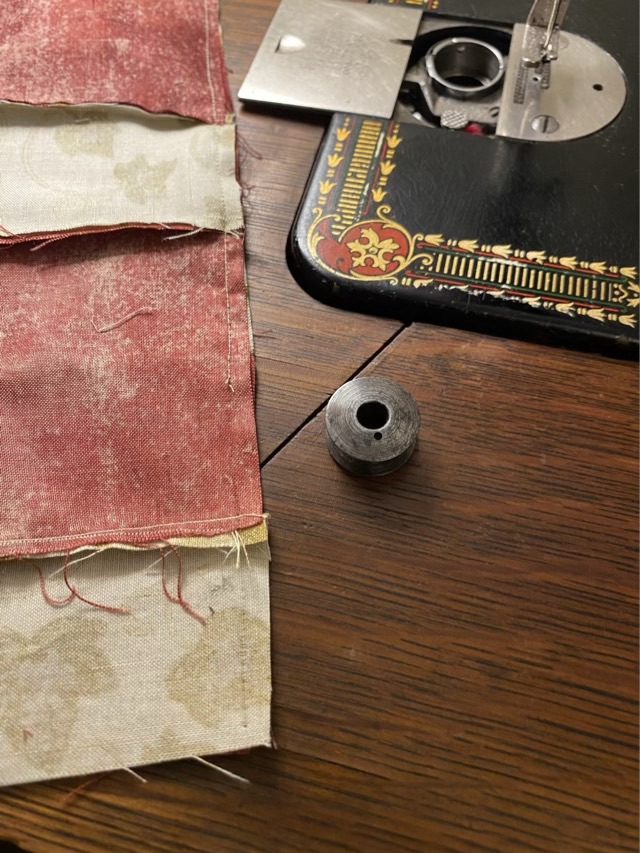
Running out of thread on the sewing machine bobbin two inches from the end of the seam happens on antique machines as well as modern machines. Sigh.
Photo description: empty bobbin on a Singer model 66 treadle sewing machine along side an unfinished seam on yellow and red quilting fabric.
Despite the frustration, this was good practice to see if I remembered how to wind the bobbin and rethread the machine. I didn’t. I rethreaded the machine three times, wondered why the feed dogs weren’t moving, so took off the foot and the needle to look, forgot to disengage the bobbin winder, and put the needle in backward. After another few minutes of troubleshooting I realized the stitch length knob was set for teenie tiny stitches, so fixed that (feed dogs work fine). Then I disengaged the bobbin winder (which is easy to accidentally bump into position). It took seven practice seams before I finally went looking online for reasons for skipped stitches and then discovered the needle was in backwards. Oh for crying in the mud. The machine works great, the operator still needs some training.