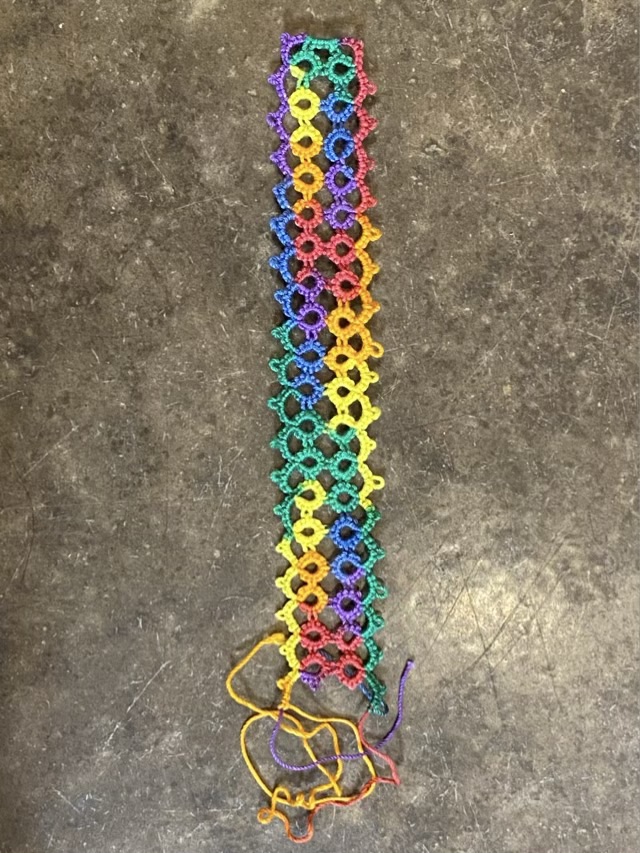
Here is another item I couldn’t finish on the plane, but not because I ran out of thread, but in need of a button. (I actually worked on this before my critical thread shortage on my mini doily posted yesterday, and considered taking it apart for the thread, but opted to keep it intact.)
Photo description: rainbow variegated thread knotted into a lace bracelet, unfinished on one end
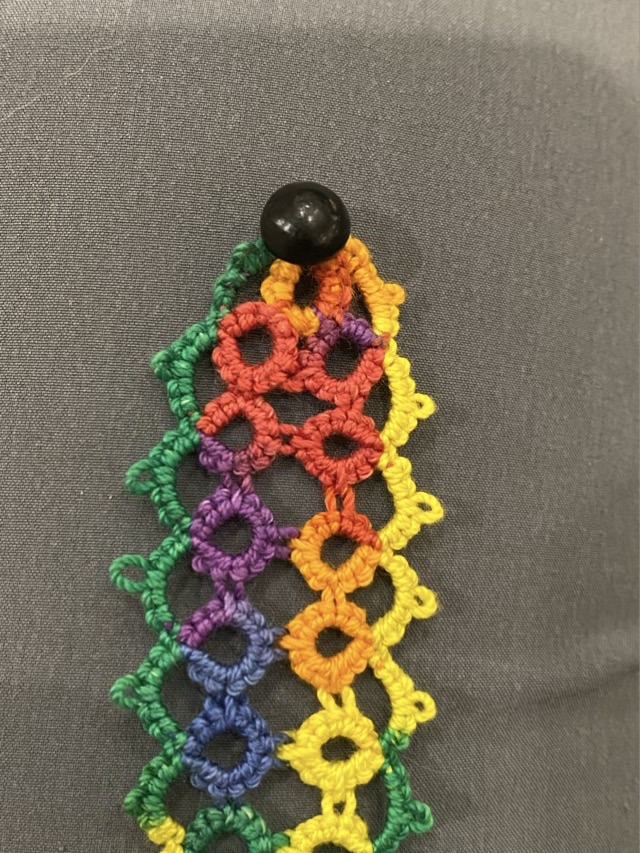
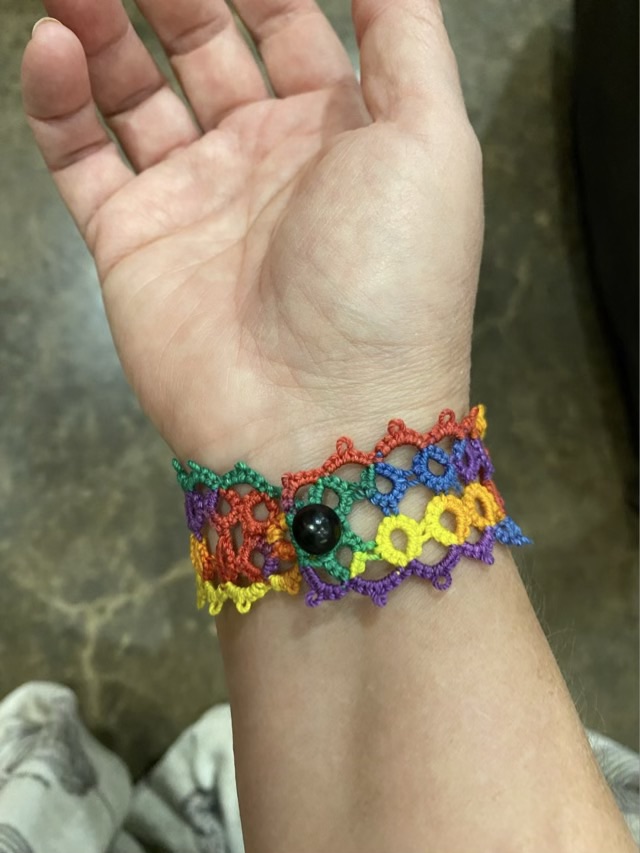
I found a small, probably vintage, black shank button in my button stash at home, and fashioned the end into the bracelet clasp. The inner circle below the button was too small for the tatting shuttle, but I was able to do the square knots with a needle to cover the threads and add structure around the button.
Photo description: finished end of the tatted bracelet with button Photo description: tatted bracelet attached with a button on my wrist
I am getting better at estimating how many knots will get me the shape I want when I’m tatting. How tight I pull the center thread also makes a difference in shape and size. This bracelet is made of two opposing rows of basic Josephine knots.
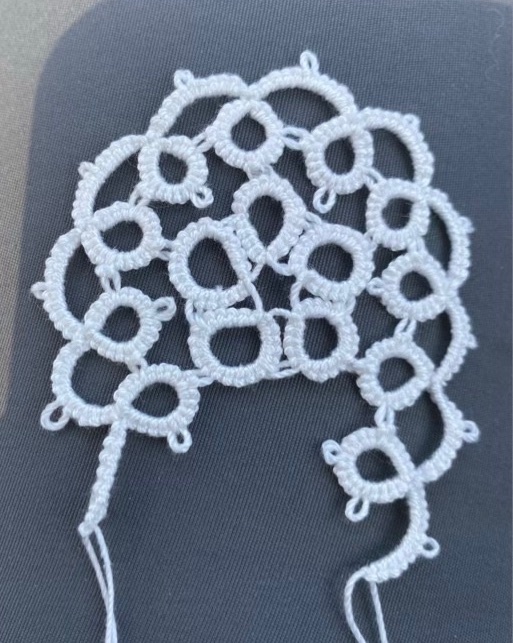
We recently took a flight for the first time (for me) in years. I was hoping to get some knitting done, but once I sat down in the seat, I could tell I didn’t have room for my paper pattern, yarn bag, and knitting with two circular needles. Nuts. I pulled put my emergency craft from my purse, which this trip was tatting shuttles and extra wound bobbins. This I could do within the confines of my seat. I pulled up my Pinterest Tatting list, and started on a round pattern. On the second round, I could tell I had a problem.
Photo description: tatting with white #10 cotton thread, the second round of Josephine knots is open
The way the pattern was laid out did not fit what I was doing; my second round could not lay flat and still connect to the beginning of the round. I could undo the second round and try something different, or clip out the center. Hm. I opted to clip out the center, literally, because I couldn’t have scissors on the plane so only had nail clippers.
Photo description: same work with the center clipped out, the picot loops teased out, and additional Josephine knots added until the project lay flat
After getting the second round to lay flat, I replaced the center with six loops done in rainbow thread, which worked out nicely and stayed flat.
Photo description: same work, but with a red, purple, blue, green, and orange variegated thread knotted into six loops and attached at every other picot to the outer round
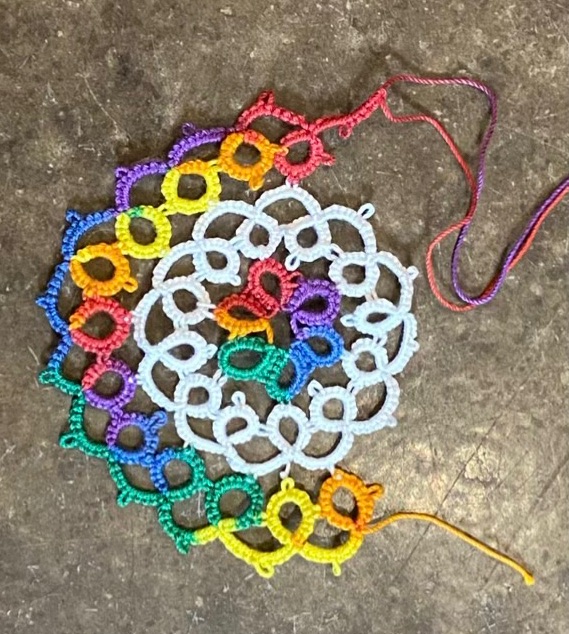
I started on the third round with the colored thread to balance the center color. To my horror, I ran out of thread. During travel. Luckily, Walmart carries cotton crochet thread, and there are Walmarts nearly everywhere in the states. They did not have the colored yarn, but they did have something I could craft with (that will be another post). The little coaster had to wait until I returned home.
Photo description: partially finished cotton tatted mini doily
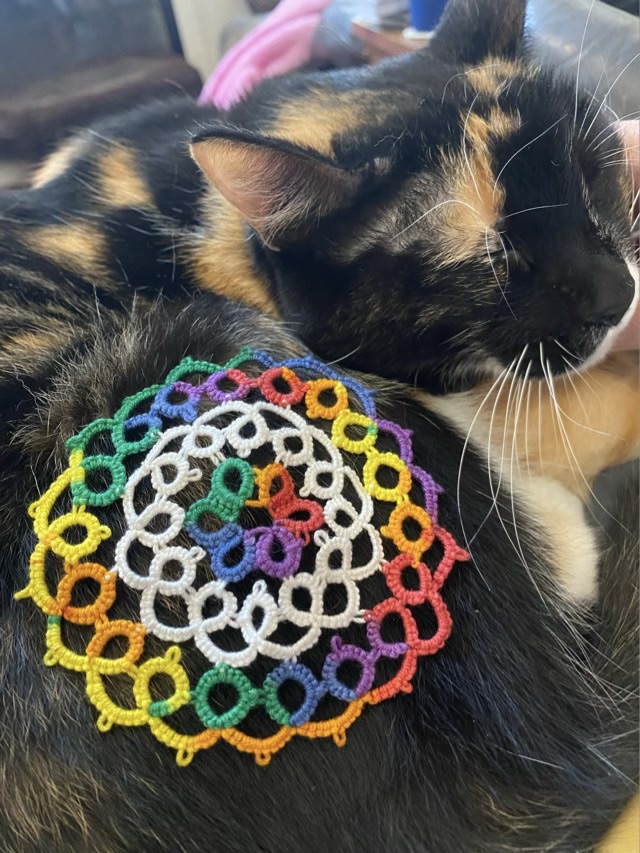
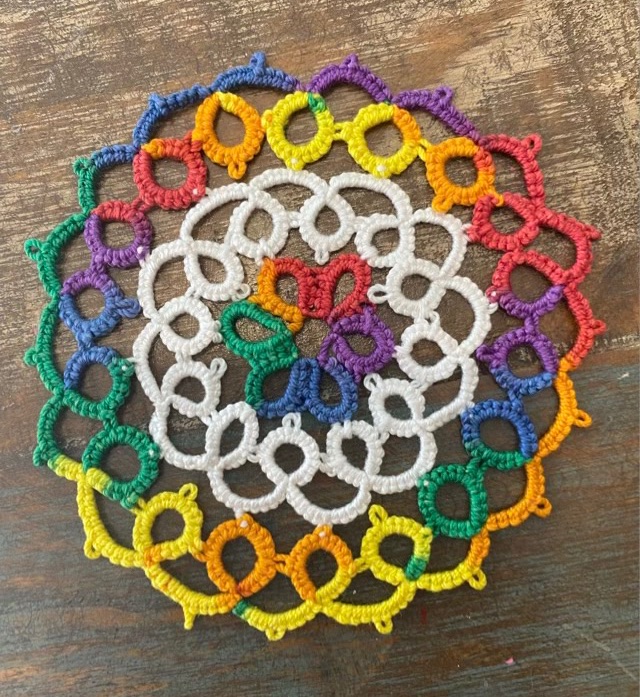
At home, I loaded up a bobbin with the same colored cotton thread and was able to finish the third round and weave in the ends.
Photo description: finished tatted mini doily on a calico cat that is very happy to be back on my lapPhoto description: small tatted doily made from #10 cotton thread in white and variegated thread alternating three rounds, blocked by wetting and laying it flat to dry
The finished lace is a nice coaster size, and it amuses me to see a bit of lace peeking out from under my cup. Apparently I am a lace person down deep (but not a frilly person). I am finding the tatting to be soothing now that my skills are developing.
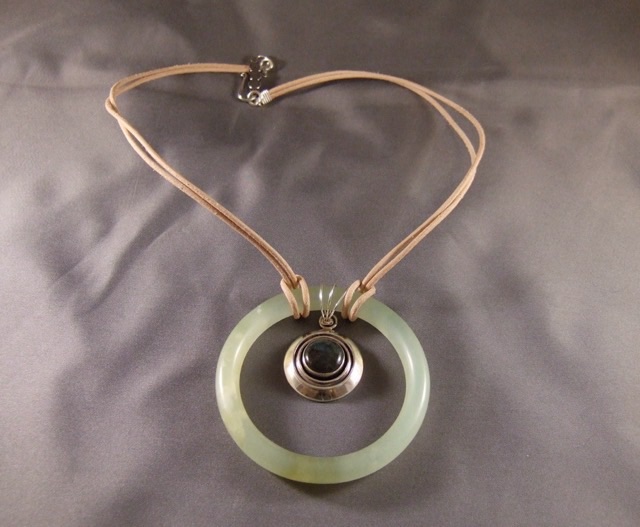
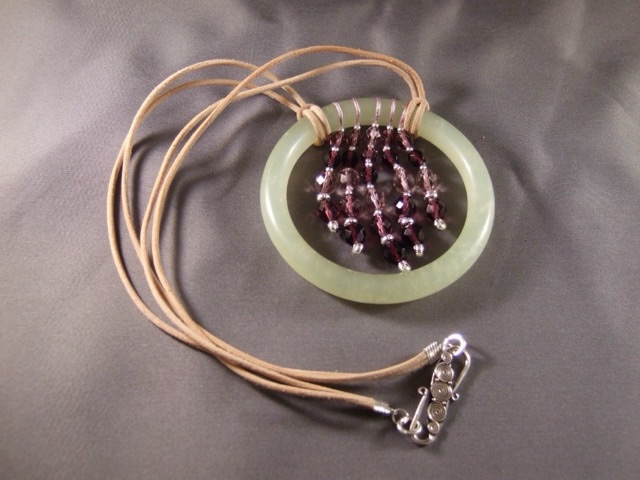
My grandmother-in-law had a pair of beautiful jade bracelets that were just slightly too small to slide over her hand. In April of 2008 I made them into necklaces so she could still wear them.
Photo description: light green jade bracelet turned into a necklace by adding leather cord, attaching a clasp to the leather, and adding a focal using silver wirePhoto description: the second jade bracelet also with leather cord, but with five strands of purple Swarovski crystal and silver beads strung with silk as a focal point
I looped the leather and focals around the bracelets in a nondestructive manner, so if ever they needed to be returned to bracelet status, they could be. The necklaces are holding up well, and I saw her wear one at her recent 99th birthday celebration.
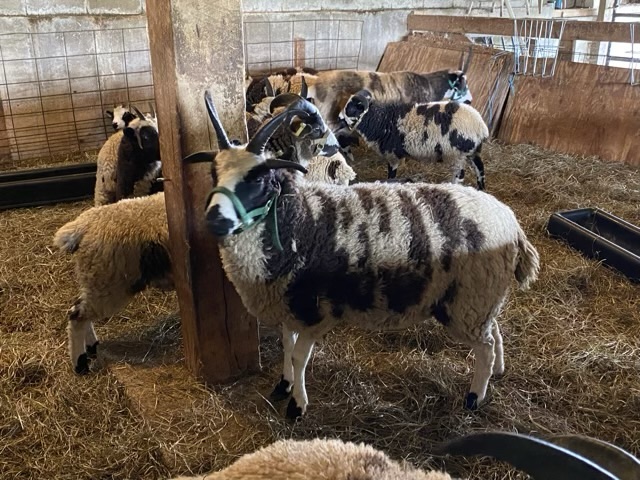
I also visited Sweetgrass Farm in Michigan, met some of Peg’s Jacob sheep, fed them animals crackers, and picked up three colors of roving.
Photo description: two wound balls of dark gray and light gray roving, and a bump of white a gray separated color rovingPhoto description: Jacob ewes, the one in the middle showing four small horns and a beautiful multicolored fleece of white and black
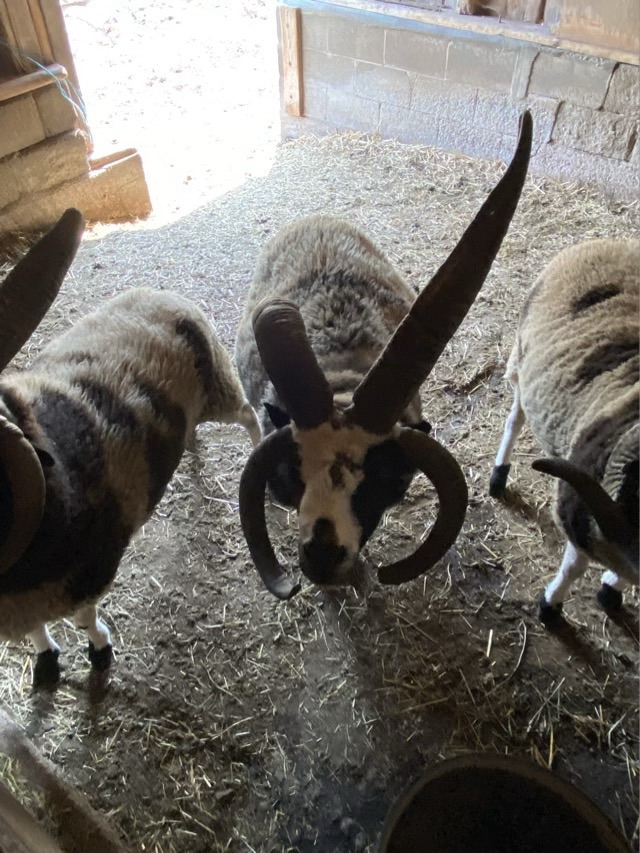
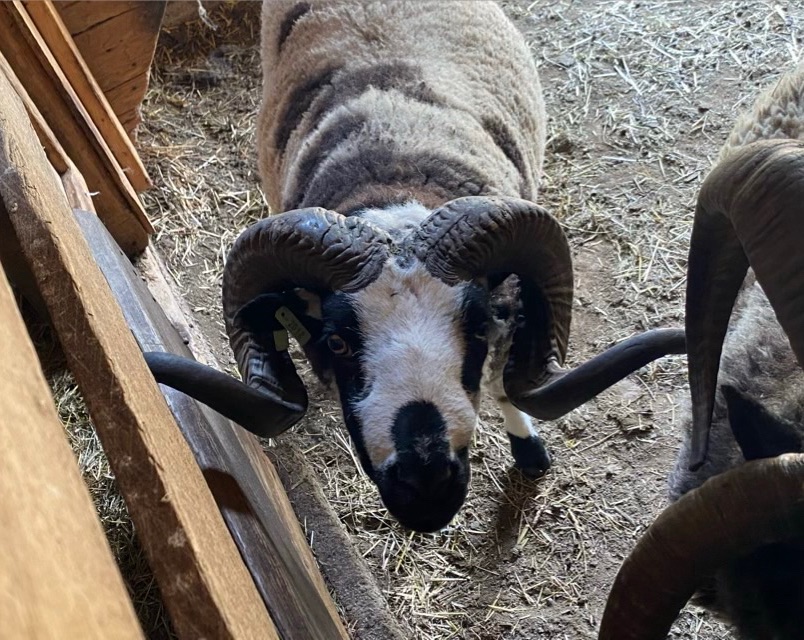
Jacob sheep are in the Threatened category according to the Livestock Conservancy. They were “park sheep” in England in the 1700s and were bred for hardiness, four horns, and spots. I love the color variation in their wool and their eye catching horns. Here is more information from the Livestock Conservancy.
Photo description: Jacob ram with breed typical four impressive large hornsPhoto description: Jacob ram with recessive trait horns that look more like a Big Horn Sheep
I’m really looking forward to spinning this wool and am already playing with ideas on what I can do with the lovely variations of natural color.
When I was up in Michigan I had the opportunity to visit Pitchfork Ranch and pick up some Teeswater roving.
Photo description: one pound of Teeswater roving with Shave ‘Em to Save ‘Em sticker and Pitchfork Ranch business card
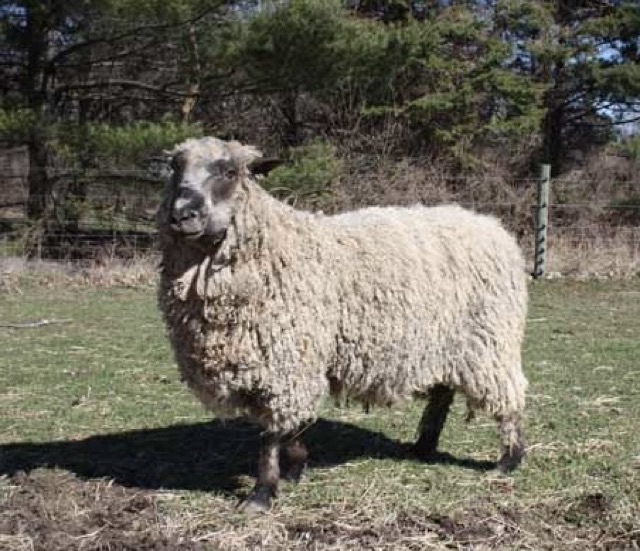
Teeswater sheep, according to the Livestock Conservancy, have a critical status. Because of preference for other longwool sheep, Teeswater nearly became extinct in the 1920s. The long lovely curly locks of Teeswater are often used in needle felting projects that retain the curl. I intended to spin most of the fiber, so was pleased that Pitchfork Ranch had roving available. To read more about this longwool sheep, here is the link to the Livestock Conservancy page, which has a detailed writeup.
Photo description: Teeswater Ram in a pasture with fence and woods in the background, photo credit to Pitchfork Ranch, used with permission