We broke down and purchased a well engineered cat door for the window to the catio. It keeps out the weather and more importantly, flies.
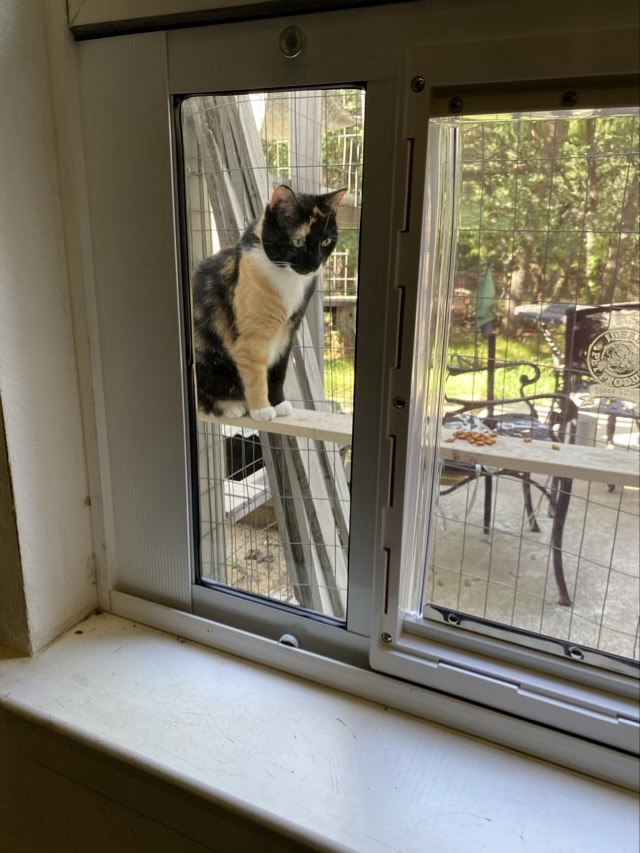
Photo description: Calico cat looking out the new cat door, plastic lock door propped up over the right window because it doesn’t open
The cats are used to going in and out at the right side of the window. The first solution was cutting a flap in the screen of the window. In winter, that was very cold. The next solution was to replace the screen with flexible vinyl, with a flap cut in. With a heavy curtain in front of the window, it was better than the screen, but the window still needed to be closed during a rain storm.
Photo description: dilute tortie looking out the window with the door lock in place
The door insert fits right into the window channels and reduces the air leak to almost nothing. We could even take away the curtain and get more light. The cats were not impressed. We tried just poking them out the window, but the magnetic click at the bottom scares Thor, the gray tabby, my 17 pound baby. We tried holding the flap open, but that lets in the flies. We decided to just let the cats figure it out.
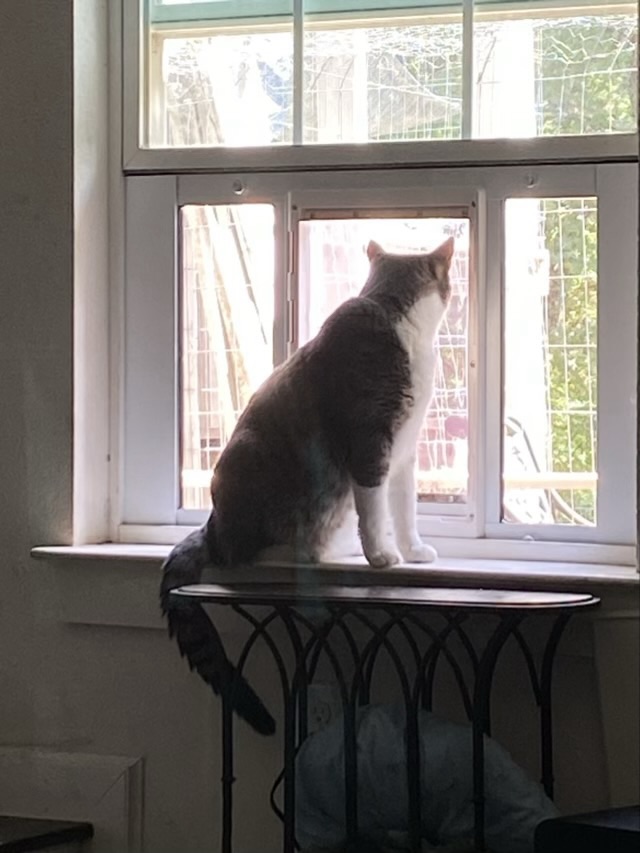
Photo description: large gray tabby looking out the window
Izzy the calico was the first to figure it out.
Photo description: calico cat seen through the window, sitting outside by her own choice
Thor has still not braved making the window click. He will sit on the windowsill looking mournfully out, but won’t let me near him (poking him out the window was traumatic, the door lock clattered in a scary way). It has been a week and he still won’t go out. On the plus side, we see more of him when he doesn’t spend his whole day outside eating bugs and frogs. He might loose some weight without all the extra wriggly snacks too.
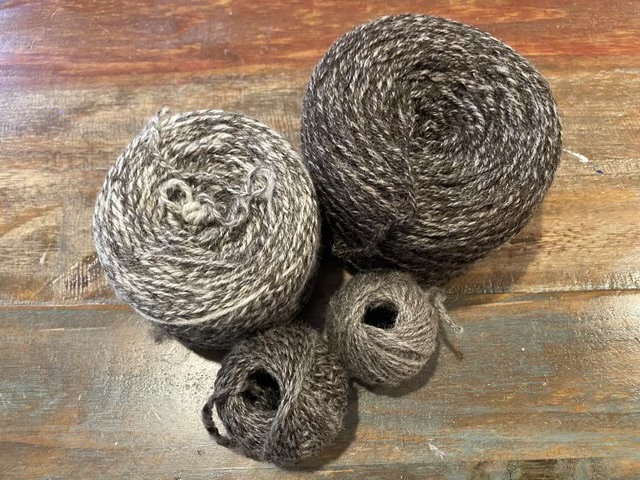
I’ve wound my handspun 3-ply Jacob’s wool yarn into center pull balls. But how much do I really have?
Photo description: two cakes of yarn and two center pull balls of yarn in different shades
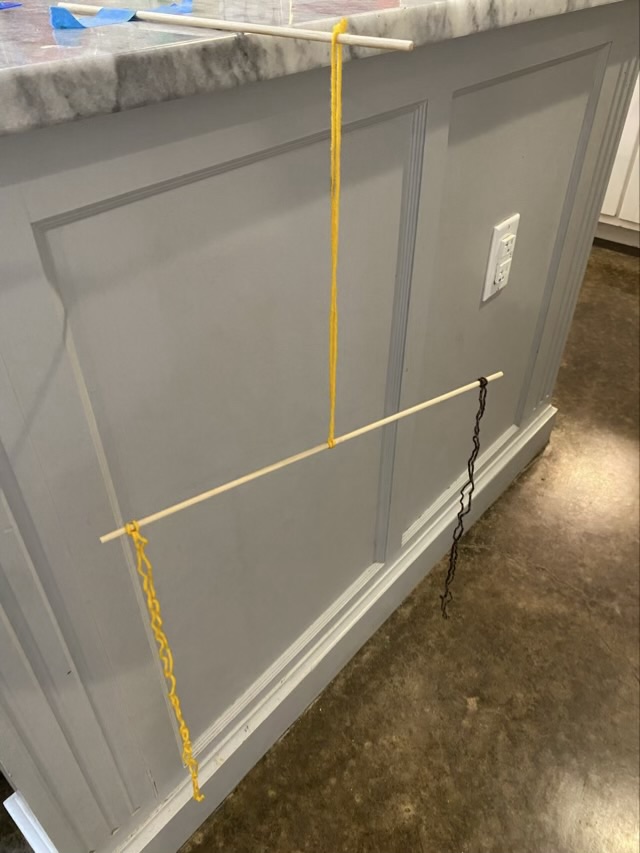
Hand woven magazine published an article about yarn balances. I followed their instructions to make a balance and used acrylic yarn of a known weight per yard.
Photo description: yarn balance with known acrylic yarn on the left and unknown yarn on the right
Because of my scientific background, I have to do my math by using the factor-label method (here is an explanatory video). I know that the yarn on the left is 142 grams per 241 meters, so my 120 cm weighs 0.071g, a weight I would not be able to measure with a kitchen scale. My hand-spun yarn that balances measures 97 cm. I now have the weight per length and can calculate yardage. (Oh yes, I completely mix my metric and standard measurements, but as long as all the labels cancel properly, we’re golden.)
Photo description: scratch pad with hand written yarn math for all four shades of yarn
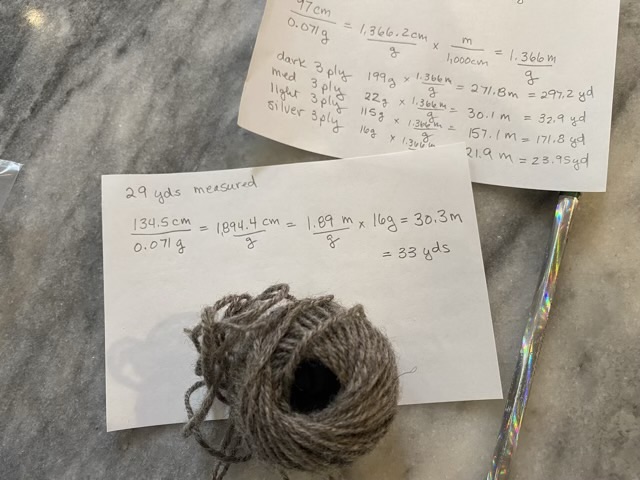
To see how accurate the calculations are, I measured the lightest ball of yarn by laying out a yard with tape on a counter. I measured 29 yards. I put a section of the yarn on the balance, did my calculations and predicted 33 yards. This is a 12% difference in weight, which I find an acceptable margin for error. When planning a pattern, you should have at least 10% more yarn than what is called for. In the case of my hand spun yarn, I will pick a pattern that needs at least 12% less than 530 yards I have.
Photo description: silver ball of yarn with scrap paper hand written math
This was an interesting exercise, and confirmed what I felt when looking at the yarn: it isn’t enough to make a vest. It may be enough the make a hat or two.
I found a picture from December 2014 that shows how the creative process sometimes works, or doesn’t. I was trying to develop a simple, repeatable wire dragonfly shape and went through many, many iterations.
Photo description: twelve partially formed brass wire dragonfly shapes on a green table
I still wasn’t entirely pleased with the end result, although I did make a few more like the shape in the bottom left.
Sometimes my ideas work right off the bat, but more often they go through a series of trials, with mostly errors. If we aren’t willing to have a few gnarls in the thread, it is hard to achieve much of anything.





 Critters and Craft