Throwback Thursday: crocheted rope

In August 2012 I helped finish a crocheted rope project. Unfortunately I didn’t write down details. I remember that the woman who commissioned me to do the work received the started pieces from a loved family member that passed before finishing the necklaces. She wanted something that she could wear, not just sit in a box. The original intent of the work was to make a long rope with looped beaded tassels on the end. That didn’t suit my client, so we decided they should sit near the collarbone with a magnetic clasp. The original maker had threaded the beads, made the first tassel, and started the crochet with a size 13 steel needle. There was one pink seed bead project and one with white seed beads.
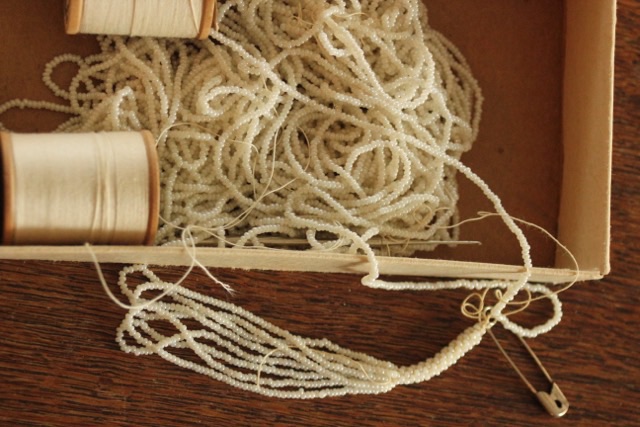
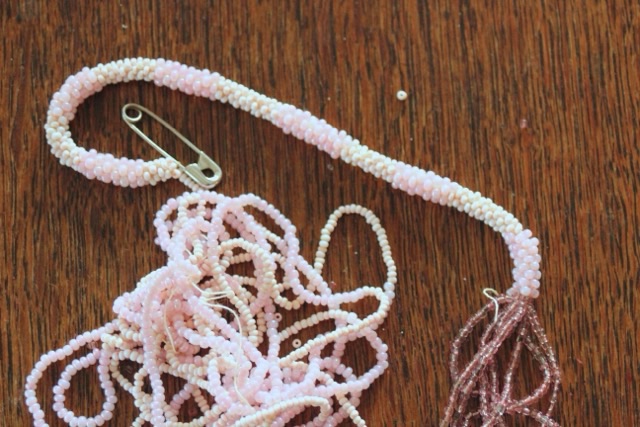
Photo description: box of white seed beads threaded onto cotton thread, tassel and crocheted rope laid on the outside of the box
Photo description: pink seed bead crocheted rope with wildly different translucent seed beads on the tassel.
Photo description: my method of beaded string organization, a huggy spool

I removed the tassels and finished the crochet to the desired length, then ran a piece of 49 strand beading wire through the tube. I attached the magnetic clasp to the wire so that no pressure was applied to the bead work.

Photo description: finished crocheted ropes in white and pink on a reflective black surface

I love the feel of crocheted seed beads ropes, but it is small detailed work that is not fast. The client was pleased and I enjoyed helping a project reach completion.

This was before I learned about the Loose Ends project that matches unfinished projects with volunteer finishers.
Potential local resource

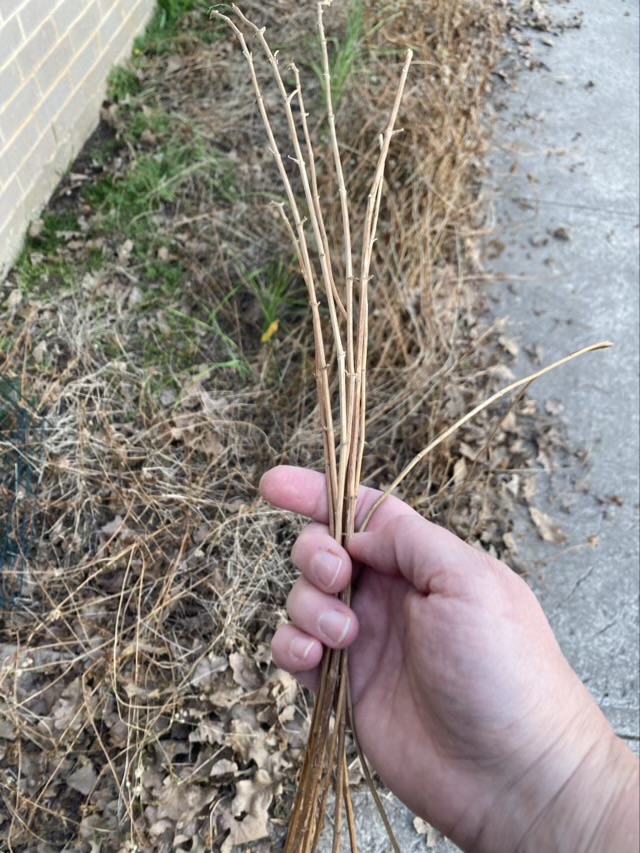
As I was wandering outside the dead stalks of last season’s Gregg’s Mistflower caught my eye. I love that the plant took over our front flower bed, and the local insects love the flowers that bloom from Spring to Fall. I started clearing the dried stems in preparation for Spring, and wondered if it would make good weaving material.

Photo description: dried Gregg’s Mistflower stems, stripped of leaves

I did an initial test by wrapping some stems in a wet towel. I left them overnight and in the morning tested pliability. They seemed flexible. The next step will be to harvest more and attempt some weaving.

It would be fantastic if my new favorite plant could also be a craft material.

Extreme closeups

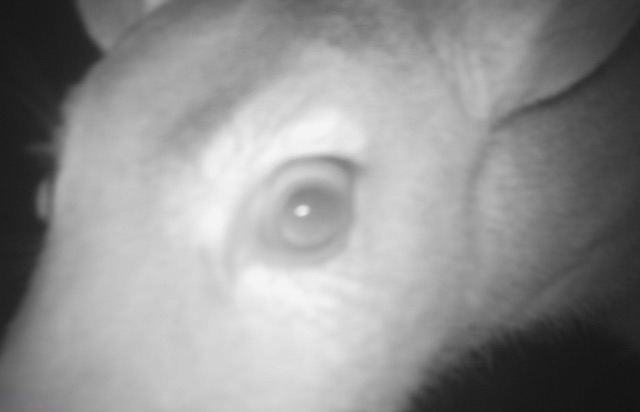
I strapped the trail cam to a tree at about calf height rather than a stand, which made for some interesting extreme closeups.

Photo description: deer eye extreme closeup in night vision
Photo description: up close view through a squirrel tail
Photo description: fuzzy extreme closeup of a black cat’s yellow eye

Chair reupholster

For our monthly craft day, my neighbor and I reupholstered two dining room chairs.

Photo description: before picture of a claw foot chair with worn velvet seat cushion

The seat was only laid into the chair frame, so lifting it out was easy, then we removed the staples with flathead screwdrivers and serrated needle nose pliers.

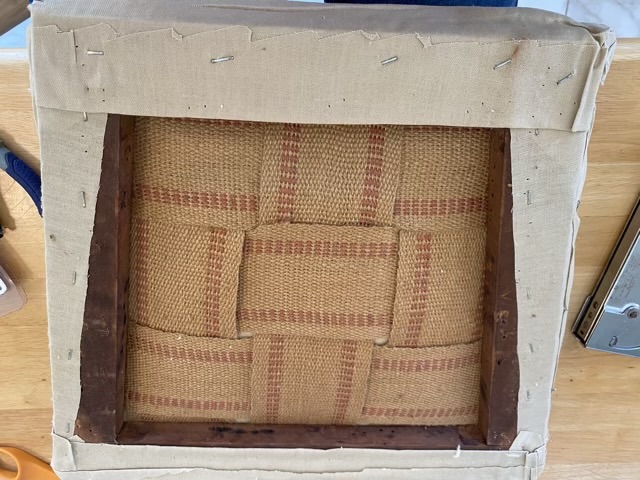
Photo description: underside of the chair pad showing the jute webbing used as support

There were so many staples. The velvet had a set of staples, then there were three layers of thick cotton surrounding cotton filler and each layer had a host of staples.

Photo description: cotton cloth layer with more staples
Photo description: padding made from raw cotton, which condensed and was no longer comfortable to sit on
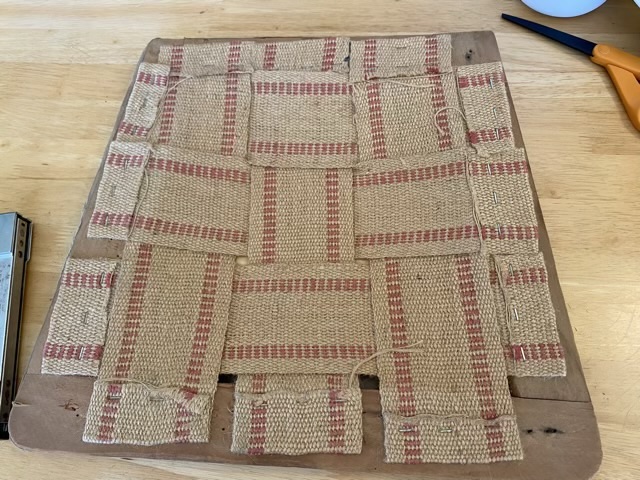
Photo description: seat frame with jute webbing

When we got down to just the frame, it was obvious that the seat had been reupholstered many times. The jute webbing was in good condition, so we left it in place. To rebuild the seat, we found a 3” dense foam chair cushion, some upholstery quality heavy cotton, and some beautiful red velvet. The cushion was the same depth and width as the chair seat, it just needed some trimming with an electric knife to match the profile. We secured the pad to the frame with the heavy cotton cloth and heavy duty staples.

Photo description: heavy cotton fabric securing the foam pad to the seat frame

Because we used a foam block, we didn’t need as many layers of cotton as was previously installed. The cotton layer did help to do the initial shaping of the pad and make applying the velvet easier.

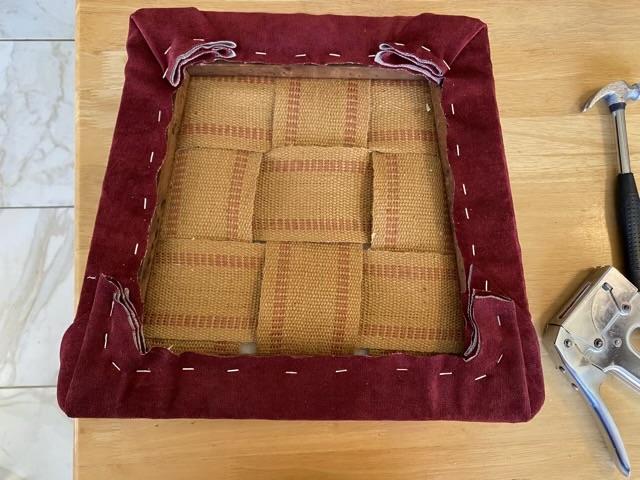
Photo description: underside of seat frame with velvet secured with staples

We did have to switch to longer staples, particularly in the corners, with the velvet. It was good that I brought along a selection.

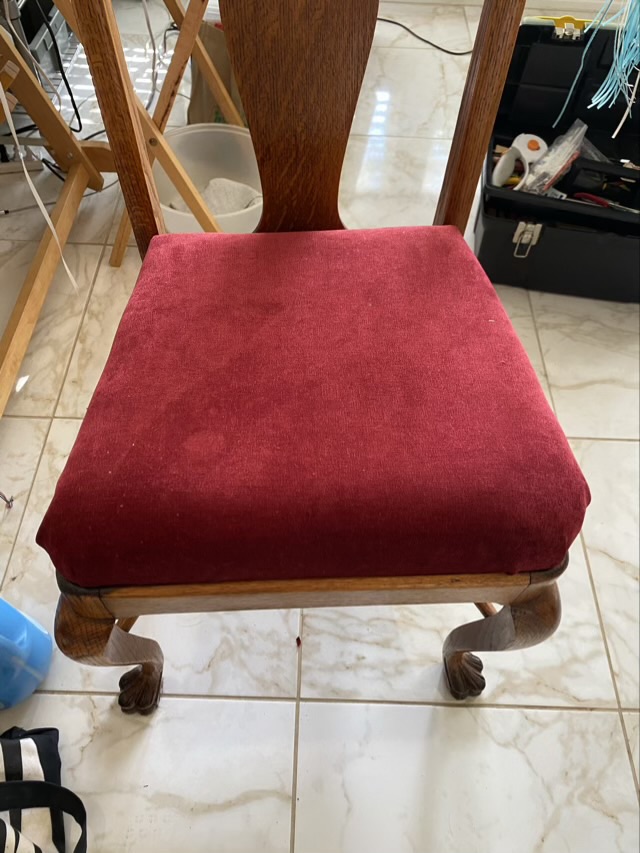
Photo description: after picture of the reupholstered seat of a claw foot chair

We were able to refinish both chairs, including shopping for fabric, in about three hours. Chair seat reupholstery is a very doable project with a good heavy staple gun, selection of staples, and a pair of pliers.

Roll reversal

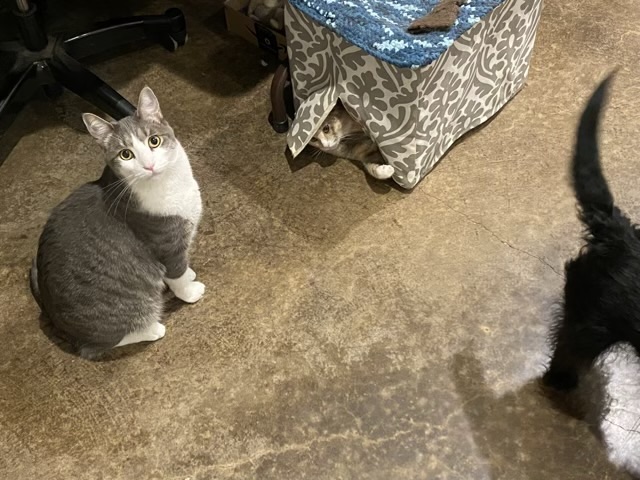
Thor the gray tabby cat is thoroughly confused by the antics of Sophie the dilute calico cat. Thor is usually the one in the box taking swipes at passerby. He isn’t quite sure what to do about this development. Missy the small black dog is on hand to break up any fights.

Photo description: calico cat popping out of a fabric covered box with a gray tabby looking at the camera and the tail of a black dog headed off screen