Throwback Thursday: turquoise necklace

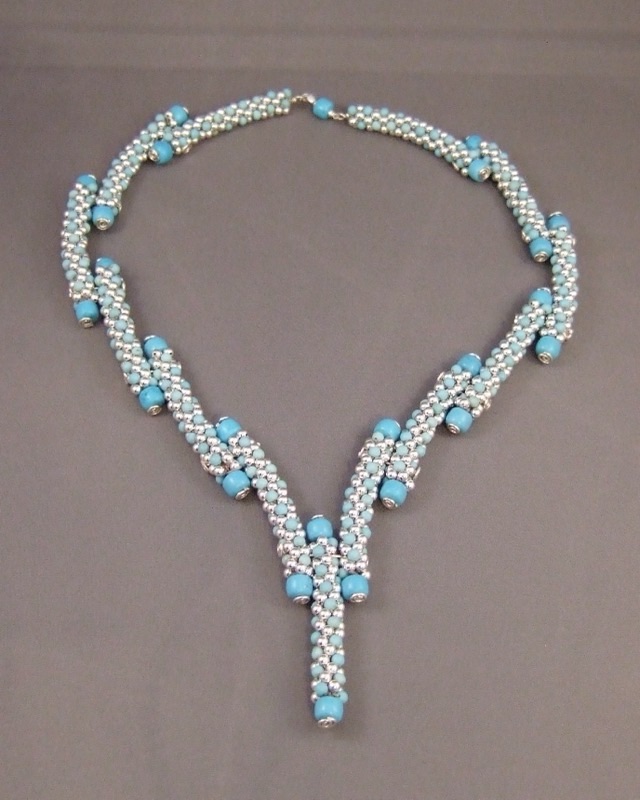
Photo description: Turquoise and silver necklace made in sections connected in an unusual manner, through the sides

I made this necklace in March of 2008, and it was featured in a FireMountain Gems catalog. I always meant to write up detailed instructions on its construction, but didn’t, so I’ll give you a short run down here.

The 13 cylinders are made by doing beaded crochet as a tube with waxed silk thread. I assembled each section with a cylindrical turquoise bead at each end, and ran a 20 gauge wire sterling silver wire down the middle, securing each end with a wire spiral. To connect the sections, I ran the same gauge wire through the sides of the cylinders, making sure that I went through the stitching inside, and made a spiral at each end. The clasp is a custom add-a-bead barrel style clasp, and I did have to ream out the bead hole to get the clasp into the bead.
Sprang: unexpected result

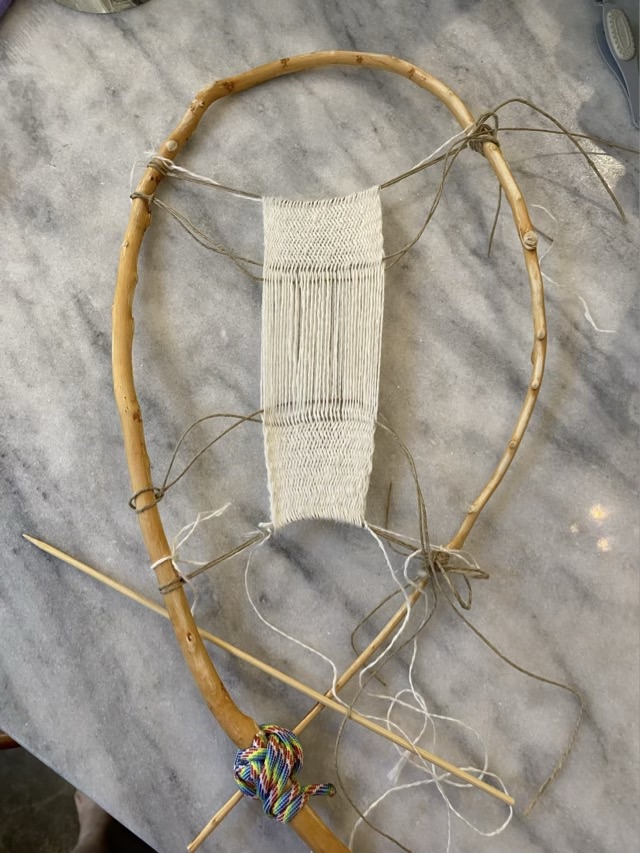
I setup my small sprang loom again, this time with hand spun pineapple fiber. I followed SolRhiza Arts’ video on how to do “interlaced horizonal ribs.” The technique alternates right and left hand twists on each row, which I hoped would solve the curl issue. The weave started out beautifully.

Photo description: hand spun pineapple fiber warped and partially woven with interlaced horizontal ribs
Photo description: sprang work in progress on the small loom

I finished with the chain method across the middle, which I still don’t like. When I removed the work from the loom I had a shock: it didn’t have the stretch effect I expect from sprang. It stretched, the horizontal ribs disappeared, and it didn’t return to the original shape.

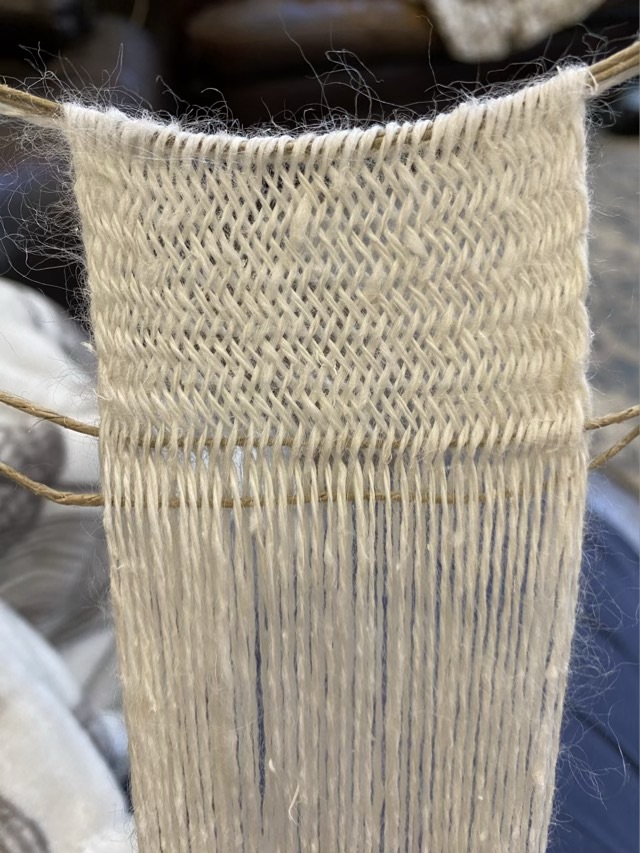
Photo description: sprang sample off the loom showing the threads going diagonally (wonky middle makes me unhappy)

Upon closer inspection, I had done a twill (over two, under two) weave at a diagonal. I’m not sure if this is the intended result, or I somehow missed something in the instructions. It is an interesting effect, and one that might work for a different project. The fabric certainly doesn’t curl.

Photo description: close up picture of the interlaced horizonal rib sprang at a 45 degree angle from the warp angle.

RIP Magic

I have been expecting Magic the hen to shuffle off this mortal coil for probably around two years. She would injure her leg and not be able to get up on the roost, loose weight because it was hard to get around, heal because she had taken weight off the injury, then fatten up again. She repeated the cycle probably a dozen times over those two years. She was the head of the Faverolles, and the most vocal for treats when she was feeling well. She passed away while we were traveling and our friend watching the animals was faced with dealing with her body (they did great). Because of course she would go when I wasn’t there.

Photo description: night time in the coop, four hens on the roost, Magic the hen on the pine shaving floor

We are down to five hens: three Faverolles and two Black Stars.

Unexpected spiral

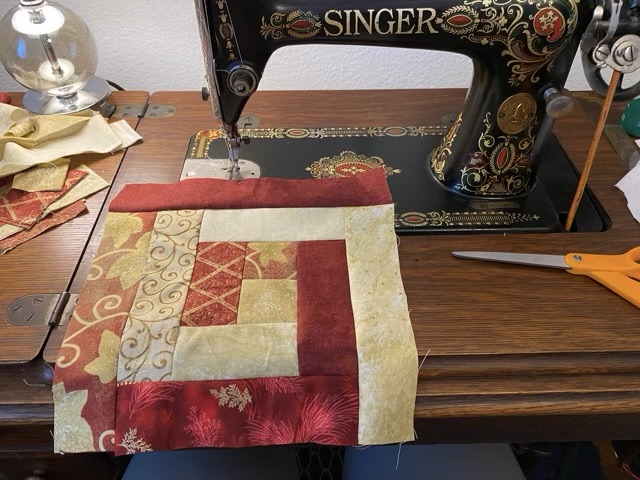
For the Sunday drive of my Singer 66 treadle machine, I’m continuing to sew quilting scraps together. Sewing regularly with the antique machine keeps all the parts running smoothly. I’ve started in on log cabin patterns: starting with a short piece and adding on longer and longer strips. I was distracted by something during sewing (not unusual), and messed up my intended pattern. I soldiered on anyway, and at the end was a little surprised that I ended up with a spiral pattern with the cream and red fabrics. Huh. Going to save this one, and try for it intentionally next time.

Photo description: Singer model 66 treadle machine with a red and cream quilt block that has a spiral pattern.

I noticed as I posted that the colors of the fabric also coordinate with the sewing machine. Who even am I?

Orchid mount

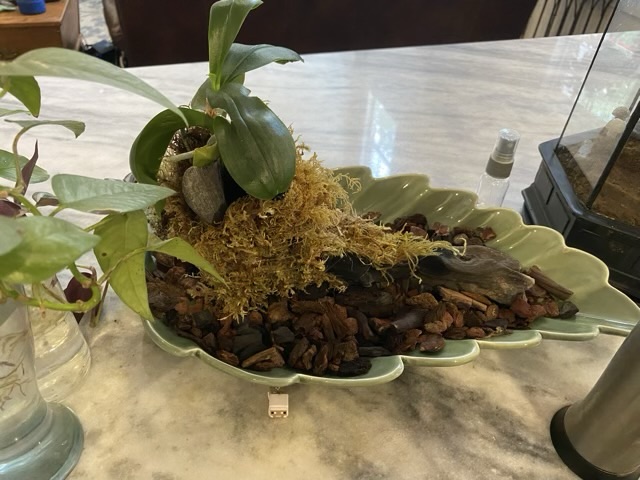
My orchid count has doubled. I purchased a jewel orchid for my terrarium, and now I have a full size orchid from family. I’m rather fascinated with mounted orchids, despite the daily misting requirements, so I took a piece of lake drift wood that I collected years ago, placed the orchid, and wrapped the roots lightly with sphagnum moss. I secured the whole thing, until the orchid can establish contact, with fishing line wrapped gently around. To catch overspray, I put the mounted orchid in a leaf dish filled with orchid mix.

Photo description: orchid on its new mount with sphagnum moss to help keep the roots moist
Photo description: opposite side of the orchid setup

The center leaf has continued to grow, so I’m hoping the orchid continues to enjoy its new habitat.