
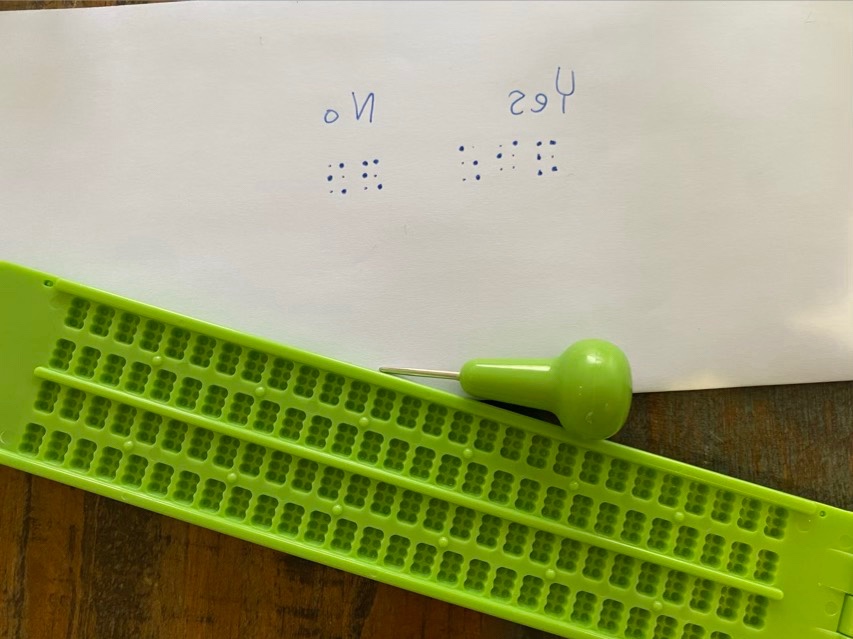
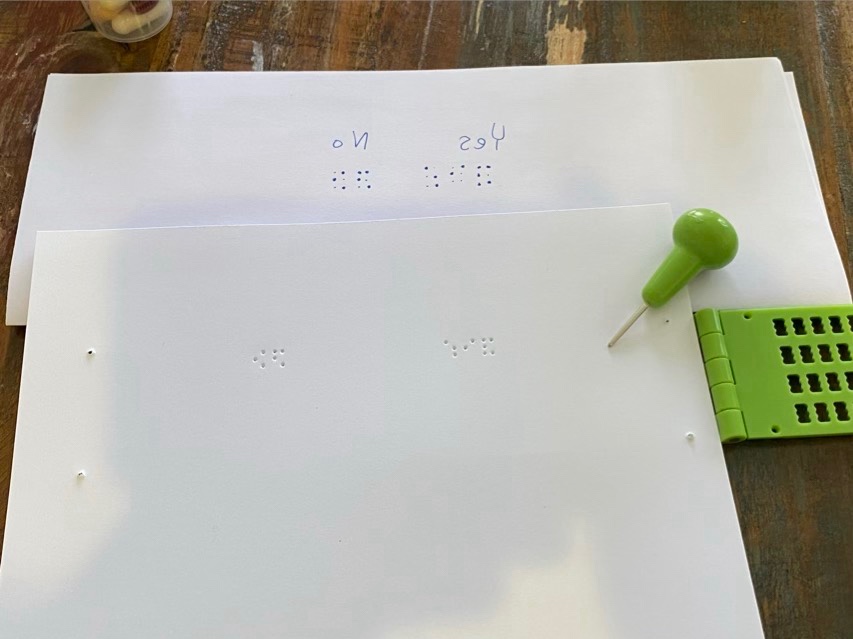
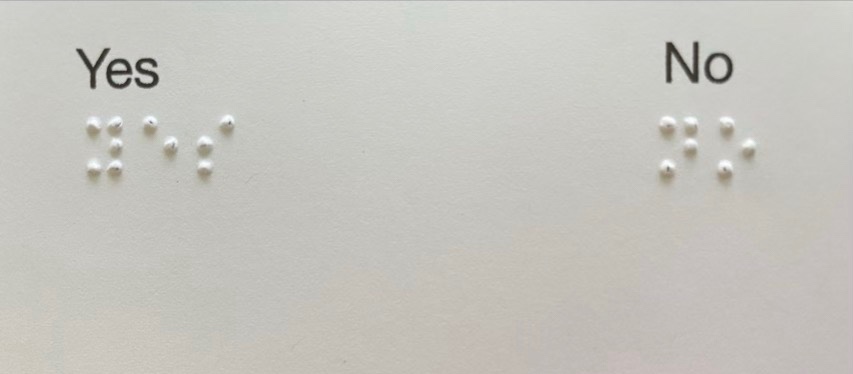
Our chorus was taking a private paper vote and we have a member who reads braille. Making the ballots inclusive was important to me and appreciated by her, and it only took a 15 minutes. I found a braille slate on Amazon, which is a small frame and stylus that makes it easy to get the right spacing for the braille dots. The frame is inexpensive, so I didn’t need to invest in a Braille Writer, which would be good for larger projects. The trickiest part is forming the letters, called cells, backwards. I printed the ballots on card stock because the thicker paper holds the embossed braille better, then used the braille slate to mark “yes” and “no” on each ballot so they were all the same. The ballot was read out loud to all members, then we all marked our ballots with pencil.
My message here is that often small changes in the way we do things can make big differences in creating inclusive environments. Could she have orally given her vote? Yes, but it wouldn’t have the same feeling of privacy the other members have. Another option to a paper vote would be that we all could have sent in our votes electronically before the meeting instead. There are many different approaches to solving problems, and it usually only takes a little thought and consideration to make processes accessible and inclusive.
 Critters and Craft