
To finish spun flax yarn, also known as linen yarn, author Stephanie Gaustad recommends simmering it for 30-45 minutes in a solution of soap and washing soda. I admit I have been avoiding this step for awhile. The treatment of plant fibers is very different than the handling of animal fibers, particularly those that felt easily. I admit apprehension. I finally did take the time to do the finishing step, and my yarn changed color. What?
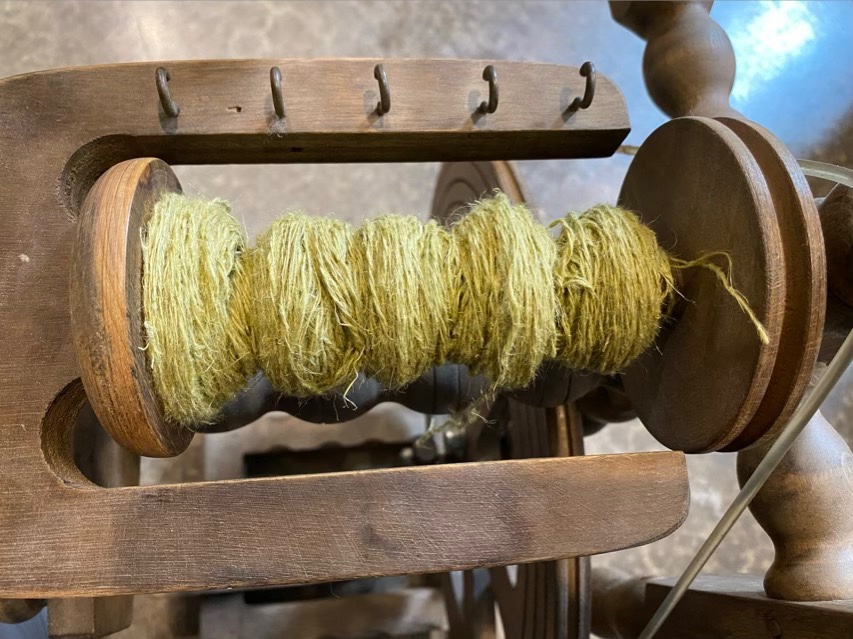
My flax roving was from a questionable online purchase. Very little information was supplied, when I received it, it was confusingly labeled both “flax” and “nettle”, and I learned later that roving is an unusual preparation for flax, usually made of the combed discards from making the long staple length flax preparation (called a strick). Definitely a flax rookie purchase. Still, I was able to spin it after much trial and error, and ply it using my spinning wheel.
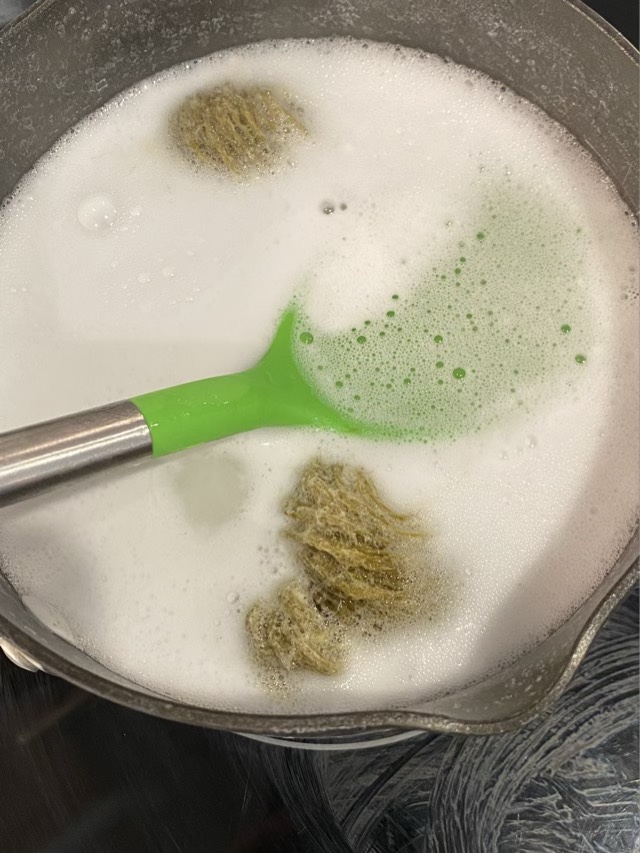
I started the finishing process and as it progressed the greenish yellow color of the yarn turned dark.
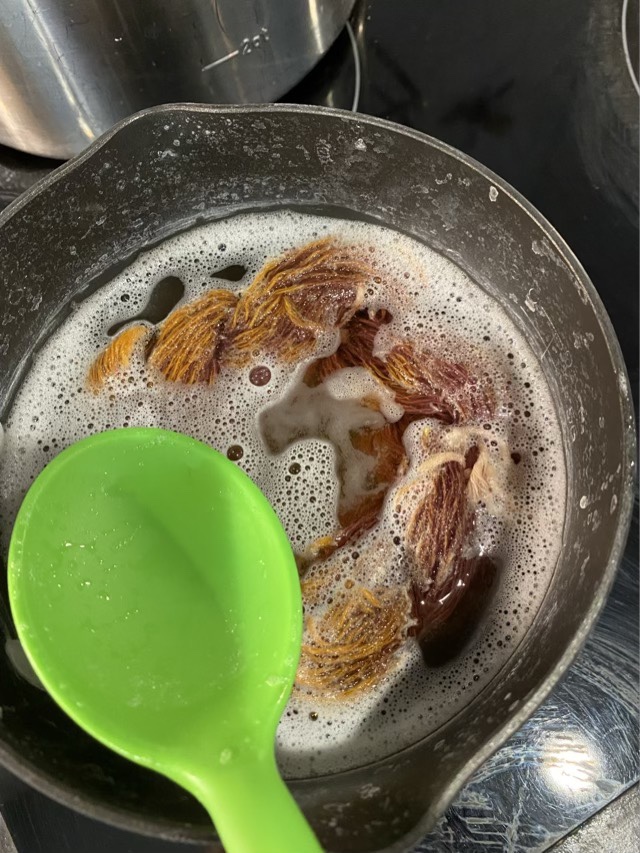

After the full boil, my yarn was purple. What? Another rookie learning opportunity. Nettle can be used as a dye, and iron is used by dyers to modify dye colors. I used water from the tap to do my boil, which comes from our well, which definitely contains iron. Hm. I had yet another surprise coming, though.

After I rinsed and squeezed out the excess water, I hung the yarn up to dry. It turned orange. Really? Really.
There are many lessons learned here. Flax roving is a difficult thing to spin, but possible. Nettle can be used as a dye as well as a fiber source, and natural dyes are sensitive to mineral content in water. I can tell you that I won’t be spinning flax roving again, although I do want to try a traditional preparation. I have never been a fan of dye, and would rather work with natural colors. I like color, but I don’t like color change and color bleed. Dying is a fiddly chemical process.
The next step for this yarn is making sample swatches for my spinning book. All this lovely gained knowledge carefully documented and preserved so I don’t make the same choices again.
 Critters and Craft