I couldn’t take it. Looking at the crocheted Wisteria wreath every time I opened the front door, I couldn’t take the tri-colored “blooms”. I made more light purple elements and replaced the multi-colored ones.
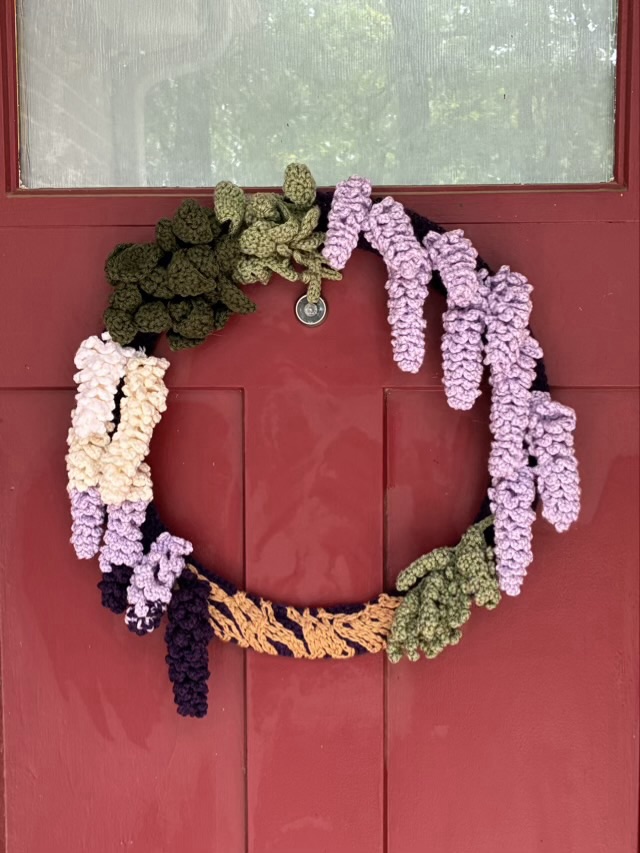
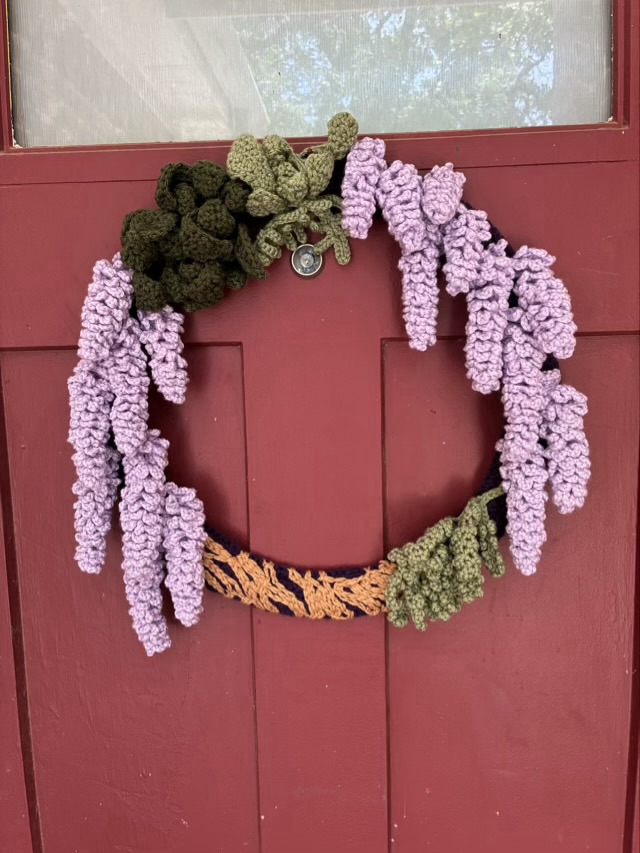
Now to see how it weathers.

I couldn’t take it. Looking at the crocheted Wisteria wreath every time I opened the front door, I couldn’t take the tri-colored “blooms”. I made more light purple elements and replaced the multi-colored ones.
Now to see how it weathers.
It might be easier to secure the elements of my Spring crochet wreath if I had a solid foundation to sew to, so I crocheted a cover onto a wire wreath frame. I started with a single crochet all along the outer edge.
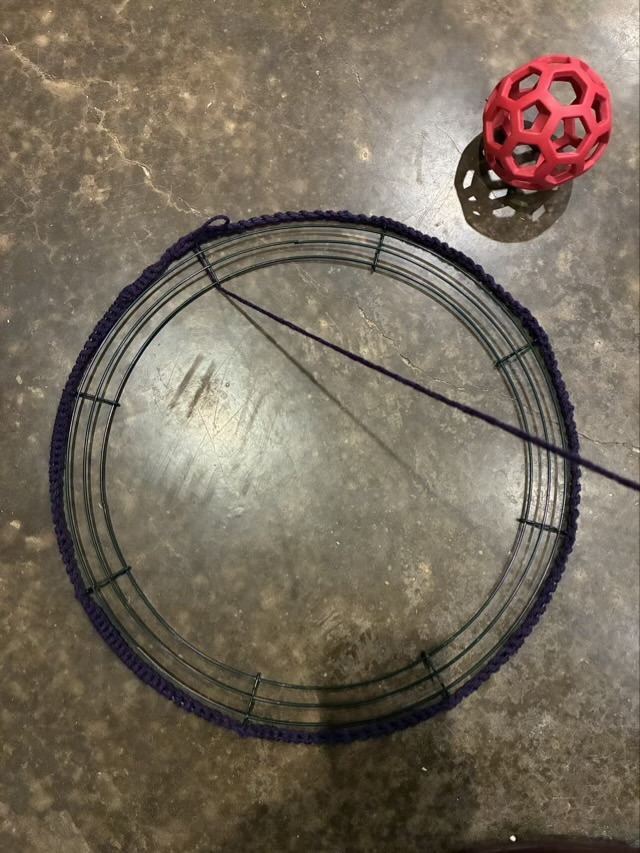
I added rows of double crochet around the frame, using decreases every fifth or sixth stitch to adjust the fit. To finish, I did another row of single crochet to the inside wire. Here is a video short demonstrating the technique.
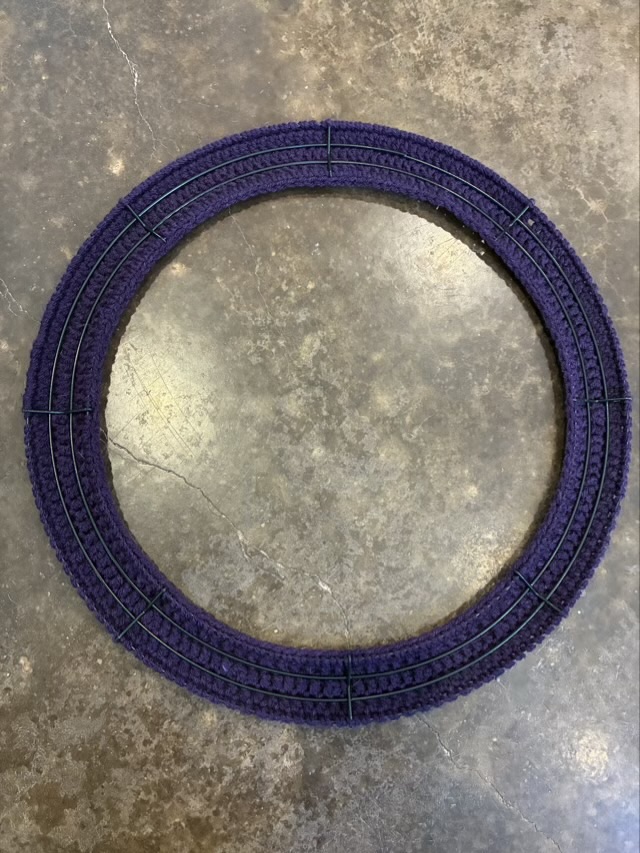
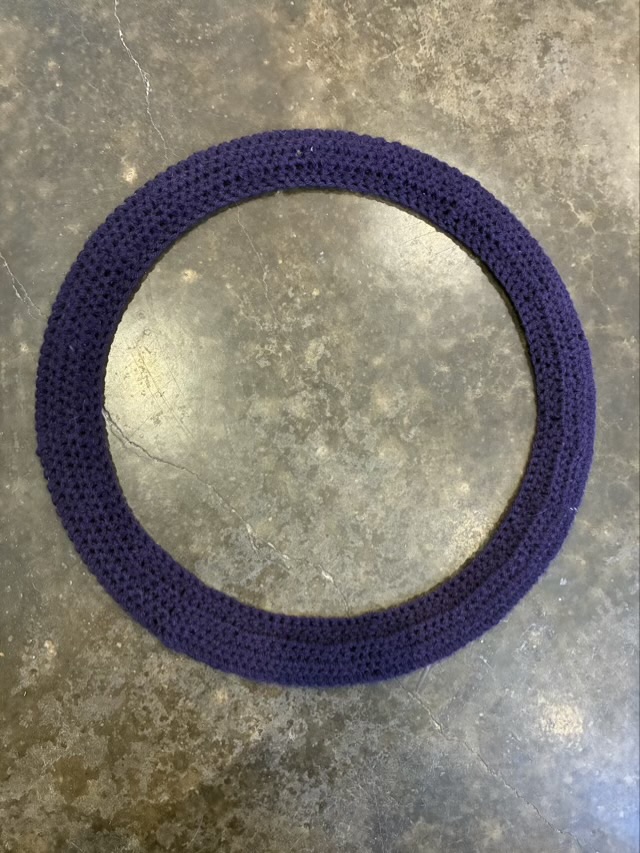
Now I will have more options when securing my botanical elements to the frame.
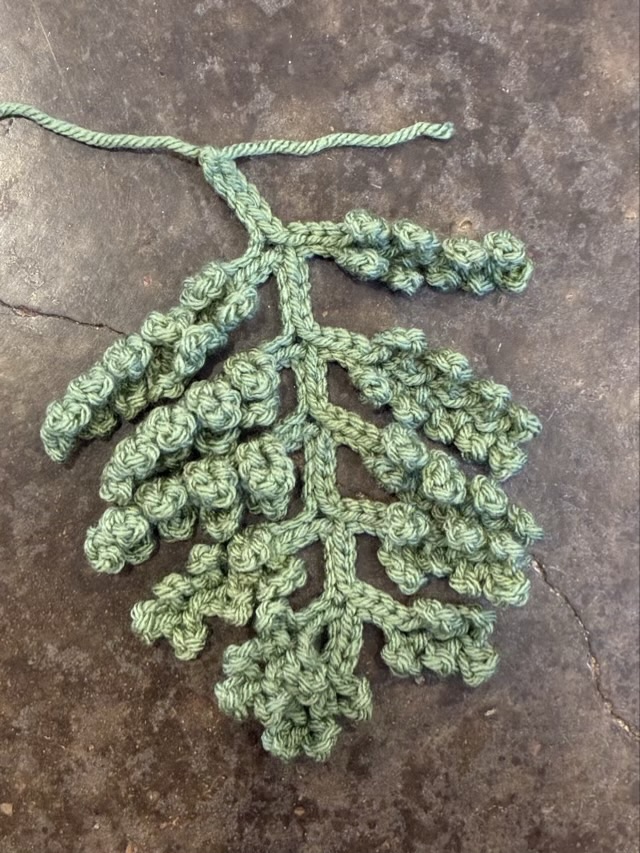
It is amazing what can be made with just chains and slip stitches in different combinations. The foliage below is made by chaining, then folding the chain back on its self and securing with a slip stitch to make a loop. Combine several loops into clusters and make stems by slip stitching along a chain, and it makes an interesting botanical shape.
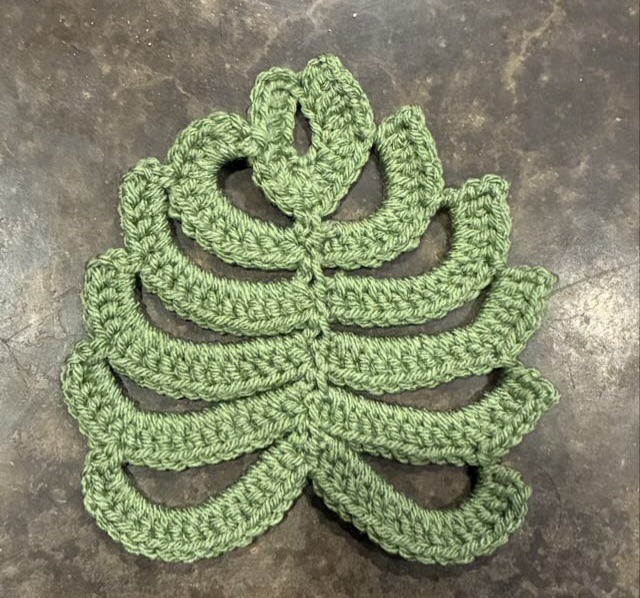
I followed a chart for a Monstera leaf that uses crocheted chains, slip stitches, and double crochet. The leaf looks complicated, but it is a simple concept: make a chain, slip stitch into the center, make another chain, slip stitch into the previous rib, then turn and double crochet back to the start.
I don’t really like that there isn’t much to the center of the leaf. I’ll have to come up with my own pattern.
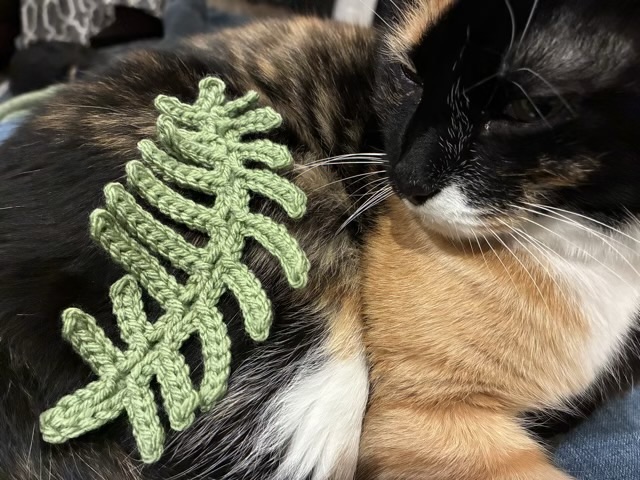
I’m not sure what to call this crocheted foliage element, but at least it looks botanical. It uses only chain stitches and slip stitches to work the stems and branches: chain out, slip stitches back. There is quite a lot of potential in this simple stitch combination.

