In February 2015 I finished a crochet project for my Dad that has a basket weave looking texture for a hat and scarf.
Photo description: black scarf and hat crocheted with black wool yarn
The technique uses front post and back post double crochet stitches in sets of three. It is actually an easy texture to achieve, but I recommend not using black yarn while trying to learn to count the stitches and rows. Also, size up any wool hats, as wear causes light felting, which shrinks the hat.
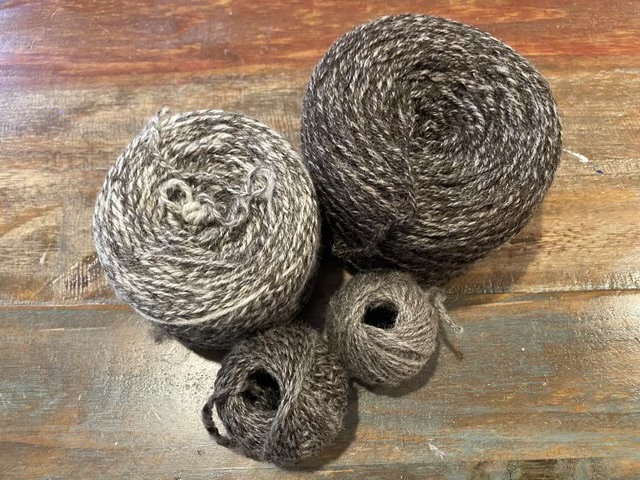
I’ve wound my handspun 3-ply Jacob’s wool yarn into center pull balls. But how much do I really have?
Photo description: two cakes of yarn and two center pull balls of yarn in different shades
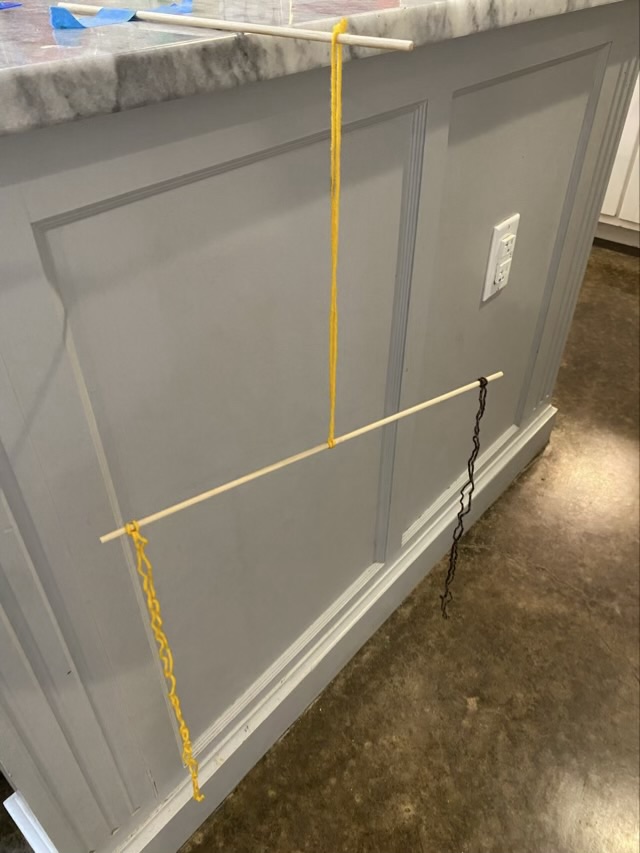
Hand woven magazine published an article about yarn balances. I followed their instructions to make a balance and used acrylic yarn of a known weight per yard.
Photo description: yarn balance with known acrylic yarn on the left and unknown yarn on the right
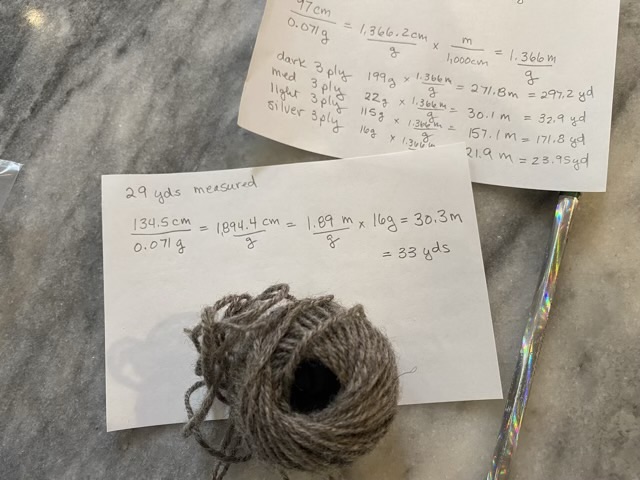
Because of my scientific background, I have to do my math by using the factor-label method (here is an explanatory video). I know that the yarn on the left is 142 grams per 241 meters, so my 120 cm weighs 0.071g, a weight I would not be able to measure with a kitchen scale. My hand-spun yarn that balances measures 97 cm. I now have the weight per length and can calculate yardage. (Oh yes, I completely mix my metric and standard measurements, but as long as all the labels cancel properly, we’re golden.)
Photo description: scratch pad with hand written yarn math for all four shades of yarn
To see how accurate the calculations are, I measured the lightest ball of yarn by laying out a yard with tape on a counter. I measured 29 yards. I put a section of the yarn on the balance, did my calculations and predicted 33 yards. This is a 12% difference in weight, which I find an acceptable margin for error. When planning a pattern, you should have at least 10% more yarn than what is called for. In the case of my hand spun yarn, I will pick a pattern that needs at least 12% less than 530 yards I have.
Photo description: silver ball of yarn with scrap paper hand written math
This was an interesting exercise, and confirmed what I felt when looking at the yarn: it isn’t enough to make a vest. It may be enough the make a hat or two.
I cast on a new pair of socks the day after I finished the previous pair (that took me 13 months to knit). This time, though, I’m using self striping yarn, and an after thought heel to minimize fuss. I knit the toes individually with a solid color yarn, then I set them up on two circular needles and joined in the self striping yarn. Now all I have to do is knit, well, and some purls since I want some ribbing on the arch and top. When I get to the heel, I’ll knit in a piece of scrap yarn, then finish the sock. The heels will be last and knit individually.
Photo description: two striped purple socks partially knitted on two circular needles
I’m already making better progress, and I avoid the project less (although I’m not completely all in, I do have a few other projects in process.)
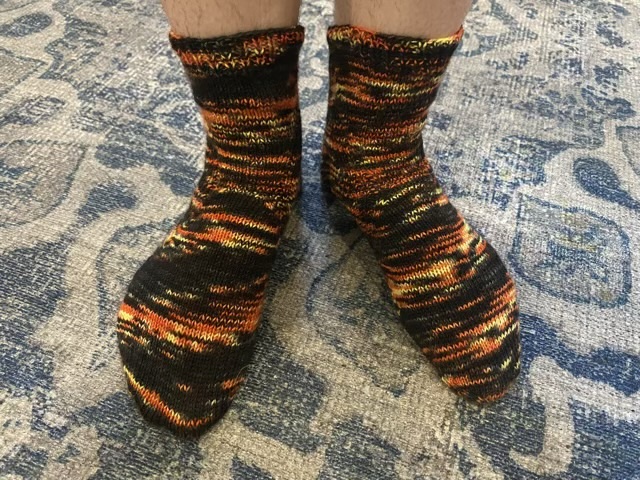
I cast these socks on in April, 2024. I called them finished 13 months later. My eldest graciously said they could end below the calf (phew).
Photo description: crew length black, orange, and yellow hand knit socks shown on feet
The Singularity pattern by Jeny Staiman is amazing. The instructions laid out in a spreadsheet format are so much easier to follow and mark off than traditional written instructions. The pattern itself is elegant. My issue was personal: I chose mostly black yarn, knitted with black needles, and am not a fan of following a pattern line by line. I would rather have a general idea and knit for many rows, or maybe have a repeating pattern that I can memorize. It is a shame that the yarn also doesn’t show off the pattern. You can’t see the beautiful sweep and contours created by all those paired increases and decreases.
I have cast on a new pair of socks using a different sock method. This set shouldn’t take me over a year to finish (fingers crossed, but not while knitting.)
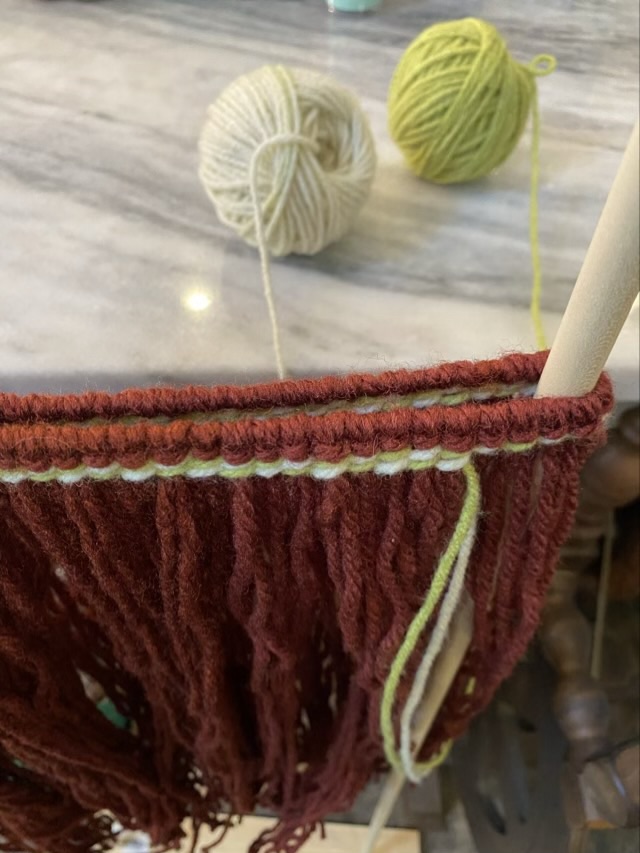
I finally made myself a twining loom, after returning my neighbor’s to her. I tried other shorter methods, but having the warp hang freely makes it so much easier to twine.
Photo description: bag twining loom made from 1×4” boards and two 7/16”dowels
The boards were in my scrap pile and 18.5” long. I used my band saw to cut one board down to 1.3”, then clamped them together and drilled seven 7/16” holes, four on one side, three on the other so I could always tell how the boards line up. The wider board on the bottom gives stability. The multiple holes give me options on bag width. Ironically, the dowels have a slight bend, and line up with nonparallel holes. Hm.
Photo description: twining two colors around free hanging warp threads in twos
My eldest gifted me some pretty green wool blend yarn for Mother’s Day, so I thought it best to make something for myself. I can never have too many project bags, and I like twining, so I just needed a loom. I had some synthetic rug yarn in my stash that was a pretty rich brown, so I used that for the warp to maximize the variegated green yarn available for the twined weft.
This will not be a quick project, but it will still be an enjoyable one.





 Critters and Craft