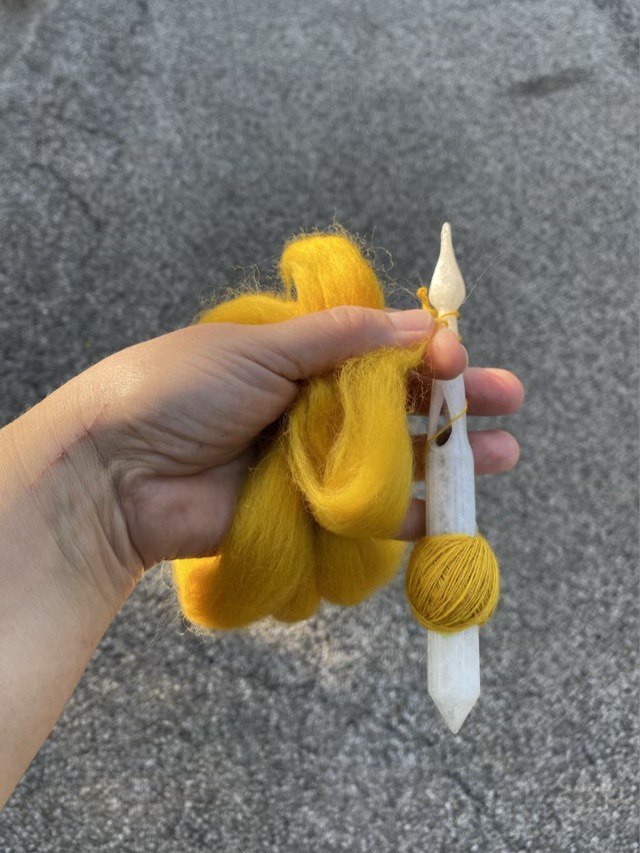
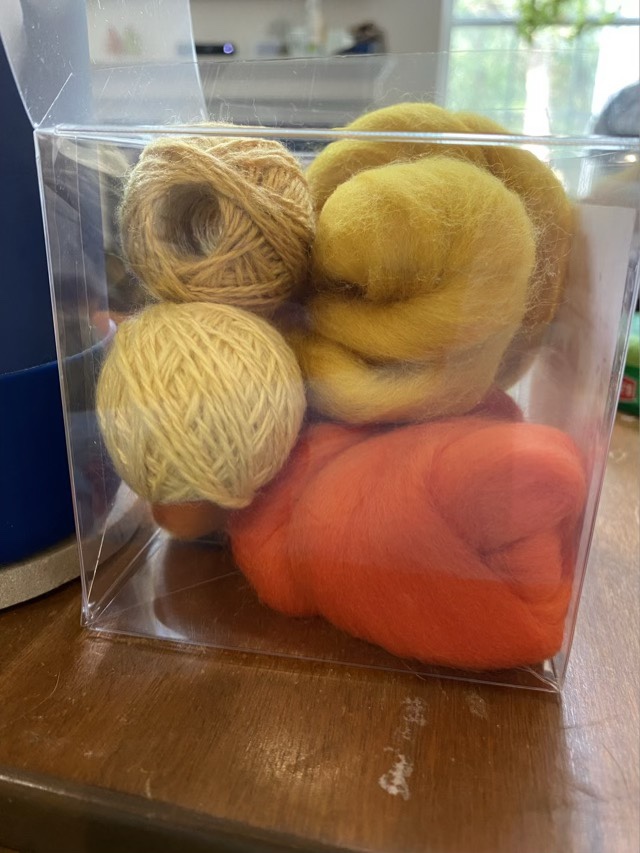
My youngest gave me a box of yellow to orange dyed merino wool and I decided to spin it up separately rather than blend it (so many choices with these bundles of colors!)
Spinning during a walk
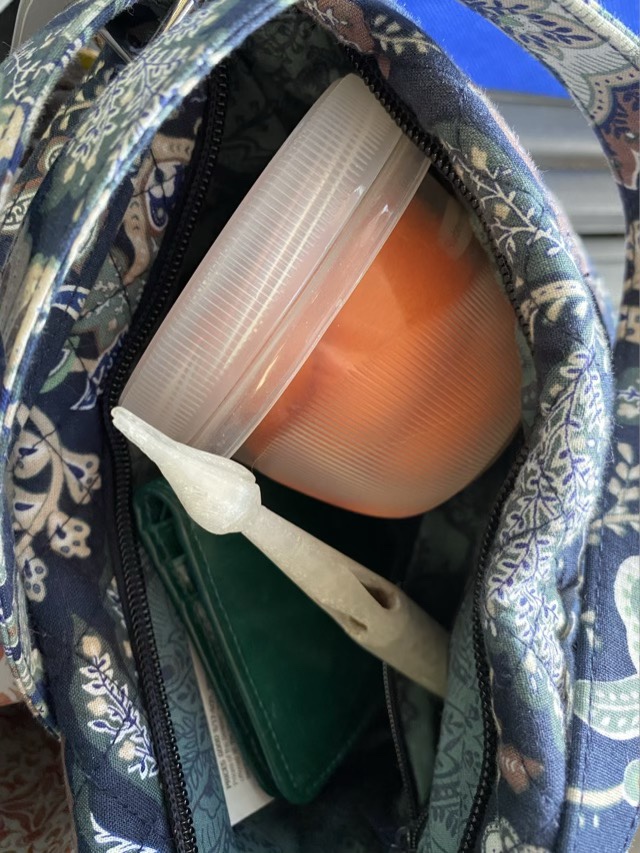
I like the small bundles of wool because they transport easily; I can walk with the roving loosely around my fiber hand, or I can pop the fiber into a container in my purse so I can spin while waiting.
Fiber and spindle stash in my purseSpun and unspun Merino wool
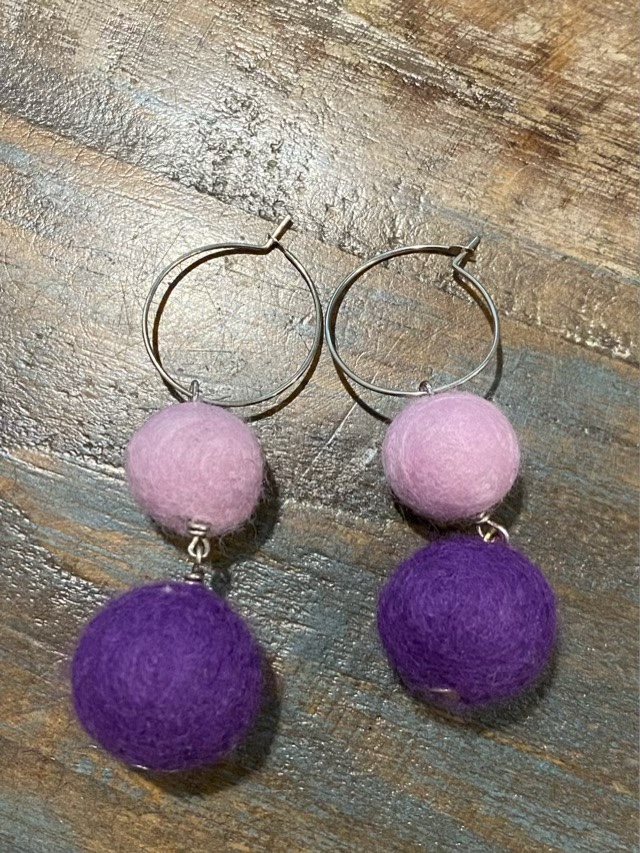
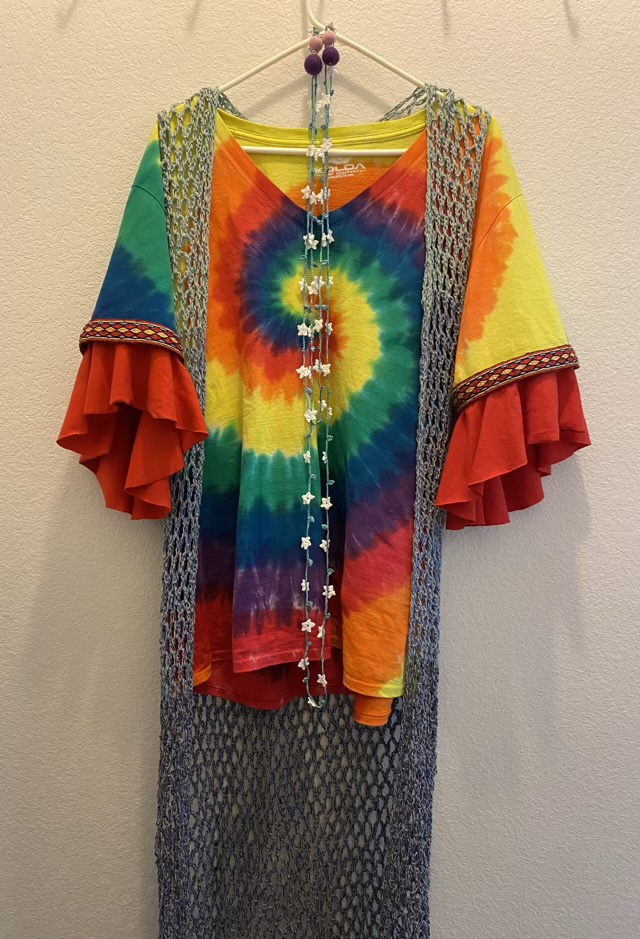
I put together a 60s themed outfit with a nod to the fiber arts. I crocheted a duster vest and flower garland, wove a band and added bell sleeves to a tie-dyed t-shirt (I did not dye the shirt, dye and I are still not on speaking terms), and assembled some felted wool ball earrings! (My mom made and gave me the felted beads.)
Bell sleeves made from t-shirt materialFelted ball earrings60s Outfit (minus bell-bottom jeans)
When I do bell sleeves next, I will make them longer and without the off-set center hole. These look great on the hanger, but were awkward when worn, except when doing jazz hands, then they worked. Since I can’t do jazz hands all the time (although that would be quite the arm workout), I picked out the seams for the added sleeves after the debut. I can see peasant blouses with woven trim and bell sleeves on my crafting horizon.
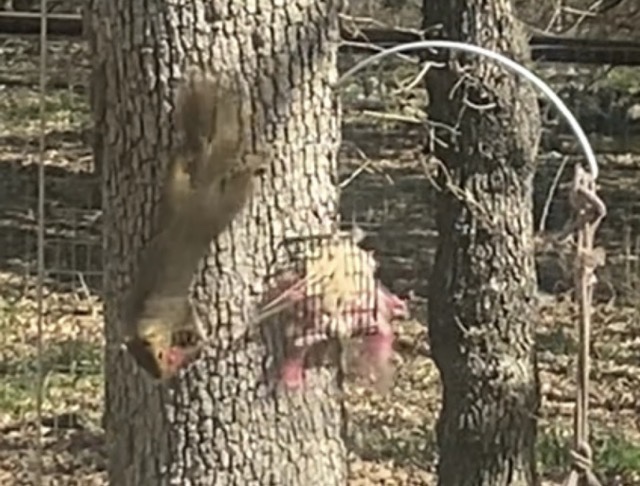
The suet cages I filled with scraps of wool are getting some attention. I caught one of the local squirrels gathering up the fiber and managed to record some video.
Video still of a squirrel wool gathering
Squirrels have kits twice a year, so I imagine this is Momma squirrel lining her nest for the impending babies. Or maybe a secondary nest construction, I’ve read squirrels can built multiple nests. Either way , I’m glad the unspun fiber is an approved squirrel material.
I came across this wool processing video that is amazing. Good information, spectacular animation, and brief. Produced by the The Woolmark Company, it is worth the three minutes to watch.
Mechanical wool drawing, photo credit to The Woolmark CompanyBest illustration of worsted (left) versus woolen (right) yarn I’ve ever seen, credit to The Woolmark Company
The third sample of gifted Rambouillet wool in my stash was raw fleece, which means it came straight off the sheep and had not been scoured to remove most of the lanolin.
Rambouillet raw fleece
I scoured the wool with Amway LOC (taking a risk because this is fine wool, but the other scouring soap is on my wish list) at about 125 degrees F, letting it soak for 15 minutes in the same temperature water so the lanolin doesn’t redeposit.
Scouring the wool (so much dirt!)Wool rinse (Look! The wool is white!)
I sacrificed my salad spinner to the cause. I haven’t used it for salad in over two years, and it does a lovely job getting most of the water out of the rinsed fleece.
Rinsed wool in a salad spinner
The fleece was dry in a few hours, and I was able to comb it in preparation for spinning. There is more waste when combing, but the waste contains the nepps and vegetable bits that are not desirable in spinning. I put the waste out in the compost bin.
I spun this on my 3D printed spindle, drop spindle style, as I walked the neighborhood. It is even more lovely to spin than the commercially prepared roving. I’m rather falling for Rambouillet.
Single spun Rambouillet woolTwo ply center pull ball of Rambouillet yarn pulled off my spindle (with Missy photobomb)