Inkle Loom part 1

I’ve been looking at Inkle looms on the internet since I made my first tablet woven strap. I was certain I could make one, but wasn’t sure if I would have the time. I found myself at the hardware store for sandpaper for a different project, so thought I would look around for Inkle loom parts. I walked out with a 1x12x24” poplar project board, 1/2” and 3/4” poplar dowels, a 6” carriage bolt, washers and wings nuts, oh, and the sandpaper.

Planning the design with pencil and string

I laid out the design by clasping the board between my knees and sketching with a pencil where the outer posts could go. I wanted a lap loom and thought it would be more stable with something to hold onto. I taped string where the warp threads would go to avoid interference between posts. Even though I intend on using it for tablet weaving, I included the heddle post in case I want to weave something that needs it. The outer edge I wanted to be wavy with an organic feel, rather than a straight lumber look.

Loom cut out

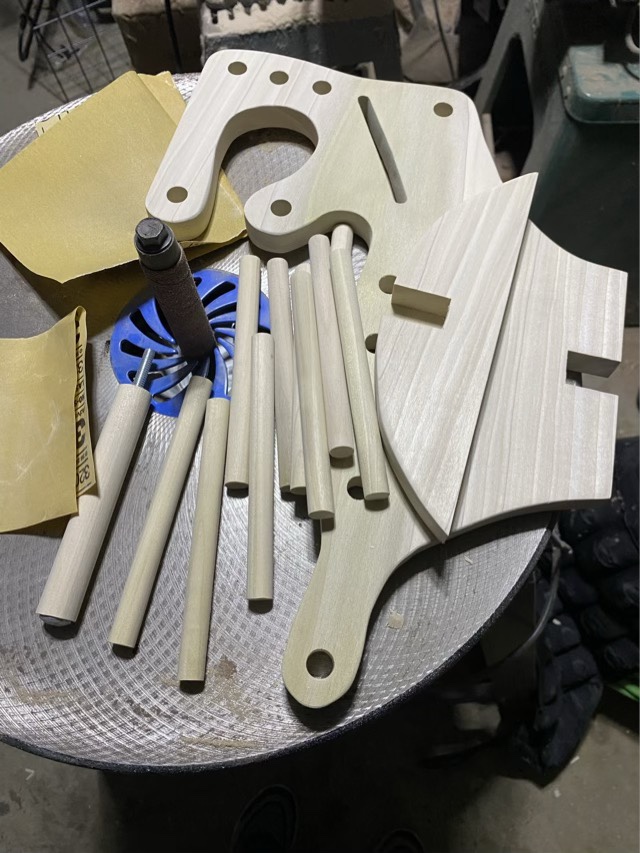
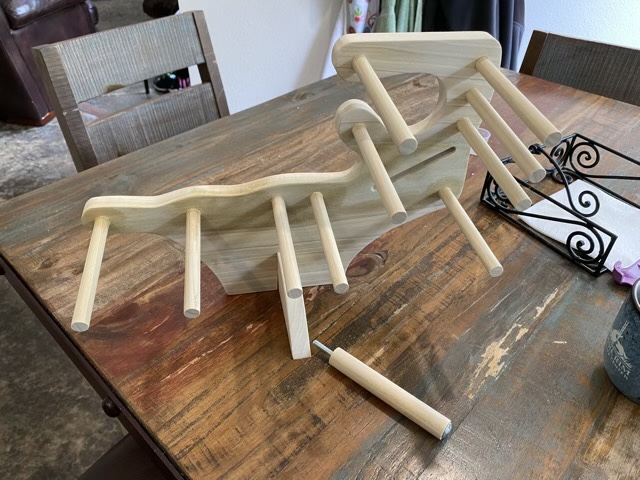
I cut the loom out using a bandsaw with a 1/4” blade. I made a base piece so I could stand the loom up on a table if I wished. I sanded all the edges with an orbital spindle sander to smooth out the saw blade cuts.

Holes drilled in the loom body

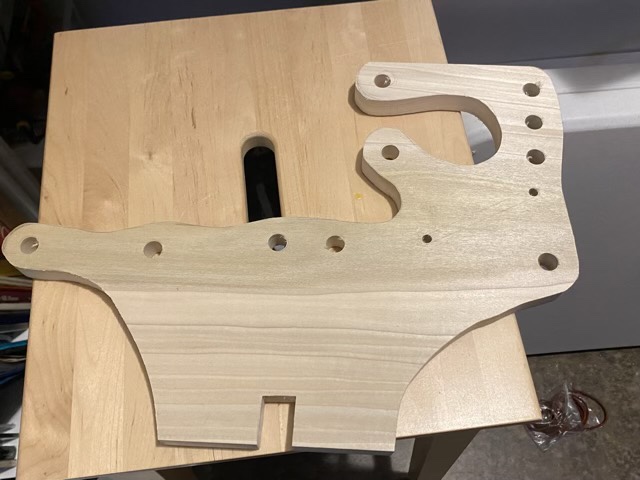
Using a drill press, I drilled 1/2” holes for the posts, and 1/4” starter holes for the slot for the tension post.

Sanding the tension slot

I cut the slot with a coping saw, but was conservative on the guidelines, and needed to do quite a bit of sanding so the carriage bolt would slide easily along the track. I rounded all the edges by hand with sandpaper as well.

To be continued.

Weights and measures

I put together seven top/bottom whorl spindles to sell at our local spinning/game store. I put the length and weight on each one on a custom stamped tag. I consider these student spindles, since the whorls are made from wooden toy wheels. I did shape the shaft with a notch on one end, and a reinforced hook at the other end, so they are fancier than the mass produced versions. Each spindle is also slightly different, which I think it good to appeal to different preferences.

Student spindles, weighed and measured

Reinforcing

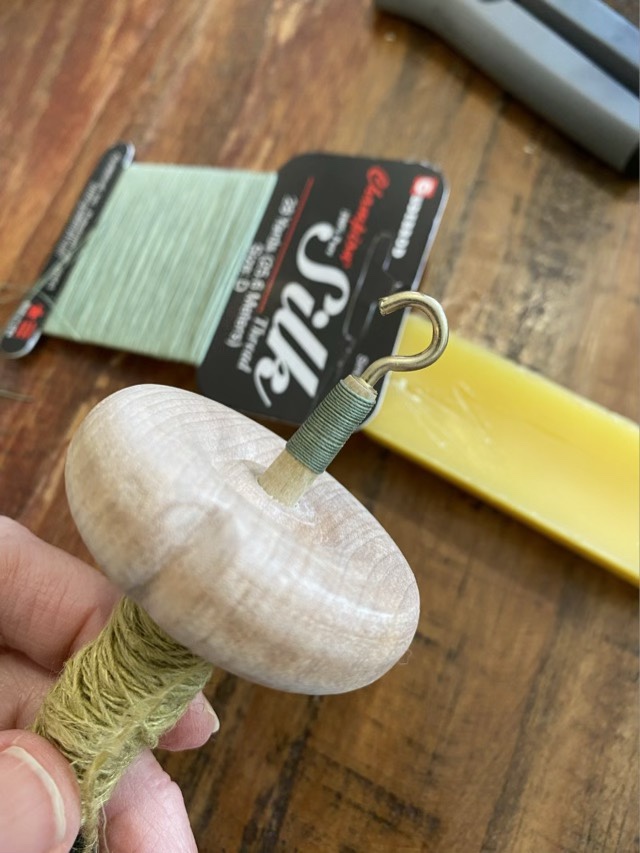
Spindles with hooks have a weak point where the hook screw connects with the wood, especially if the shaft is slender. I like slender shaft drop spindles because I feel I can control the spin better and the light weight is more comfortable. I don’t like when I drop it and the shaft cracks. To give the metal to wood join some reinforcements, I decided the wrap the weak area with waxed silk.

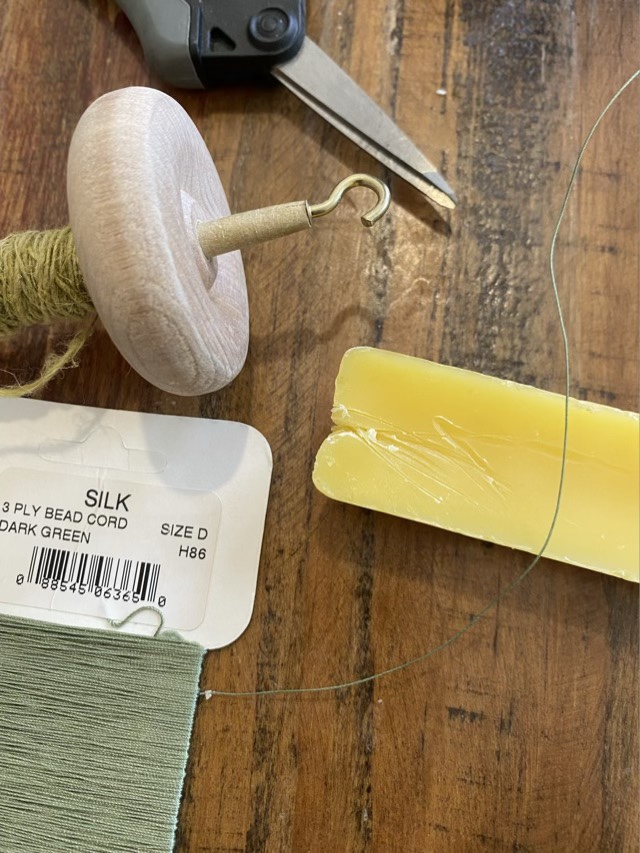
Clockwise: scissors, beeswax, silk cord size D, drop spindle

The method I used to wrap is called common whipping. Plugging those two words into your search engine will generate all sorts of illustrations and tutorials, as long as you get the words right. It took me an hour of searching to find the right words, I had a synonym of whipping in my head that I couldn’t dislodge. So, two words: “common whipping” are my gift to my readers today.

Common whipping on a drop spindle with waxed silk cord

I ran an arms span of the silk cord through my wax block three or four times to build up a layer of wax. The wax helps protect the cord and makes it stay in place better. I start my whipping with a loop laid along the shaft. I wrap toward the loop, run the end of the cord through the loop, then pull the loop end to draw the ends into the middle of the wrap. (This is where the internet search comes in handy if you are a visual learner.)

I used silk because I tried hemp and it wasn’t strong enough and the diameter made a wrap thicker than I wanted. Waxed linen is also commonly used, and is strong, but I didn’t have any on hand.

Antique spinning mule bobbin

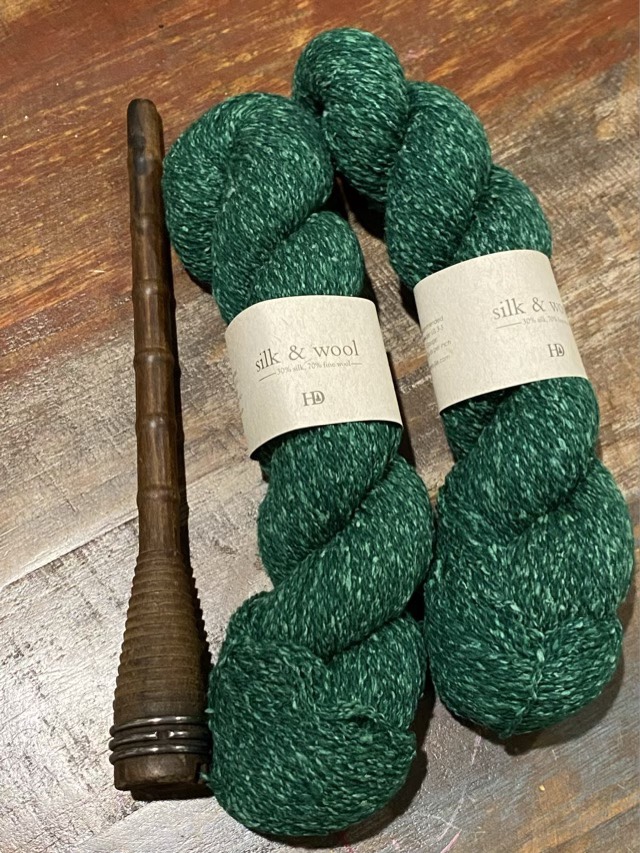
Harrisville Designs in New Hampshire has moved their machines back to the original factory floor in town, to strengthen the ties to the community, switch to renewable energy, and return the historic buildings to their original purpose. To celebrate, they offered customers a piece of history, an antique spinning mule bobbin, if you purchased a skein of yarn. I ordered yarn.

Antique maple spinning mule bobbin and new silk and wool yarn from Harrisville Designs

A spinning mule is a machine used to spin yarn on multiple bobbins as once. (Here is a place to get started on more information.) It drastically improved the amount of yarn that could be spun at one time and replaced the spinning wheel as the main production of yarn in the 1700s. This bobbin is between 50 and 100 years old. Fascinating. I can’t collect many antiques, I just don’t have the room, but this is small and will go with my hand spindles.

Finishing

I have a new rolling pin! After several coats of tung oil, my rolling pin is done. I will probably wait about a week to use it to make sure the tung oil is solid, but I’m very excited to get back to making sourdough discard crackers, and maybe some pie crusts.

Finished repaired rolling pin

I hope you enjoyed this series. I did draw it out quite a bit, but decided to run it sequentially, which I don’t normally do, so the thread is easier to follow for those that stumble across it later.

(Part 8 of 8 in this blog series)