
The Rose Top fiber sample was nice to spin, and working up the swatch projects was satisfying. Even though this fiber is produced in a similar way to Tencel, only using rose stems and leaves rather than wood pulp, I found this easier to handle.

The Rose Top fiber sample was nice to spin, and working up the swatch projects was satisfying. Even though this fiber is produced in a similar way to Tencel, only using rose stems and leaves rather than wood pulp, I found this easier to handle.
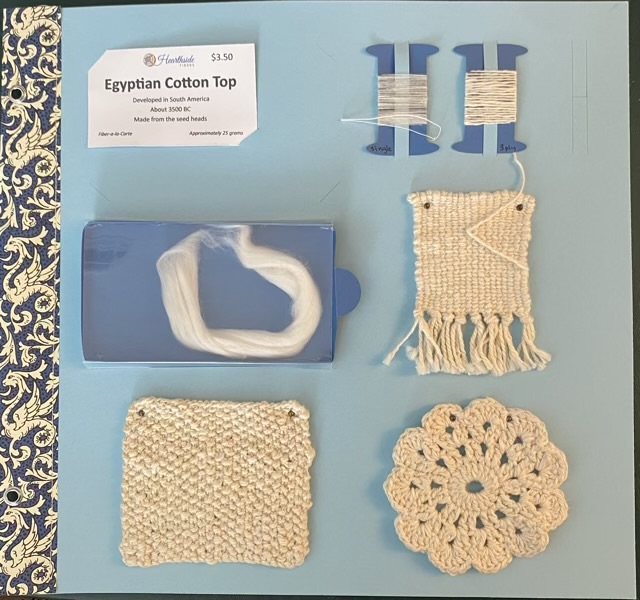
I spun this Egyptian cotton sample on an Ashford Traveller spinning wheel fitted with a high speed whorl. Egyptian cotton has a longer staple length so is less inclined to form pills. It was nice to spin and worked up into the swatches well.
I enjoy spinning cotton, but is definitely a sitting activity, either on a wheel, or with a tahkli spindle. I also avoid wearing black, as the small fibers accumulate everywhere.
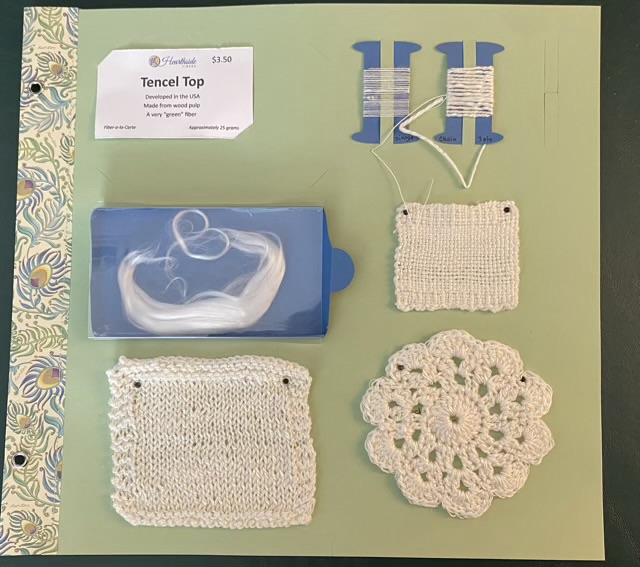
The next completed fiber study page is for Tencel. Tencel is made from wood pulp and the combed fiber is shiny and silky looking, but it is not easy to draft consistently. I want to like it because it is made from waste product, but it fought me when I was spinning. Maybe it would be better if it were blended with something. Blending fibers is another whole rabbit hole.
Despite the difficulties spinning, my swatches are more rectangular and less skewed than with other fibers. I block most of my swatches, but the Tencel really benefitted from being wet and reshaped.
I was struggling with the sides of my twined weaving coming in and not staying straight. My neighbor, who is an accomplished Cherokee weaver, and who taught me how to twine bags, suggested that I flip the work for each row. I had been working from just one side, going right to left, then left to right. For my rose fiber swatch I followed her advice.
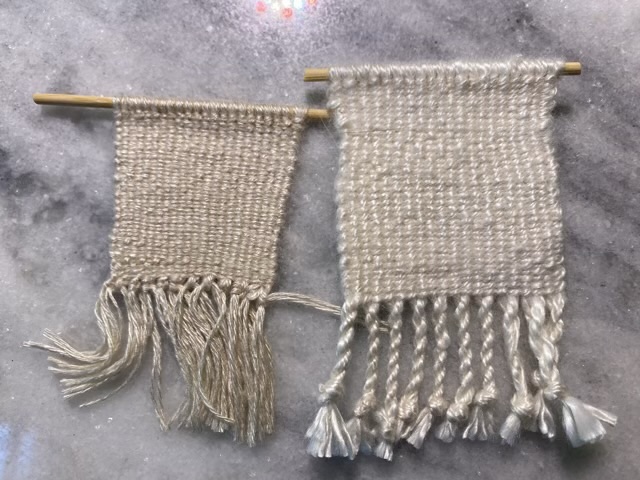
Flipping the fabric worked, the sides of my swatch are better than my previous attempts. They aren’t perfect, but my skills are improving. It is those little tips and insights that make learning from accomplished crafters so valuable. YouTube is great for general knowledge and diving down rabbit holes, but the knowledge we can gain when working with another crafter is invaluable.
My Mom requested a stretchy woven watch band. I took one of the plain purchased bands she had so I had the hardware, and I purchased colored shirring elastic thread. I set up a 22 card tablet weave on my Inkle Loom using a pattern I found on Pinterest. An interesting thing about tablet weaving patterns is that the result changes depending on how the cards are turned. It took me a little time to figure out how the pattern worked, so I decided to make four different patterns on the same band, then cut them later. I also had quite a shock when I removed the band from the loom and the elastic contracted, creating different issues.
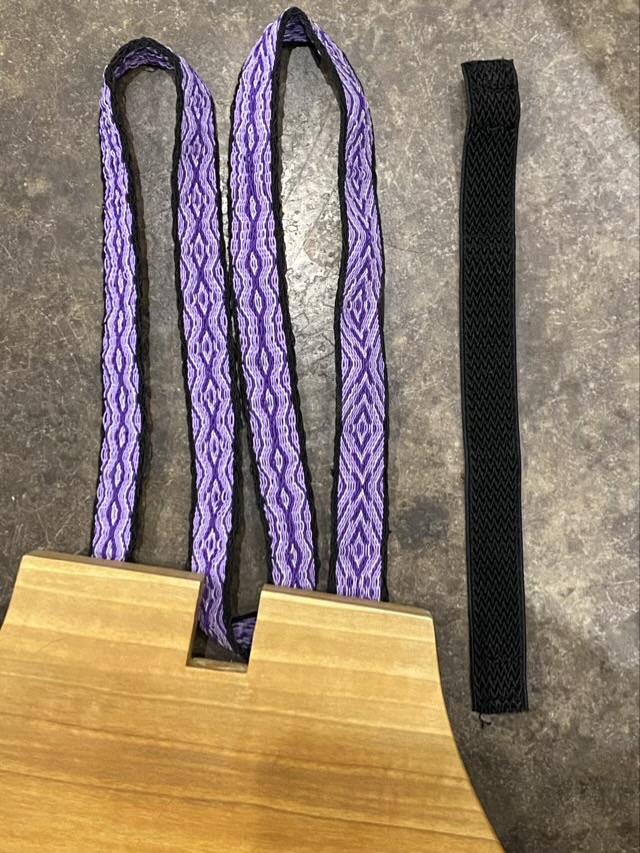
When I warped the loom, I didn’t pull the thread completely tight, it is quite elastic, but on hindsight could have loosened it up a little more. I did pull the weft thread taught. If someone is reading this to get hints on the how, I recommend trying a non elastic weft. On the final band three of the designs puckered strangely, one in the middle and the other two on the edges. I think this is due to the tension or uneven tension on the warp and the pattern. It was difficult to get an even pull on all 88 threads when it was so elastic.
I had at least one decent section, so the next quandary was how to cut it. Ideally, it needed to be cut and sealed to prevent the elastic from unraveling. I happen to have a laser cutter. I couple experiments with settings, and I was able to cut and, in the same process, seal the band.
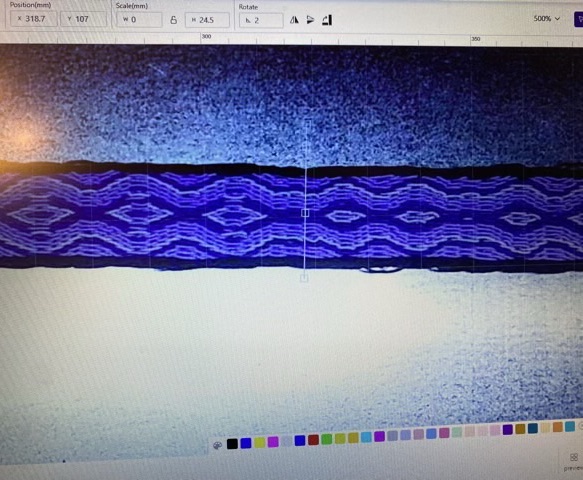
I put the band on a sheet of steel, and used high power and a slow speed to cut the band. It look a couple of experiments with settings to get a cut with minimal burn.

To protect the end while threading it through the hardware, I wrapped it in washi tape.

Sewing was a little challenging because of the thickness, but this little three-in-one sewing tool was a life saver.
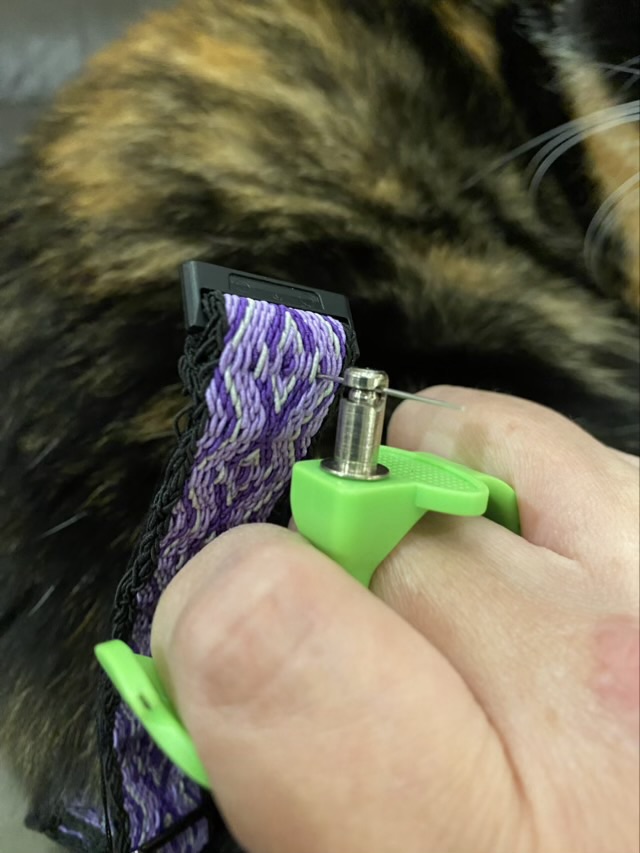

The most unfortunate part of the whole project is that I didn’t realize the slides on the ends have an up and down. I installed them both upside down. Nuts.
 Critters and Craft