Tapestry weaving bobbins

I have been weaving with my yarn tied into butterflies (not onto butterflies, which would be cruel and flappy, but the practice of looping yarn over two fingers and tying in the middle resembles a butterfly). They are easy to tie and require no additional equipment. For the most part the yarn management is easy, until near the end when you either have to retie the butterfly or deal with a long end. After looking through my book and magazine, I decided to make some tapestry weaving bobbins.

I chose mesquite because I had some scrap laying on my bench. I used the band saw to cut square dowels about 6 inches long and about 1/2 inch in diameter. The scrap from this looked useful, so I also made some small yarn shuttles.
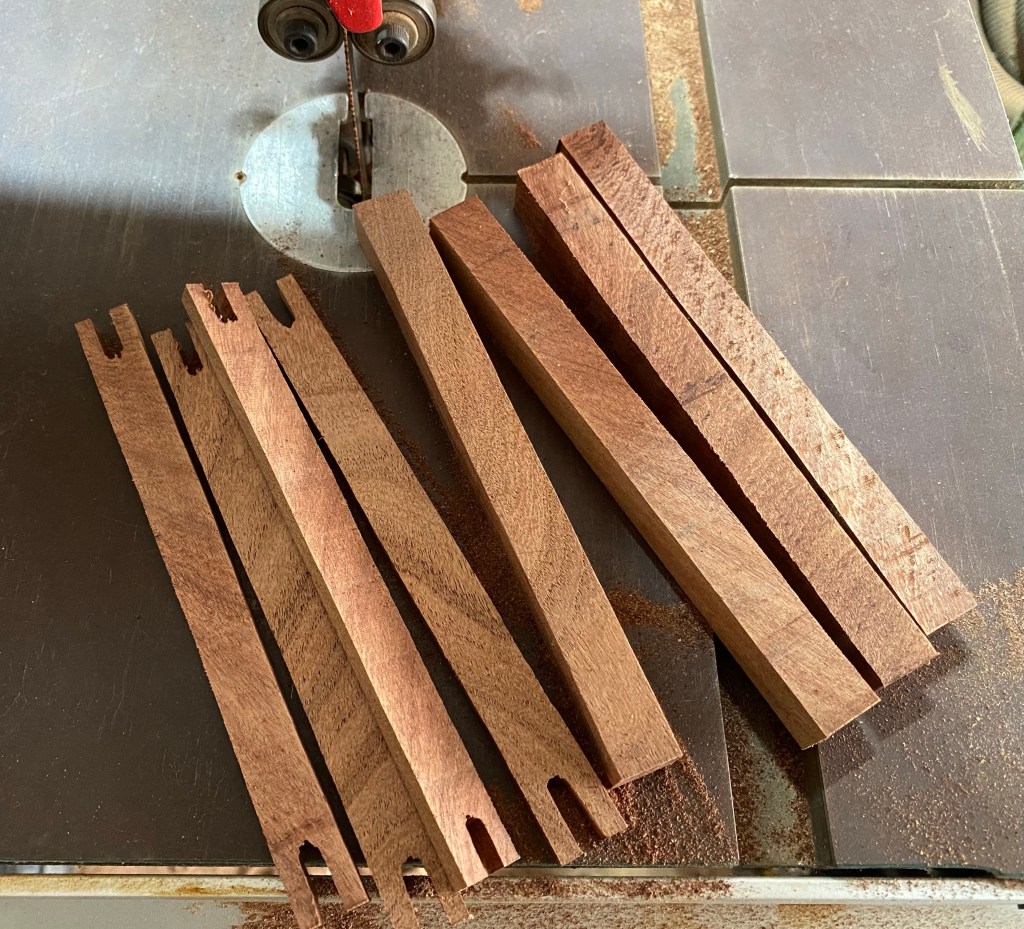
Mesquite cut into blanks on a band saw

Then I moved on to my band sander to shape the bobbins, and smooth the shuttles.
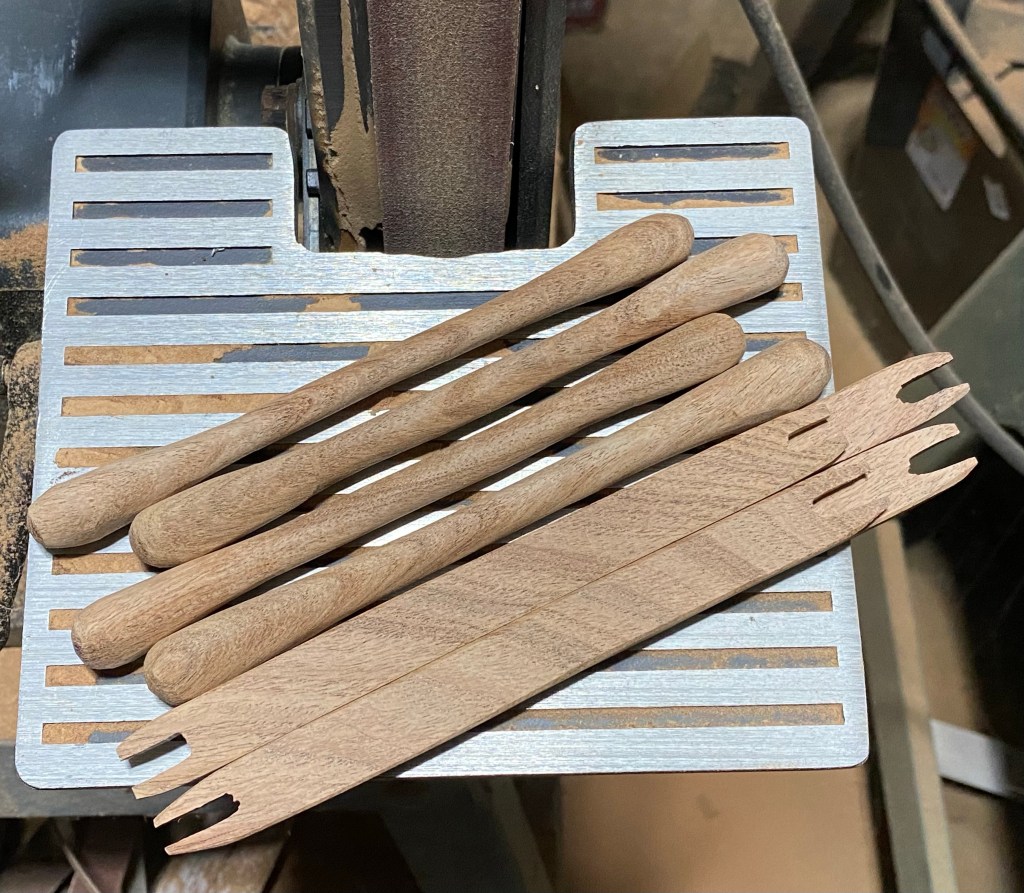
Bobbins and shuttles shaped with a band sander

After roughing in the shape, I hand sanded all the pieces down to 400 grit. I have not finished them yet, as I am not sure they are at their final size (and I really wanted to start using them, and not wait for tung oil to dry!)
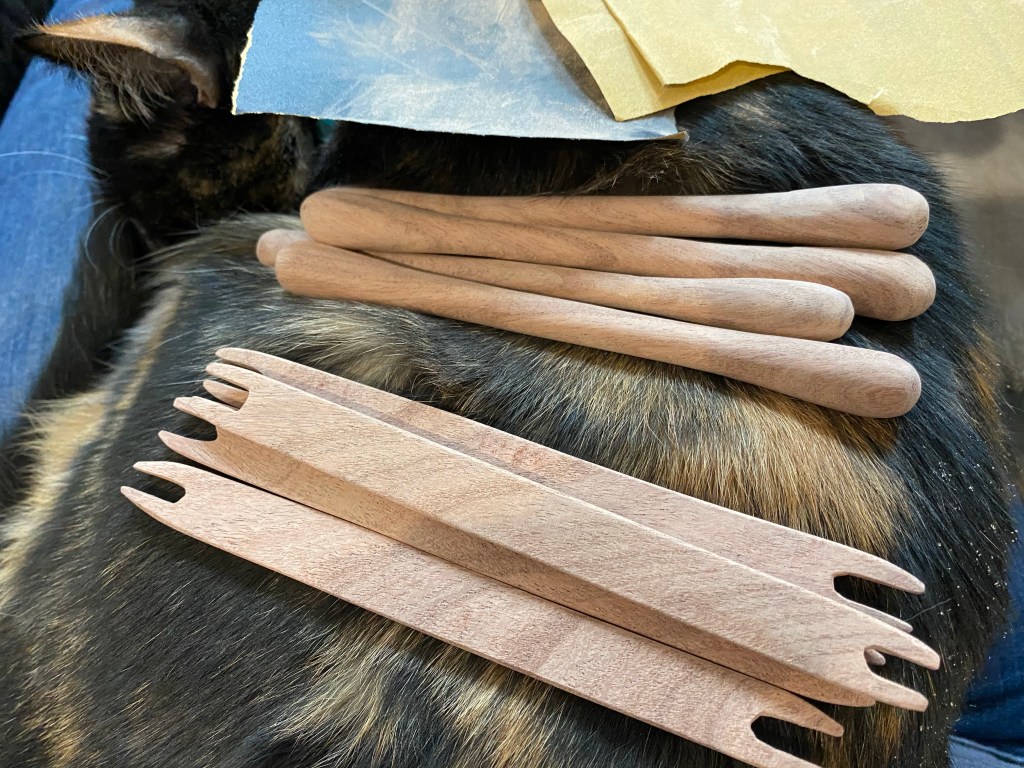
Hand sanded bobbins and shuttles and a cat who insisted in lap time even though I was sanding

I am pleased with the shape and feel of my bobbins. They could have been more regular if I turned them on a lathe, but I still haven’t secured my lathe in the rearranged garage, so this will do. Hand shaping has given them an organic feel, which is nice as well.

Interesting to note, I will have to be more careful when working with mesquite in the future. Like wearing a mask when I’m sanding, even if I only think it will take a few minutes (wear your dust mask kids!) After sanding I felt light headed, and the next day I had a headache. This is not my first wood sensitivity; I’m outright allergic to walnut and can’t work the wood at all. I did find a nifty chart with wood allergies and toxicity here (https://www.wood-database.com/wood-articles/wood-allergies-and-toxicity/), which lists Mesquite as sensitizing. So there you go.
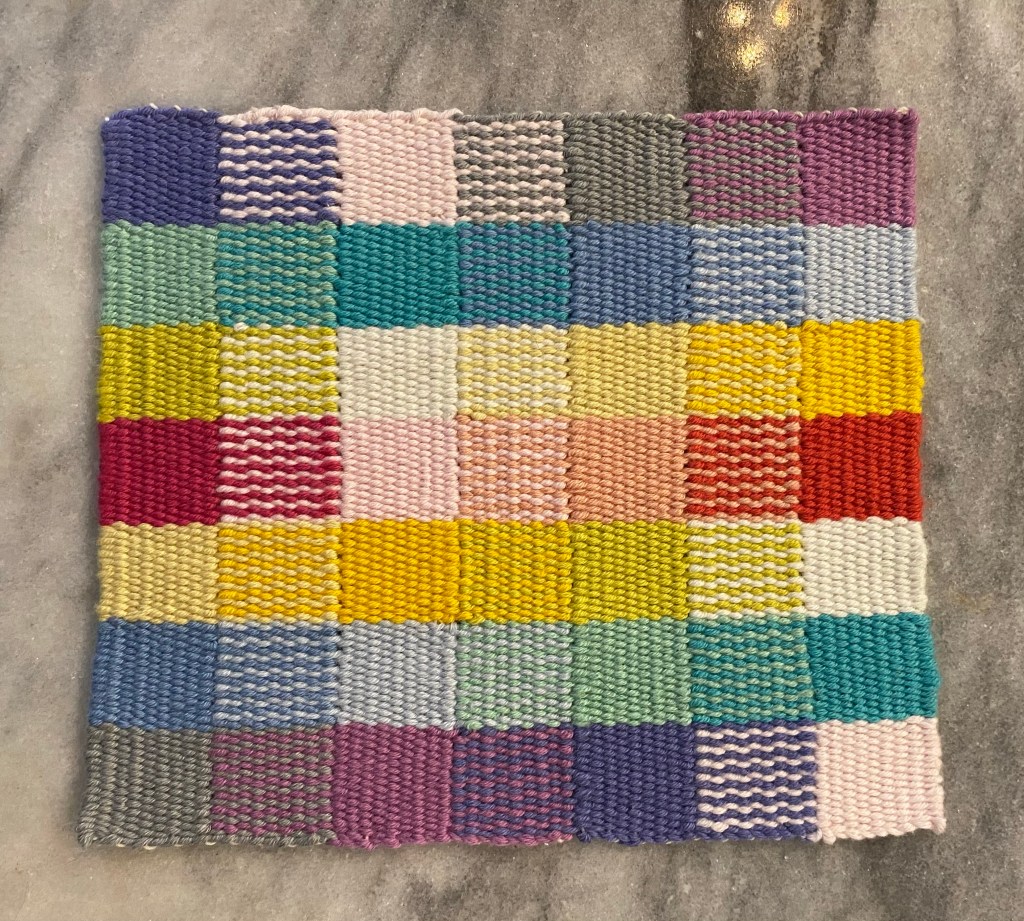
Color play

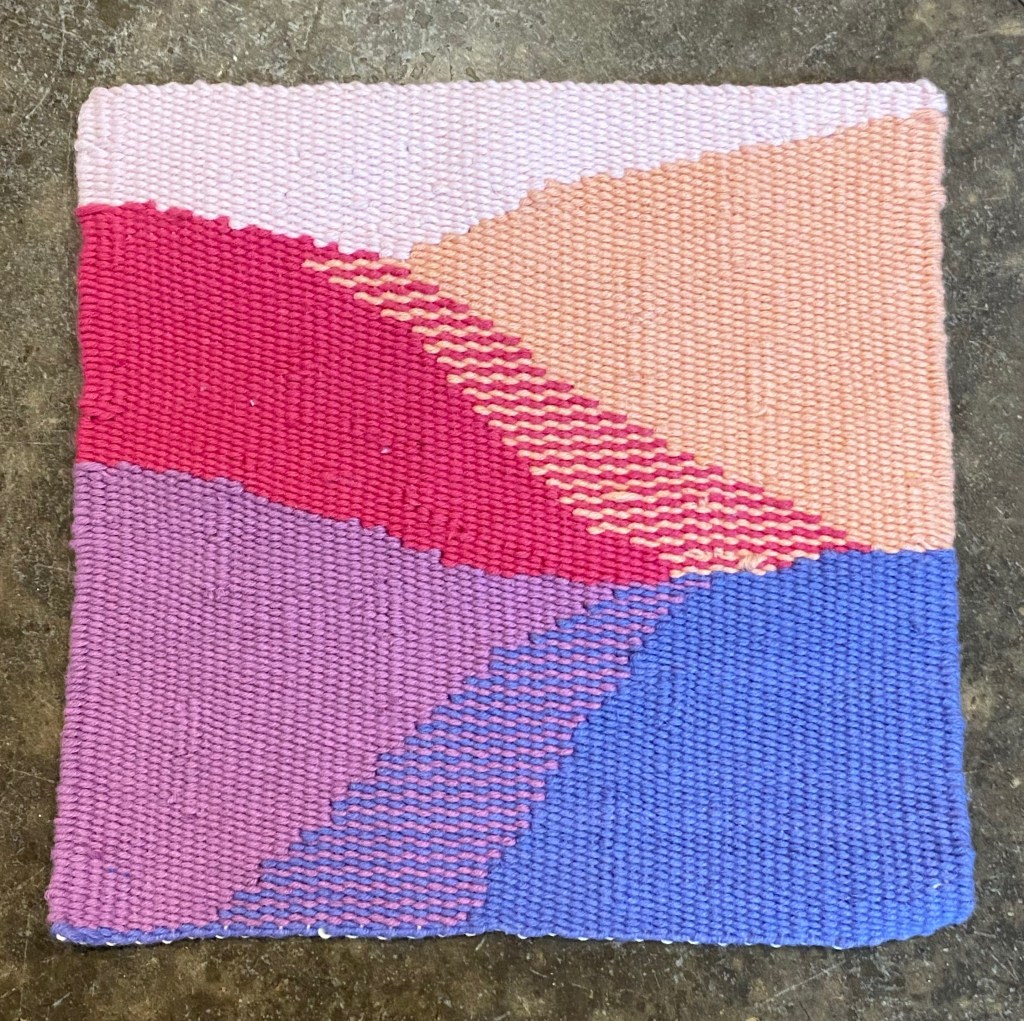
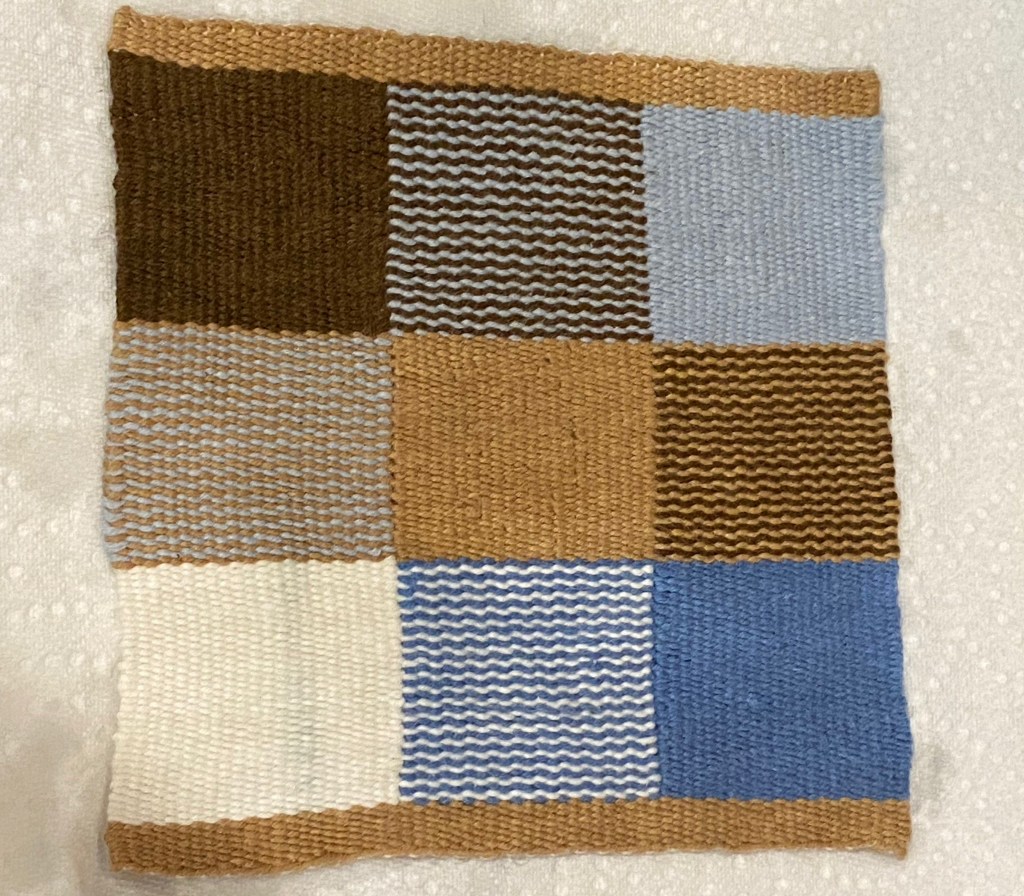
I tried another hatching weaving with smaller squares and lots more colors.

Front of weaving
Back of weaving before weaving in ends
Back of weaving with ends split and woven in

Things I like: The color play and overall look of the piece. Still a big fan of splitting the ends before weaving in, I had trouble telling the front from the back.

Things I learned: Keeping long lines straight needs work! When twining the bottom and top with multiple colors, I need to connect the strands.

Details: approximately 8”x8”, 100% cotton weft, warp suspected cotton (from stash), woven on an 8 sett frame loom. First and last pass twined. Warp drawn through piece to finish.

Shapes

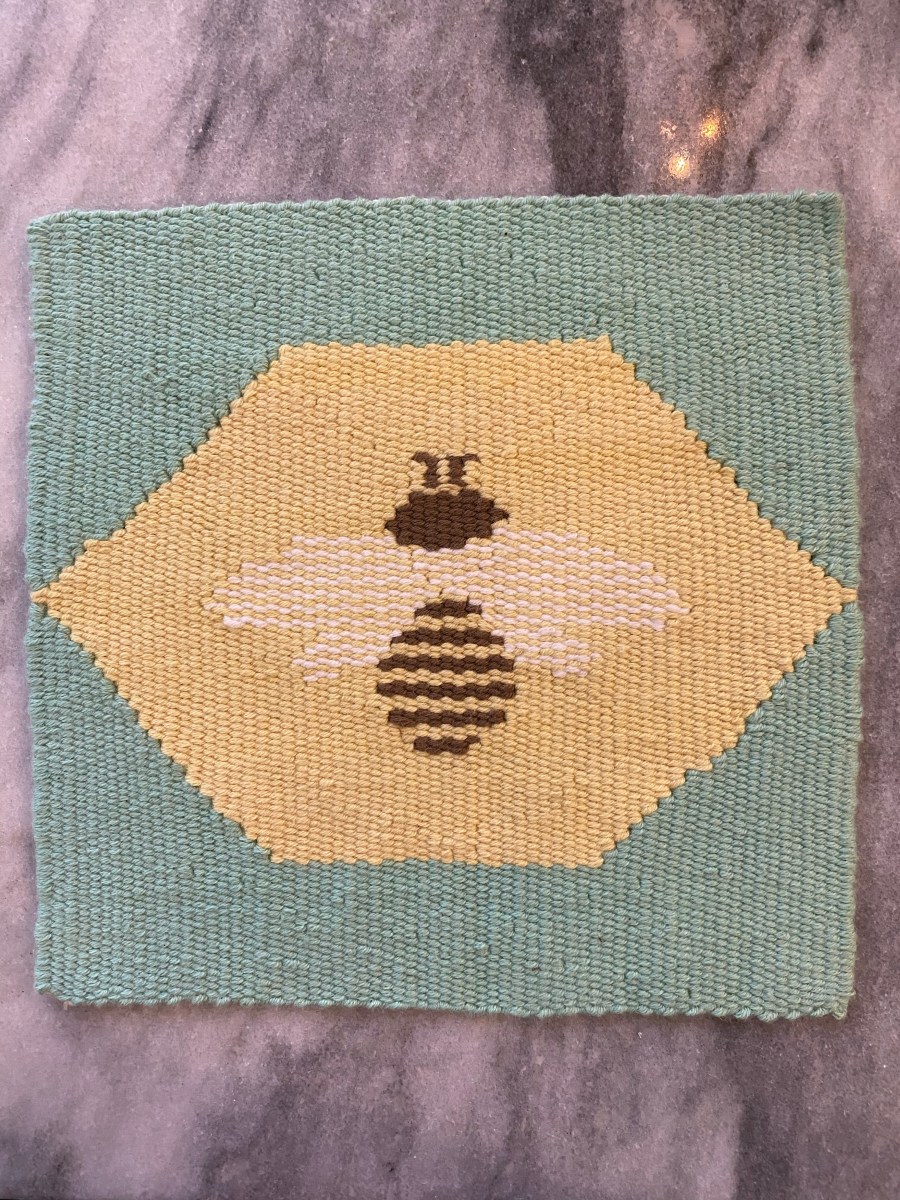
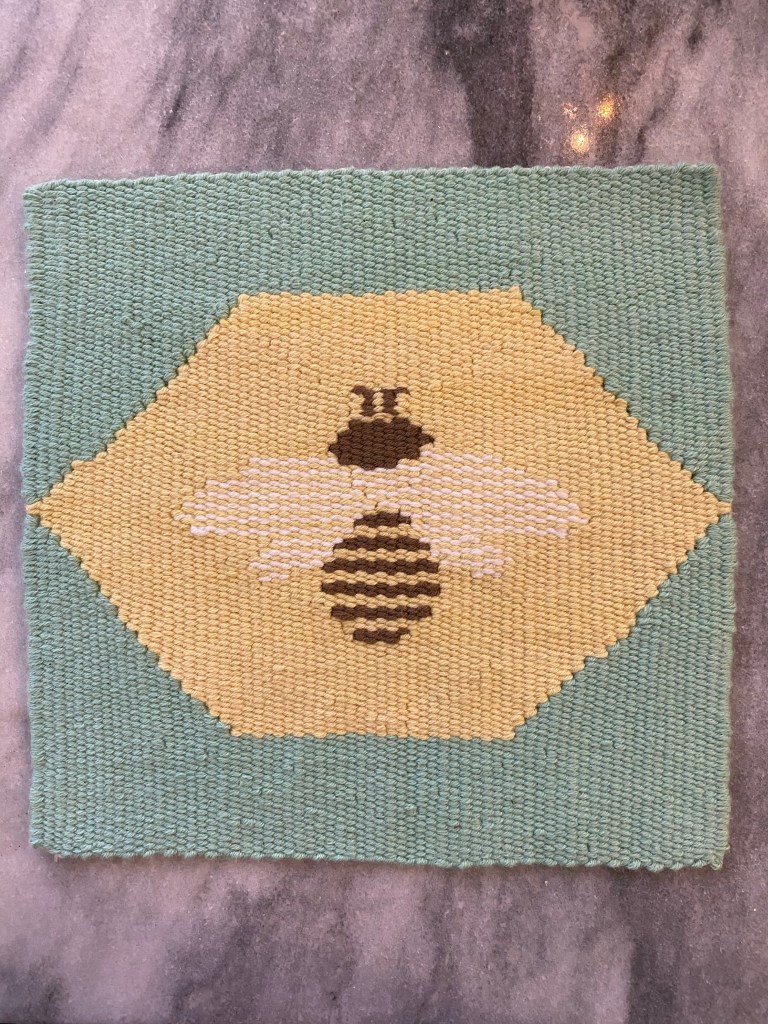
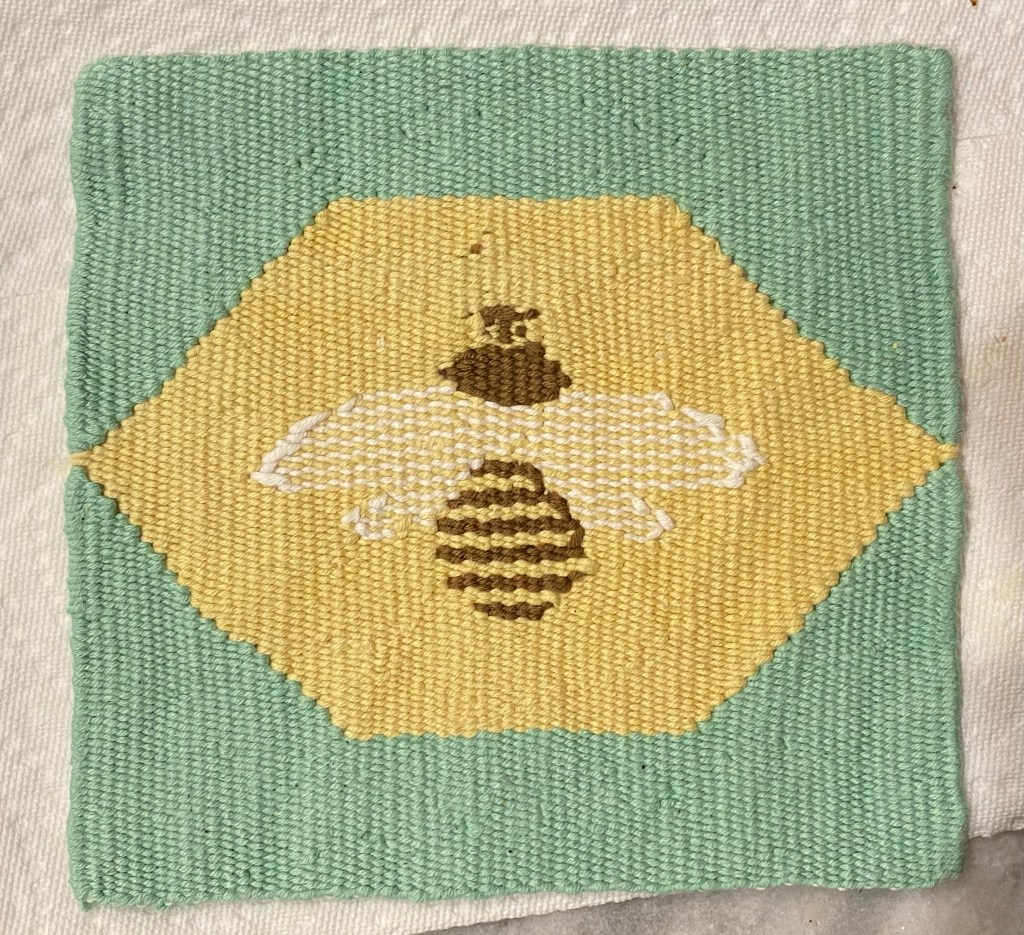
This weaving had a two fold inspiration. My sister loves bees, and my daughter recently has been drawing the cutest simple bees. I did ask my eldest if it was OK that I borrow her bee style!

Bee and hexagon weaving, steamed flat
Back of weaving, before steaming

Things I like: My eldest suggested the bee abdomen have thicker stripes, which really turned out well with the thinner hatching stripes on the wings. Steaming also helped smooth things out.

Things I learned: I need to work on consistent angles. I used a cartoon (pattern), but decided to do the angle mathematically, up two over one, rather than follow the line. Or maybe I need to adjust my math.

Details: approximately 8”x8”, 100% cotton weft, warp suspected cotton (from stash), woven on an 8 sett frame loom. First and last pass twined. Warp drawn through piece to finish.

Curves

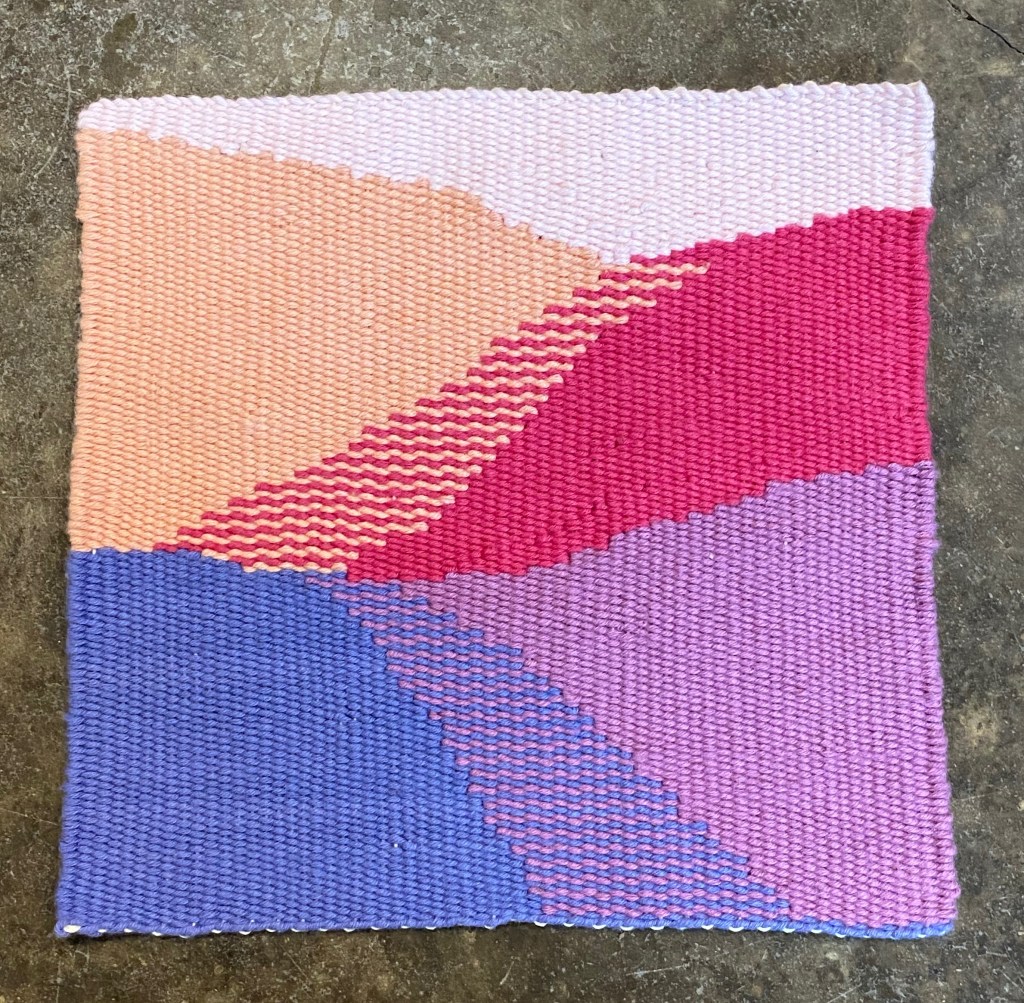
My next finished experimental weaving where I tried curves and hatching.

Front of cotton weaving
Back of cotton weaving

Things I like: Still like hatching. The curves are fun! I split the ends to be woven in, which made a huge difference on the neatness of the back.

Things I learned: Taking the time to do a continuous string heddle saves time and frustration especially when unweaving. Using a line drawing taped behind the loom as a guide is very helpful as well, however, I need to make sure I use the same viewing angle each time I reference the cartoon.

Details: approximately 8”x8”, 100% cotton weft, warp suspected cotton (from stash), woven on an 8 sett frame loom. First and last pass twined. Warp drawn through piece to finish.

Happy New Year! May this year be better than last (asking little). I have a few more wrap up items for posts from the holidays, then exciting new things for the new year!

Hatching

I finished the first experiment with weaving with hatching.

Front of cotton woven cloth
Back of cotton woven cloth

Things I like: Hatching! Neat, neat technique with so many possibilities, and solid joins between colors.

Things I learned: Pay careful attention to each pass. Finding a missed warp thread four passes later is frustrating. No, I didn’t unweave, this is a learning piece. Also, weaving in the ends makes lumps on the back. Also, marking the warp threads with washable ink means you have to give the item a proper wash, not just a blocking. Even that doesn’t guarantee the ink will wash out of the white areas.

Details: approximately 8”x8”, 100% cotton weft, warp suspected cotton (from stash), woven on an 8 sett frame loom. First row twined to space warp threads. Warp drawn through piece to finish.