The draw knife is held by both handles and pulled along the wood. It is truly excellent for removing bark. I waited until after a rain so the bark was softened, which also helped. It wasn’t quite able to get all the bark off. I was working by myself and didn’t want to unscrew the vine from the supports because it took three of us to wrestle it in place. When I have help, I’ll take the vine off the brackets, finish removing the bark, and give it a good sanding. Then we’ll let it dry before putting on a protective finish.
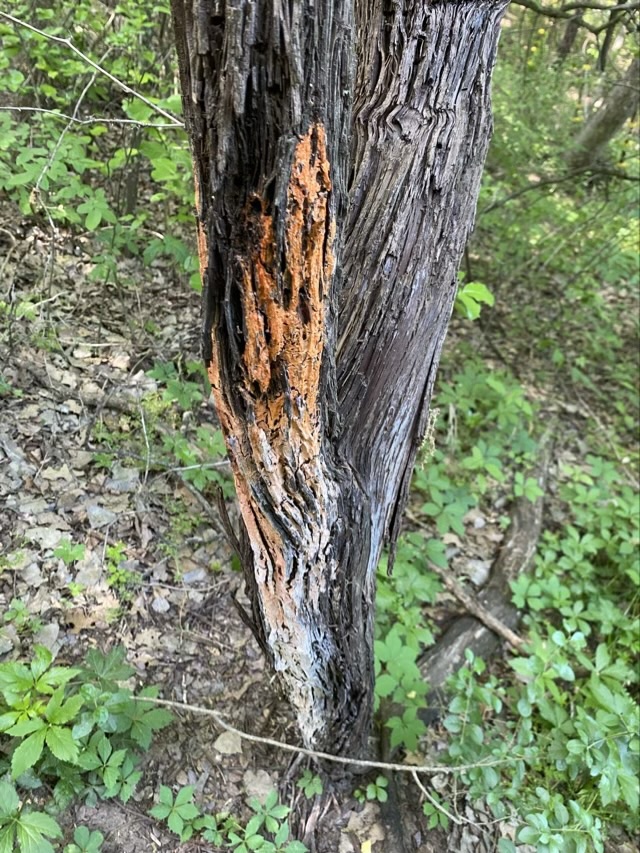
My husband built a beautiful rustic style curved stone staircase off our back porch. Our challenge has been getting a handrail to match the curve without throwing a lump of money at it. The first attempt involved cedar sapling trunks, but we didn’t have one long enough, and splicing two together was tricky. When I was wandering our woods looking for hand rail candidates, I saw a grape vine that I’ve been meaning to trim because fungus has started into the side of the bark.
Photo description: orange and white fungus on a large muscadine grape branch
I cut off the vine above the fungal damage, and since that vine was a nice diameter for a hand rail, freed it from the canopy. I then cut away the diseased tissue from the main vine and sealed it with pruning spray.
Photo description: sealed main vine, approximately 7-8 inches in diameterPhoto description: muscadine grape vine freed from the woods and dragged to the back yard
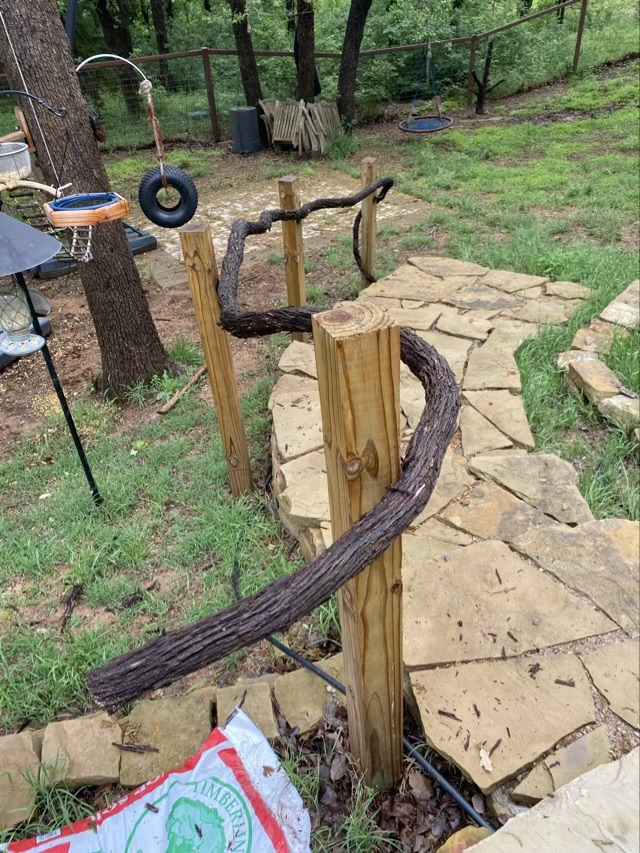
It took three of us to wrestle the vine into place as a hand rail, but because the vine is supple and we waited until the rain gave it a good soak, it was possible.
Photo description: grape vine installed as a hand rail on a curved stone staircase
We secured the vine with screws. The next step is to strip off the bark and seal the vine core so it lasts a little longer in the Texas weather.




 Critters and Craft