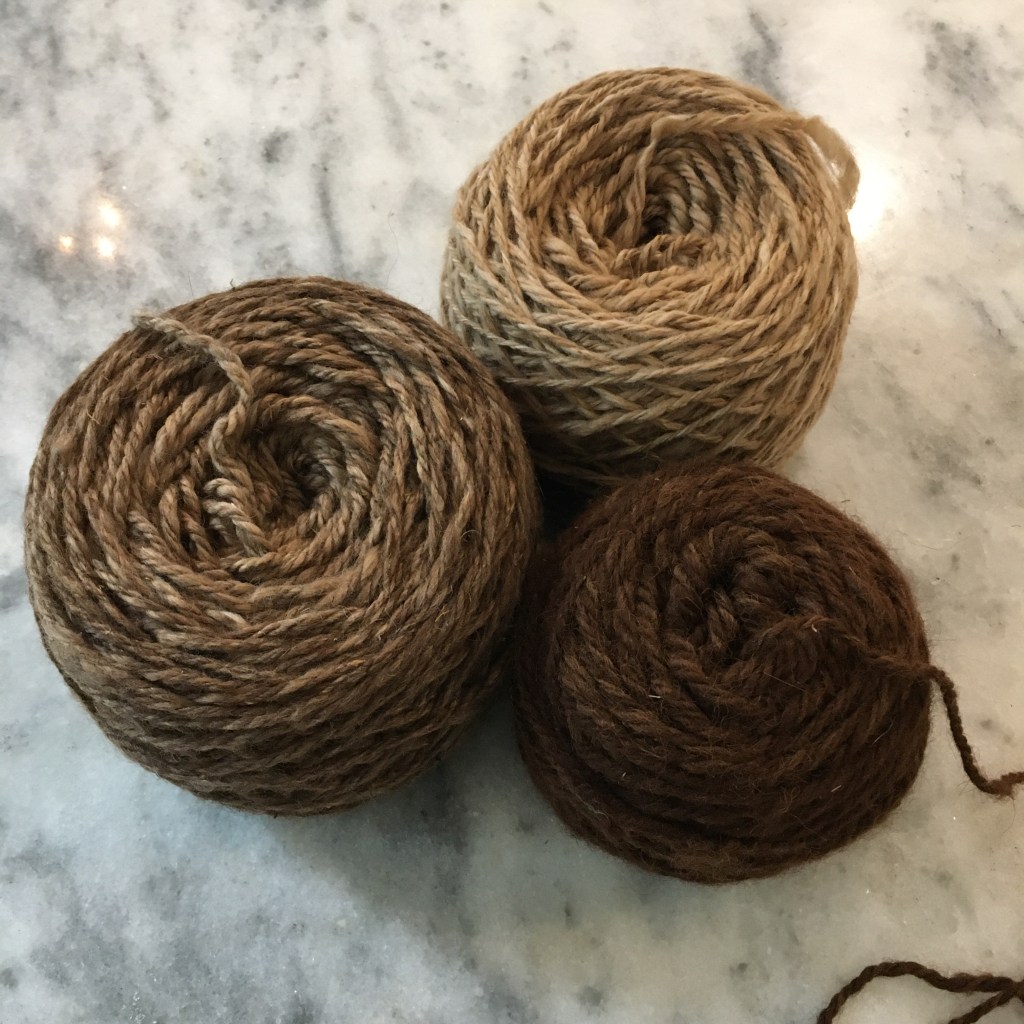
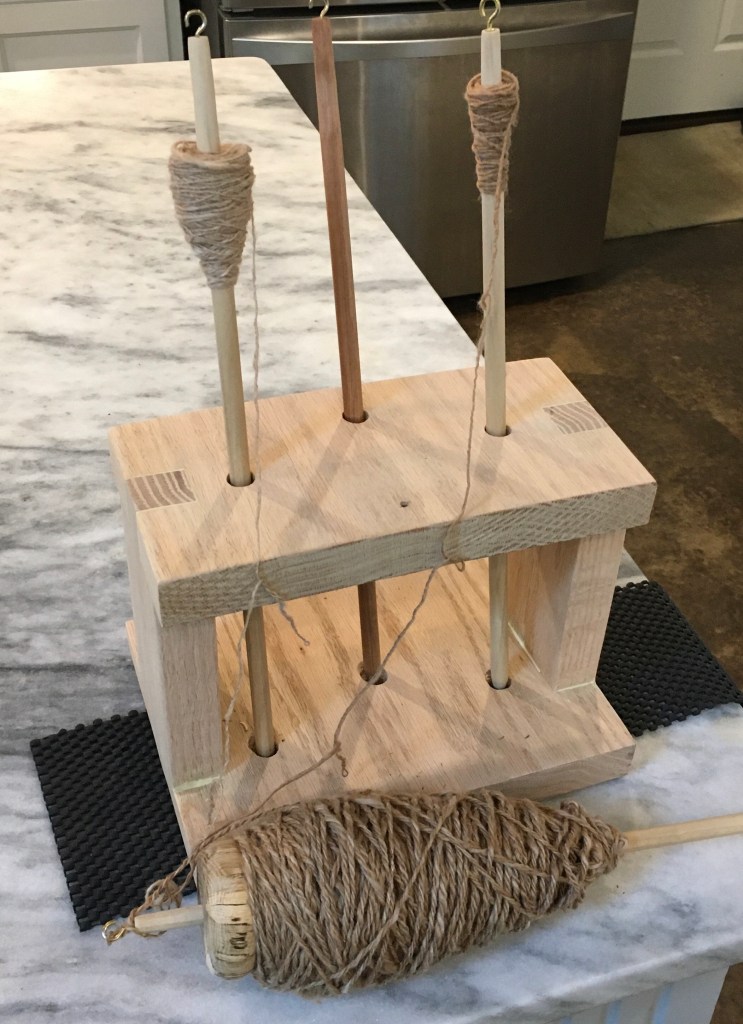
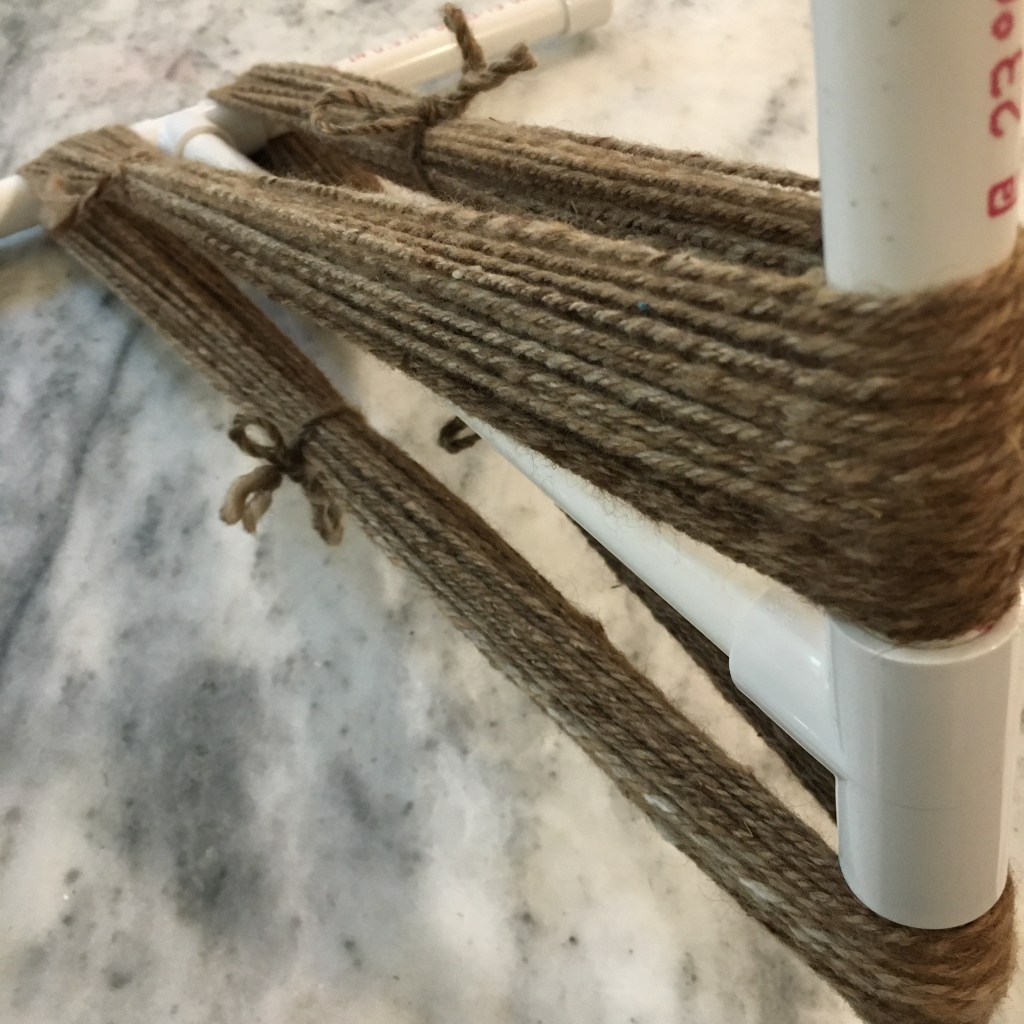
I now have spun and plied three colors of alpaca yarn. The Lazy Kate I made for plying also works well to hold a spindle full of plied yarn as I transfer the yarn to my niddy noddy. I did give the Lazy Kate a clear coat, but needed to use it before putting on a second coat. I modified my niddy noddy as well. The 18 inch center pipe made a 3 foot circumference skein, which is the maximum size my yarn swift can handle, which makes me uncomfortable. So I cut down the center tube to 12 inches so I get a two foot circumference. I also took off the end caps as they really aren’t necessary to hold the yarn in place on the arms, since the arms are so long. Really all the end caps were doing was making a nice cozy environment for mold. Ew.
Using a Lazy Kate and a PVC Niddy Noddy
I have to say, if I read this post a year ago I would have had to look up most of the terms. I’m learning!
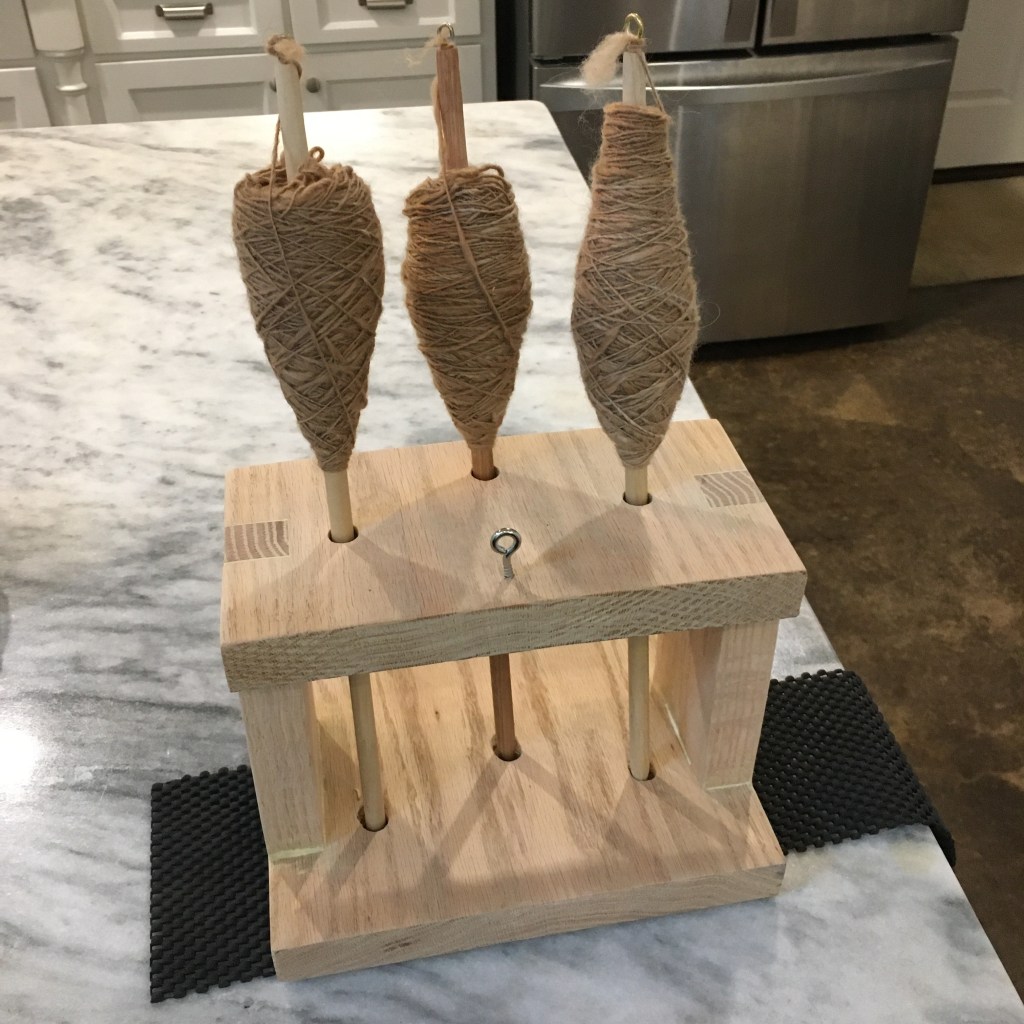
I finally made a wooden Lazy Kate. I had grand schemes to make something fancy and practice making dovetails, but alas I need more practice and on something smaller and softer than the 1” cupped oak plank I tried! Still, I managed to salvage the wood, which is nice and heavy, to make a functional tool. A Lazy Kate is used to hold spindles full of single ply yarn so the spinner can ply easily. It really should be a Genius Kate, or a Work Smarter Not Harder Kate. Poor Kate. She and Susan probably have some grievances. Anyway, I cut notches in sides of the top and bottom pieces and then cut pegs that fit in the notches for the sides. The holes for the spindle shafts are at a 5 degree angle because I saw another design that tilted the spindles. I used the largest section of wood for the base for stability, and glued the whole thing together.
Testing the Lazy Kate
When the glue was dry, I did apply some wood filler to the gaps, and when that was dry sanded the whole thing first with an orbital sander, then by hand with 120 grit sandpaper. Before applying finish, I tested plying with it. I have seen another style with a loop to feed the threads through, so I tried that. Turns out it is easier not to use a loop. I also put a rubber mat under the base to keep it from sliding, which isn’t a bad idea, but the weight of the wood did a good job keeping it steady.
Plied yarn using the Lazy Kate
This is the best Lazy Kate I’ve made so far. It made plying easier as I didn’t have to fight the tool the whole time. The angle of the holes worked great, letting the spindles spin, but not spin out of control (I’ve seen other designs that use elastic or wrapped string to provide tension). Since it passed its test, I’ll give it a nice polyurethane clear finish!
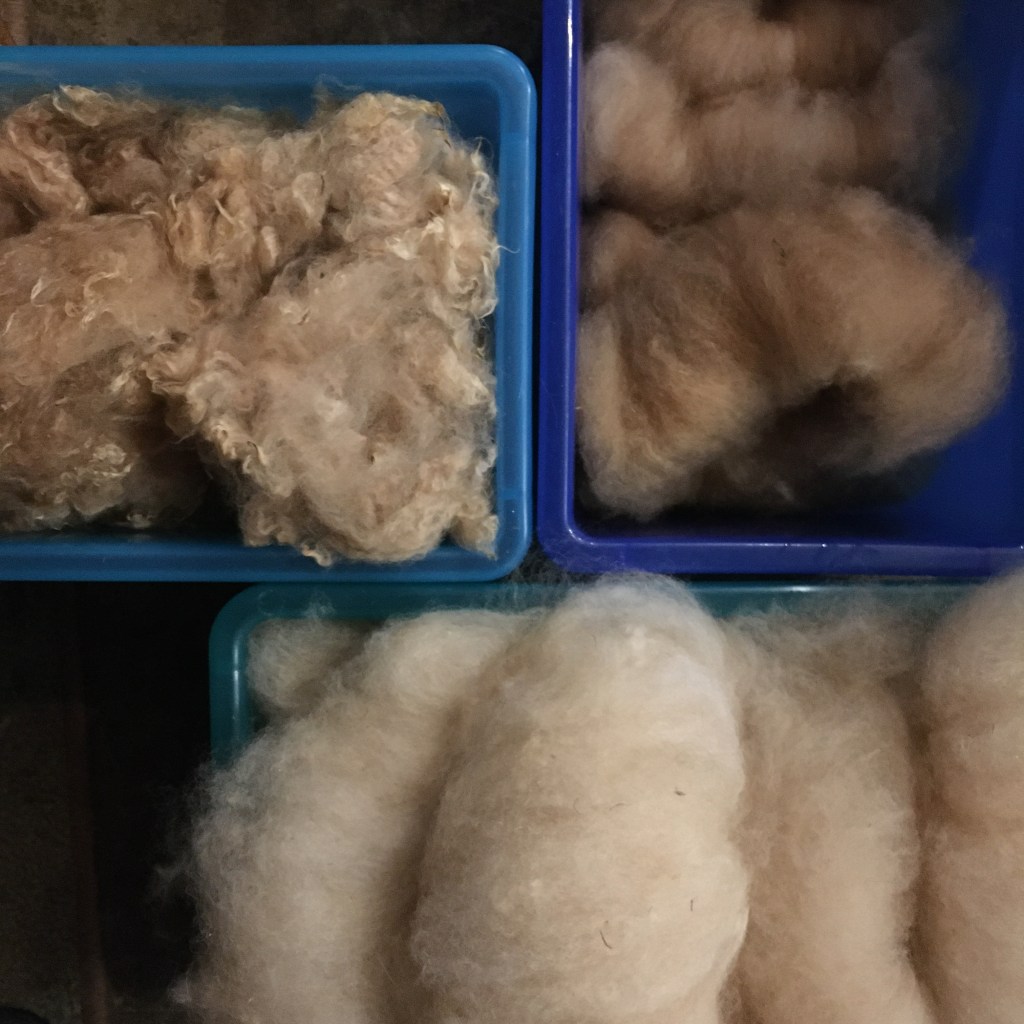
For my next yarn color it was time to use Donna Bella’s fleece (a fawn colored alpaca from Alpacas of Aledo). I was not planning on blending this round, but as I was carding I noticed a distinct color difference in some of the rolags (the roll of fiber that comes off the carder). So I separated the lightest and darkest colors and will spin them separately. I’m also going to reduce the number of rolags I spin per spindle to 10 to lighten the weight when I ply the last bits. (I used 12 rolags per spindle for the dark brown and fawn blend.)
Sounds more like something to have in the evenings than to do with spinning. Ha. I transferred the first skein of alpaca off the niddy noddy and wound it into a cake so that I could wind the second spindle full onto the niddy noddy and wet it down. The next step is to card some more fleece!
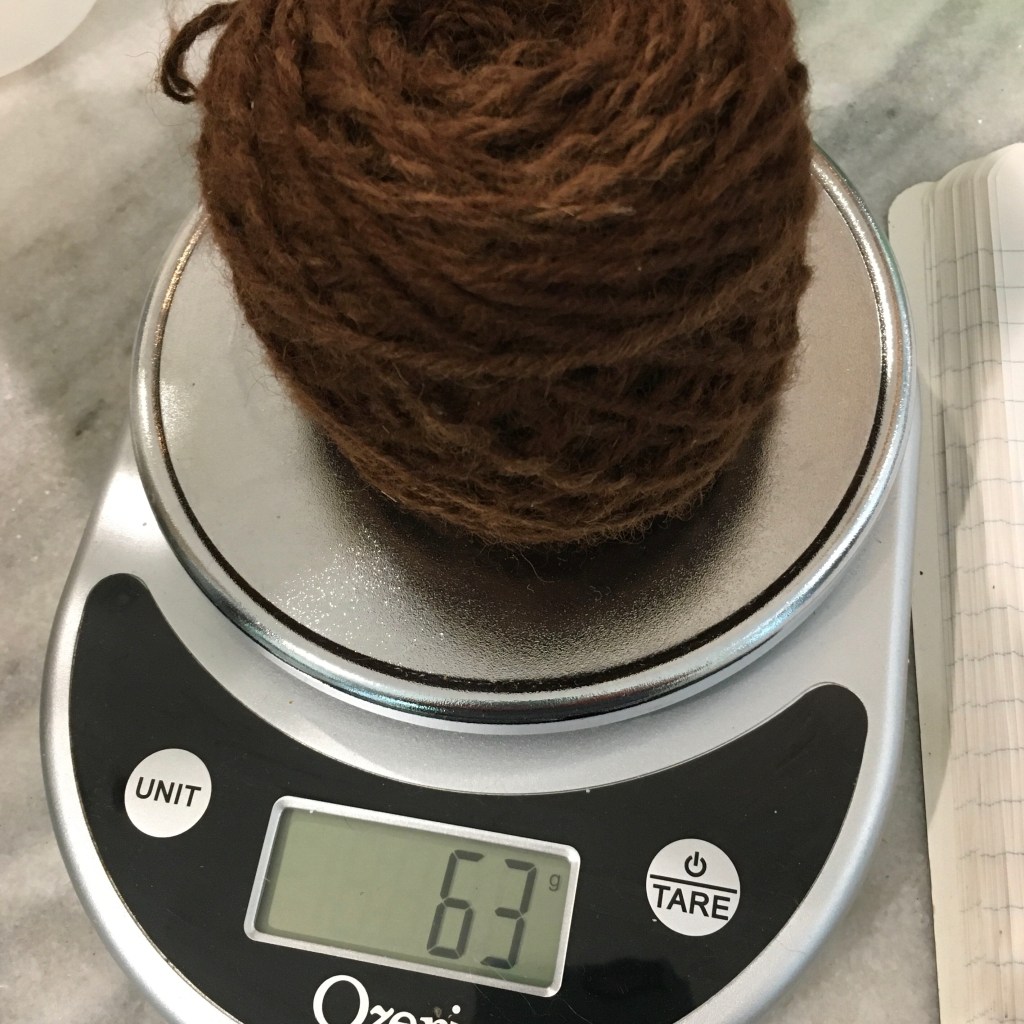
Dark brown alpaca yarn cakeBlended alpaca yarn on a PVC niddy noddy
Oops. I could probably reduce the amount of fiber I spin into singles, that spindle is very full and hard to handle! But I did it. I plied all three singles onto a single spindle! I was pleased also that the singles were nearly all the same length. When the first one ran out, there was very little left of the other two. Neat.