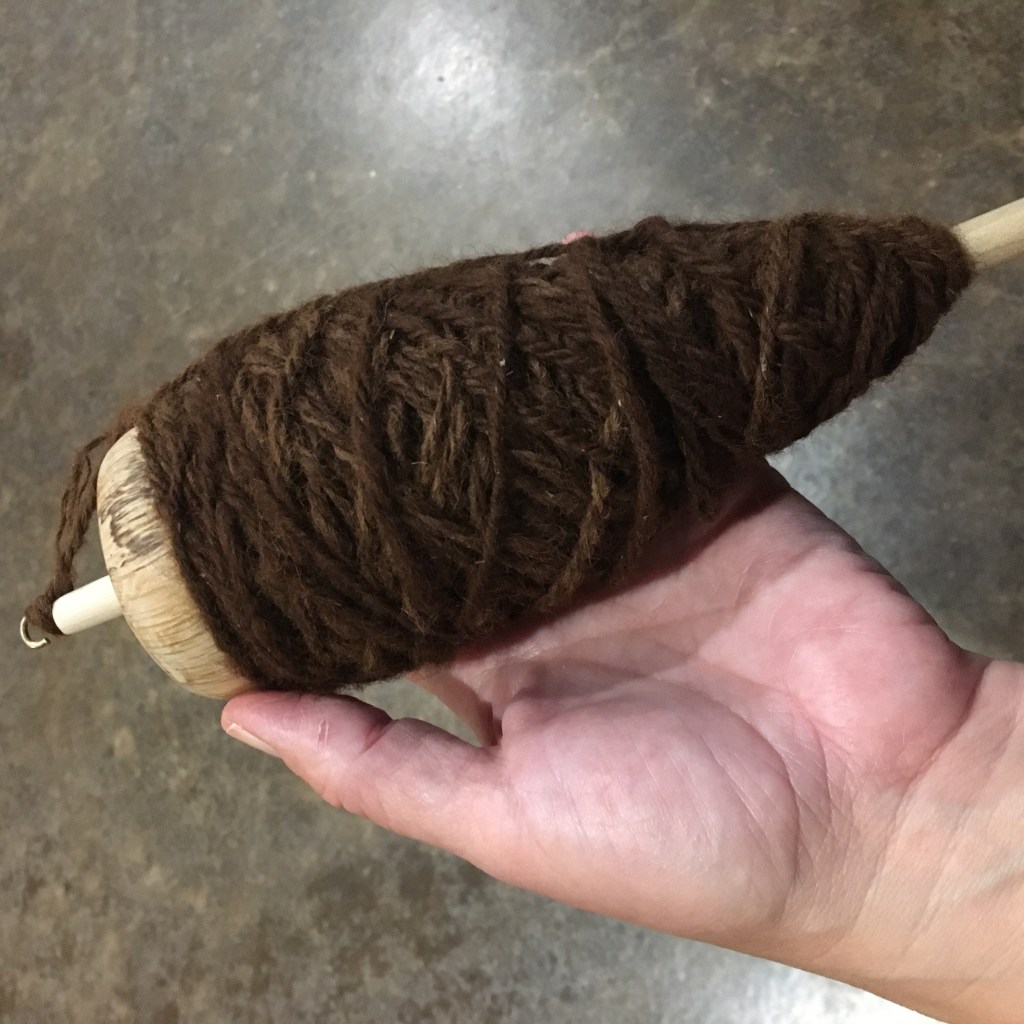
Oops. I could probably reduce the amount of fiber I spin into singles, that spindle is very full and hard to handle! But I did it. I plied all three singles onto a single spindle! I was pleased also that the singles were nearly all the same length. When the first one ran out, there was very little left of the other two. Neat.
Time to ply again! My spinning production took a dramatic downturn with the onset of the stay at home orders, which seems strange. Turns out that it had nothing to do with staying home (although with two kids and crisis schooling I have much less time for my crafts), and everything to do with not wanting to knit. I changed my plan for the yarn to a crochet vest, with motifs rather than a large solid piece, and suddenly I have motivation to spin again. I don’t know why, but even though I can knit, I don’t enjoy it as much as crochet or nålbinding. I like the stretch and feel of knit, I just don’t like ripping it out (which ALWAYS happens). I thought about nålbinding the vest, but that would be a two-year project, which also makes me go “ugh”. So the current plan is to make crochet motifs and join them together into a vest (note: this may change!)
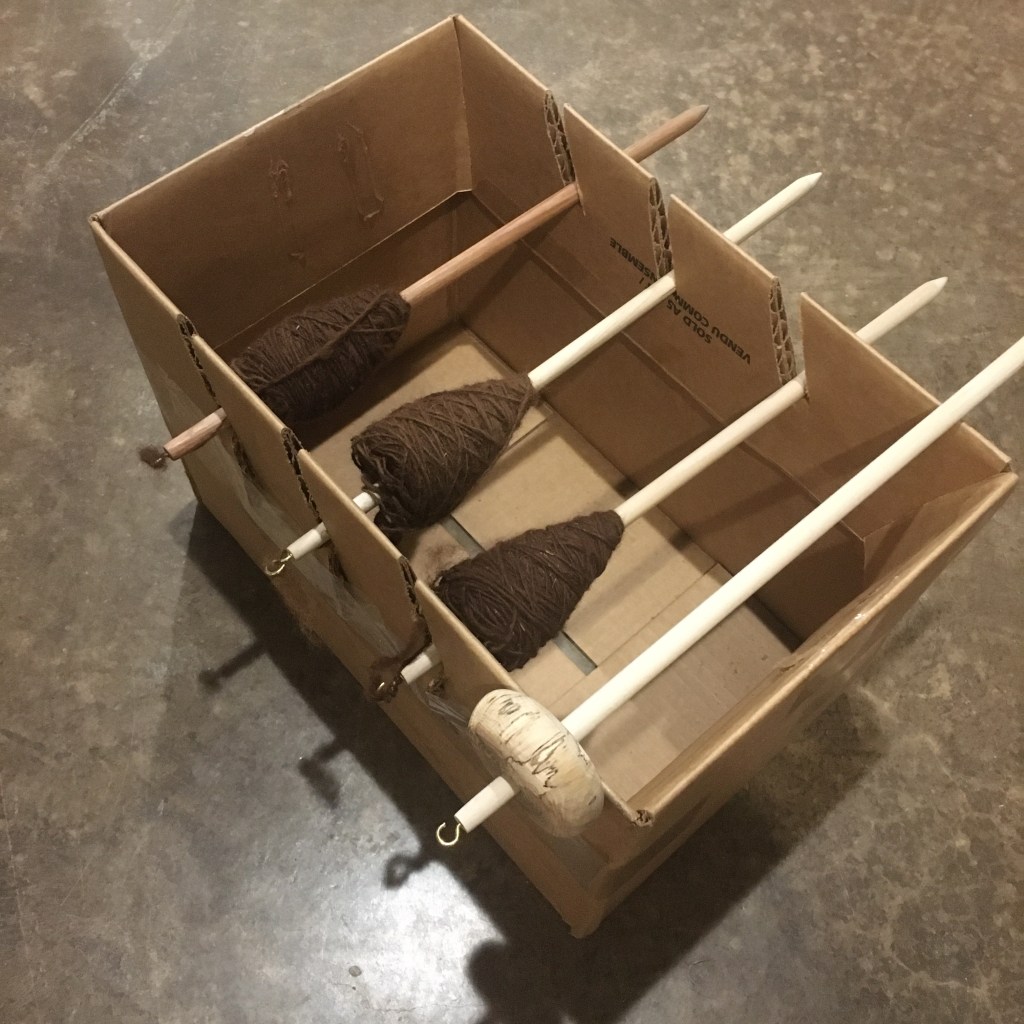
Any who, I am still looking for the best plying method for me, and have been researching what works for others. I’ve seen many wooden contraptions, in many different styles. I like working in wood, and I have scrap wood in the garage, but before I render anything in wood, I thought I should try it in cardboard first. So I took the box that I tried a sideways method to hold the spindle shafts, and poked holes in it and tried an upright method. This worked better, but needs a weighted bottom. I actually think a slight angle on the shafts also works nicely. Now to think on how I want to make a wooden one.
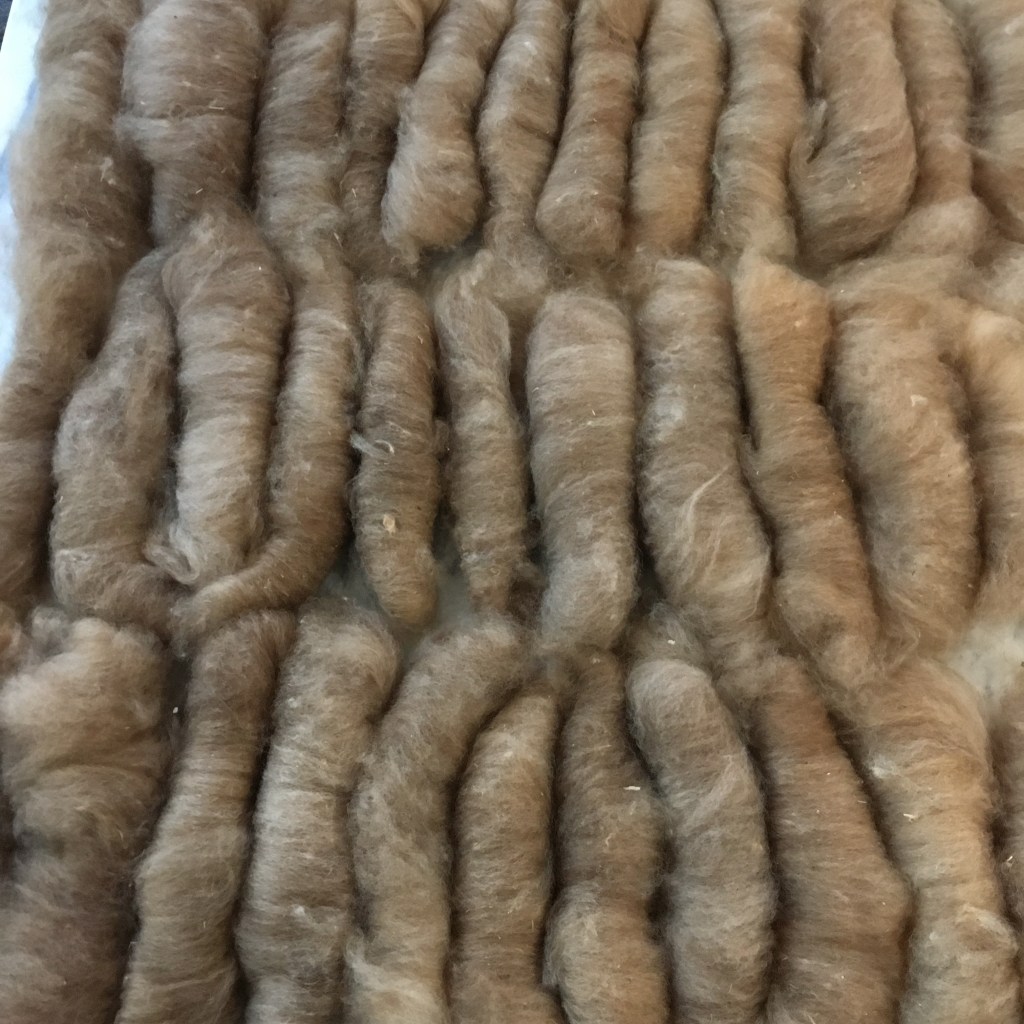
Carded rolags made with Aimee and Donabella’s fleece (alpaca)
I’ve moved on to my next color blend: fawn mixed with dark brown. I loaded the fawn color on my carder first, then added the dark brown so the fawn wouldn’t be overwhelmed by the brown. This worked much better. When all the rolags were prepared (I used a large box to hold them this time), I sorted them by shade in three groups. The idea is that if I spin each group, then ply them together, I will still get a gradual color fade in the final yarn. We’ll see.
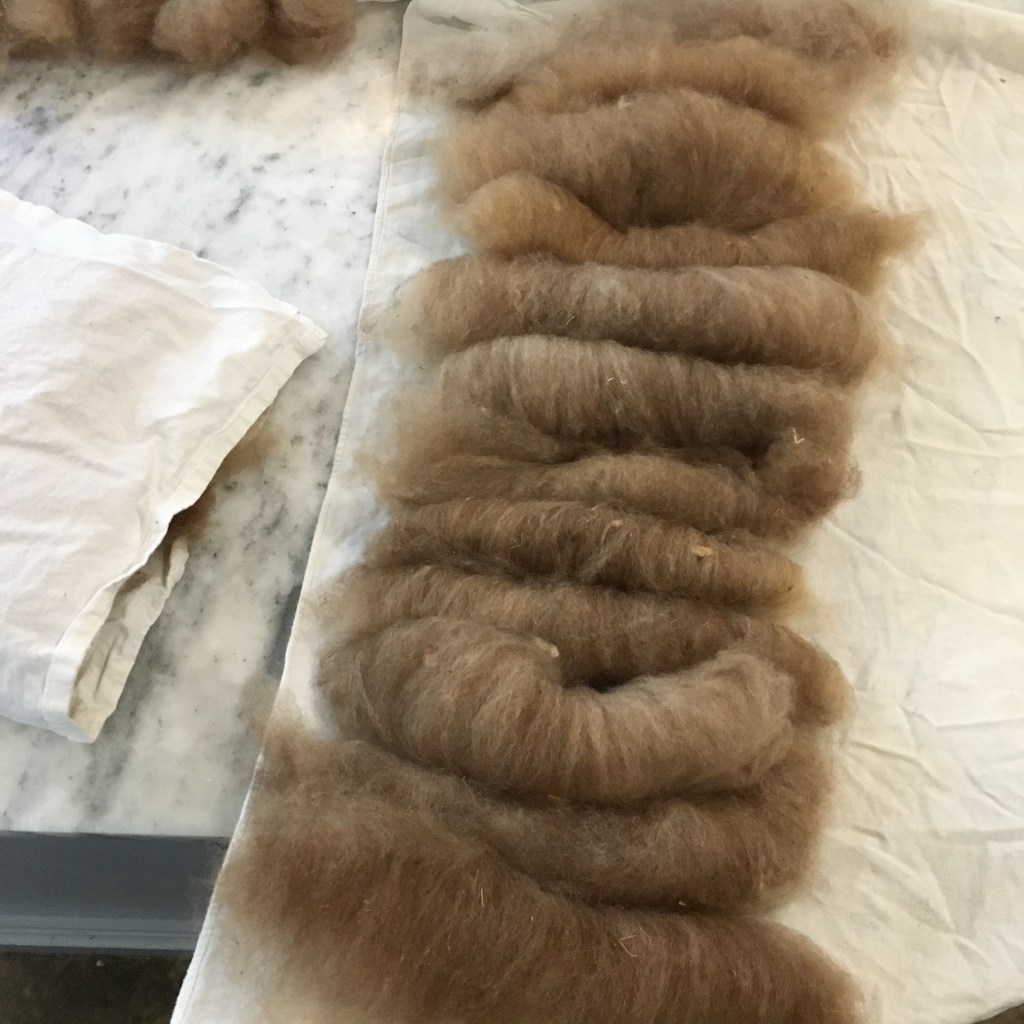
Folding the sorted rolags in dish towels
To keep my colors sorted, I gently folded each group in a dish towel so they stay neat and in order. There is still a fair amount of vegetative matter (VM) in the fiber, even after carding, but I have found that when I spin it is easy to remove most of it by plucking the yarn before I wrap it on the spindle. Some stubborn bits needs to be pulled out, but it is easy to feel and see where they are in the twist.
You would think that with the pandemic I would have more time to spin, but the opposite has been true. The time is being well spent: I’m baking with the kids, we are painting rocks and doing art, playing games, learning states and capitals, reading, and are starting into home schooling. All good things, just different from pre-pandemic. I think being flexible and able to roll with changes is important and I hope I‘m instilling that in my children. “Make hay while the sun shines.”
I had a bit of a panic when I went to spin my alpaca fleece. I wanted to spin as consistently as I could, so I thought having similar spindles would make it so my singles were more consistent. My current favorite top whorl drop spindle is one that I made from a branch from our back woods (maybe post oak? Or cedar elm), but making three or four similar weight whorls from branch wood takes high skill and time, neither of which I have currently. (Home schooling is going OK, and spinning is something I can do inside while the kids are playing, and put down at a moments notice.) I had an epiphany. I don’t need four spindles, I just need four shafts! The whorl I made can be removed from the shaft and put on a different one. Much easier and faster!
Three shafts filled with spin singles, and a fourth with the whorl, ready to ply
I am looking for the best method (for me) to hold the shafts while I ply. I saw a box with slanted slits, and decided to try it first in cardboard. I don’t like it much. The angle the yarn comes off the box has to be just right and the shafts are squirrelly as I ply. I’ll have to try a different method next time!
Izzy was very interested in the spinning shafts (this is the wrong yarn angle, by the way)
I did manage to ply the singles (Aimee’s fleece, washed, carded), but my ply wasn’t as good. I think I don’t have enough twist. I did a fair job of evenly dividing the fiber, and when one of the three ran out, I chained plied the rest (there wasn’t much) onto the end of the three ply yarn.
Three ply alpaca yarn
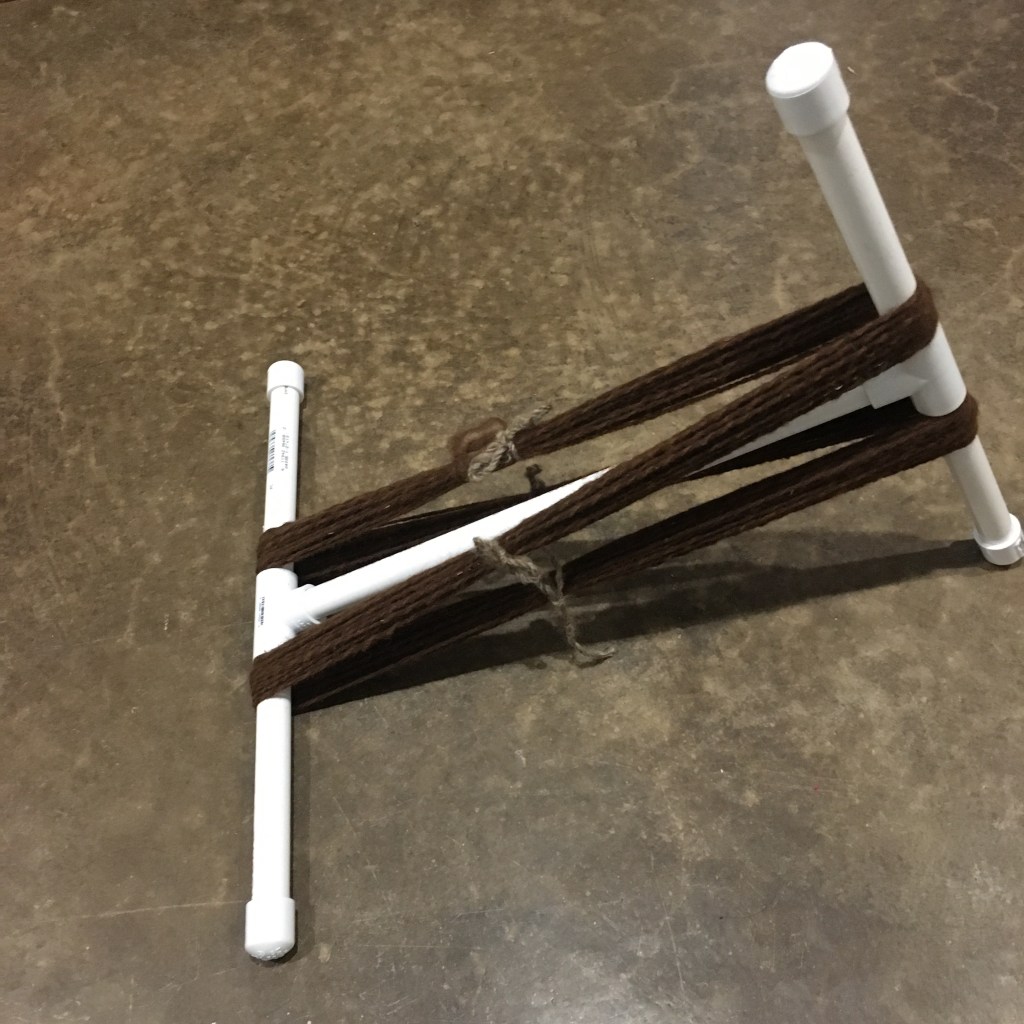
After plying I did put the yarn on my PVC niddy noddy and wet it down. I made about 54 yards of three ply yarn.
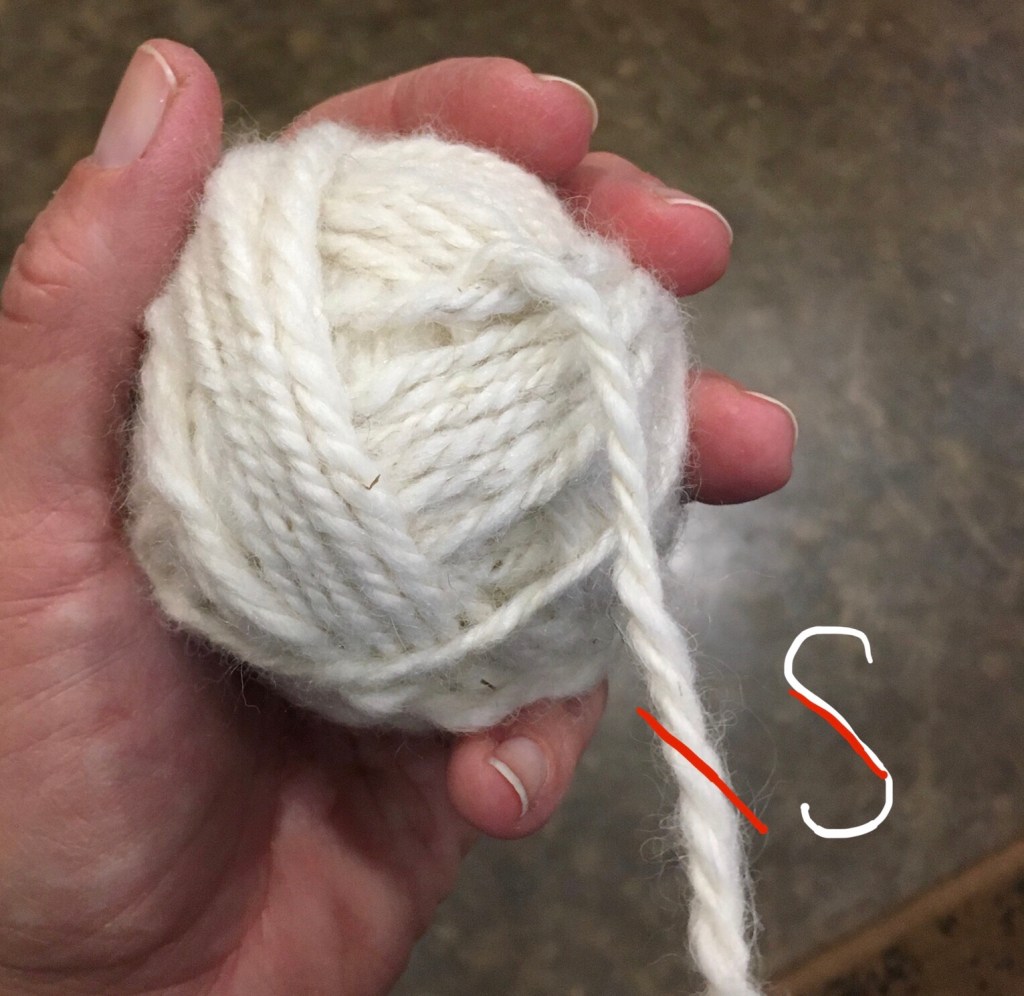
For my next alpaca project I want to try a plied yarn. This means spinning the singles thinner and plying three singles together. I am leaning toward knitting, so I an spinning my singles in a Z twist, and plying in S twist. This seems to work best for knitting (it is the way most yarns are machine made). If I were going to nålbind, I would switch the twist order, especially for the York stitch. It really is fascinating the way the twist effects the final product.
Center pull yarn ball, alpaca three ply, showing plied S twist
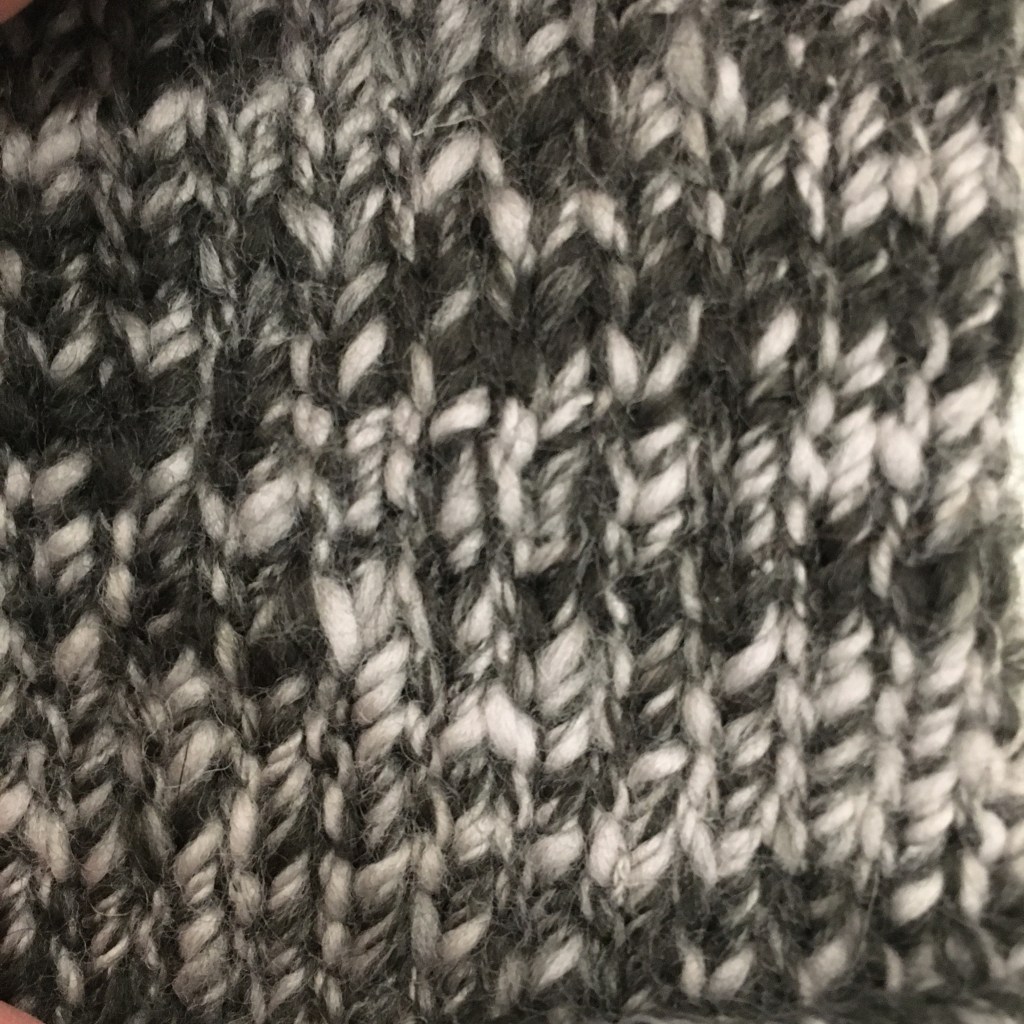
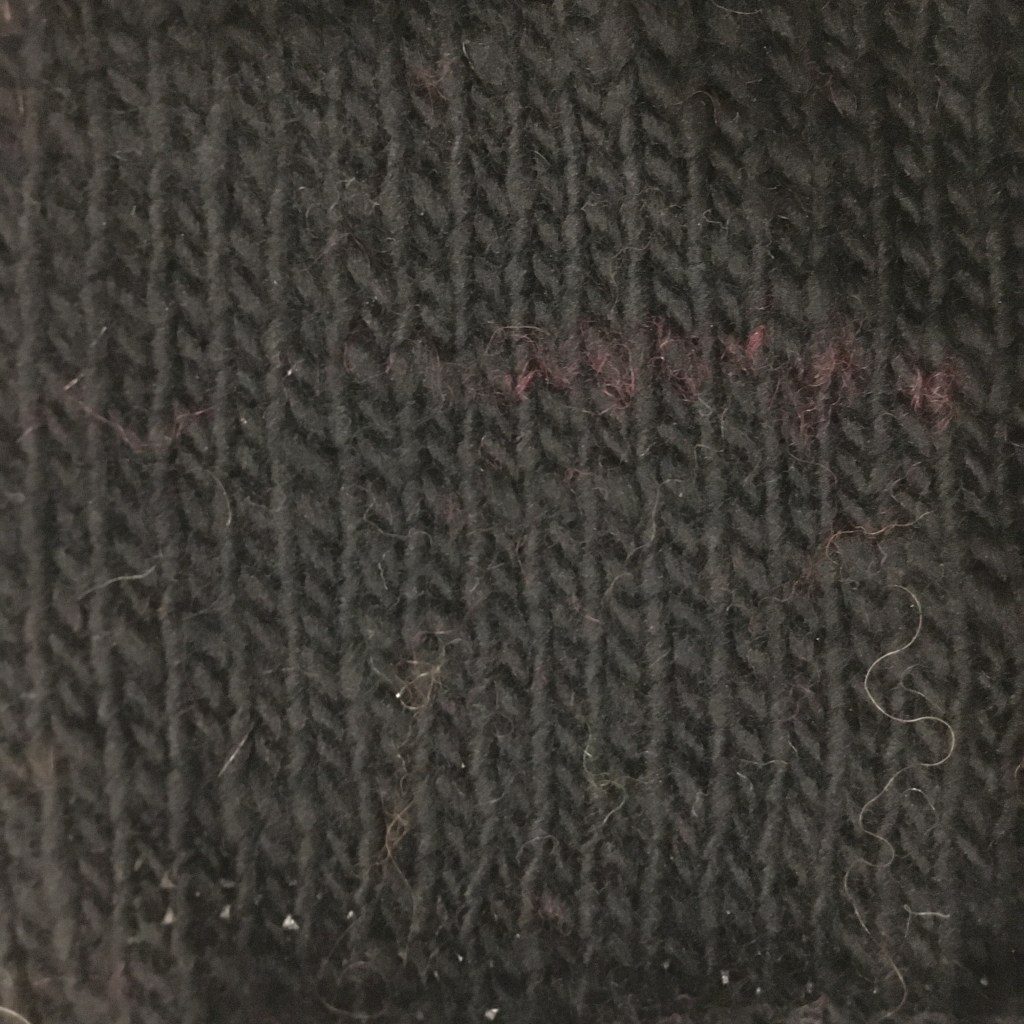
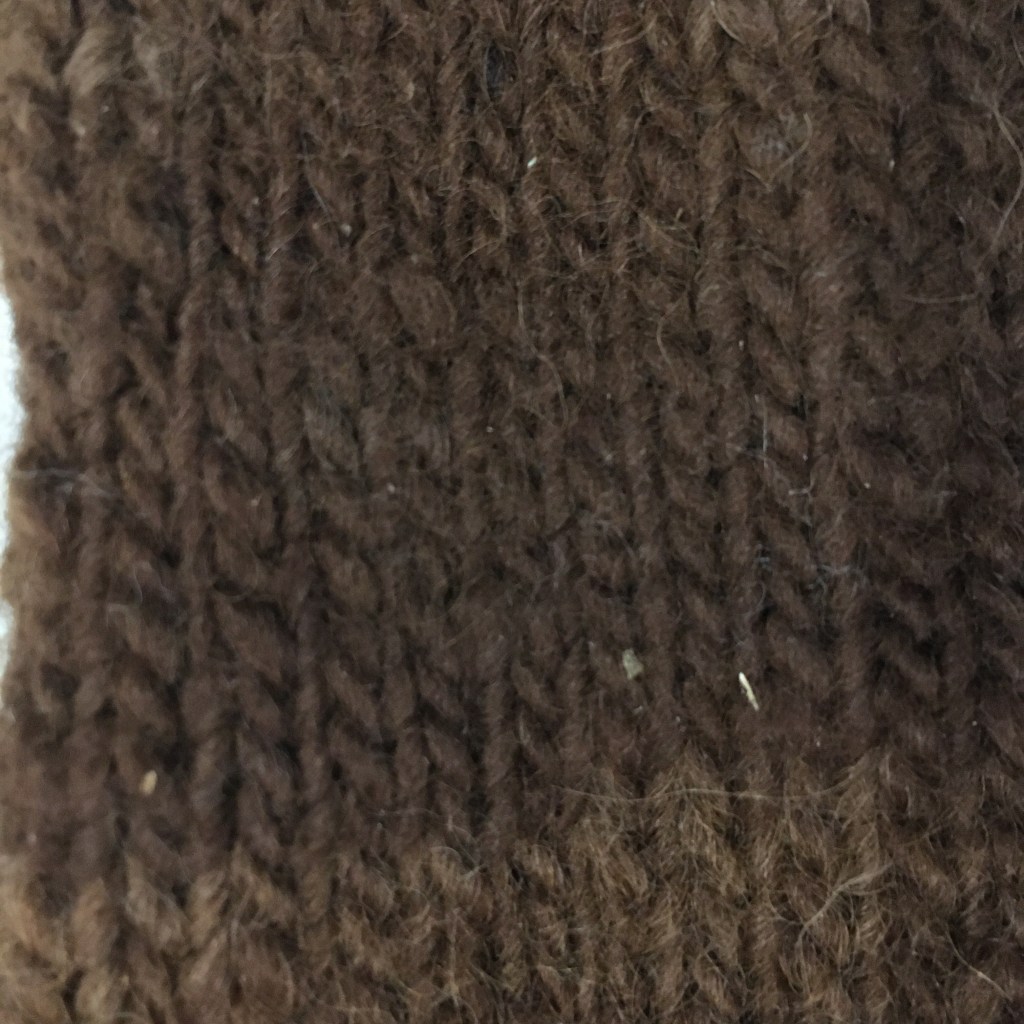
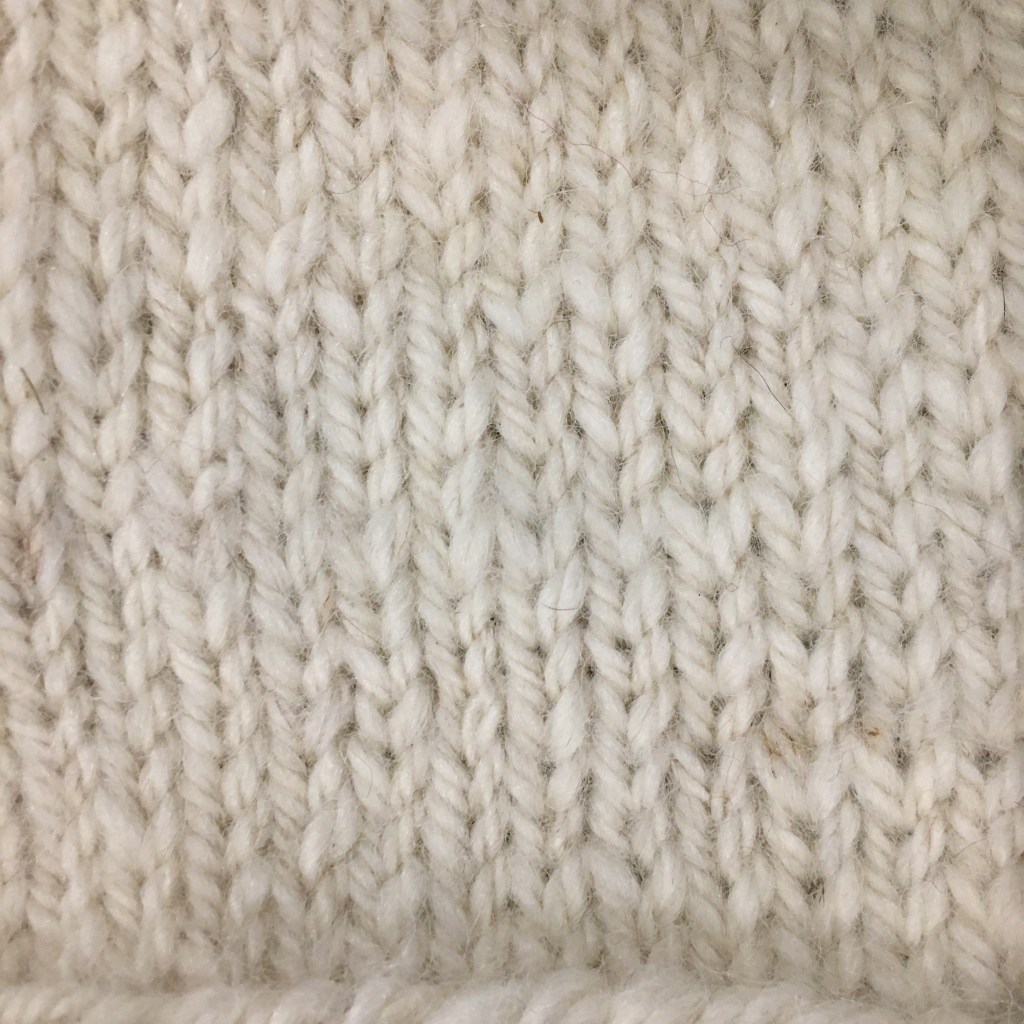
Since I am planning to knit, I made up some test swatches with various yarn scraps I had, as well as the new 3-ply alpaca. All the yarn was spindle spun, some with merino wool, some with alpaca, some plied, some singles. I found the the yarn with a Z twist knit up with uneven stitches, resulting in a fabric that doesn’t look balanced. The S twist, however, knits up nicely and the “V” of each stitch is balanced. The US 8 needles were a little small for my chunky 3-ply alpaca, and although the swatch was soft, it was not nearly as sumptuously soft as the swatch knit on US 10 needles. And oh is that last swatch soft; like cuddle on the couch, swatch against the cheek, sucking on your thumb kind of soft. It literally makes people say “oooo” when they hold it.
Merino wool, 3-ply, Z plied, knit on US 8 needlesMerino wool, single ply, Z spun, knit on US 8 needles (the stripe pattern is from the Z twist)Alpaca (Aimee), single ply, Z spun, knit on US 8 needlesAlpaca (Sugar Plum), 3-ply, S plied, knit on US 8 needlesAlpaca (Sugar Plum), 3-ply, S plied, knit on US 10 needles




 Critters and Craft