Spindle bumper

Now that I’m getting more comfortable spinning and walking I tend to drop the spindle more. With any luck, even more practice will reduce my tendency to skitter the spindle down the road, but in the meantime I put a bumper on the bottom of the shaft. A pencil eraser works well to cover the end, and protects the wood from sudden impact!
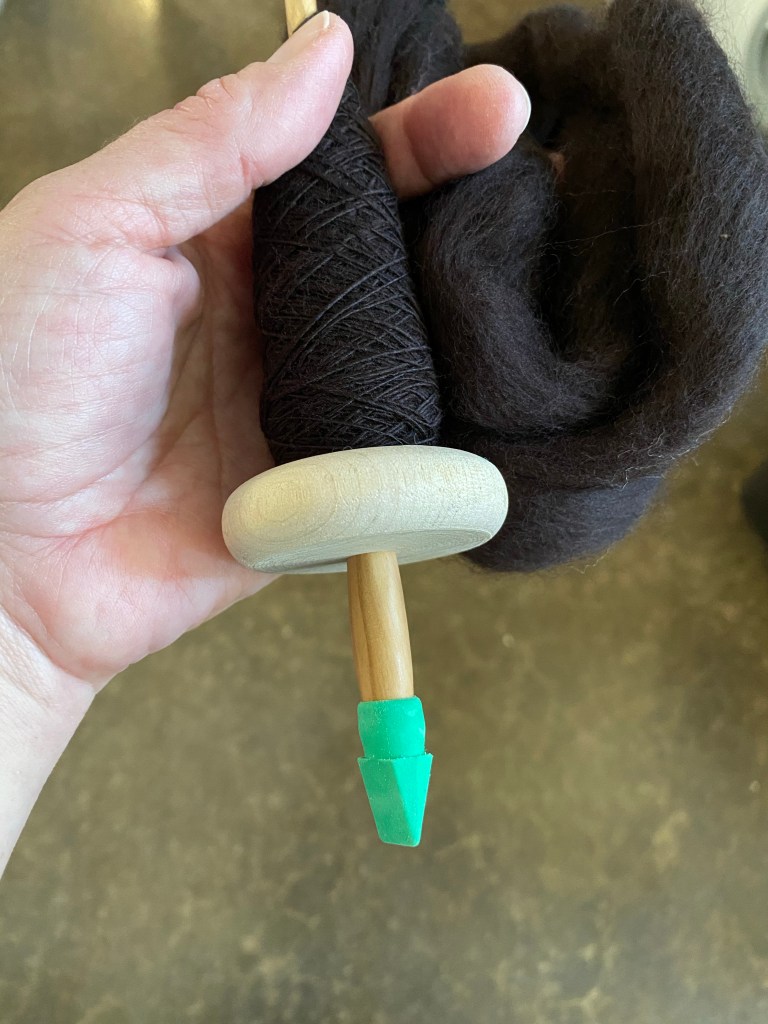
Pencil eraser as a make shift spindle bumper

Weaving on a wire jig

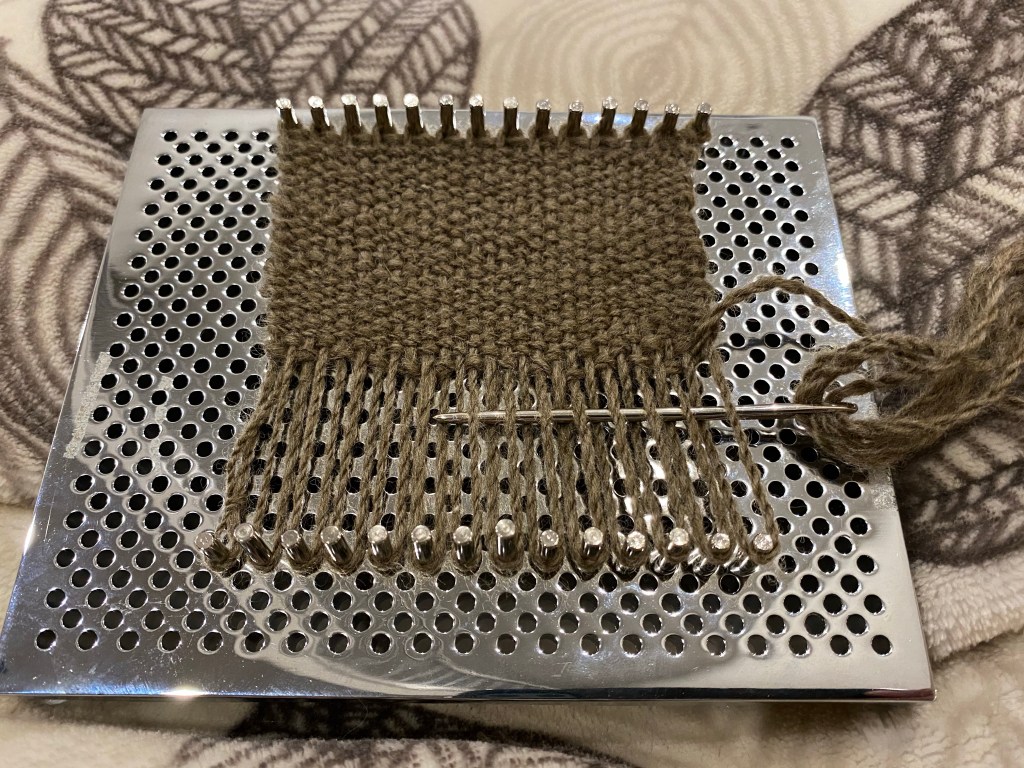
I had a small amount of two-ply hand spun merino wool left. Not enough to weave on my frame loom, but if I could rig something up a little smaller it might work. So I tried weaving on one of my wire jigs.

Weaving set up on a wire jig

I used my smallest pins to hold the warp threads and a tapestry needle to pass the weft through to make a plain weave. As the weaving progressed, I had to hold down the pins as they tended to pop up out of the jig. On the whole, the idea worked, but it wasn’t a pleasant experience since the pins were only loosely set and it was difficult to do the final passes. Mark that up as a nope.

Watch of merino wool woven on a wire jig

Nålbinding swatches

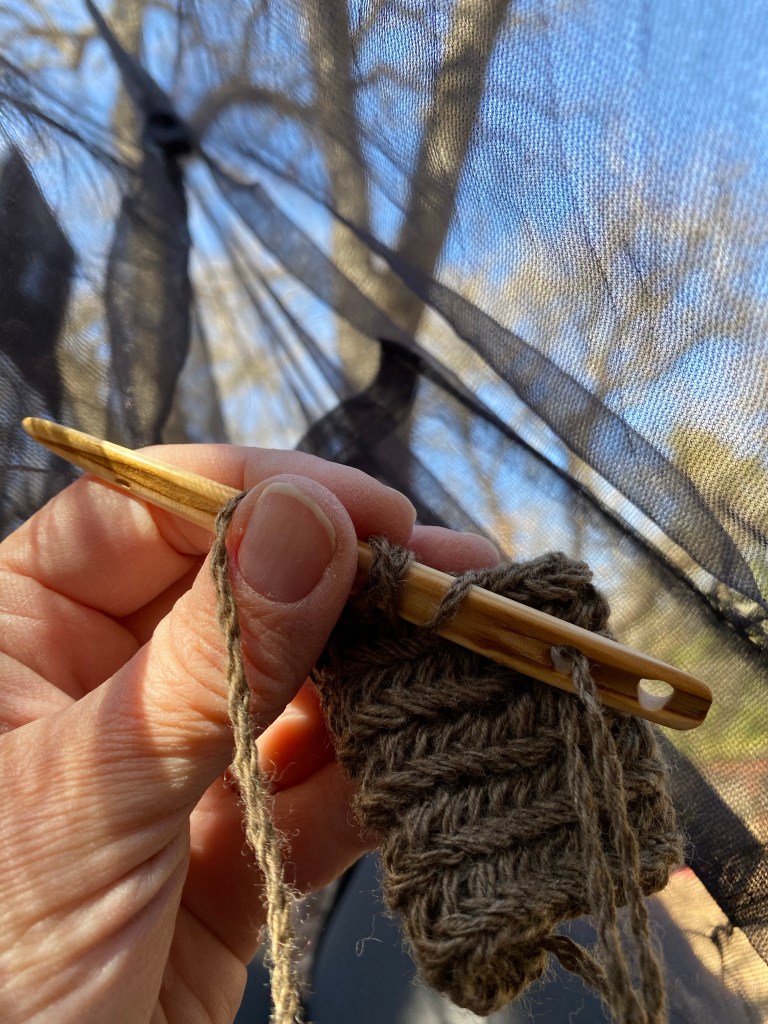
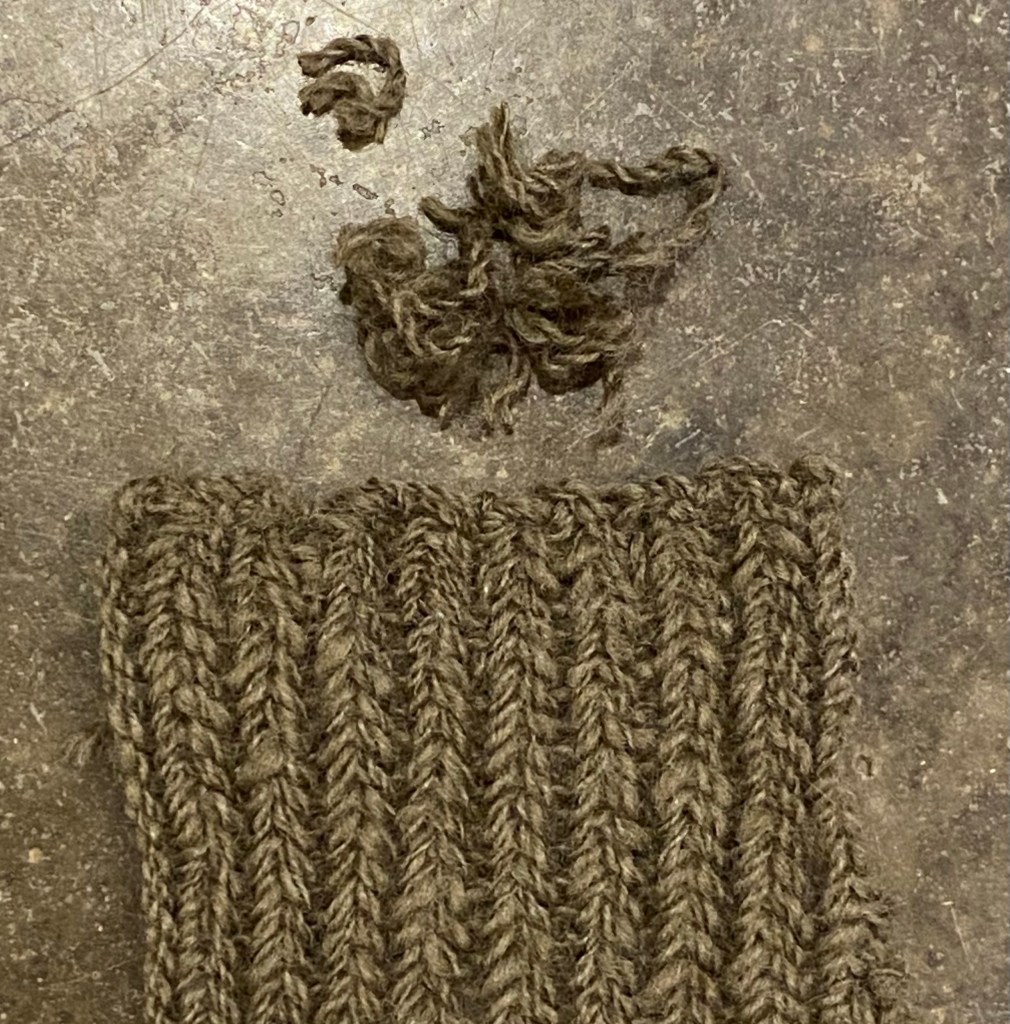
I did some crochet, some knitting, and now it is time for nålbinding! I only had two ply and four ply yarn left, but I tried using a tapestry needle as well as a hand-made nål on the two ply. Sizing the loops to the tapestry needle was much too small and much too tight, but the 25mm diameter nål made a nice fabric for both the two ply and the four strand cable ply. I stitched in the round, then cut the tubes open. The swatch does not unravel when cut! Although a few tiny bits of yarn do fall out. Of the three methods of fabric construction, nålbinding is the slowest, but I enjoy it the most. The process is soothing and the resulting fabric is nicely stretchy (at least with this stitch).

Nålbinding swatches made from hand spun merino wool
Nålbinding while laying outside in a hammock
Cleaned up the cut edge by removing the partial threads, snugging up the attached threads and running them down the back of the work

Knitted swatches

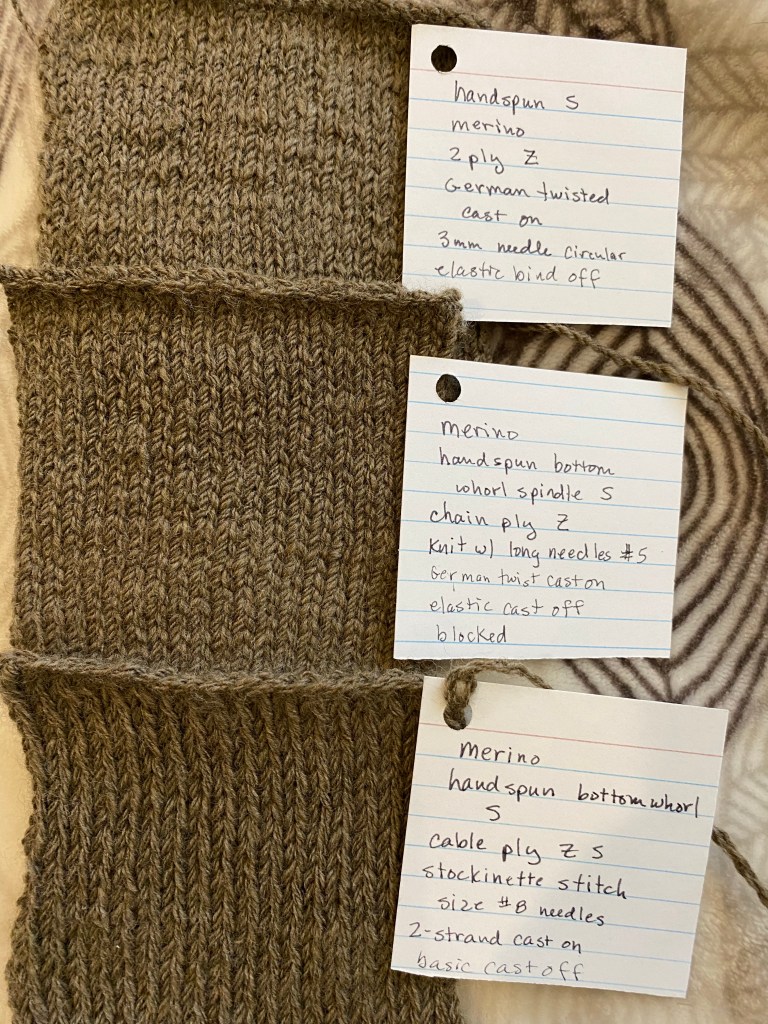
I had some more of my differently plied yarn, so I knit some swatches. I used different needle sizes for each yarn, but used stockinette for each piece. I was reminded how much faster I am with long straight needles than with circular needles, but my knitting is still slower than my crocheting. I like the knitted fabric, but don’t really care to knit. Ah well.

Knitted swatches of hand spun wool which was plied differently

All the knitted swatches had to be blocked because stockinette stitch is curly. The 2- ply was the softest, but the S plied four-strand had the most balanced stitches (the right and left side of each loop have the same number of twists). Most commercial yarn has an S ply.

Crocheted swatches

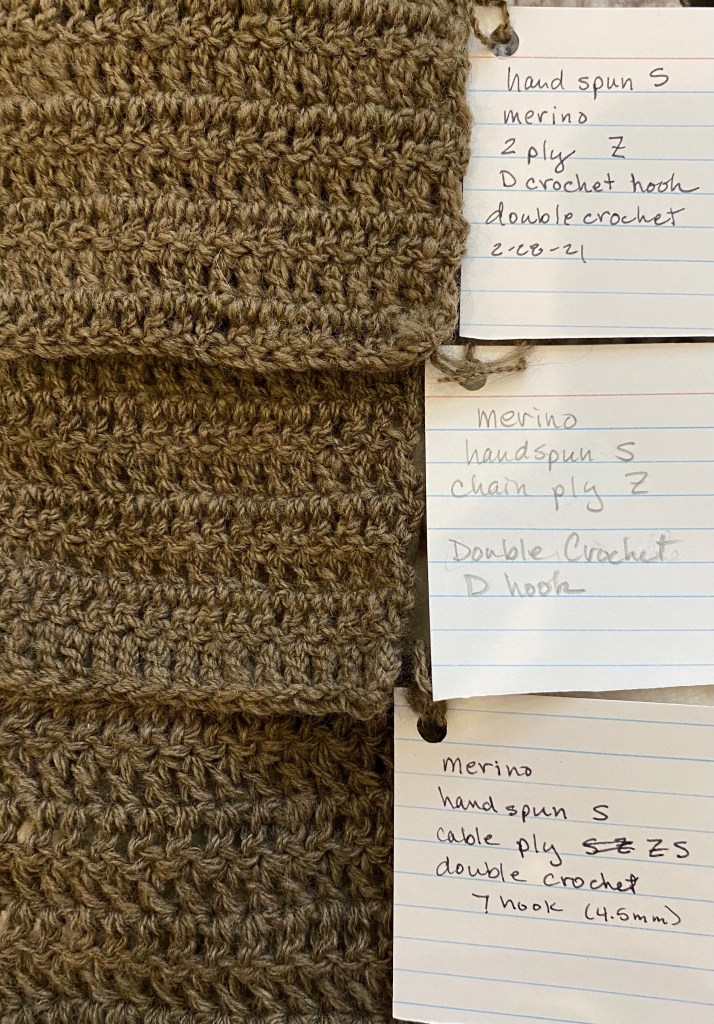
What to do with wee balls of yarn? Swatches! The experiments on my hand-spun yarn continue. I crocheted up a swatch from each of the three balls of yarn, one two-ply, one three-ply, and one four-ply. I used a double crochet stitch for each swatch, but used a different sized hook for the four-ply. I’ve labeled each swatch (as you do) with a bit of hole-punched card stock.

The stitch definition is nicer (to me) for the three and four ply yarns, but the two-ply is has the softest feel. Although, the three ply may have felt softer if I used a size larger hook.