Fiber on the brain

I may be a bit obsessed with spinning. My husband sent me an amazing sky picture, and my first thought is that it looked like fiber ready to spin!

Cloud waves (picture credit to my husband)

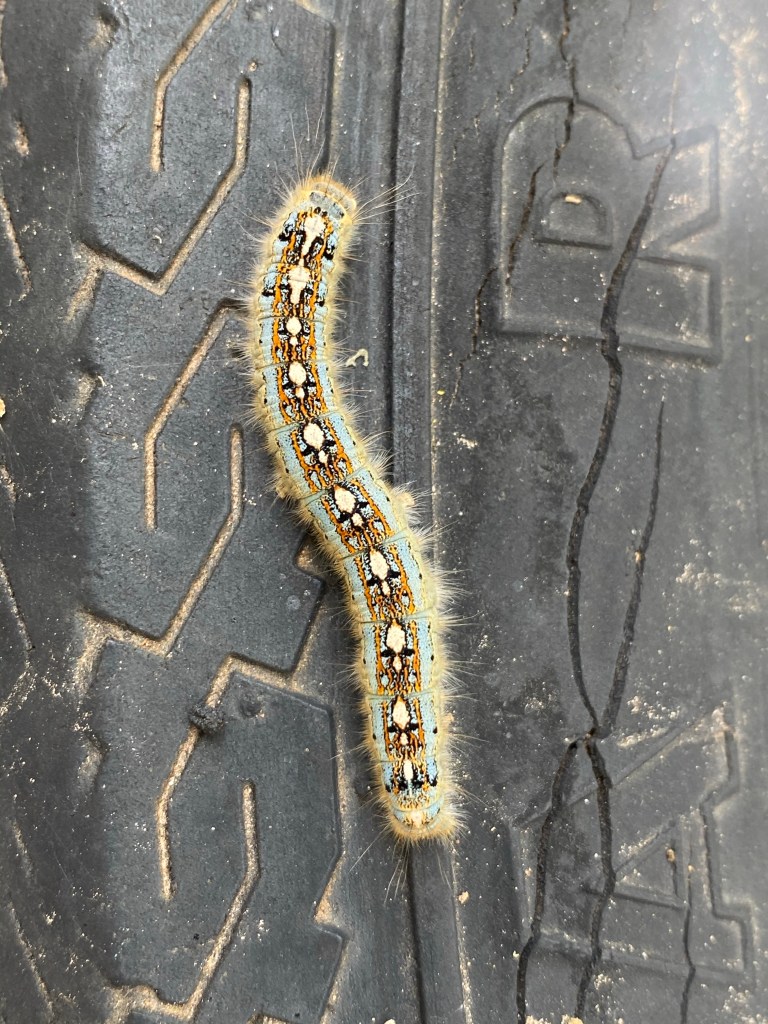
Then I found an forest tent caterpillar on my planter (yes, it is a tire), and it looks like it has sheep marching down its back!

Forest tent caterpillar

Perhaps I should go have a lay down, but first I’ll spin a bit.

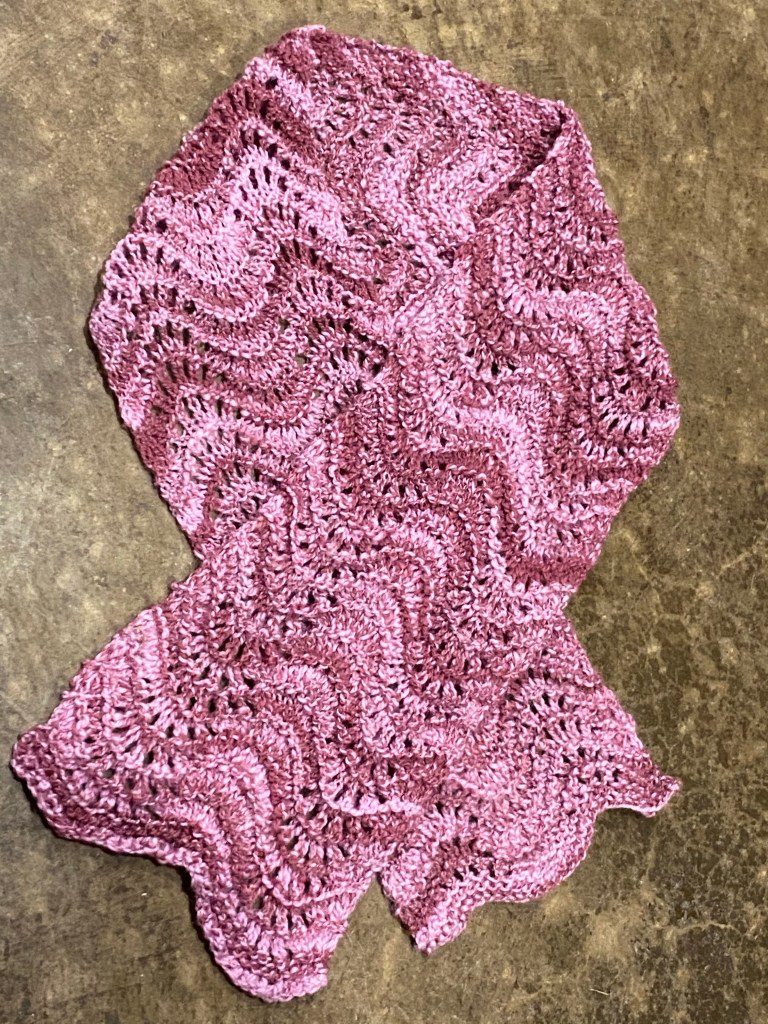
Knitting lace pattern

For someone who does not count knitting in my favorite crafts, I certainly seem to be knitting often. I finished spinning the two-color pink merino wool and am quite pleased with the color distribution. It isn’t nearly as patchy as I thought it would be when I was spinning the singles! I then needed to decide what to do with the two ply yarn. Since I want to get back to spinning, I chose knitting because it is faster than nålbinding and I like the texture better than crochet. It is all well and good to only spin, but how can I improve my spinning if I don’t know how the finished yarn performs?

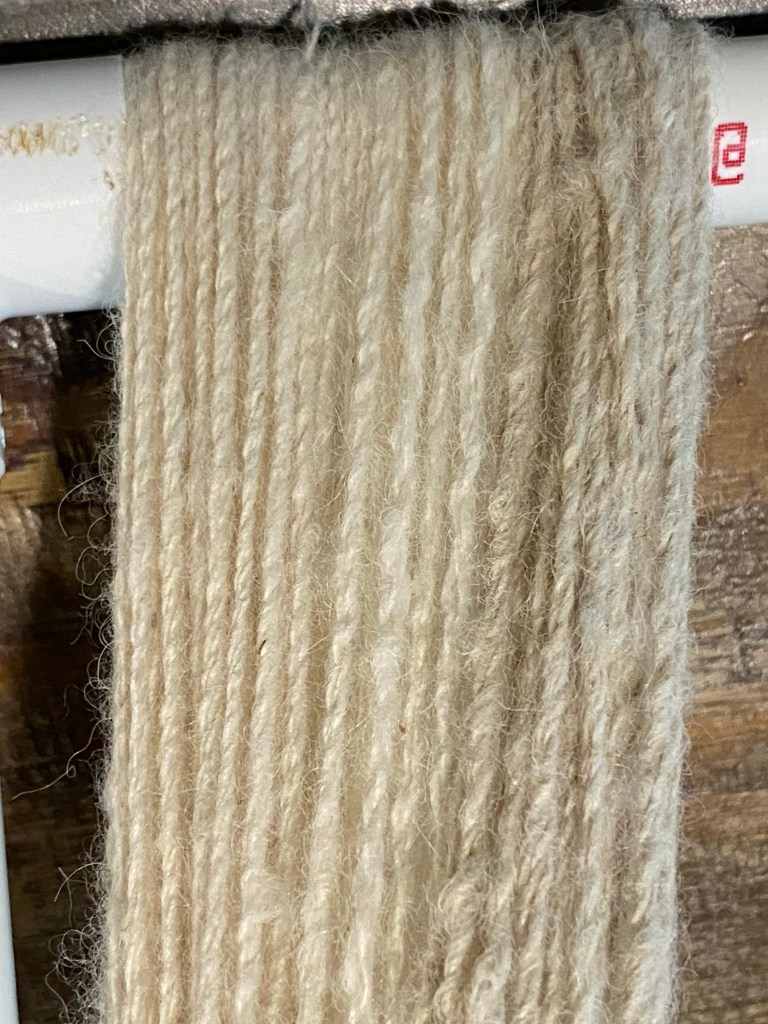
Hand-spun merino wool

I found a simple knit lace pattern, since I read two ply is often used for lace. I also learned about a different kind of needle from Prym. These are ergonomically designed with tips that hook the yarn better, triangle shafts so the loops slide better, and they clip together to keep the stitches on the needle between sessions! I do appreciate well designed things!

Prym knitting needles (size 8) shown clipped together

This pattern is my kind of lace! It repeats every four rows, and there is only one row with increases and decreases, otherwise it is knit or purled all the way across. I had the pattern memorized after three sets, and could recognize where I was in the pattern after three more. And such a lovely dynamic result! I realized that I have seen this ripple pattern somewhere else. My daughter’s dolls were tucked in with a rainbow blanket that my grandmother made that used the same stitch! I’ve always admired the ripple and wondered how it was done. Now I know!

Baby blanket knitted by my grandmother

My knitting still can’t be considered speedy, but it will do for a sitting project. I have two other skeins queued up for the next knitting project, and have started a new walking spinning project. We’ll see if I can finish the knit projects before I have more finished yarn!

Walking plus plying equals fun

Oh I had a good time plying this merino wool!! I wrapped the singles nostepinne style when I spun them, which made lovely center pull balls. For plying, though, I chose a top whorl spindle because it would hold more. I can also set the top whorl spinning by rolling it along my outer thigh, which makes it go much faster than flicking. I had just read an article about Romans depicted spinning in art, where the leg was raised at an angle to roll the spindle. Aha! If I timed it right, I could raise my leg on the forward step, roll the spindle, and continue the step and only have a little hitch in my stride. (It is sad that rural women in Italy were forbidden to spin and walk because it was considered a bad omen.) I also pushed how long I could ply before I had to wrap. I figured out that I can hold my left arm out about head high and let the spindle hang, then when the twist was where I wanted it, swing the spindle up and catch it in my right hand. I have to watch the hubris, though, because if I get too cocky a strand breaks and I spend the next five minutes of my walk splicing the yarn back together. Still, it was not only an enjoyable walk, it was longer because I wanted to finish the second ball.

Walking and plying from a center pull ball (not pictured in action because I’m not that talented)
Yarn plied in about an hour (left) and singles wrapped in center pull balls ready for plying (right)

Plying the buffalo

No, I am definitely not wrangling buffalo. American bison are not to be messed with by amateurs!! But plying the fiber, yes please. This is my first time plying singles that are most definitely of woolen preparation (the fibers are every which way, as opposed to worsted preparation where the fibers are aligned), and plying two singles is a whole new experience. I can barely tell the twist, it is just a lovely fuzzy line. I used a top whorl spindle to ply because it is easier and the singles can take a little heavier spindle than the fluff. I did have one single break, but it was easy to felt the ends back together and keep plying. I rather like the two ply as well because I can ply every last inch of my precious fiber — the tail end left of one ball I just doubled up, felted the ends, and kept twisting.

Two ply hand spun buffalo yarn

After plying, I wrapped the yarn around my niddy noddy and rinsed it to set the twist. Once it was dry, I wound the skein into a cake. It is so soft! Now to decide what I am going to do with my precious little bundle of yarn.

Handspun buffalo yarn cake (with cat photobomb)

Weird but works

I noticed that I had to spin my experimental spindle quite often. I was not able draft fast enough and the twist built up and reversed the spindle. I needed to either draft faster, or slow the spindle down. I started by drilling a couple holes in the base of my spindle and wiring in an embroidery hoop. Moving the weight away from the center slows down the spin (yay physics!)

Spindle with wired-in embroidery hoop

This worked well, but was very heavy. So I visited a local craft store and picked up some steel macrame hoops. Rather than wiring them in, I had the idea to snap them on. Because I so helpfully included an indent at the bottom of the spindle (which at the time I just thought was pretty), I could make a catch with the wire so the hoop could be changed out.

Spindle with wire hoop to adjust spin dynamics

I need to perfect the balance (which using a lathe on the spindle and more precise wiring should help), but with this modest modification I could produce yarn so much faster. The hoop is low enough that I can still use the nostepinne style ball wrapping, and when I want to use the spindle supported, the hoop pops off. It is not really surprising that I came to this solution. Wire is one of my favorite mediums, right up there with wood.

Hoop removes easily (which also means if I drop it, it pops off and sustains less damage than a permanently wired hoop)
Here is a variation on the wired “clip on” edge weighted hoop, still not quite right, but I feel I’m getting close.