Spinning as I go: plarn

A crafting friend recently reminded me of the value of plarn. Plarn is yarn made from plastic (PLastic-yARN). Typically it is used in recycling efforts by giving new life to used shopping bags. (And oh the things people make, just image searching plarn is its own rabbit hole.) The attraction of cutting up bags is that if you cut them from side to side you end up with loops, which are very easy to connect into longer pieces. So I set my grocery bags out to dry, then cut them into loops by folding them length-wise several times, squeezing out the air, and cutting about one inch sections. (I found the measurement of the end digit of my tallest finger is one inch. Convenient.)
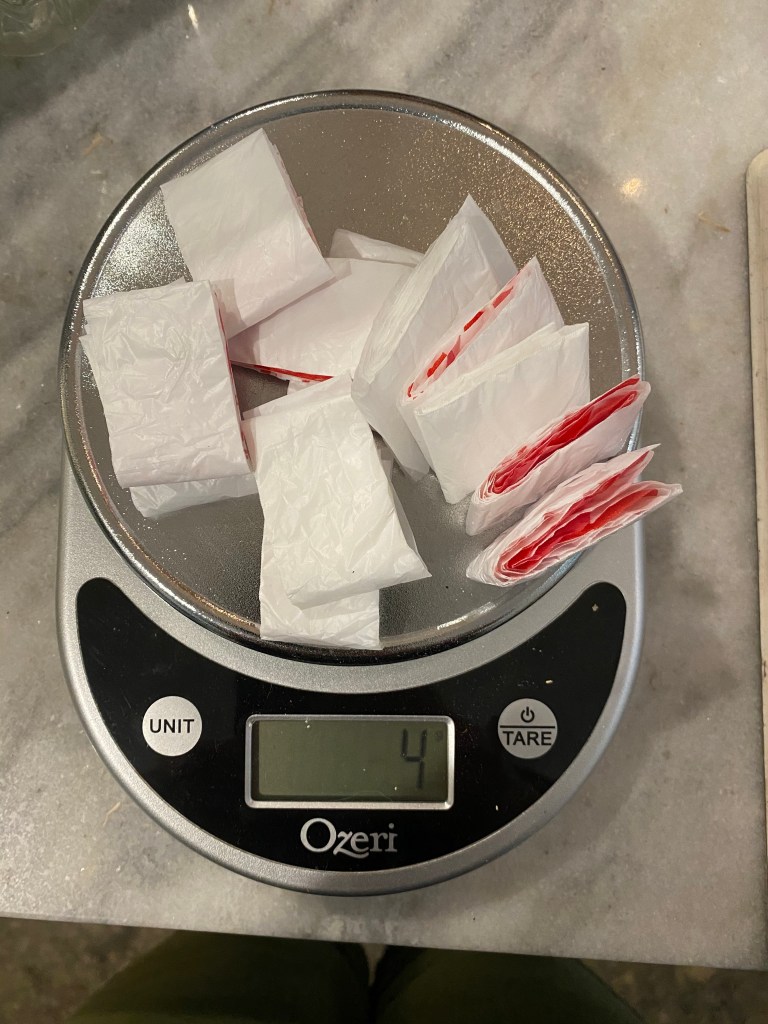
Sections cut from a grocery bag

I really enjoy nålbinding, and connecting short sections is the exact method needed for this technique. Rather than making a large length of plarn, I decided to attach as I go. But can I spin it too? Well of course. It actually works quite well to attach a loop, use the hook on my drop spindle on the other end of the loop, and spin just that section. (It is possible to put twist into the plarn with a pencil or fingers if you don’t have a spindle with a hook.) Putting twist into the strand makes it more durable and easier to work with when making stitches. The tighter the twist the harder the plarn feels; I prefer to twist until the diameter is about the same as the knot.

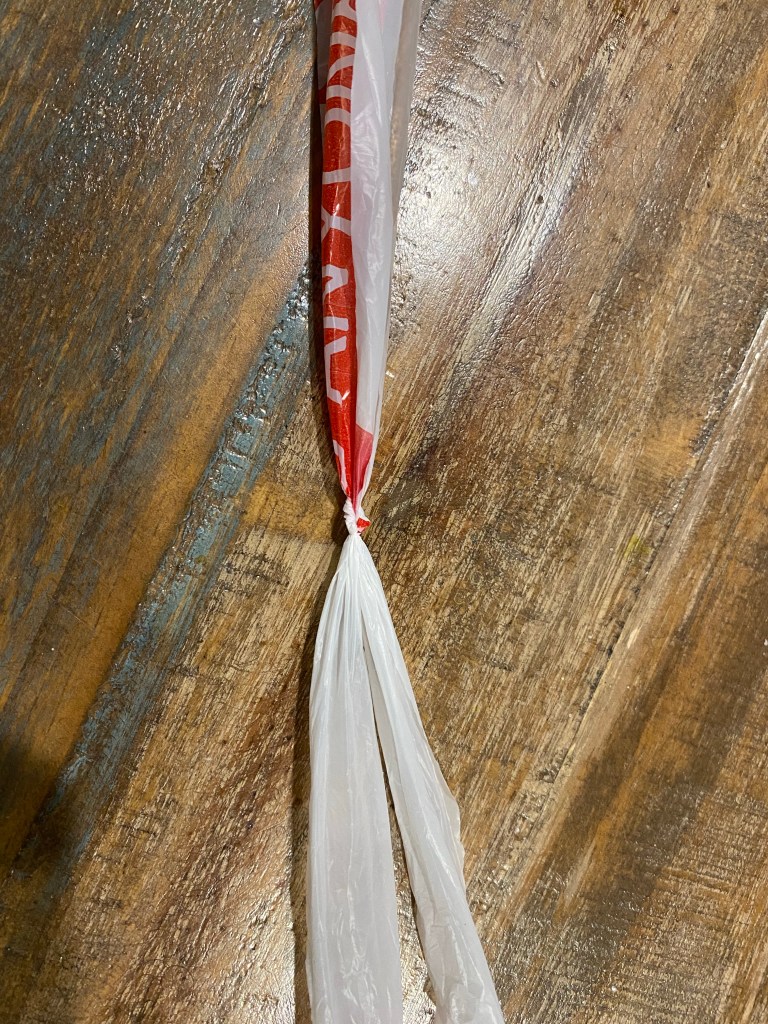
Plastic bag loops attached and aligned
Two loops pulled snug to make a small knot
Drop spindle hook used to put twist in the section

I did a short video to show this technique. (I used a new method for closed captions, so check that out too.) This post is getting rather long, so I’ll talk about what I’m doing with the plarn tomorrow.

Alpaca experiment

I have read that some people spin alpaca fiber without washing it. Alpaca fleece does not have heavy deposits of lanolin like the wool from sheep. There seems to be a great debate on whether it needs to be washed, or at least very strong feelings, so I thought I would make up my own mind in the matter with a little experiment.

Singles spun from washed and carded alpaca, washed alpaca, and unwashed alpaca (respectively)

I took three samples from the same fleece (Sugar Plum’s). Two were washed (not scoured, but washed in warm water with mild soap), and third I pulled from the cleanest part of the fleece. One of the washed sections I carded using fine toothed hand carders and made rolags. The second washed section I left uncarded and spun from handfuls. The unwashed section I also spun from handfuls. I did attempt to pull out a rough roving-type bundle of fibers, but after sitting in my bag a couple of minutes, there was little cohesion and it was just easier to spin small sections.

Cabled yarn plied from washed and carded alpaca, washed alpaca, and unwashed alpaca (respectively)

The biggest difference was in spinning the singles. The washed and carded fleece spun smoothly and consistently. The washed uncarded was a little more fiddly to spin especially when I reached clumps of thicker fibers. I had to distribute these sturdier hairs with the finer fibers to keep the yarn from drifting apart. The single also had considerably more halo (fibers sticking out), than the carded sample. It was the same with the unwashed fiber, clumps of fiddly bits and more halo, but in addition, my fingers felt like I had applied lotion. There is definitely some kind of coating on the unwashed alpaca fiber, but it was not unpleasant. I did wrap the unwashed single onto my niddy noddy and gave it a soak in warm water and no-rinse wool wash. Nothing came out of the water. Even though I know the color can change throughout a fleece, I still felt the darker color was due to trapped dirt.

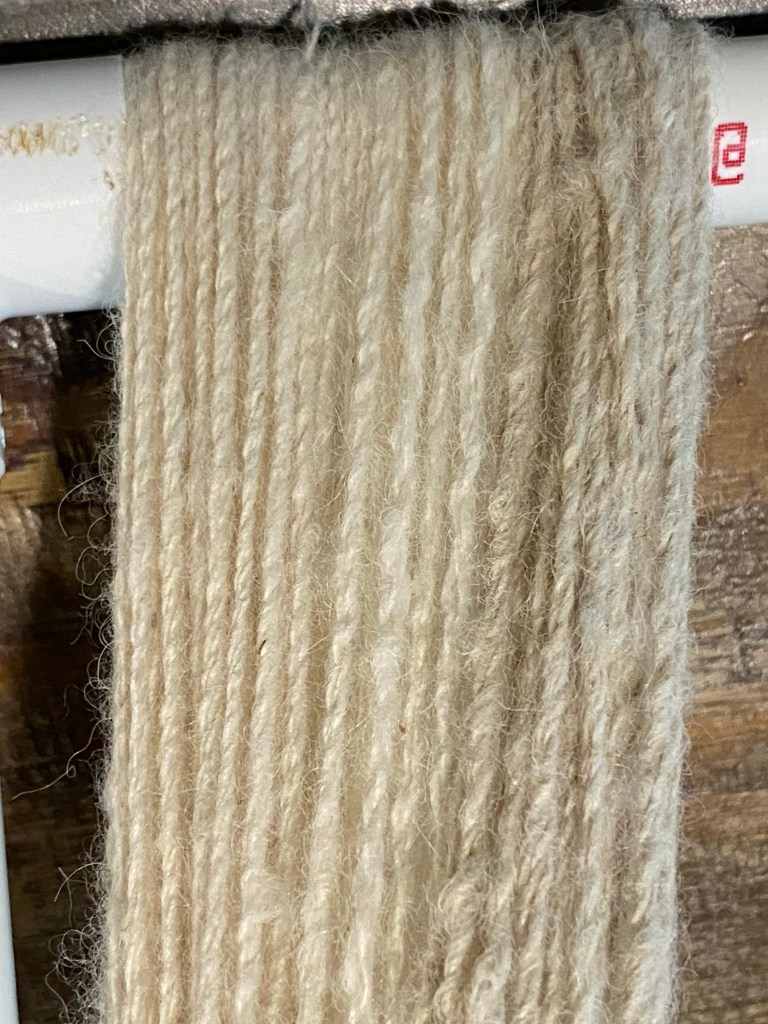
Close up of cabled yarn on the niddy noddy from washed and carded alpaca, washed alpaca, and unwashed alpaca (respectively)

I decided to cable the yarn (ply twice to get a four strand yarn). The differences in fiber preparation made no difference in the mechanics of plying. The uncarded samples still have a more pronounced halo as you can see in the photo above, as well as a less smooth appearance. My plan is to nålbind all the samples with the same stitch (I want to practice a new stitch, so this is a good opportunity).

So how do I stand on the wash or no wash discussion? If I had fleece with very little vegetable matter (VM) and mud, perhaps from a coated animal (the farmer can put coats on to keep the dirt off somewhat, but I don’t know how the animal feels about that), I wouldn’t mind spinning directly from the fleece. The fleeces currently in my possession are not that clean, so I will be washing and carding henceforth.

Chasing fluff

I am doing a spinning experiment (the results of which will be posted later, but this was funny, so I thought I would share.) The gist is that I am spinning bits of fluff as I am walking, which gets a bit problematic when there is some wind and a loose tuff of fiber. It must have been quite the scene with my bit of alpaca fleece rolling merrily down the street with me chasing after it.

Alpaca fleece rolling down the road, making a run for it

How cool is this?!

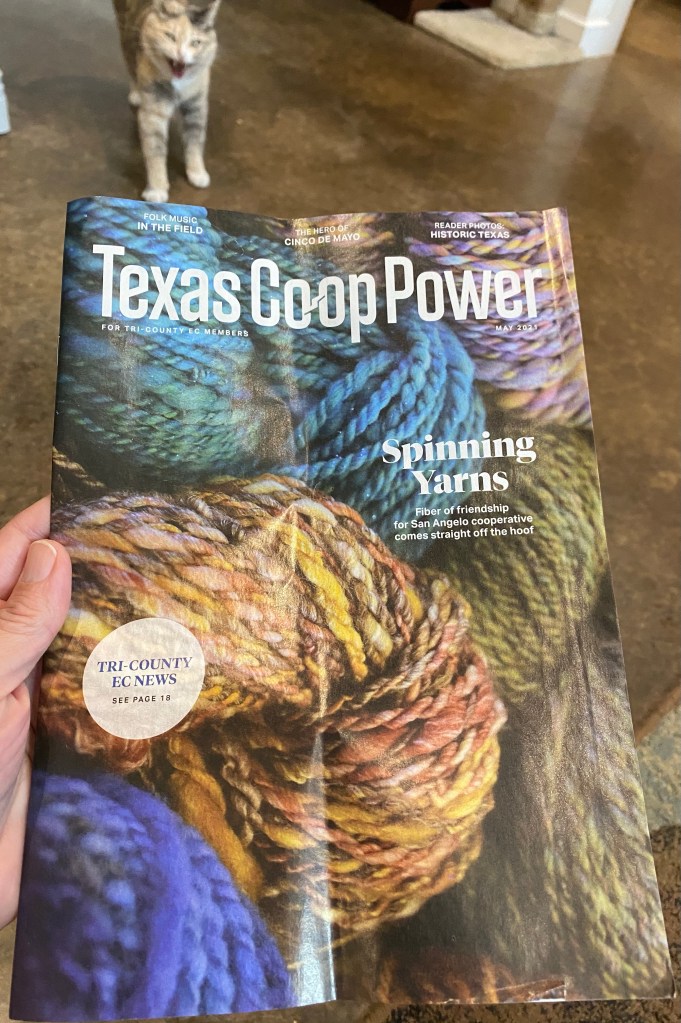
May 2023 cover of Texas Co-op Power

How awesome to open up my mailbox and be greeted by a picture of a kaleidoscope of lovely hand spun yarn?!? And it isn’t even my spinning magazine, but from the monthly electric co-op publication! (My sister gifted me with a subscription of Spin-off magazine that I LOVE, and selfishly stretch out by only reading an article or two at a time.) Bonus spinning info, hurray! Here is the link to the digital version, if you are interested. It talks about a enterprising group of spinners that co-op their own herd of sheep, goats, and alpacas. A little too far away for me, which is a bummer, but I have local sources for alpaca, buffalo down, and mohair, so I feel pretty darn lucky.

Oh, and that is Sophie doing a photobomb and looking scary. I caught her in the middle of a yawn and stretch.

Marled ripple lace scarf

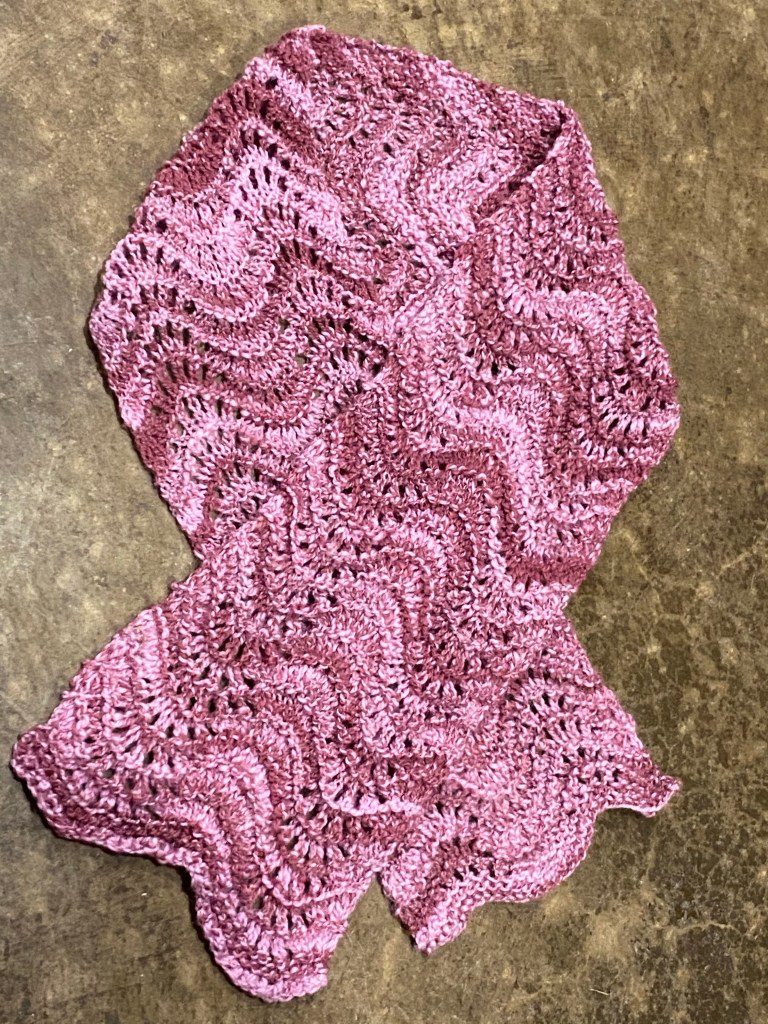
The lace scarf is done! It isn’t very long, but I used up all my fiber, with only a short segment remaining.

I won at yarn roulette, only a few inches of yarn left over

The total weight of the scarf is 103 grams (3.6 oz). I used two colors of pink merino roving, pre-drafted the colors together without blending, spun with a hand carved drop spindle, then made a two-ply yarn. Lace stitch was done with size 8 Prym needles (which may have just changed my feelings about knitting and especially lace knitting). I blocked and dried the scarf.

Finished merino wool lace scarf

Interestingly, the pictures of the scarf are much more striped than it appears in person.