Sad but expected

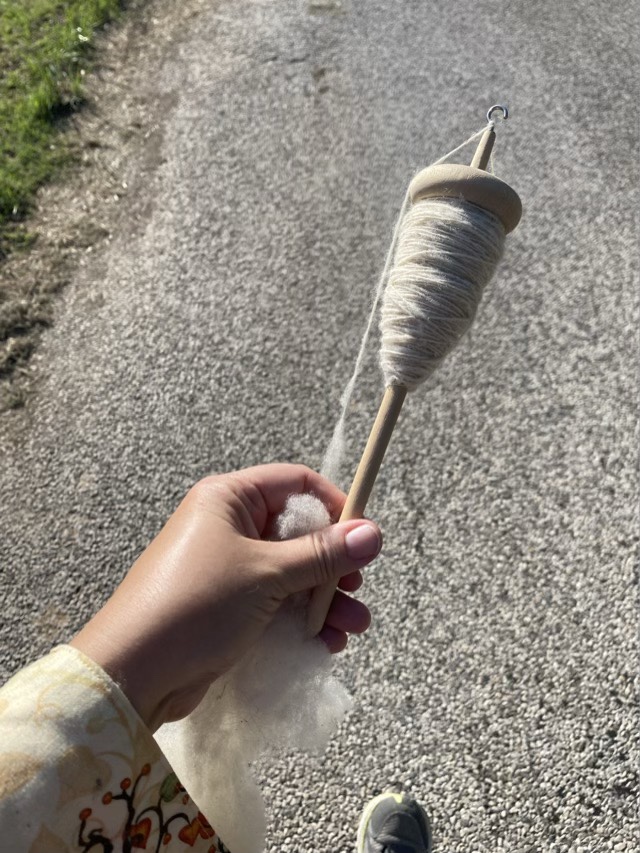
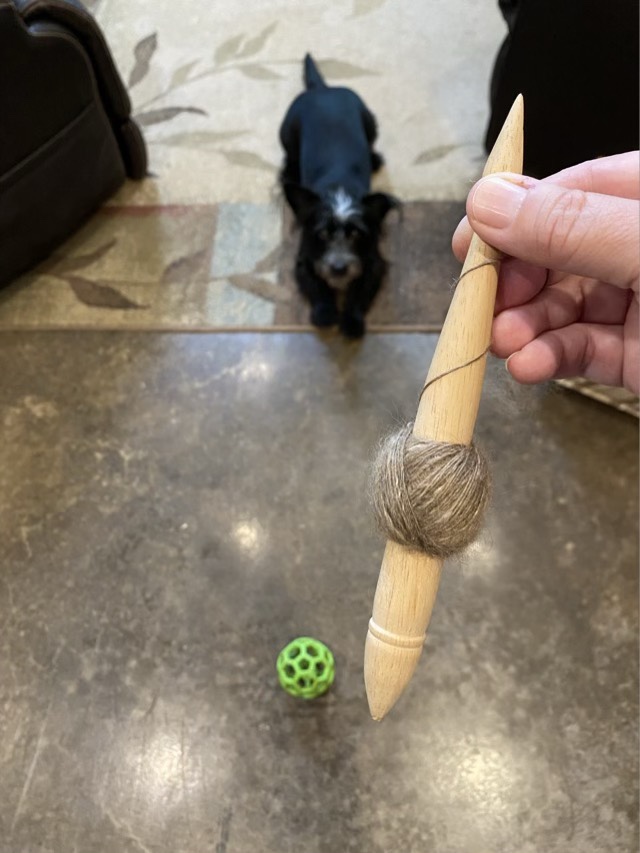
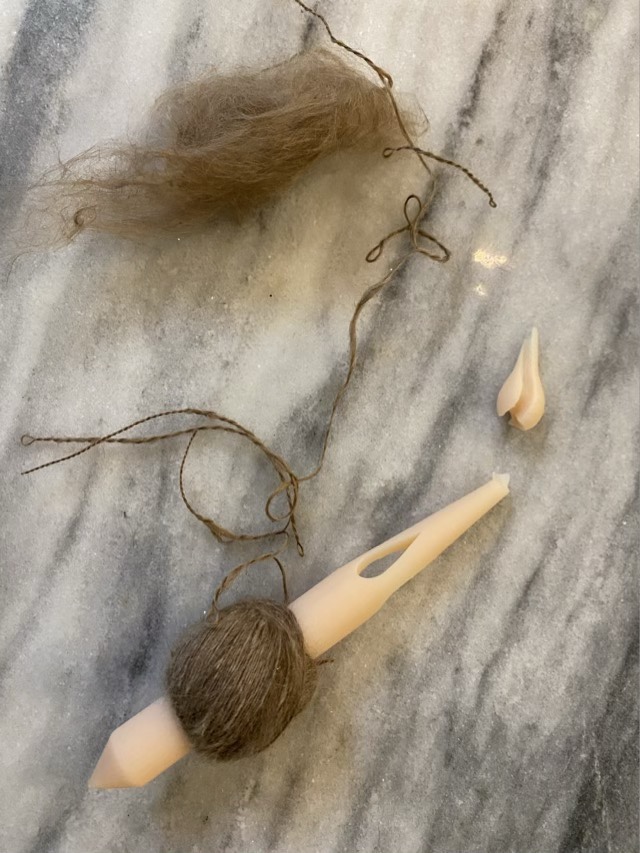
I have been giving my 3D printed spindle a more rigorous testing by using it as a drop spindle. I rather expected a sudden drop might be detrimental, so although it was a shock when I dropped it on the concrete floor and the head broke off, I was not really surprised.

Broken 3D printed spindle (my second design)

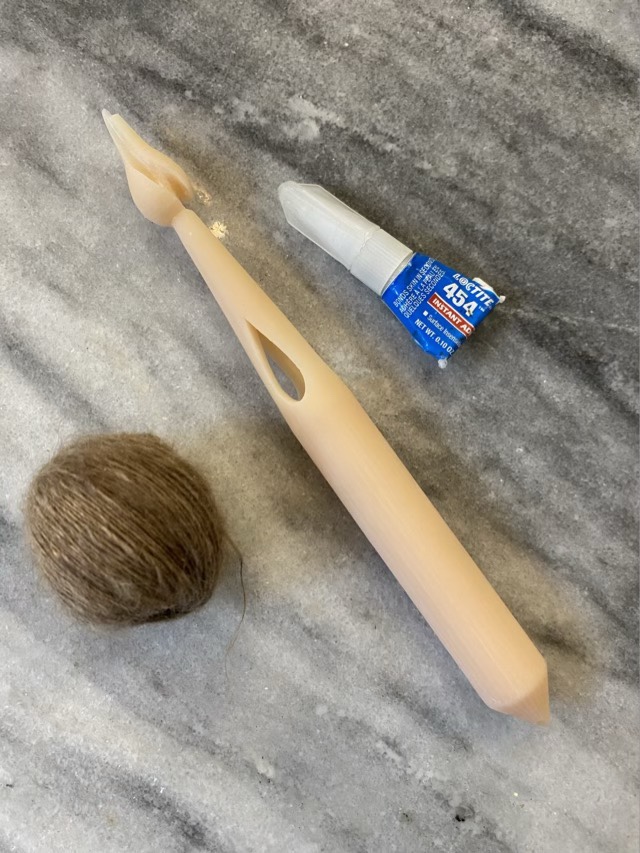
I used Loctite 454 to reattach the head, which worked very well. I couldn’t find one of the top tines, but it will still function as a supported spindle (much less chance of a distance drop).

Head glued back on the spindle

Embarking on a new journey

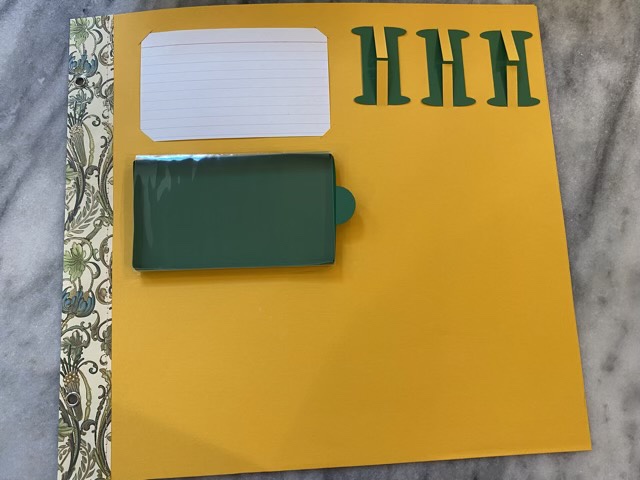
I have been reading from many sources that to improve spinning skills, a spinner should spin many different fibers. Twist my arm. I have also read that keeping a record of each spin is helpful when evaluating fiber for future projects. Writing about fibers isn’t a problem, but putting together what is essentially a scrap book of fiber information is a little more daunting. I tend to think about saving bits only after the project is finished and most of the fiber is gone. That is going to change. I’m starting a fiber spinning book. I’ve designed a standard 12×12 scrap book page to hold a bit of unspun fiber, “spools” of yarn, and swatches of fabric made from the yarn.

Fiber study page made to fit a 12×12 post scrap book

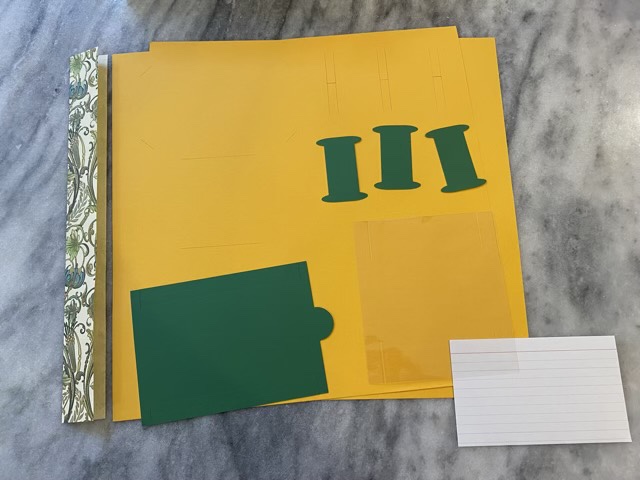
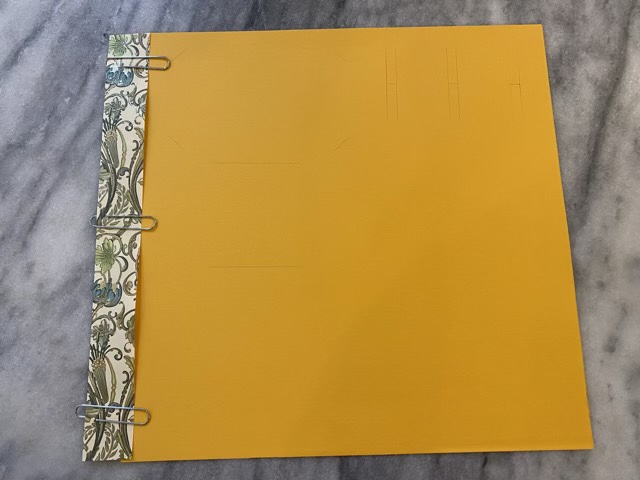
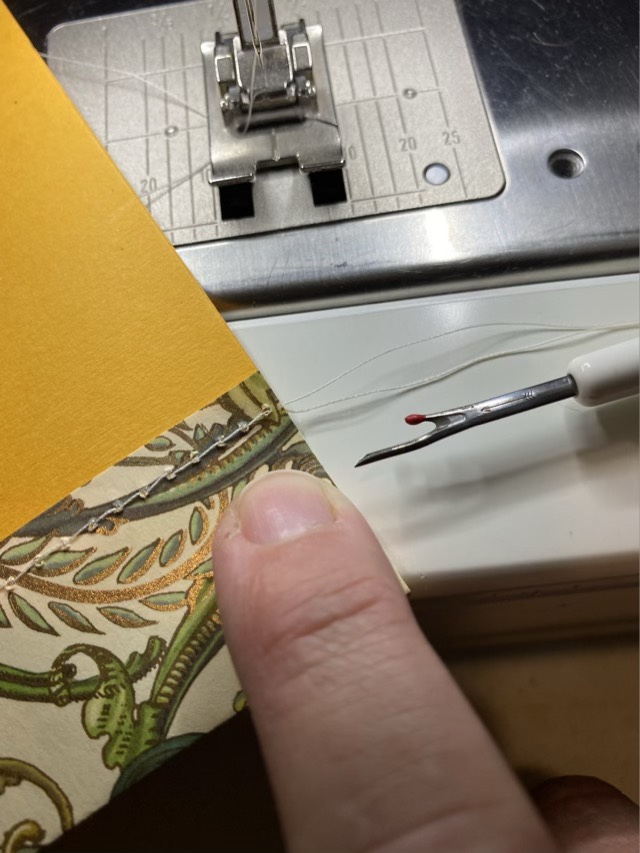
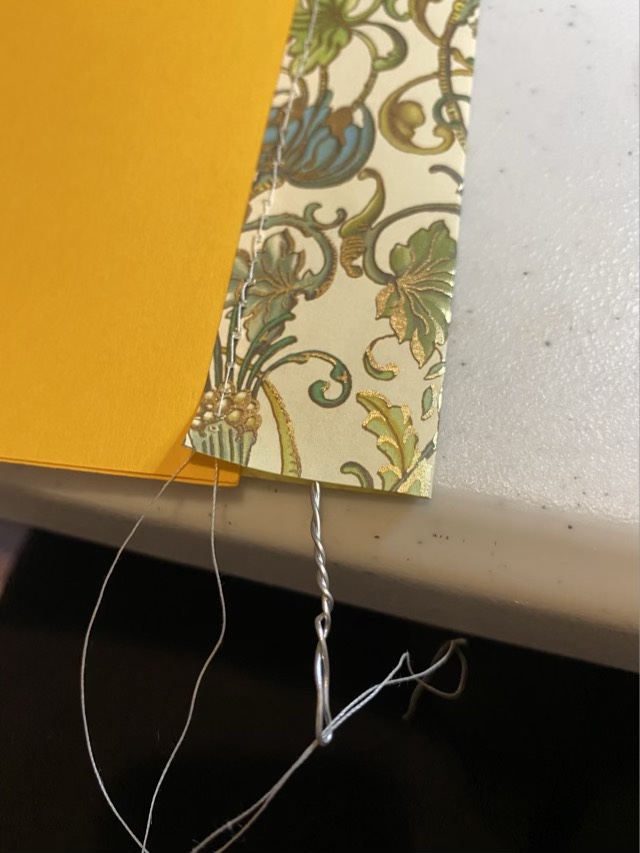
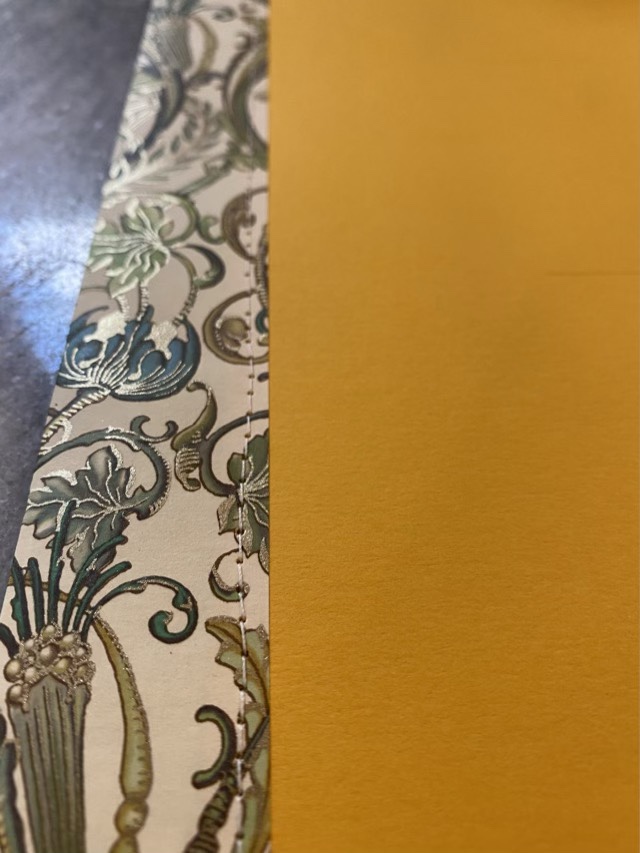
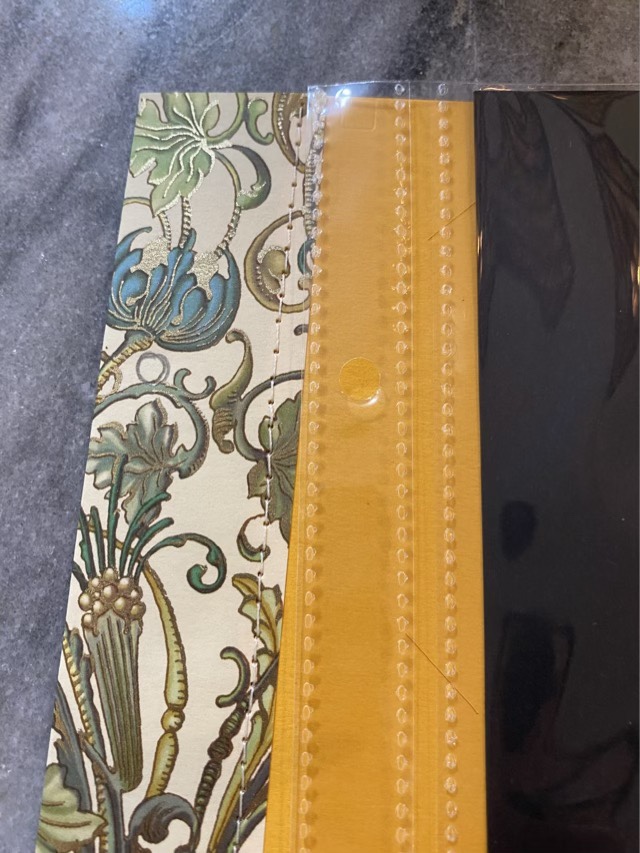
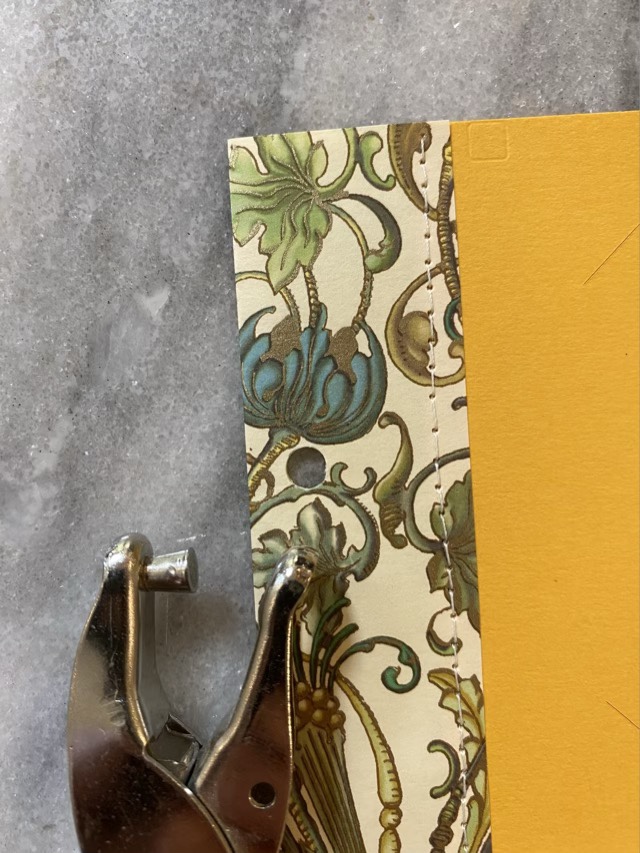
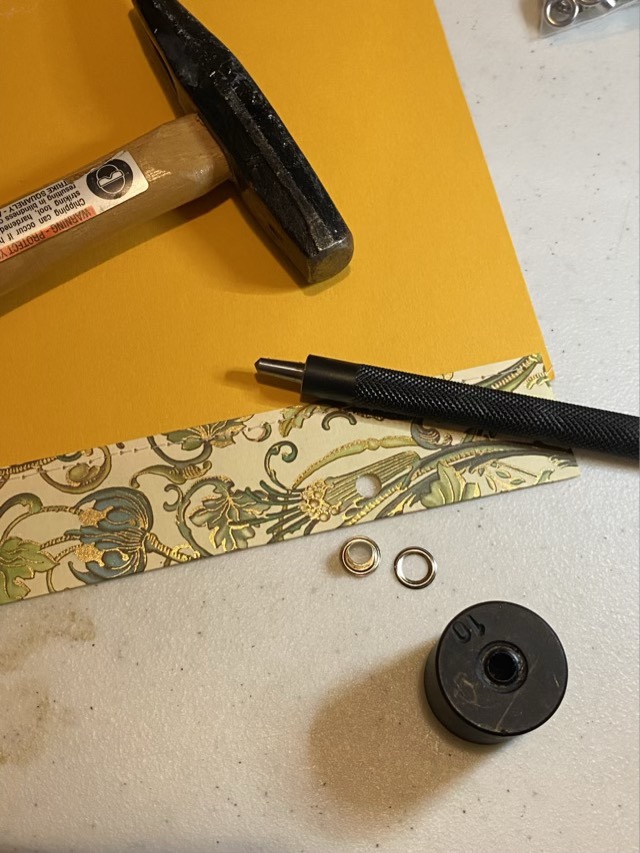
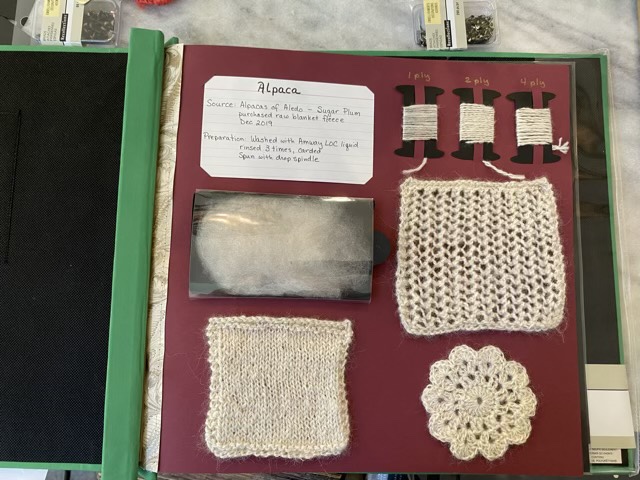
This first page is about the fiber from an alpaca named Sugar Plum. The spine is made from paper my sister bought in Italy (look, I finally found a worthy project!) sewn onto two sheets of card stock and the holes are reinforced with metal grommets. The top sheet has slots cut using an electronic cutter to hold the information card, spools, and fiber drawer. The spools are cut from card stock and have slits one inch apart to make estimating wraps per inch (wpi) easier.

1/4 inch fiber drawer

I made a clear fiber drawer so my fibers could be seen and not be flattened down. I used heated laminate sheet and card stock with some hot glue to make the box sturdier. That is the only type of glue in the whole project since adhesives can degrade over time; all the other connections are mechanical.

Fabric swatches lifted up to reveal further information about construction

The fabric swatches are held on with metal brads, and information written beneath.

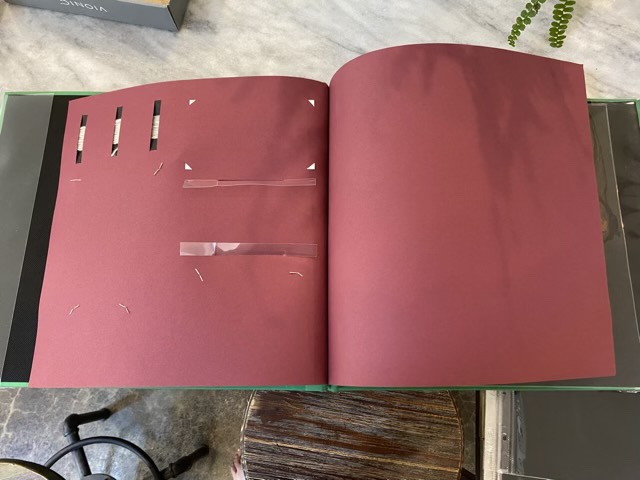
Protective page of card stock

I used two sheets of card stock so that the back page can protect the next sheet from the exposed brads, but still allow access to the brads.

Page installed in store-bought scrap book

The journey has begun! I’ll blog about fibers as I complete pages, and I’ll do a tutorial on how to make this type of page (I was too excited to get started to properly document this first page.) And that plain scrap book cover needs some ornamentation and improvement. This should keep me busy and blogging for awhile!

In preparation

I finished spinning the alpaca fleece from Sugar Plum that I washed over a year ago. I had a brief moment of panic that it was the last bit, but then I found a half bag more unwashed in the closet.

Two-ply alpaca yarn

I’m thinking of starting up another long term project, but that is worked in small sections. I’ll give a big reveal later. For now, here are alpaca swatches drying over the tub to give you a hint (or thoroughly confuse).

From left to right: crochet, stockinette stitch, lace stitch all done in alpaca hand spun yarn and blocked on netting stretched over the bath tub

Upcoming will be a post detailing the project. Not the completed project, because it will take years and may never be “finished”, so maybe instead of a grand reveal, it will be the announcement of embarking on a journey.

3D spindle design #2

I reworked my spindle design in the Blender software and asked my local 3D printer to print it in cream resin for me. I redesigned the head and neck to make the top lighter and route the yarn better.

New spindle design (prototype 2)

It spins easier than the first prototype, and is a bit more elegant, but isn’t quite where I want it.

Green combed top spun on a 3D printed spindle

I have realized that elegance is really what attracts spinners to a spindle. Yes, sometimes we need a workhorse to just get the job done, but a tool with elegance or history, or both, sing more to the soul. I have recently learned, when watching a history piece on spindles by Judith MacKenzie, that it possible to spin yarn by thigh rolling. No wheel, no spindle, hands and leg together to not only spin, but ply simultaneously. (I will report back on my attempts at that!) So why accumulate a collection of different objects to do the same thing? Because we are hoarders that like shiny things. We like to share and show our hoard and thus spread the knowledge farther. It is not a bad thing, in balance, and a good reason to strive for elegance on occasion.

Setting the twist

After plying my hand dyed chain ply yarn, I transferred it to my PVC niddy noddy and soaked it with water to set the twist.

Gradient yarn on a niddy noddy

When the yarn was dry, I wound it into a cake using a swift and a ball winder.

Cake of yarn made from Supernova Dye Works’ “Spruce it up” hand dyed Merino wool roving

I have picked a crochet pattern that I think will do nicely with this yarn, but it is fifth in my queue, so I better get to making!