Winding

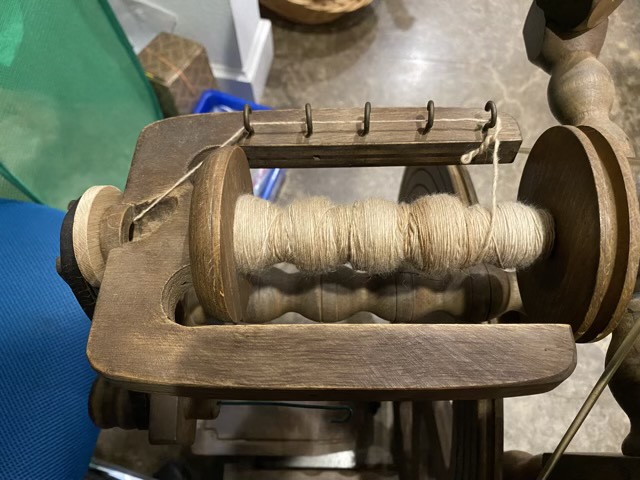
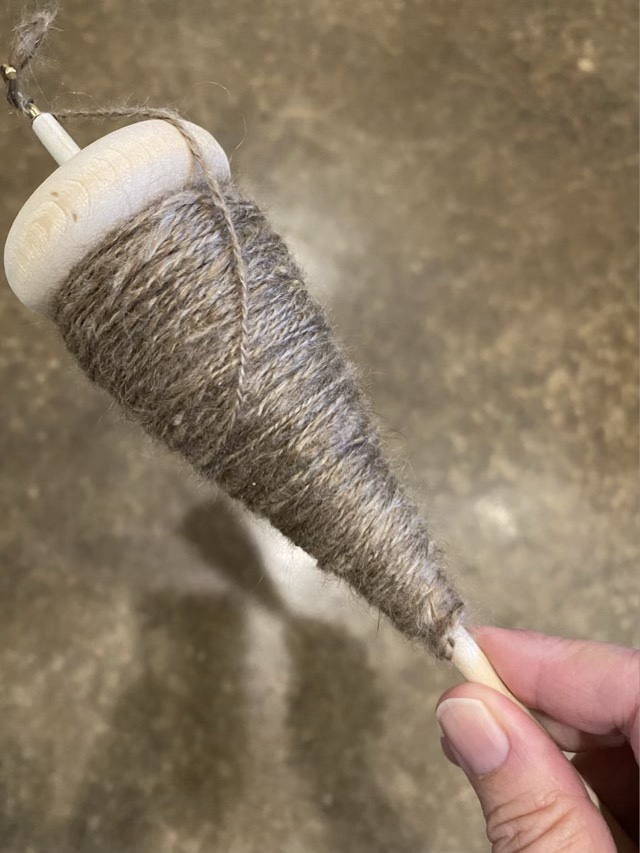
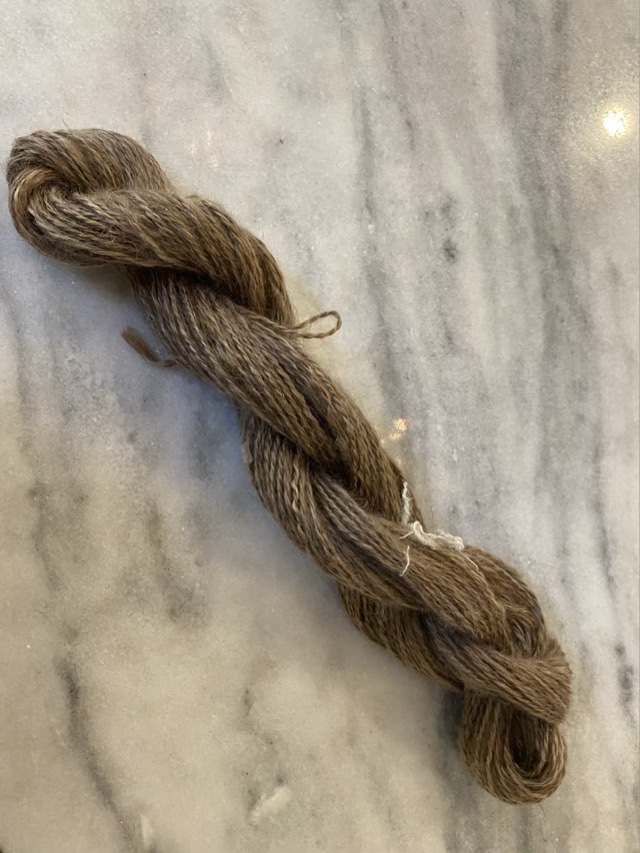
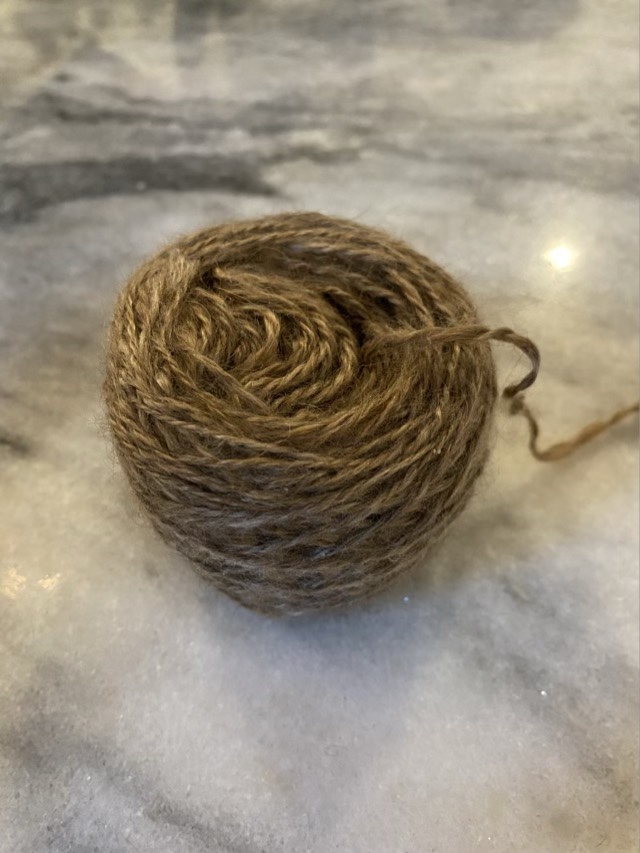
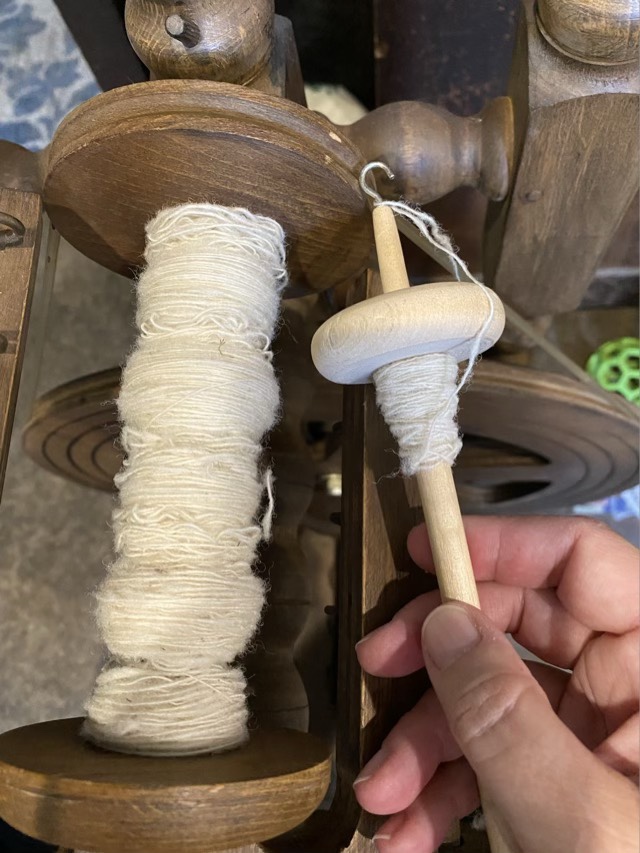
I filled my first spindle of Clun Forest wool while walking the neighborhood. Rather than ball up the singles, or put them on the niddy noddy just yet, I used my vintage spinning wheel to wind the yarn onto a bobbin. I used the hooks at first, but was not pleased with the way the yarn kinked between sections, and I was afraid the flyer was putting in more twist.

Single ply yarn wound from spindle to bobbin using hooks

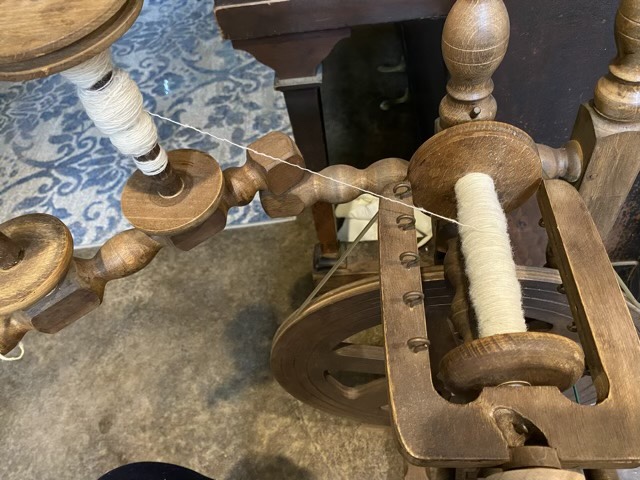
I transferred the yarn to a different bobbin, and this time I locked down the flyer so it couldn’t add twist, and just let the wheel spin the bobbin. I didn’t use the hooks, but guided the yarn onto the bobbin with my hand position to make a smooth transition all along the bobbin.

Transferring yarn from bobbin to bobbin

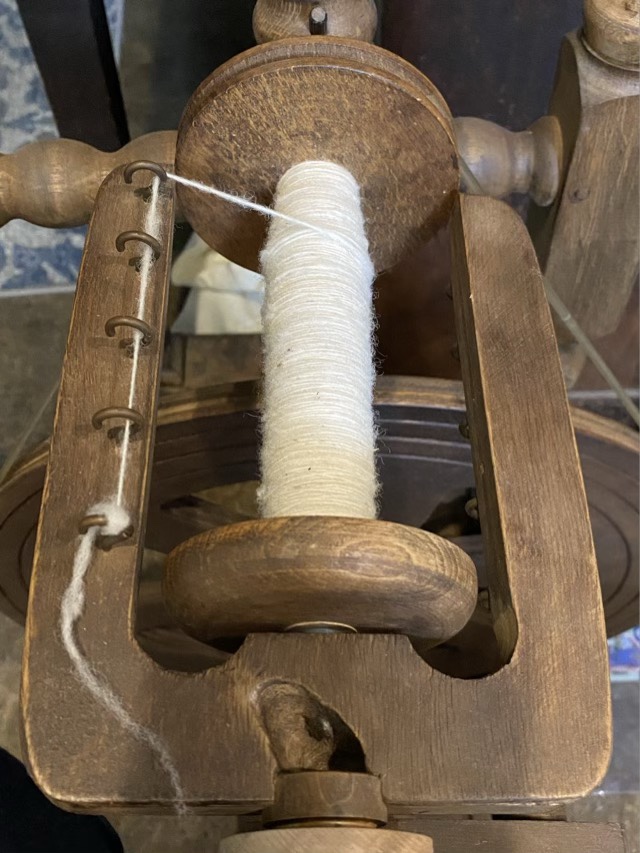
The resulting wrap is much more pleasing to look at. My plan it to add on the singles as I spin them, then ply everything using the wheel.

Smoothly wound singles yarn

Building a fiber study page

As I spin through as many different fibers as I can get my hands on, I am creating a scrapbook page for each to build a reference book. This is how I build my pages.

Materials:

  • Two 12”x12” sheets of card stock
  • One 8.5”x11” sheet of card stock
  • One 2.5”x12” rectangle of end paper (fancy printed paper with some strength)
  • One 8 3/4” x 11 1/4” heat-sealed laminating pouch (sealed empty)
  • One 3”x5” index card
  • Two 3/16” inside diameter metal grommets
  • Paper brads
  • Hot glue
  • Thread

I use a Cricut electric cutter to score and cut my cardstock, but similar preparations can be done by hand with a craft knife. I make a 1/4” drawer, three “spools” from coordinating cardstock, a drawer sleeve from heat-sealed laminate, and cut one sheet of cardstock with slots to hold each element. Paper brads will hold the swatches onto the page. The Cricut project is available here: https://design.cricut.com/landing/project-detail/630799ca21506d2c4716a4c2

Cut, scored, and folded pieces ready for assembly
I use paper clips to align and hold the two large pieces of card stock and the folded end paper together with a 1/4” overlap. The back uncut sheet acts to protect the following page, and the end paper forms a spine to make the page large enough to fit in a standard photo book. Sewing, rather than gluing, provides a secure attachment for a longer length of time.
Using a straight stitch I sew the three layers of paper together.
I use a seam ripper to pull the threads to the inside of the layers.
I knot the ends of the threads, then use a long piece of twisted wire to run the threads back inside the spine.
Finished seam.
A page from the scrap books works well to mark where the holes should go on the spine.
I use a hole punch to cut the holes for the posts of my photo book.
Two part metal grommets help reinforce the holes. These are easy to add with the right tools.
Set grommet.
A heat sealed laminate sheet is remarkably easy to fold. The drawer sleeve needs four creases to create a 1/4” high sleeve, then the tabs on the back fit into the slits on the card stock.
The folded card stock drawer benefits from the ridged hot glue to reinforce the sides. The drawer works without the adhesive, but is studier with it.
Assembled fiber study page. The spools are held with long tabs that can slide under the yarn once wrapped. Each spool has two slits one inch apart so the yarn’s wraps per inch is easy to see.
A second page with a different color scheme for a lighter colored yarn.

Descriptions of the yarn can go on the index card, unspun fiber can go in the drawer, spun yarn of different plies go on the spools, and knit, crochet, nålbinding, or weaving swatches can be attached with paper brads to the open areas.

Back of a finished page showing the connections and the protective sheet.
Finished page with alpaca yarn installed in a scrapbook.

On the road again

Now that the temperatures are dropping, and my Achilles tendon is healed, I’m starting to walk and spin again. Joy. I picked the Clun Forest wool from my stash, which I bought as roving, so it is ready to spin from the bag.

Walking and spinning with a top whorl drop spindle

This wool is very different from the Merino and Shetland wools I’ve spun so far, it has more lanolin for one, the energy in the crimp is higher, and it is coarser. I find spinning it a little thicker makes us both happier. There are fluffy little balls in the roving, called noils, and if they want to incorporate into the yarn I let them, but if they float to the side, they are set free in the breeze.

Fiber prep

I pulled some scoured mohair from my stash that I prepped a few years ago. This is hair from Rutabaga, an Angora goat, and came from her first shearing. My intention is to spin it up for another fiber log page.

From left to right: yarn spun from brushed fiber, yarn spun from carded fiber, yarn spun from combed fiber

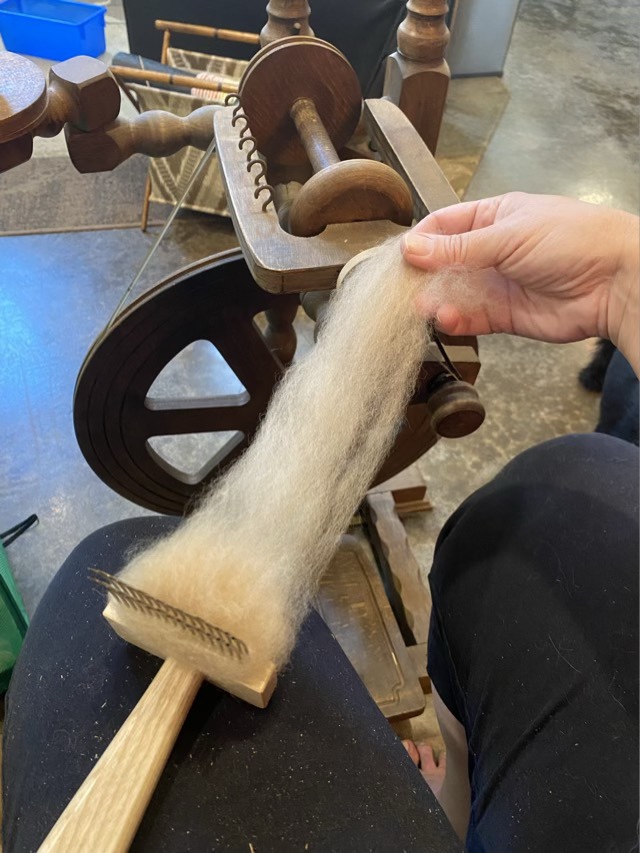
The fibers condensed some in storage, and at the time I didn’t have carders, so had used a cat brush to align the fibers. I tried spinning from the sections straight from the bag, but the pull was uneven and my yarn inconsistent. So I carded some with hand carders, which made spinning easier but I lost some of the shine. I don’t have wool combs, but found some undercoat rakes designed for dogs. I am able to comb small amounts of fiber inefficiently, but I can comb them, which makes the fibers parallel and removes the noils and shorter fibers. The combed sections are much easier to spin and have more shine when spun.

The next step is to obtain actual wool combs, which have longer tines to process more fiber. Properly made wool combs are an investment. Yes, there are DIY versions out there using finish nails, but those nails aren’t mirror finished or very long. As I think about how I would construct combs, hardening and mirror finishing the metal tines seems the most intensive part. Then setting the tine into a comfortable handle in such a way that they don’t work loose under the work load is the next challenge. I am thinking that the combs, although expensive, are not unreasonably so.

Her ears

Missy the dog’s hearing is astounding. I picked up a wooden spindle, gave it a spin, and she woke up from sound nap in the other room and came running with her ball. The spindle spinning is not a loud sound, but the tiniest of gentle whirs. Those ears.

Missy is ready for me to spin, and kick her ball