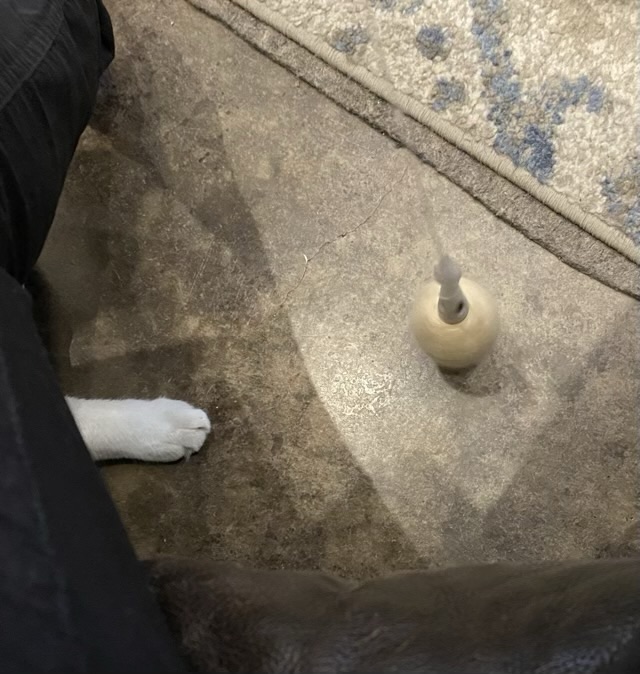
Thor the cat is really fascinated with spinning yarn. He is a good boy in that I tell him it isn’t his and he backs off, but he does try to get as close as he can. He is particularly tempted when I am spinning a drop spindle while seated.

Thor the cat is really fascinated with spinning yarn. He is a good boy in that I tell him it isn’t his and he backs off, but he does try to get as close as he can. He is particularly tempted when I am spinning a drop spindle while seated.
Blocking a knit item really can work wonders. My Helix scarf increased in length about a third, making it a nice size. I’m glad I didn’t add on.
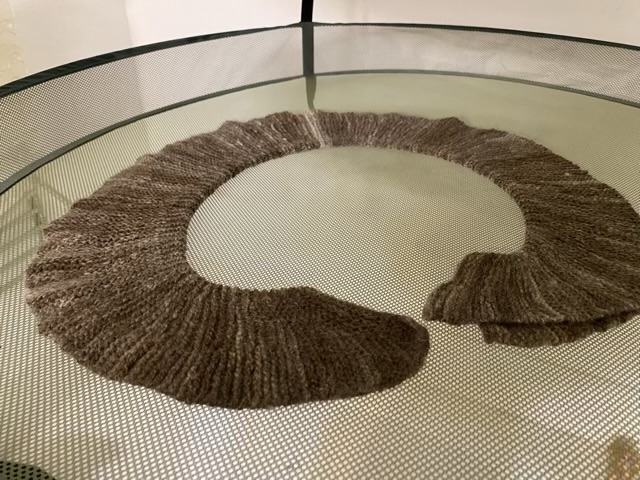

This could be my favorite piece of spinning and knitting that I’ve done. I started spinning the yarn about a year ago, and knitting it took me about a month. That being said, this was not my only project during that time. I call myself a serial crafter, but really I should consider the title parallel crafter. A parallel serial crafter. A craft dispatcher. Hm. This train derailed, but I’m glad the scarf made it to the station.
I finished knitting my Helix scarf! It has lovely ripples when laid out, but is a bit short. I used all my hand spun blended wool and silk yarn, so if I need to add on, it would have to be a different color. Hm. I think I will block it (get it wet and lay it out) before making rash decisions.


I really love this pattern, and the way they do the short rows. It really is a wonderful way to show off hand spun yarn, and I like the subtle variation in color that the blended fiber produced.
I’m still working on spinning the fawn-colored alpaca wool on my vintage Befra Willy spinning wheel. I’d like to get it finished up so I can give the wheel a good rub down with Howard’s Feed-n-wax, but apparently my fiber basket is bottomless. (Or I get distracted…)
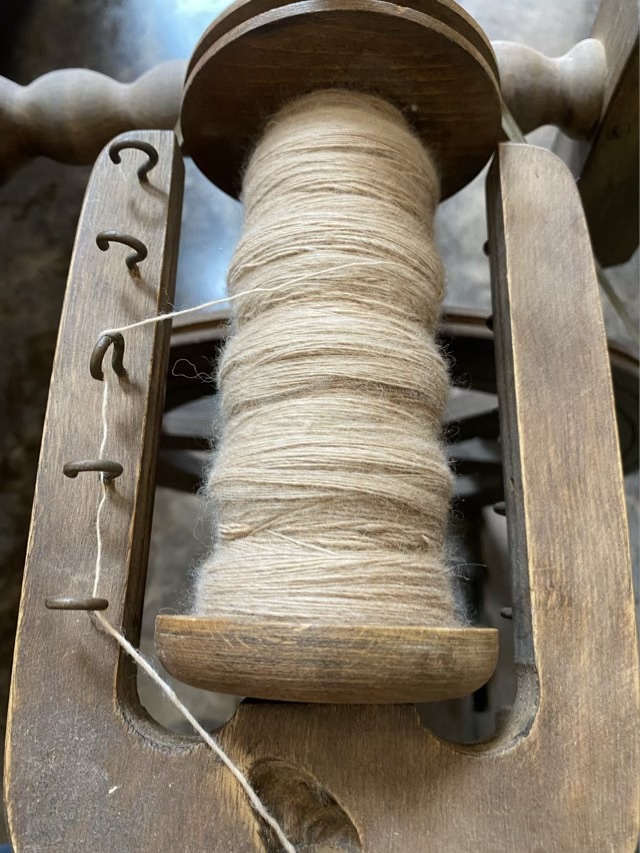
Today’s distraction is an evenly wrapped bobbin. There are all sorts of devices out there designed to achieve a smooth wrap, rather than the bumpy wrap produced by the hooks on the flyer. A smoothly wrapped bobbin makes taking the yarn off the bobbin easier, with less potential for breakage.
I’ve been thinking on this, and noticed that I can turn my hooks and get a slightly different take up angle on the flyer. This helps a little, and if I did this from the beginning I would certainly be closer to that epitome of bobbin wrapping that seems to be so coveted.
Ah, so that is why it is called a helix scarf.
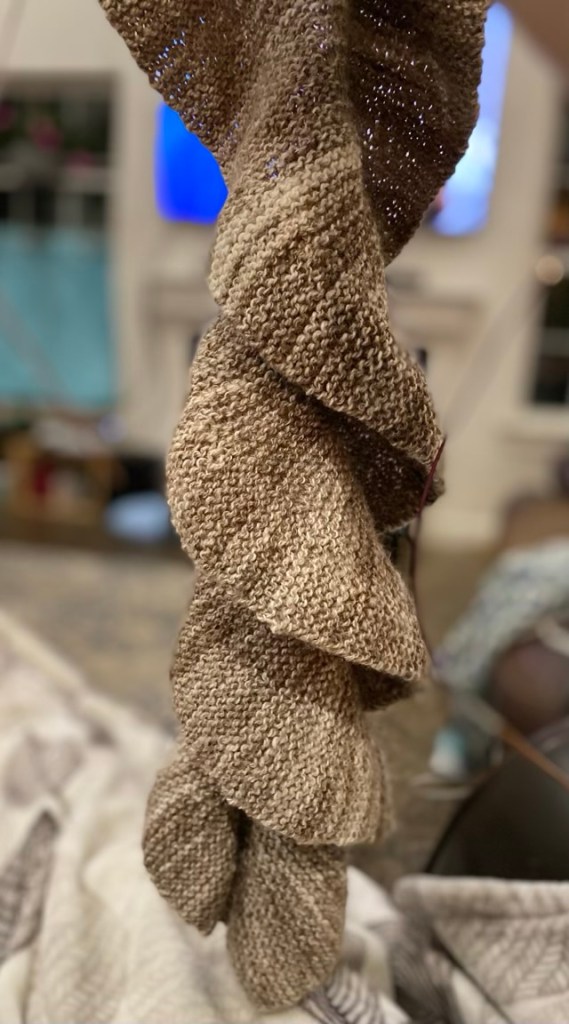
The pictures that accompanied the scarf pattern showed a lovely wide double-sided ruffle, but the title was helix scarf, which caused me to wonder, until I had knit awhile. So cool that the short rows on each side make this twisted effect. I really like short rows, and I like this pattern because it is a three-row repeat, which is easy to remember.
 Critters and Craft