Spinning cottonwood

We visited a park recently covered in cottonwood seed fluff; of course I had to try to spin it.
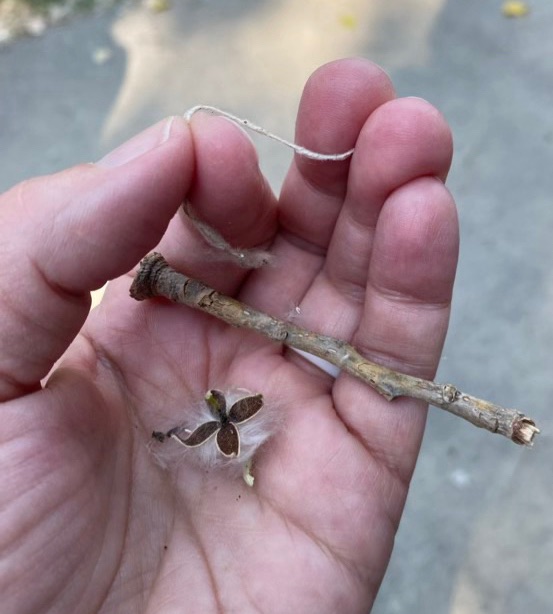
Photo description: the start of twisting cottonwood seed into a singles yarn, with a stick to hold the yarn, and an open seed pod in my hand

There is good reason the cottonwood tree is named after the plant. The fluffy seeds look similar to the fibrous cotton seeds, but are much smaller. The fibers are short, less than an inch, which made spinning a high twist with a stick a challenge. It would have been better to use a tahkli spindle or chakra, which are designed for short fibers, but it was a walk through the park, so I used what was at hand. I also didn’t prep the material at all, but spun from clumps of seeds, taking out non-fibrous material as I went.

Photo description: small amount of single spun cottonwood yarn on a stick (different smoother stick)

It took me the better part of an hour walking the park to spin a small amount of yarn because I was not getting enough twist in and it kept drifting apart. When we were done at the park, I had my eldest help me fold the single in half, and I added some twist to ply it, just to see what it looked like. It was fluffy and soft with a pretty luster.
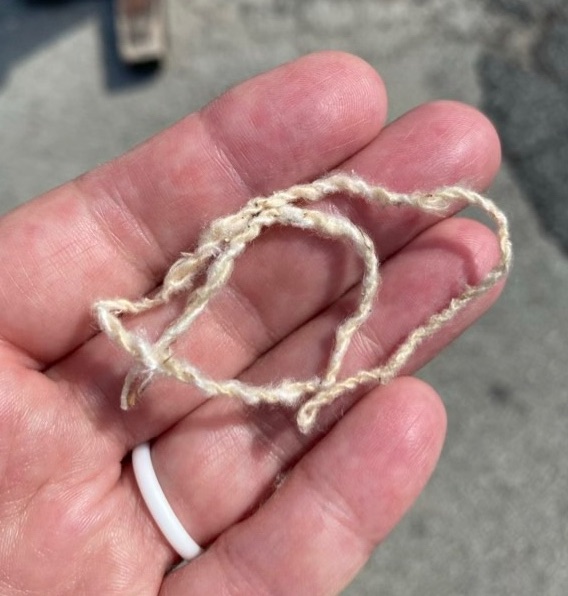
Photo description: several inches of two ply cotton wood yarn

Note, I am allergic to cottonwood, but is a nasal allergy, not a contact allergy, so I was quite sniffily by the end. I have spun it now, though, so can stop wondering if it is possible.
Compaction

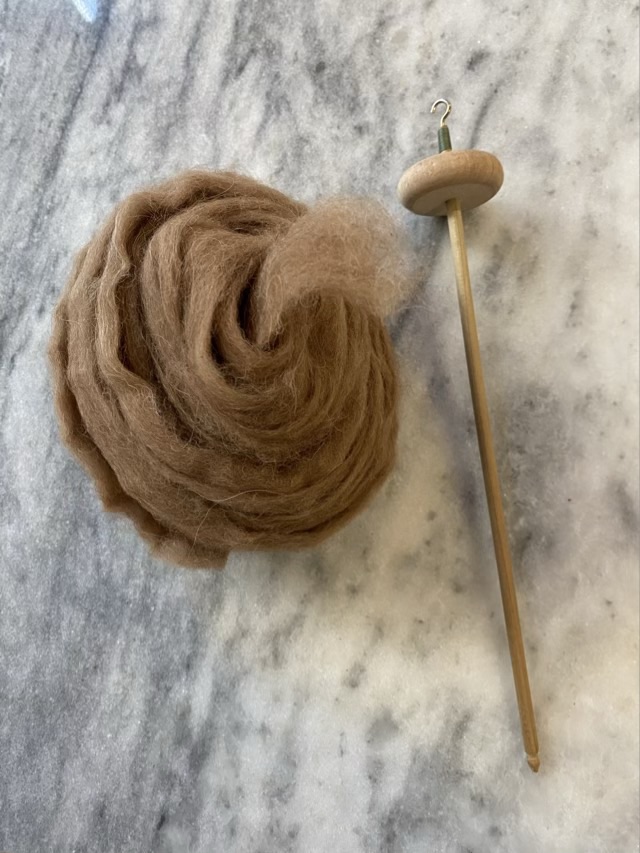
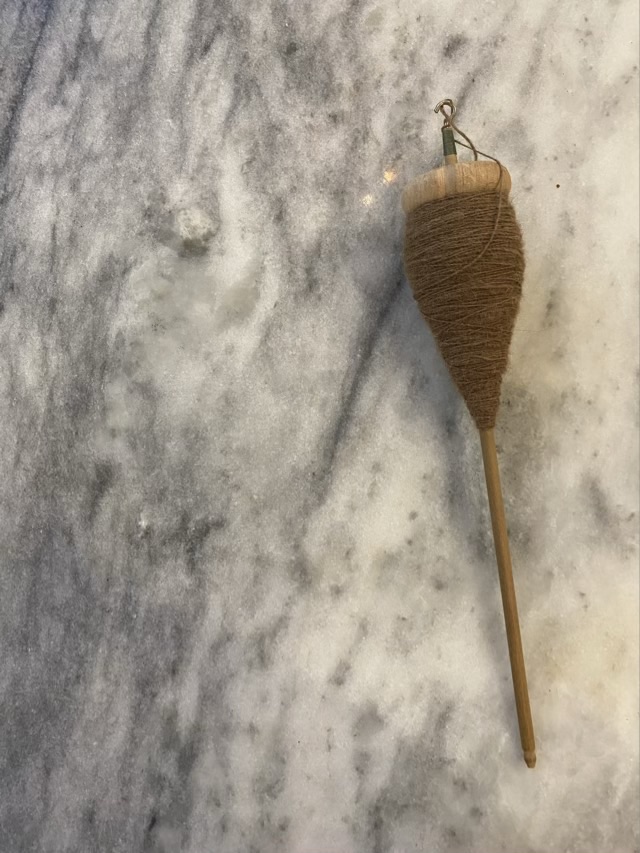
I thought this pair of pictures would be interesting. First is a bundle of camel fiber next to an empty drop spindle, the next is that bundle of fiber spun into singles on the spindle. There is a big volume change.

Photo description: camel roving wound into a loose nest next to an empty drop spindle
Photo description: full spindle in the same position

These pictures were taken 20 days apart. I spun for about 30-40 min 12-13 days during that time, giving an approximate time investment of 6-9 hours. Plying goes much faster, and I can make a 2-ply yarn from this yarn in 60-80 minutes (2 walks). Winding into a nostepinne style ball takes just one walk.

Photo description: 2-ply camel yarn wound onto a paper tube, spindle empty in my hand, asphalt in the background

Really it isn’t the time, it is making the walk bearable, and the zen I get from spinning.

Fiber page: Shetland lace

The Baize Shetland wool was the first Livestock Conservancy Shave ‘Em to Save ‘Em fiber I purchased. I bought a 13 oz batt, and have been spinning it at demonstrations and fair booths. I’ve been quite remiss in actually making a fiber page! That is now rectified, and this wonderful fiber has a page in my sampler book.

Photo description: Post card from the breeder (top left), single spun and two ply yarn (top right), unspun wool as purchased scoured and carded (middle left), crochet round (middle right), two Shetland lace knit samples (bottom left), nålbinding (bottom middle), and a woven swatch with combed fringe.
Photo description: same page, but with the samples folded up to show the descriptions

Shetland wool is a joy to spin, and is definitely on my “will purchase again” list.

Turkish turtle

I finished spinning my pineapple fiber sample singles with a 3D printed Turkish spindle. I attempted to use the turtle of yarn to make a two ply yarn.

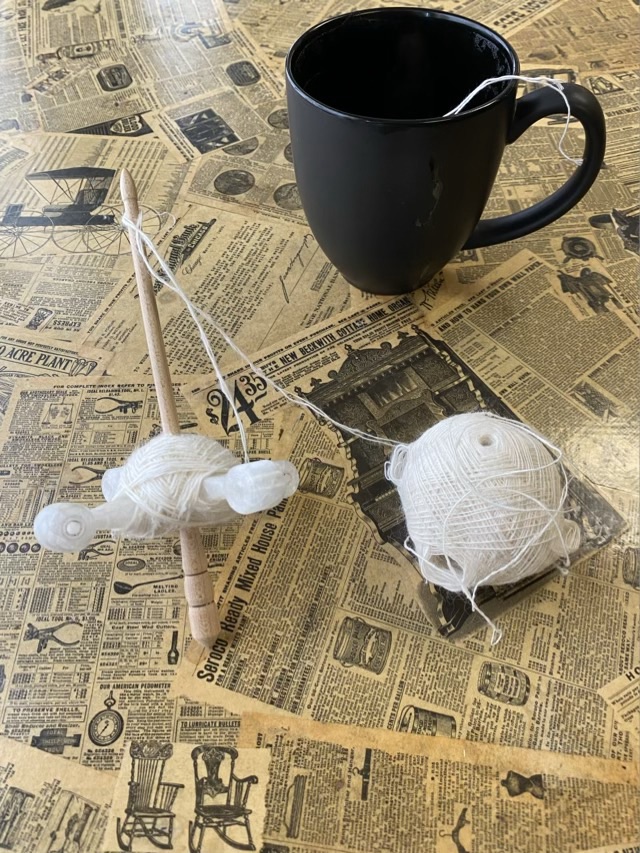
Photo description: Turkish style drop spindle with two ply yarn coming from both ends of a single ply turtle of yarn sitting on a table decorated with old newspapers and sitting next to a cup of chai at my favorite coffee place.

I had an unpleasant revelation. As the yarn comes off the top of the turtle a whole layer of wraps pops off, making a tangled mess. So I stopped trying to go directly from the yarn turtle, and instead made a nostepinne style winding ball with two strands.

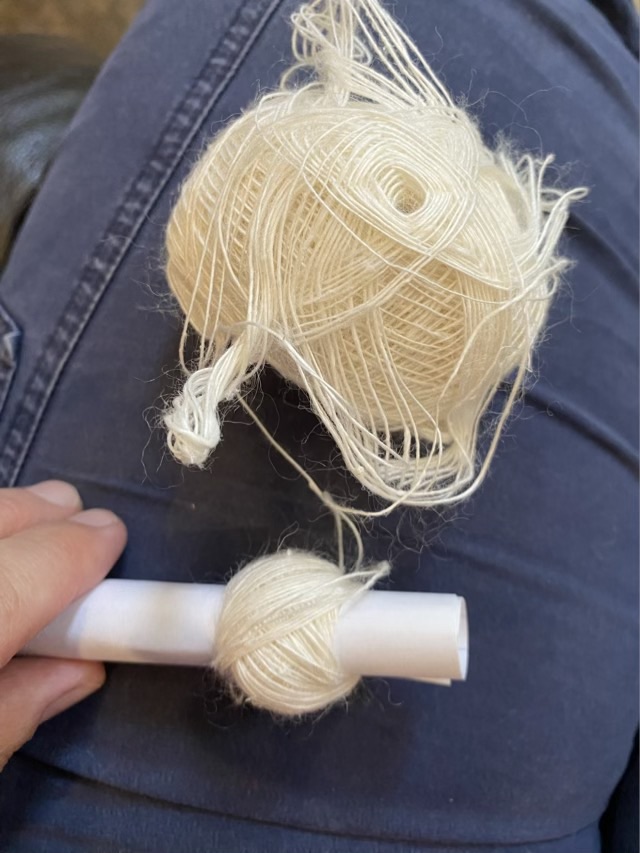
Photo description: yarn turtle unraveled from the top showing how a layer lifts off. The yarn is being wound onto a card stock tube into a center pull ball.

After my yarn was neatly arranged, I was able to ply it without dealing with heavy tangles. There are spinners who consistently make plying balls, and I can now see the appeal.

I finished plying and my Turkish spindle wrapping technique is improving. Since I’m going to work directly from the center of the yarn turtle for the next step, I don’t need to rewind. The Turkish spindle turtle does very well as a center pull ball.

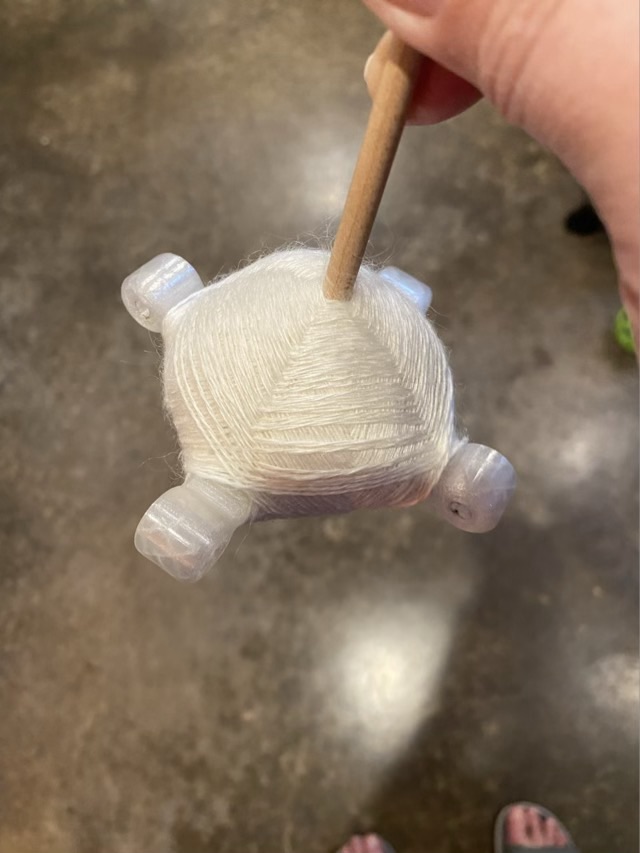
Photo description: top of the yarn turtle on a Turkish style drop spindle showing fairly neat wraps.
Photo description: bottom of the yarn turtle showing overlapping layers. Dog and ball in the background because she thinks I should be kicking her ball all the time.

Making things too hard

I excel at overthinking. I have gone through many contraptions to hold my full spindle so it wouldn’t skitter across the floor while I wound the yarn off into a ball. Before I headed off for a walk, I saw that I didn’t have enough fiber to last the walk, and I would be at the point I needed to wind off mid-walk. Throwing caution to the wind, I stuck a rolled up piece of card stock in my pocket and headed out. Within 10 minutes I had spun all my fiber and was faced with winding a nostepinne style ball without any of my spindle holding devices except my hands.

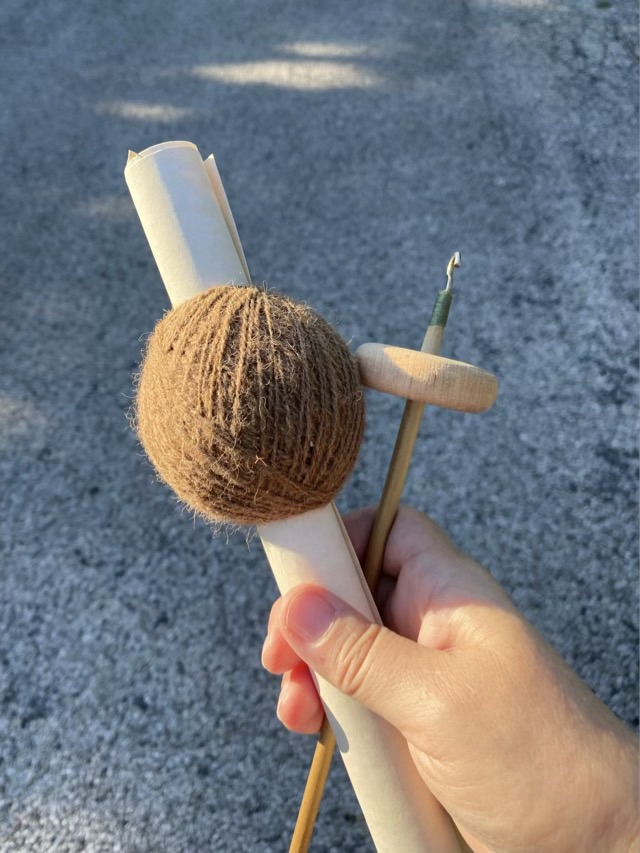
Photo description: winding camel fiber single ply yarn into a nostepinne style ball on a card stock tube from a drop spindle while walking the neighborhood, asphalt in the background

It turned out brilliant. I could rotate the spindle around the tube, keeping consistent tension by lightly gripping the shaft, and slowly rotating the card stock tube. I had been stuck in thinking that the spindle or bobbin needed to be set down in order to control the tension to wind off. I’m glad I broke through the “I have to do it this way” barrier, for this is now my preferred method.