Southdown spin

I have finished spinning 4 ounces of Southdown wool using a Turkish style spindle to make single spun yarn.
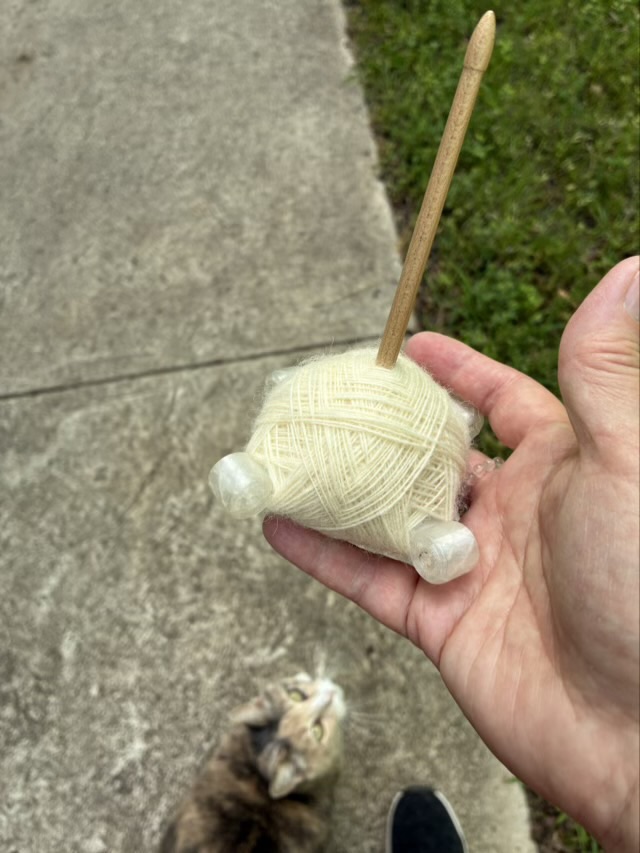
Photo description: Turtle of Southdown yarn on a Turkish Style spindle outside with dilute calico in the background

Southdown sheep are a dual purpose breed from England. When I bought this wool, the sheep were on the Conservation Priority list. In 2024, they came off the list and are no longer considered a threatened heritage breed. Which demonstrates the power of attention and purchase.
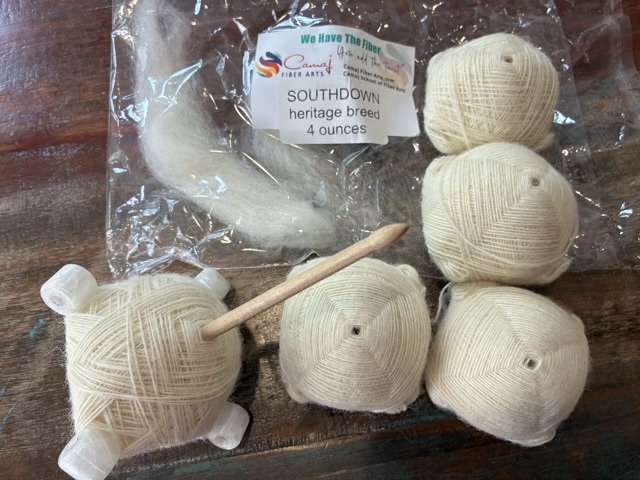
Photo description: all five turtles spun from 4 ounces of Southdown roving made while walking the neighborhood

Before I ply these singles, I think I will experiment with making swatches with the singles. The ways the yarn twist and fabric method bias interact have peaked my curiosity and I was to do some experiments.
Yarn turtle #4

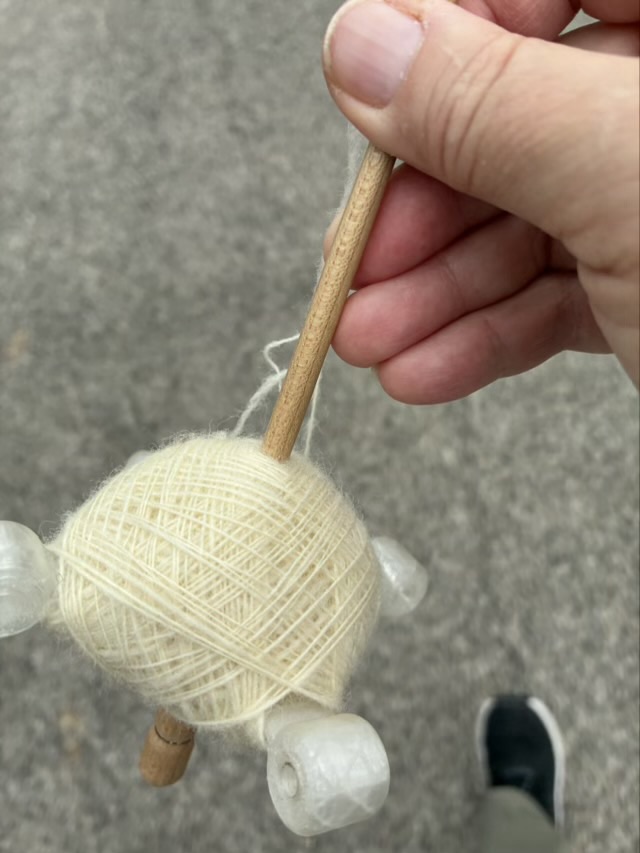
Here is my fourth yarn turtle spun on my 3D printed Turkish style spindle using Southdown wool.

Photo description: thin single spun yarn wrapped around the arms of a Turkish style spindle, asphalt background as I was walking

I was hoping to make a three ply yarn from the Southdown wool, but I think I have enough roving for one more turtle, which will give me 5 turtles, which is not easily divisible by 3. I could chain ply, but I find that difficult with turtles, especially toward the end. I could two-ply, then cable ply by plying the two-ply together to make a four ply, which gives an interesting texture and results in very little waste. I could weigh the yarn and rewind it all into three even amounts. So many choices.

I think, when the spinning is done, I shall do some small lengths of each type of plying, to help me decide what to do over all.

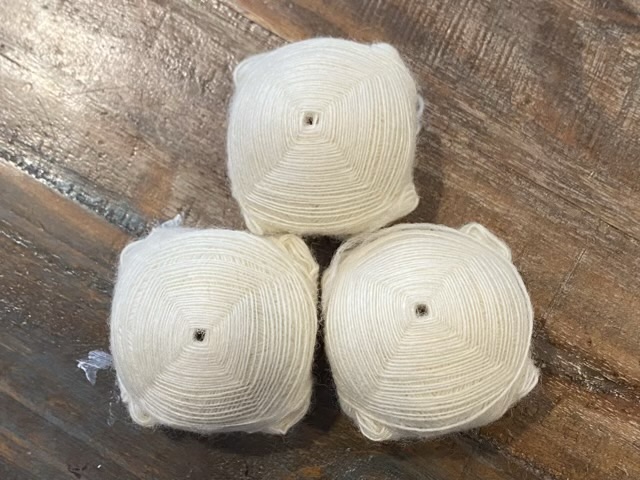
Three turtles

The cop of yarn built up on a Turkish style spindle is called a turtle. In the photo below, you can see why. The balls of yarn look like turtle shells. I now have three single spun Southdown wool turtles from spinning as I walk. The next step is to ply the three together, but for that I will use a treadle spinning wheel and a secure way to hold the turtles.

Photo description: three turtles of single spun white Southdown wool

Turtles of yarn are center pull balls of yarn, and it is possible to ply the inside end and the outside end to make a two-ply yarn. It is even possible to walk and ply, but since I want a three ply, and don’t want to chain ply, my best option is to sit at a spinning wheel so I can closely monitor the turtles. I may see if my yarn bowl will be helpful.

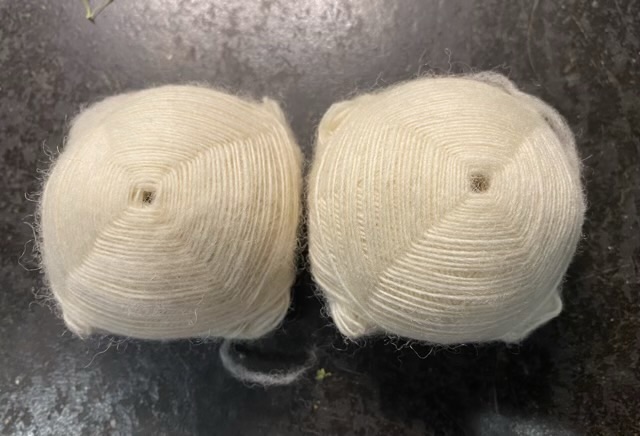
Eye calibration off

Photo description: two yarn turtles from a Turkish style spindle, the one on the left weighs 22g, the one on the right weighs 26g.

I’m spinning Southdown wool on a 3D printed Turkish style spindle. My eyes aren’t quite calibrated to estimate same-sized turtles when one is on the spindle and the other is off. I had a difference of 4 grams. That may not seem significant, but I can visually tell the difference when they are both off the spindle and it means the one on the right has several yards more yarn. I’m planning a three ply yarn with the singles, so need to spin another turtle. I’m aiming for the 22 g size to minimize leftover single spun yarn. Even three turtles of my hand-spun yarn that weigh the same won’t have the exact same yardage because my spin has some variation, especially across different days, but it a reasonable estimate.

Spin walks

School is back in session, so I’ve started up my spin walks again. Really it is a matter of the temperature coming down and walks being pleasant in the morning, instead of a hot sticky mess.

Photo description: spinning Southdown wool on a 3D printed Turkish style spindle while walking a city park

I found two drop spindle projects in progress when I went to pick up my spindle. Hm. I decided to start with the Southdown, because this little Turkish style spindle is one of my favorites. If I drop it, the rubberized arms bounce, and the yarn is protected from contact with the ground due to the jacks like shape of the arms and shaft.