Rewrapping a cat post

The favorite scratching post in the house needed a fix-up.
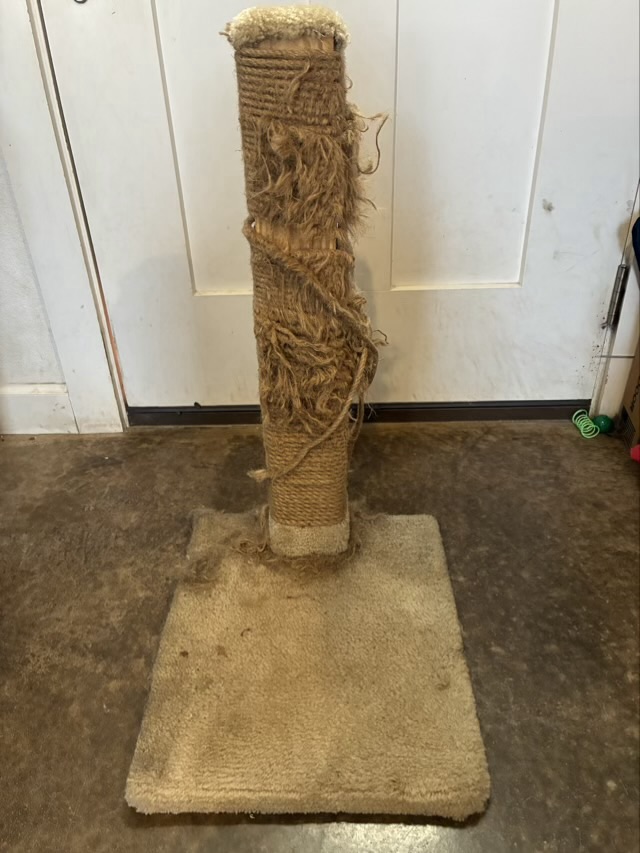
Photo description: cat scratching post with the jute rope broken and falling off

When I last rewrapped this post, I took some of the carpet off the top to provide a higher area for scratching since I have longer cats. From the picture, it really wasn’t necessary, even the big cats scratch the middle of the post. To rewrap this time, I purchased 160 feet of 1/4 inch jute rope.
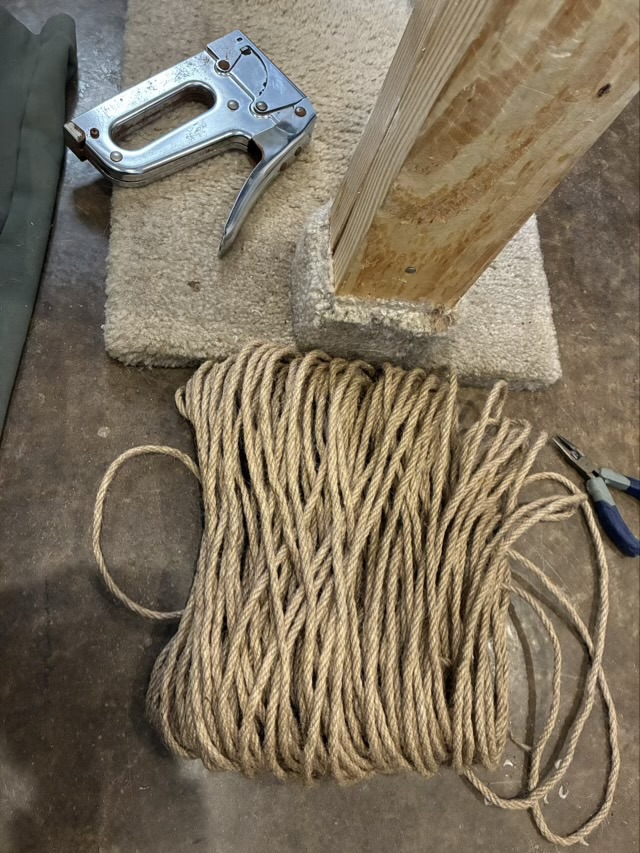
Photo description: bundle of jute rope, pliers, and a staple gun for the rewrap project

My future self is not going to be pleased with me, because as I wrapped the rope, I stapled it down on the back every few inches. Last time, I only stapled the top and bottom, which made it easy to remove, but I believe shortened the time of use. The last wrap lasted slightly less than a year.

The most helpful thing this time around was that my eldest held the rope above the scratching post, so it was easier for me to wrap the post from the bottom up smoothly.
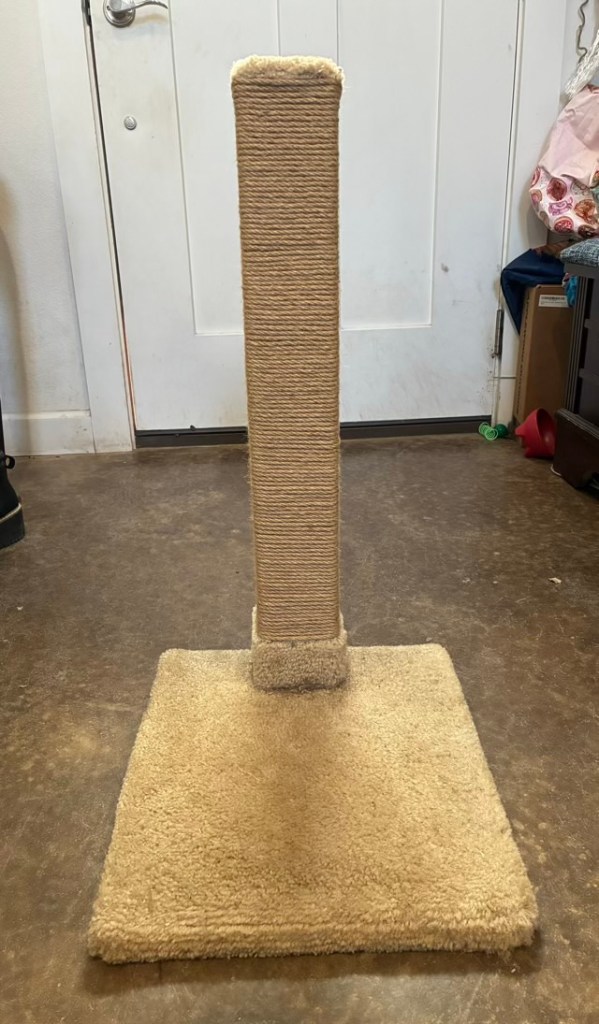
Photo description: freshly jute rope wrapped cat scratching post

The new rope, while marketed as 1/4 inch, has a smaller diameter than the old rope, and a tighter twist. It will be interesting to see if it holds up better.
Adding obstacles

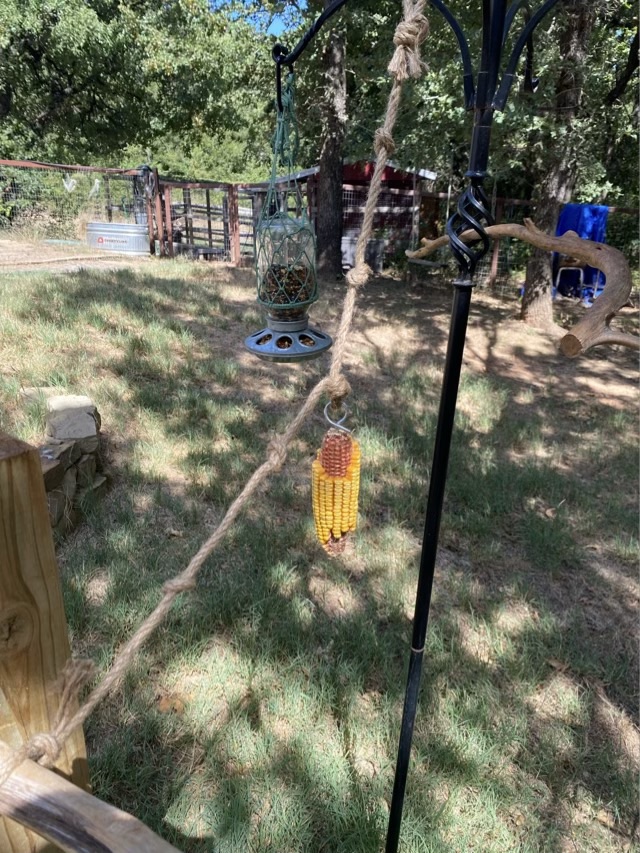
The squirrels really appreciate that I put out dried ears of corn, but they go through one ear in a day. I added an obstacle, so they have to work harder for the corn by tying knots in a 1/2” hemp rope and adding a screw eye. The corn is twisted onto the screw and hangs in the middle of the rope.

Photo description: Rope tied from the bird feeder stand to to railing with an ear of dried corn hanging from the middle

The squirrels have figured out how to get one kernel at a time off, but prefer the birdseed. We have a four squirrel family, so maybe one will figure this out while the others are gorging on seed.

I will twine

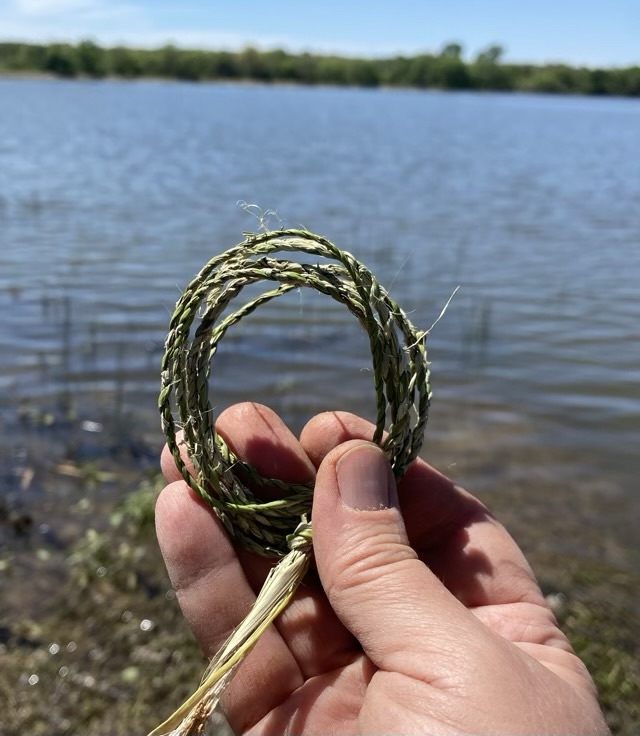
What to do at the lake when you’re waiting for the fish to bite and there are downed reeds at your feet? Twine! It was a beautiful day, but the fish weren’t frenetic and my worm duties were low, so I stripped down a reed that had washed up on shore. After removing the inner soft material from the strong outer casing and tearing it into even strips, I started to twine. I had a new technique from Sally Pointer (on YouTube) that I wanted to try. Instead of adding strands end to end, she adds the new strand in the middle, so each side gets new material. Nice!

Photo description: five wraps of green twine made from reed with the lake and blue skies in the background. This is about an hour’s worth of twine.

This twine was quite strong; I couldn’t break it with my hands. Next time I might see how fine I can twine.