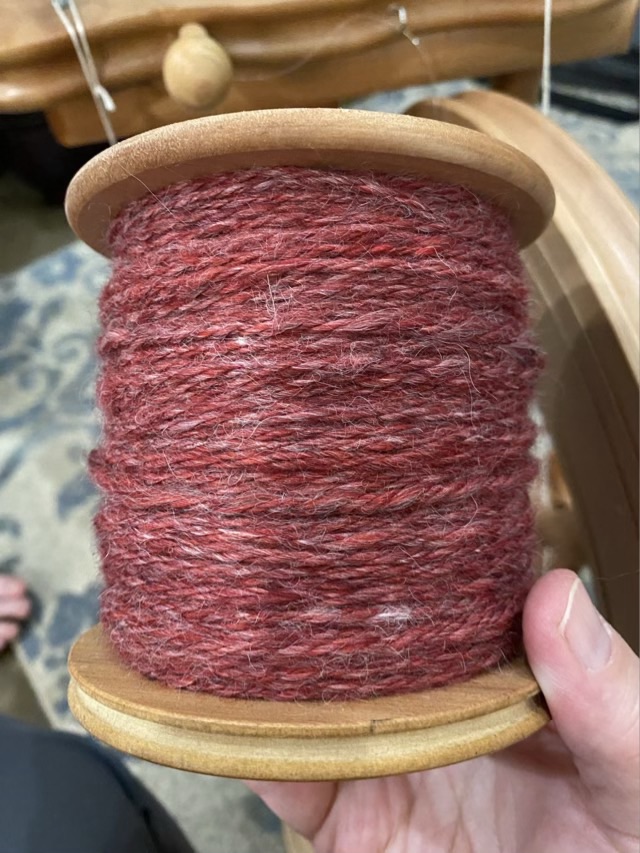
Examining Chain-plied yarn

Chain-plying yarn takes a single spun yarn and makes a three ply yarn from one bobbin or ball. The spinner makes long chain links, like in crochet, but each chain can be the length of an arm. There is no waste as the yarn is always tripled to the end of the length. It is a very useful technique especially if the spinner wants to preserve a color gradient, or doesn’t want to waste any precious material dividing the ball into three and risking running out of one ball before the other two. It does leave its mark, though. Each chain has a bend of yarn, a hiccup in the twist of the ply. This is difficult to see in a finished piece, but in a half-woven swatch, the chain loop ends are more obvious in the warp.
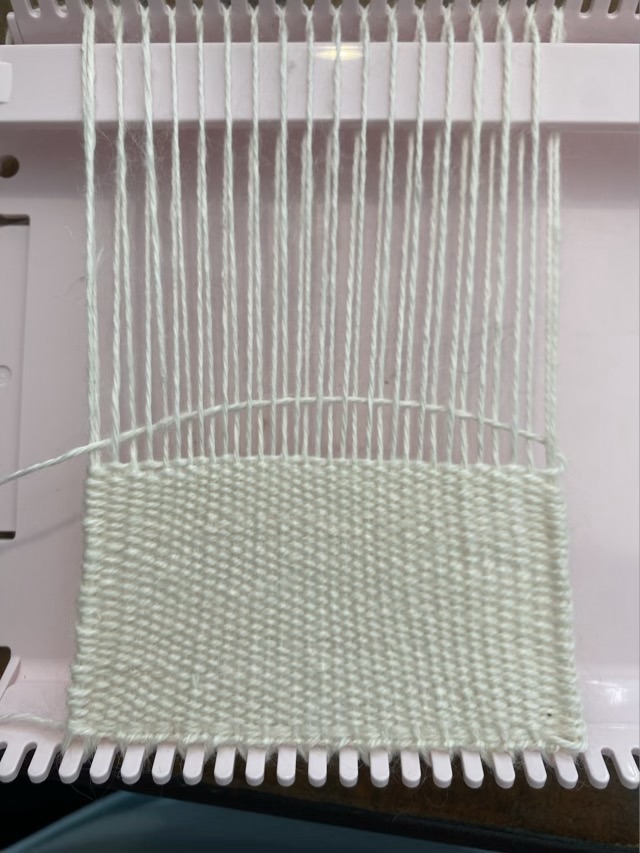
Photo description: Ramie chain-plied yarn warped onto a Clover mini loom and done halfway in plain weave
Photo description: same picture, but with the visible chain bumps circled in blue, and one weaving error circled in red

These chain bumps are more of a concern if the weaver wants to leave a fringe. I wove in the ends and trimmed them. To fix the missed warp in the weave, I took a small piece of yarn and sewed it over the warp and tied it in the back.

Photo description: back of finished swatch showing trimmed ends and fixed warp
Photo description: front of swatch

The chain bumps are not readily visible in the end piece, but the edges are uneven, and I pushed the weft into the loops left by the loom, arcing the bottom of the swatch. Which is why I swatch, I learn so much from each piece.
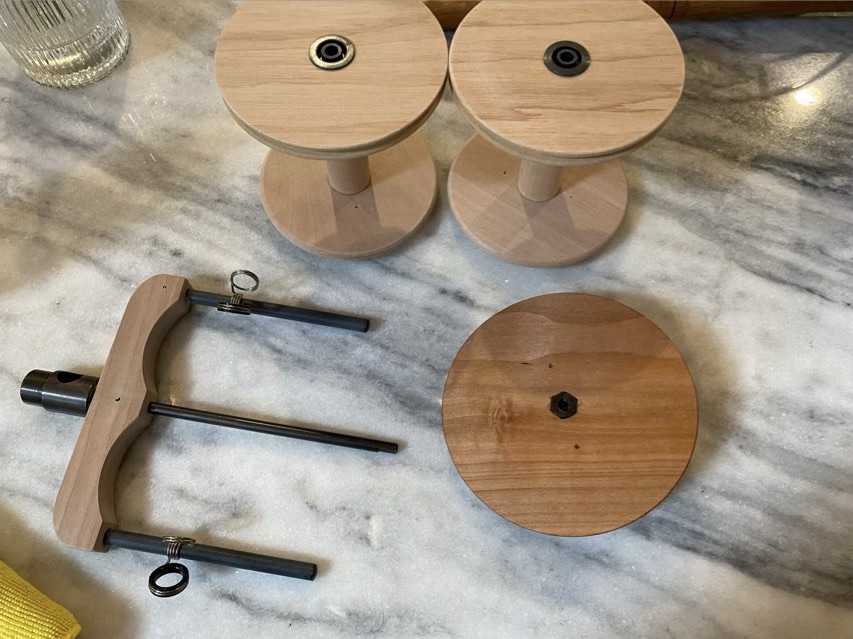
Jumbo flyer

The new-to-me Ashford Traveller spinning wheel came with a jumbo flyer that hadn’t been assembled. I finished all the wood parts with Howard’s Feed-n-Wax. (See? I love this stuff.) Ashford wood products typically come unfinished.

Photo description: Ashford jumbo flyer with sliding hooks and two bobbins, the whorl (bottom right) has had an application of Feed-n-Wax

After a few applications and some drying time, I finished the assembly by screwing in hooks and tried it out on the spinning wheel to ply my three singles. It occurred to me that three full bobbins will not all fit on a single bobbin of the same size, but a jumbo bobbin could hold it all. The flyer came with a new end bracket to fit the larger end of the flyer, but it also came with grommets to fit the original flyer so I don’t have to change the bracket to switch back and forth. Nice.

Photo description: jumbo bobbin and flyer mounted on an Ashford Traveller, bobbin is half full of three plied yarn
Photo description: to ply, I hold the single spun yarn leading from the lazy kate bobbins between my fingers to keep tension between my hand and the flyer orifice. This keeps the pigtails of twisted yarn from catching in the ply.
Photo description: jumbo bobbin full of three ply alpaca merino yarn

The jumbo flyer is marketed as an aid to make bulky art yarn, but I think it does a lovely job of plying as well.