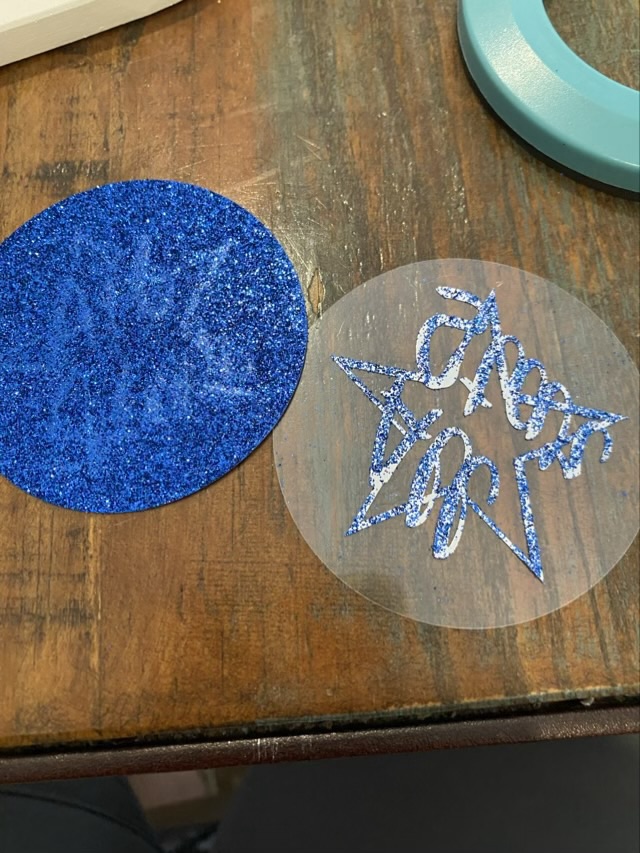
This week I found out that sparkle paper works in my button maker. Nice. I designed an “All Star” graphic in Cricut Design Space and cut it out with the electronic cutter.
Photo description: silver vinyl cut into the words “All Star” over a star outline, one of three designs weeded
The vinyl doesn’t stick well to the sparkle paper, at all, so positioning the decal was tricky, but not impossible.
Photo description: glitter stuck to the back of the silver vinyl
Including the mylar cover was a must, both to keep the decal in place, and prevent glitter from shedding.
Photo description: completed button with blue glitter background and silver “All Star” script with star outline
I quite like the finished button, it has flash and glitter, without shedding flash and glitter. Leaving trails of glitter is on my “very rude” list.
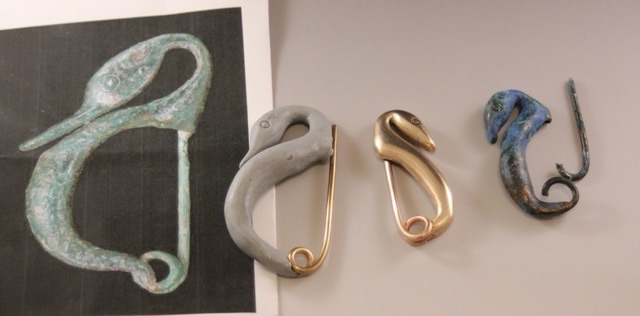
Here is an example of a picture without a thousand words from January 2013. As I was going through my album looking for Throwback posts, this almost didn’t make the cut because I didn’t leave myself enough information.
Photo description: printed image of an ancient bronze fibulae, clay model with wire spring, polished bronze clay fibulae (new), mystery fibulae (made by me)
At the time of the photo I was still experimenting with metal clay. My sister is an ancient historian and I suspected this was a project for her, so I pinged her for confirmation. She provided the name “fibulae” and an interesting article about their findings and use.
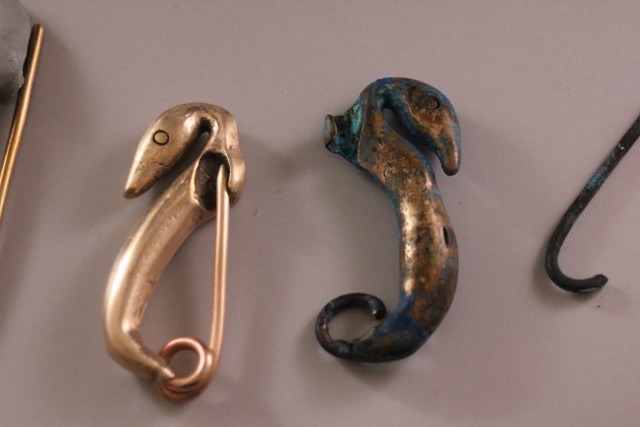
I can tell from my photo that I had a museum photo as reference, and I made a model with less expensive polymer clay, that looks more swan-like than my reference photo. The middle polished bronze clay fibulae I obviously spent more time on, but I’m not sure if I fired the clay with the wire in place or epoxied it in later (I’m already not using ancient foraging techniques, since I’m working with modern metal clay.) The last fibulae on the right is what raises the most questions. Did I not polish it? It is the same shape and style as the bright bronze, so I’m sure it is my work (my replication skills are not finely honed, especially then.) Did I try to antique it by adding patina, or is this how it came out of the kiln? Did I make this before or after the bright bronze fibulae? I have a feeling that I fired it with the wire in place and either the firing or the antiquing weakened the metal, causing the breakage. Did I do it on purpose? So many questions.
Here is a picture of the back, which answers the question of how the pin fastens.
Photo description: back of modern-made bronze-clay fibulae showing the pin pocket
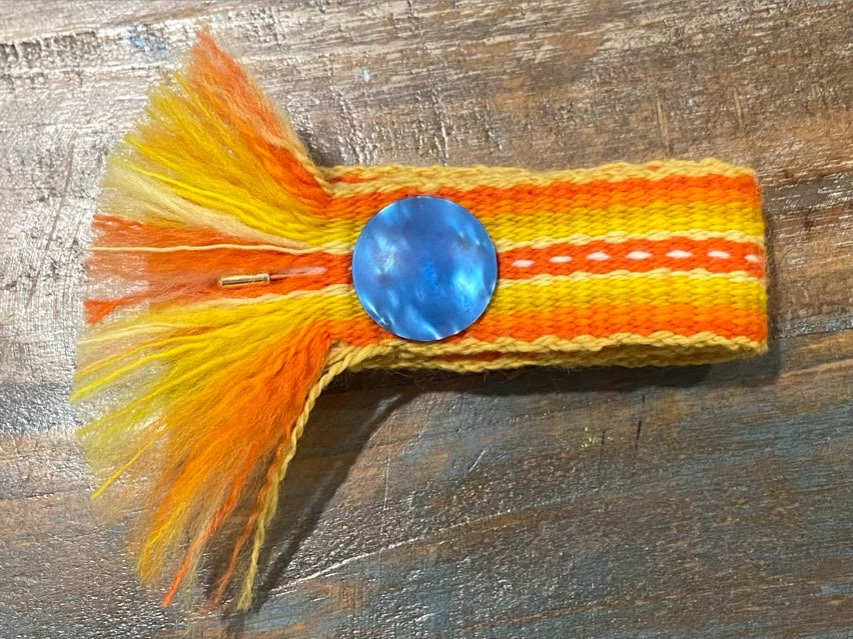
For my Dad, I took an end section of my Inkle woven band (post from yesterday) and made it into an adjustable hat band.
Woven hat band
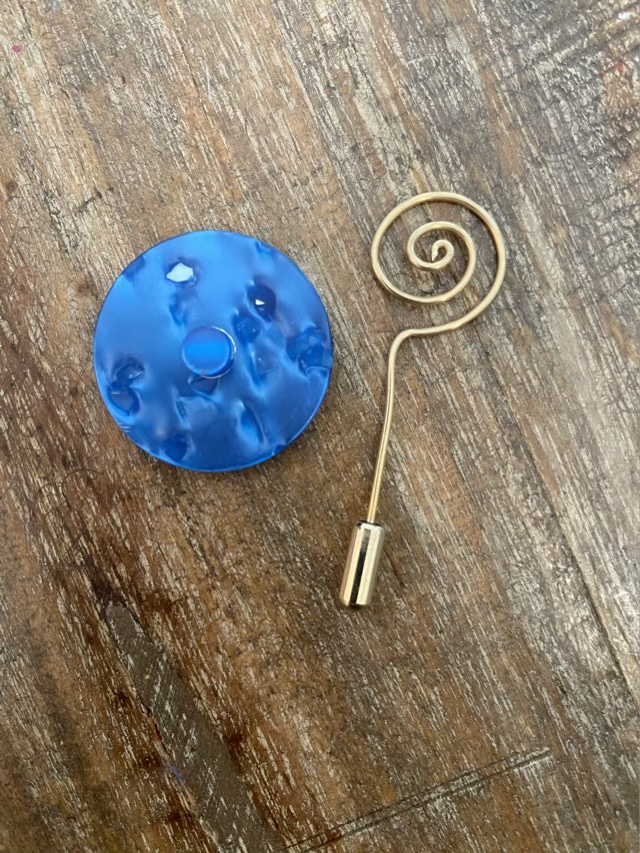
I sewed where I wanted to put the end before cutting it, then sewed it over again to catch all the ends inside the seam. For the pin, I used a shanked button from my button stash. I believe this one is vintage, but sometimes my buttons get mixed. To make a button into a pin, I use a spiral wire with the end sharpened.
Back of button and handmade pin converterButton installed on pin converter
I brushed out the fringe on the woven band and shaped it to mimic a feather. The weaving is doubled back so won’t unravel, and I think the spray of yarn adds a bit of flare to the band (although it will probably have to be combed out straight occasionally). To set the band size, the pin holds the ends of the band together.





 Critters and Craft