
I used scrap pegboard to make a display for all my twine cards for the Pioneer Festival at the Doss Heritage and Culture Center. To make the two pieces of pegboard into a sandwich board I cut and punched a strip of leather and riveted it to the top of the boards.
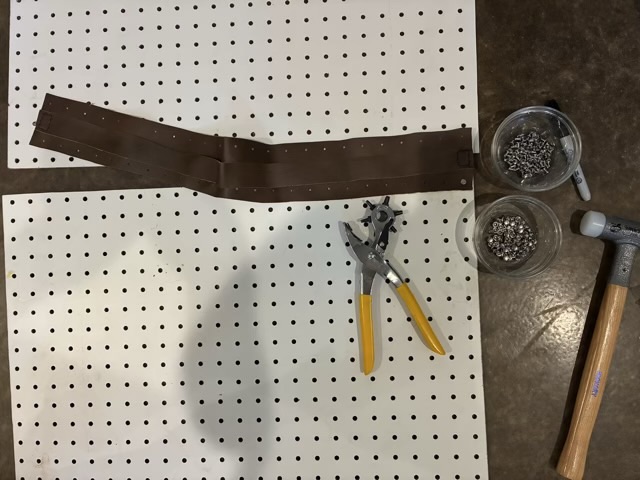
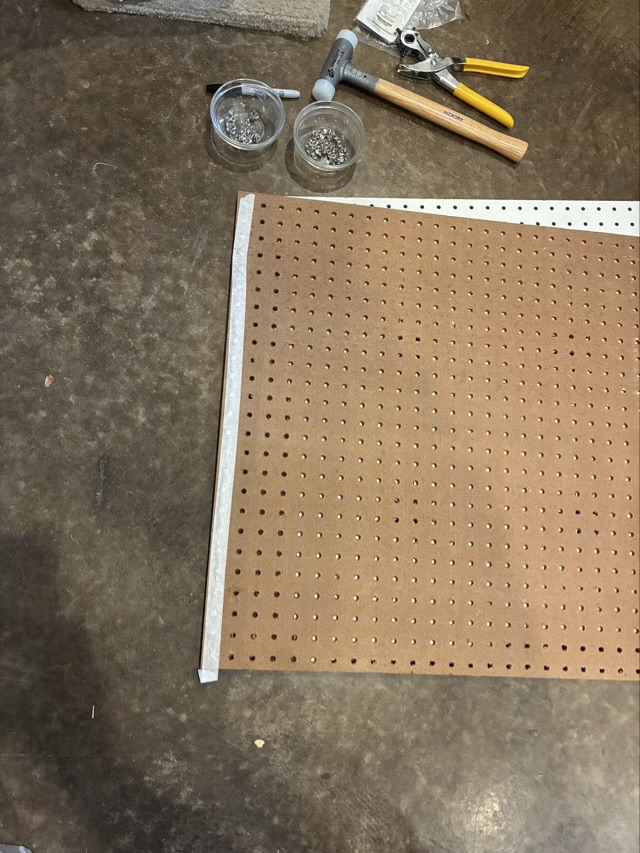
My rivets were just the right size to lock together through the leather and the pegboard. I used a dead blow hammer to secure them as the board laid flat on the floor. The second board was a little tricky to set the bottom rivet, so I flipped the board over, put in the rivets, and secured them with tape so they wouldn’t fall out. I used screw rivets to secure side straps to keep the boards at the same angle when open.
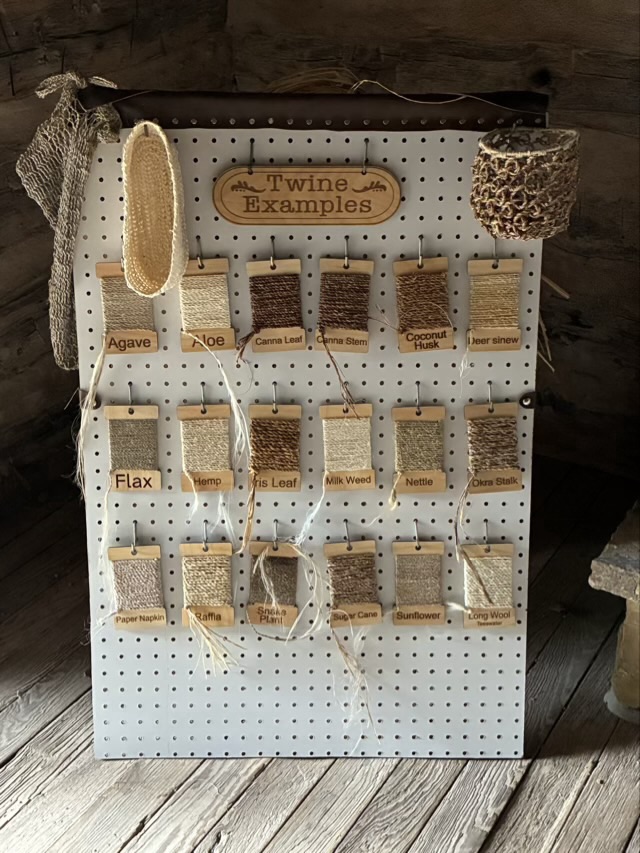
The twining went over well. I took raffia and taught two wonderful volunteers to twine and they taught hundreds of people coming through the event to twine bracelets while I demonstrated spinning on a great wheel and a treadle wheel (not at the same time, but as a comparison). Of course I didn’t take a single picture of my period outfit, but I did take one of the wheels I worked with in the 1850s cabin I was in.
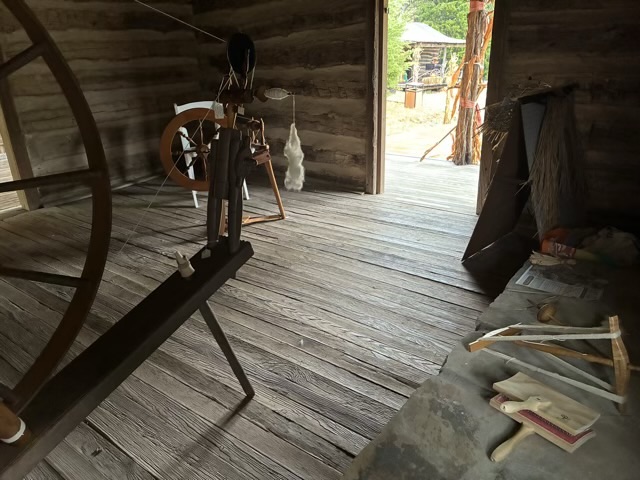
The treadle wheel was meant to only be decoration, but it just needed a new string on the footman at the bottom, and a bit of wire at the top to keep it on. I cleaned it and oiled it and had it spinning wool again. On the Great Wheel I was spinning Texas grown cotton.

