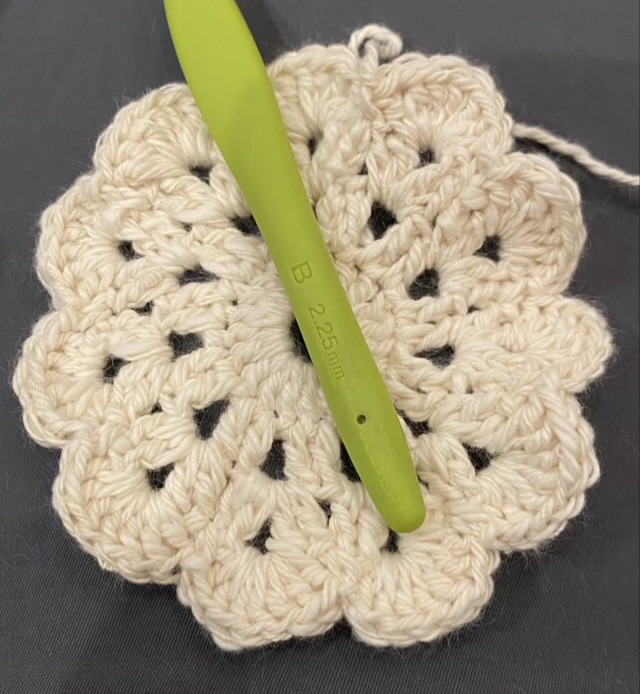
I made my swatches for my fiber book from the Egyptian cotton that I spun on an Ashford Traveller spinning wheel.
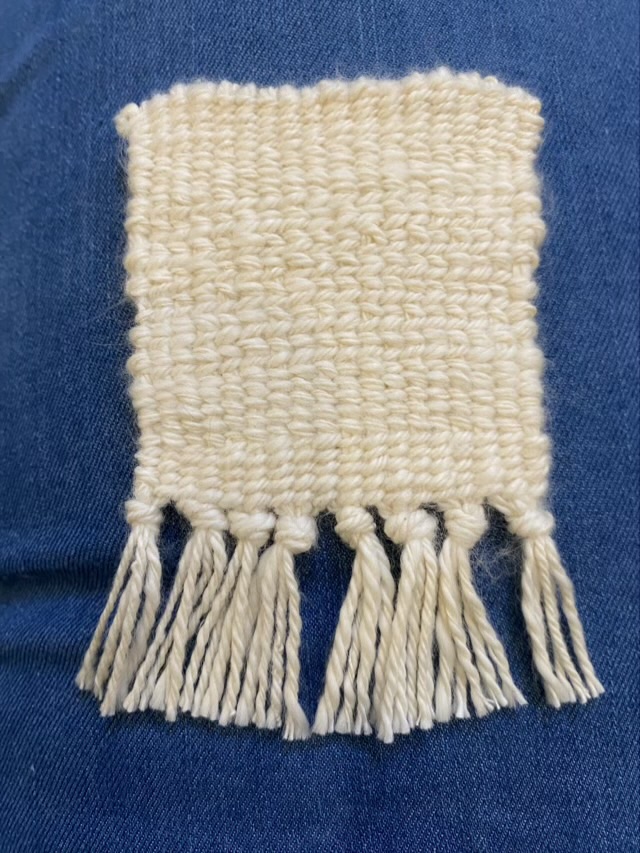
Photo description: knit square in moss stitch with size 2 Prym circular needlesPhoto description: crocheted round coaster made from Egyptian cotton with a size B Clover crochet hookPhoto description: 3 salvage twined swatch with knotted tassels
I still love the twining weaving technique with open ended warps. This was my first swatch, but the sides are less wonky than my other weaving attempts.
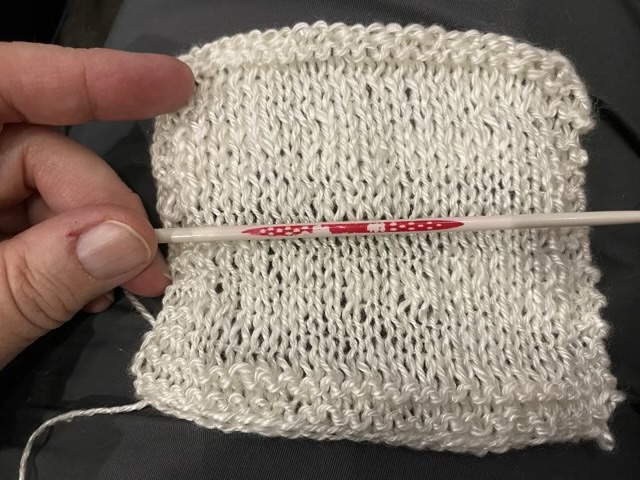
I knit my hand spun Tencel yarn with size 4 Prym needles. I like to do a stockinette stitch with garter stitch border to help it lay flat since stockinette alone likes to curl.
Photo description: knit swatch of Tencel with the knitting needle because sometimes I forget which size I usedPhoto description: same swatch after blocking which only improved the shape slightly
My knitting tension is even, the wonkiness of this swatch comes from the uneven spin of the yarn. Tencel was a tricky fiber for me to spin. It is shiny and lustrous, but likes to clump and doesn’t draft evenly. The finished swatch is soft and has a lovely sheen, but I’m distracted by the strange pooling of uneven yarn.
I stopped knitting and bound off my rainbow brioche scarf months ago, but there were errors at the beginning when I was still getting used to the brioche knitting with multiple colors techniques. I thought I needed to rip out the first few inches and rebind, which is daunting, so I stuck the project in a bag and tucked it into the back of the closet until I was ready.
Months later, when I was on a finishing kick (see yesterday’s post), I figured I was ready to work on the scarf again. I pulled it out of the bag, in all its squishy soft amazing length, and couldn’t find the spots that bothered me before. I looked again and did eventually spot the small errors, but it definitely took over 10 seconds. I have a 10 second rule, that if you can’t see the mistake in 10 seconds, the item passes. If someone else wants to examine an item that closely, they deserve to find something.
I wet the scarf to block it, and noticed that the colors bled.
Photo description: rainbow scarf in blue tinted water in the sink
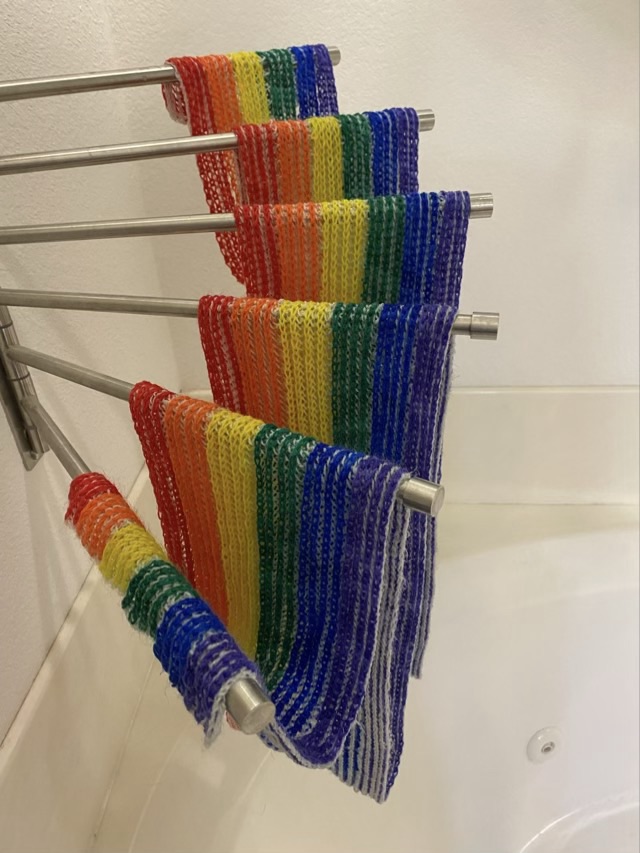
I rinsed the scarf until I could not see any dye in the water, and hung it up to dry.
Photo description: rainbow brioche scarf hanging from multiple towel racks
The dye colors were taken up by the white yarn as the scarf dried, but it doesn’t distract from the piece. I’m glad I didn’t add fluffy clouds to the ends, they would not have stayed white.
Photo description: finished scarf laying artfully on a leather chair
The scarf now has a happy home, two years after I started it.
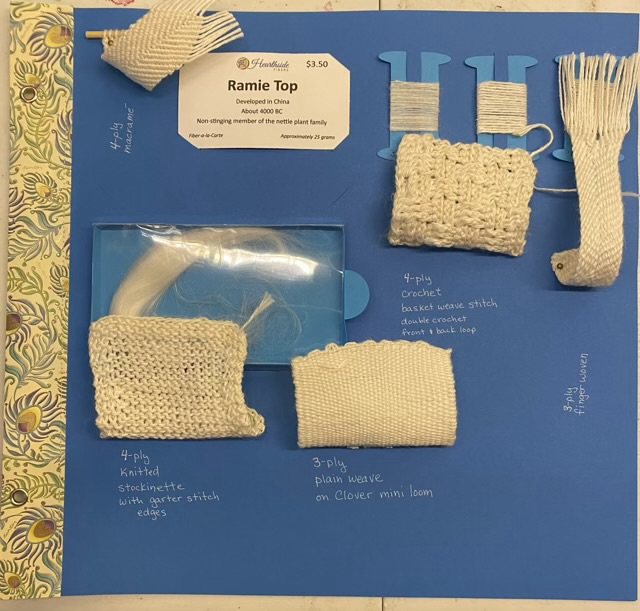
I completed the fiber page for my spindle spun Ramie top fiber from Hearthside fibers. Ramie was pleasant to spin and has a cottony feel but with a long staple length. I experimented with three and four ply yarns.
Photo description: 12 x 13.5 inch fiber page with (clockwise) a sample of macrame on a bamboo stick, the card from Hearthside Fibers that says “Ramie Top Developed in China about 4,000 BC Non-stinging member of the nettle family”, paper bobbins containing single spun, 3-ply, and 4-ply yarn, finger woven sample, crocheted basket weave swatch, plain weave swatch, knitted swatch, unspun fiber in a clear topped drawerPhoto description: sample fiber page with the swatches flipped up to show the descriptions written in white ink on the blue card stock
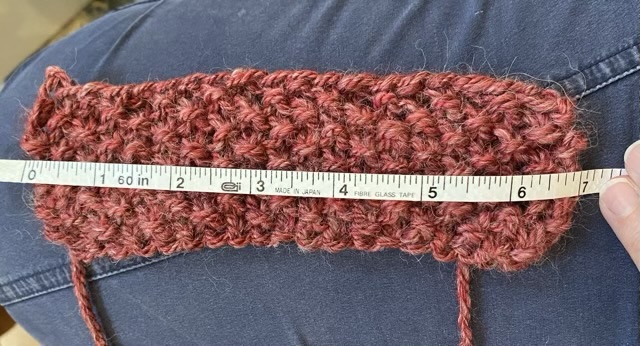
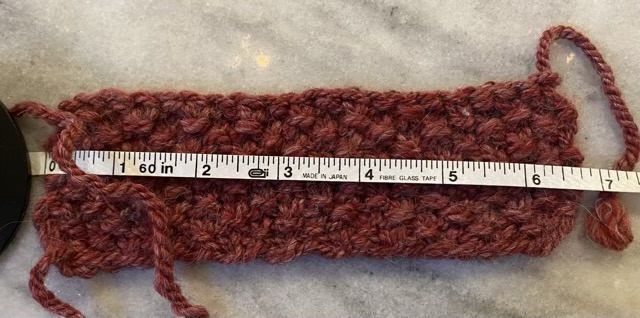
My small swatch of hand-spun merino/alpaca dyed yarn experienced a small amount of shrinkage after I rinsed it and let it dry.
Photo description: moss stitch swatch straight off the needles measuring 7 inches Photo description: same swatch after blocking measuring 6.75 inches, but looking more tidy
The good news is that there was no visible bleed when I blocked the swatch. I was concerned that the beautiful dark red would bleed.






 Critters and Craft