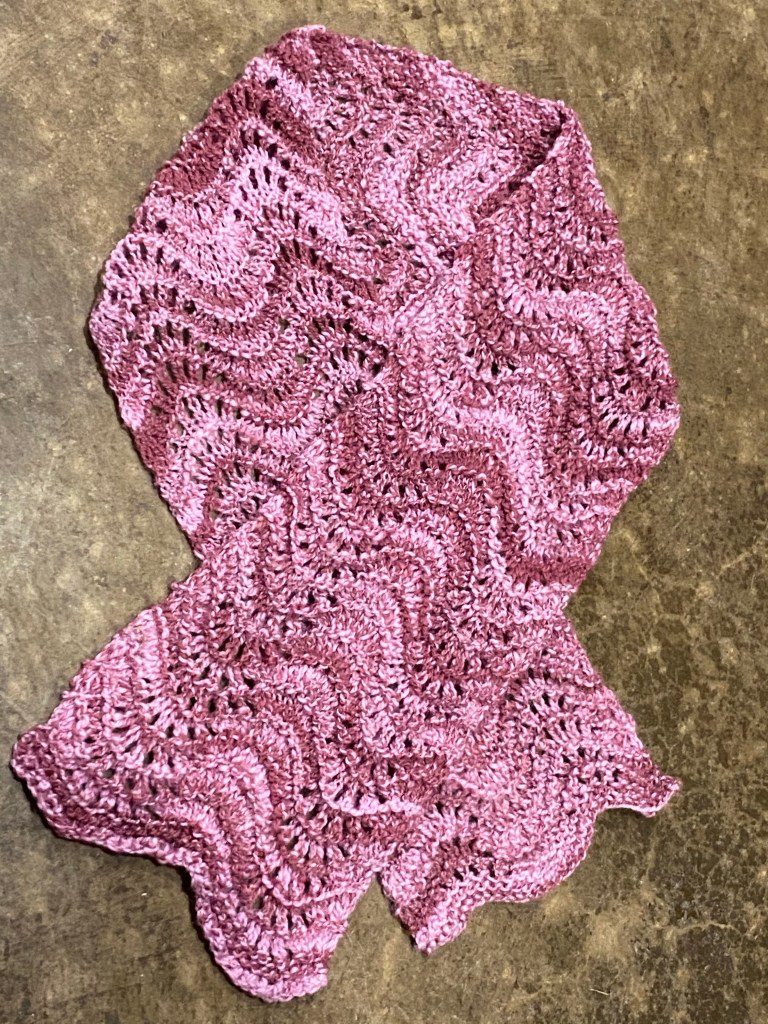
The Frabjous Fibers hand-dyed Blue Faced Leichester (BFL) and silk yarn I spun up in June has finally been applied to a project! I decided to do a random knit lace scarf, but with pointed ends rather than square.
“Balsam” colored BFL/silk random knit scarf
The random knit used a combination of increases (yarn over) and decreases (knit or purl two together) spaced with one to five knits or purls (depending on which side was toward me). The goal is to keep the same number of increases as decreases across the row. To do the shaping I added a stitch on each side of the knit rows only, then to narrow the end, I decreased on each side of the purl rows only. To keep the edges neat, I slipped the first stitch of each row.
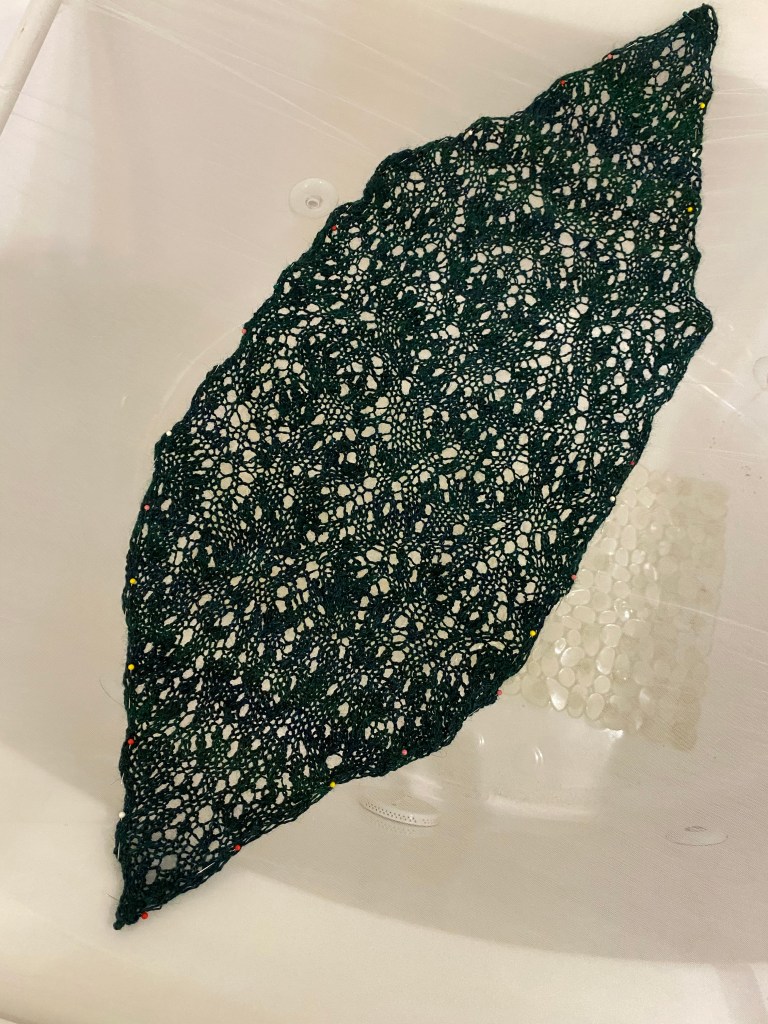
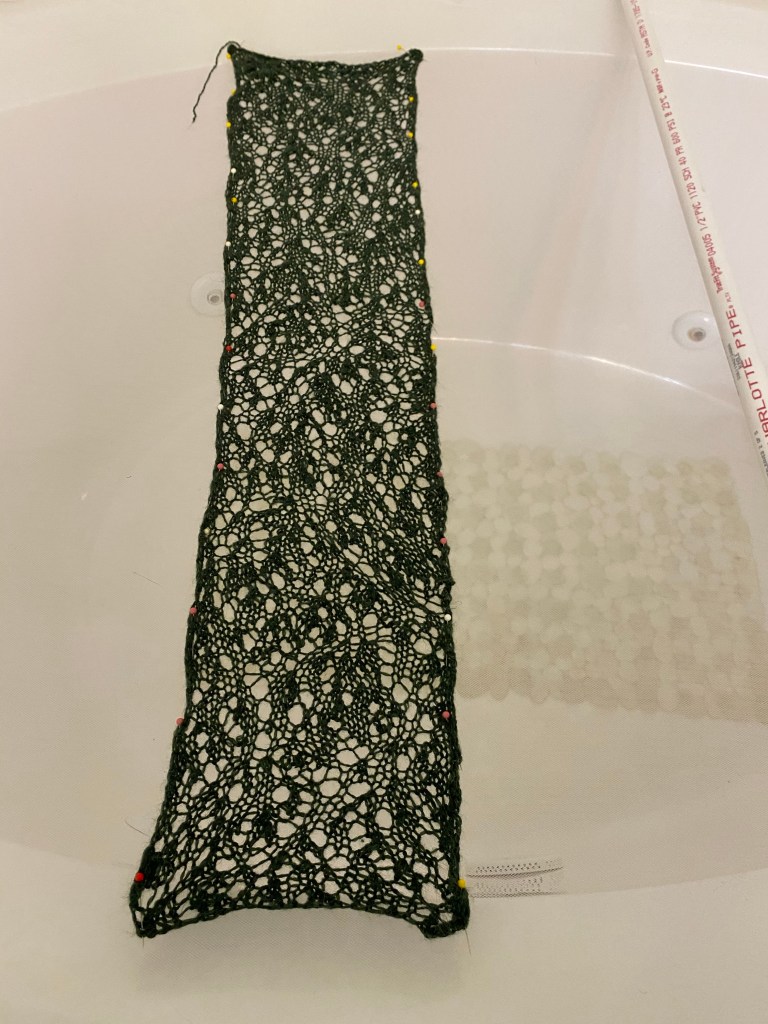
I tried writing this all up in a standard knit pattern, but it then looks so much more complicated than it actually is. I will say that when knitting the technique using a block able yarn (such as wool or cotton) is key. It doesn’t look like much until I get it wet and pin it out flat on my netting and PVC drying rack.
I saw instructions for random lace awhile ago. Loved it, wanted to try it, picked up needles and yarn to start it, then remembered how much I hated decrease stitches. Getting the needles in is tight, it is fiddly, it takes longer than a simple knit stitch, and I often drop the stitch instead of decreasing. I abandoned the project, going so far as to throw the printed version into the recycle bin.
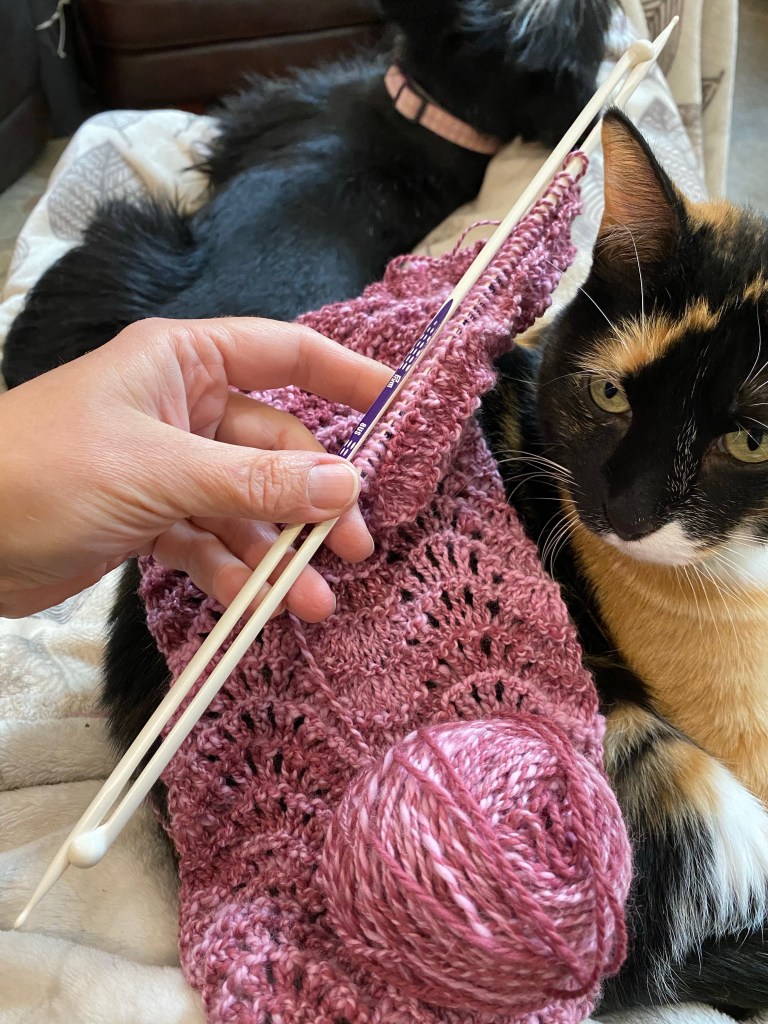
Then I found the Prym needles (this totally sounds like an advertisement, but I am not getting kick back, I genuinely appreciate this product). The little nub on the end of the needle gives me just enough advantage to tackle the decreases with less frustration. It probably also helps that I am using a fingering weight merino wool yarn (small diameter) with larger than recommended needles (US size 8), so the stitches are not super tight and difficult to manipulate. Plus, since it is a random pattern, if it is too hard to make a decrease, I don’t! Rather than struggle and swear, I knit the stitch (or purl if I’m on the back side) and put the decrease in where it is easier.
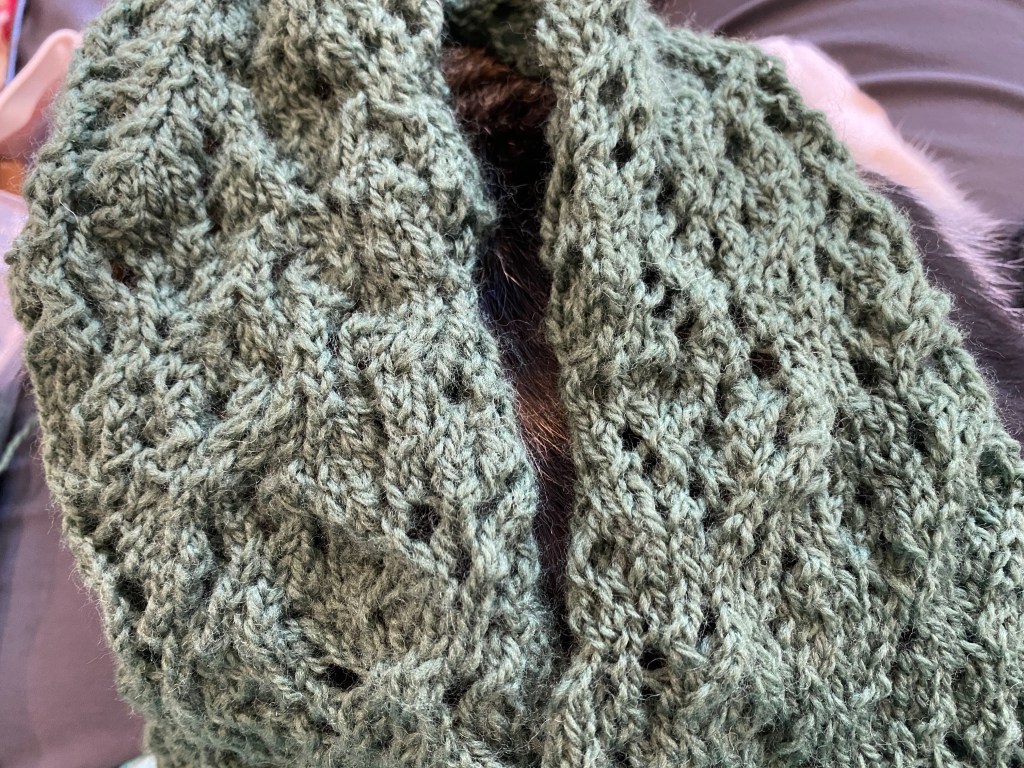
Random lace before blocking
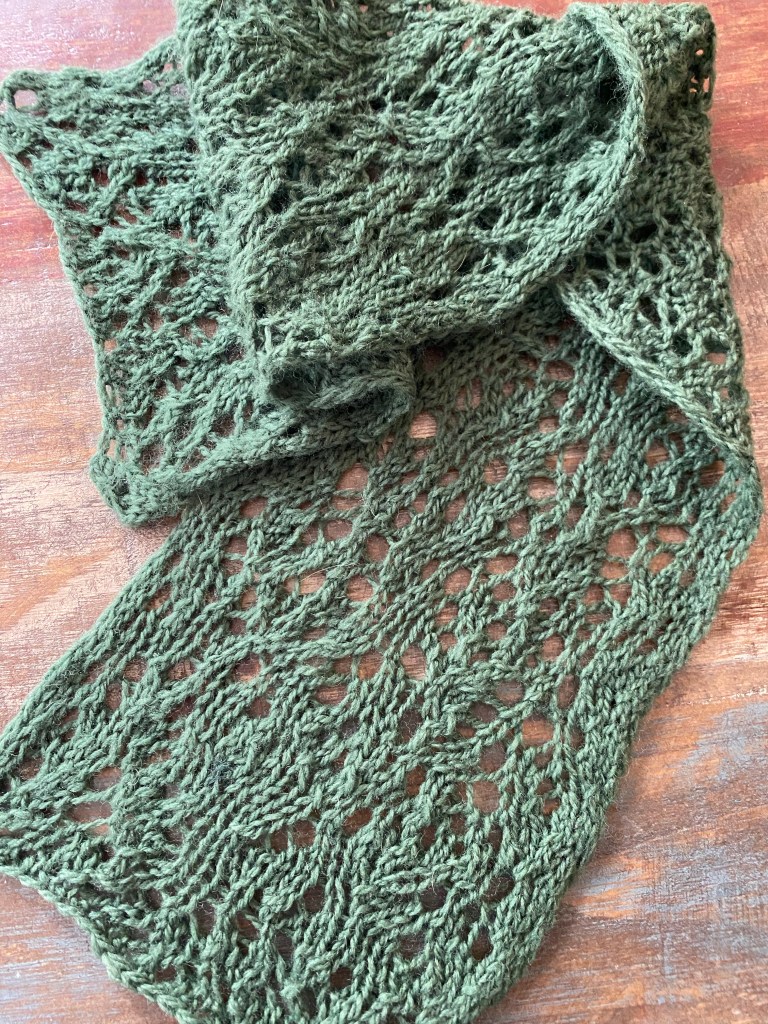
Now here is the magic part. When knitting random lace, the fabric is interesting, but more like crumpled paper. When it is blocked, it completely changes to a light airy organic lace!
Blocking random lace
I blocked my sample by getting it wet, squeezing out most of the water (never wringing), and pinning it to nylon netting stretched over a PVC frame. Oh how it opened up! And when it was dry, it maintained it’s shape.
Random lace after blocking
Structured lace patterns are lovely, but I always miss a stitch in the instructions (usually by getting distracted, imagine that). I can see that imperfection like a lightning bolt at night, but only after it is too far to go back (I know some will, but if I have to rip out half a project I will never pick it up again). I am pleasantly surprised that when gazing at this type of lace I see the surprise structure; the swoop here, the cluster of bubbles there; rather than seeing imperfections, I see order in the chaos.
The lace scarf is done! It isn’t very long, but I used up all my fiber, with only a short segment remaining.
I won at yarn roulette, only a few inches of yarn left over
The total weight of the scarf is 103 grams (3.6 oz). I used two colors of pink merino roving, pre-drafted the colors together without blending, spun with a hand carved drop spindle, then made a two-ply yarn. Lace stitch was done with size 8 Prym needles (which may have just changed my feelings about knitting and especially lace knitting). I blocked and dried the scarf.
Finished merino wool lace scarf
Interestingly, the pictures of the scarf are much more striped than it appears in person.
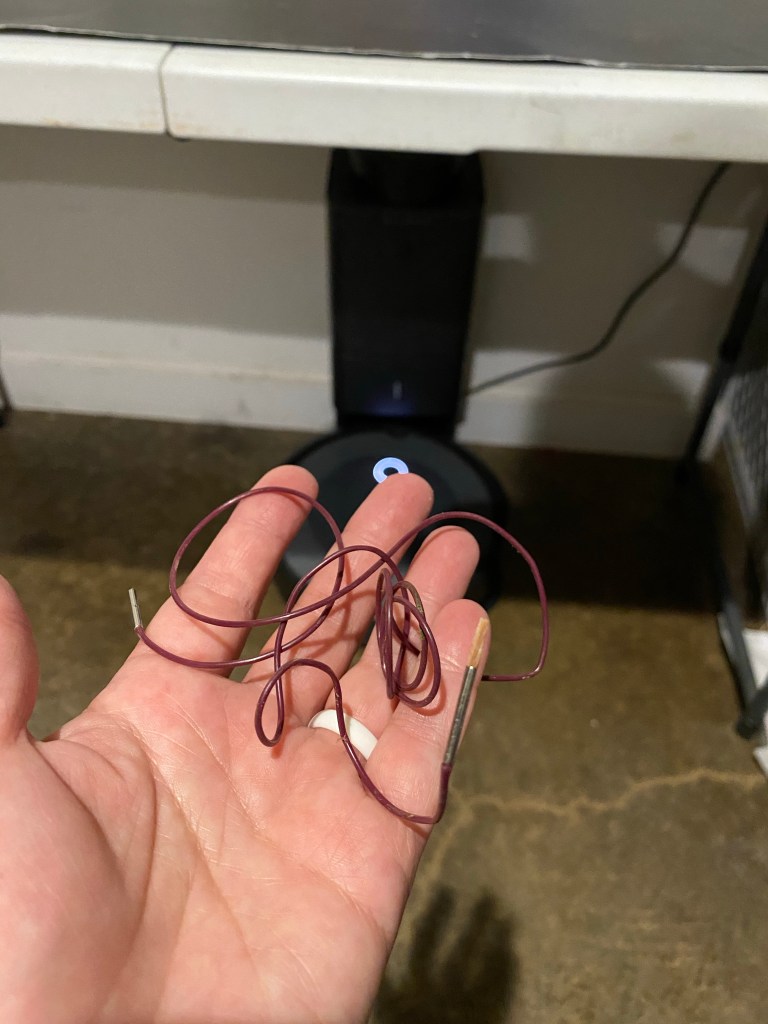
So would this be Roomba shaming? I couldn’t find my circular knitting needle then had the awful realization that if it fell to the floor it was probably wrapped up in robot parts. It was. The needles shattered, at least I couldn’t find evidence of them anywhere, so I assume that they were broken into tiny fragments and hoovered up. The Roomba seems to be fine, but the needle set is beyond redemption. It’s not like the robot deliberately sought out and ate my stuff, but sometimes I wonder.
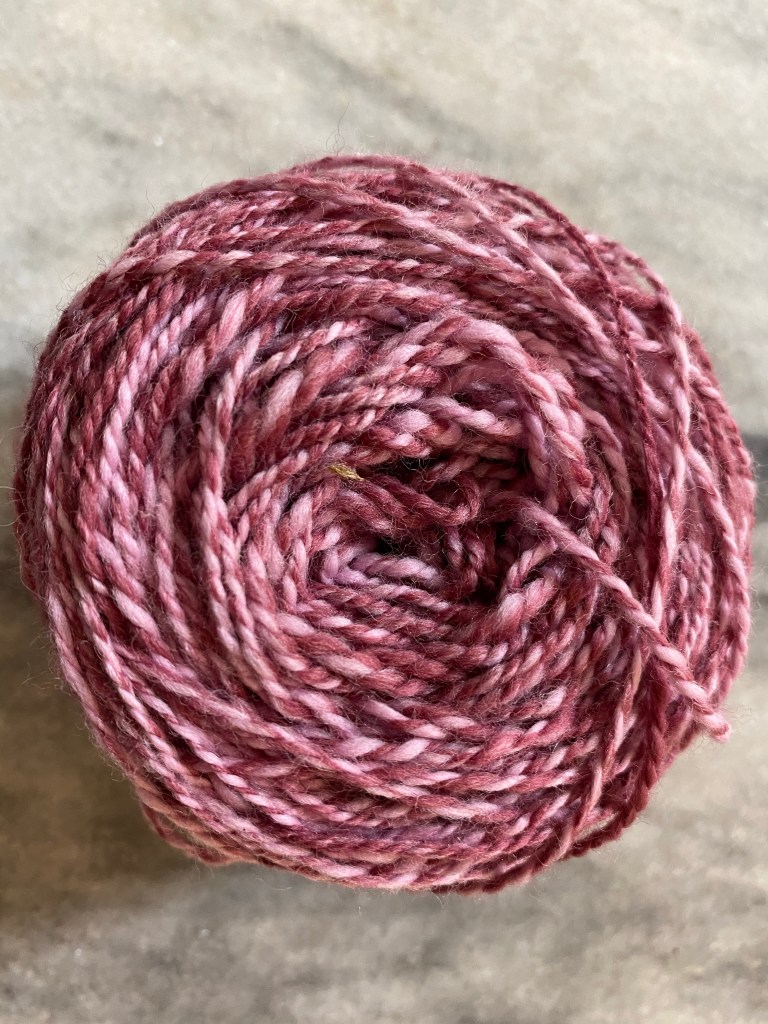
For someone who does not count knitting in my favorite crafts, I certainly seem to be knitting often. I finished spinning the two-color pink merino wool and am quite pleased with the color distribution. It isn’t nearly as patchy as I thought it would be when I was spinning the singles! I then needed to decide what to do with the two ply yarn. Since I want to get back to spinning, I chose knitting because it is faster than nålbinding and I like the texture better than crochet. It is all well and good to only spin, but how can I improve my spinning if I don’t know how the finished yarn performs?
Hand-spun merino wool
I found a simple knit lace pattern, since I read two ply is often used for lace. I also learned about a different kind of needle from Prym. These are ergonomically designed with tips that hook the yarn better, triangle shafts so the loops slide better, and they clip together to keep the stitches on the needle between sessions! I do appreciate well designed things!
Prym knitting needles (size 8) shown clipped together
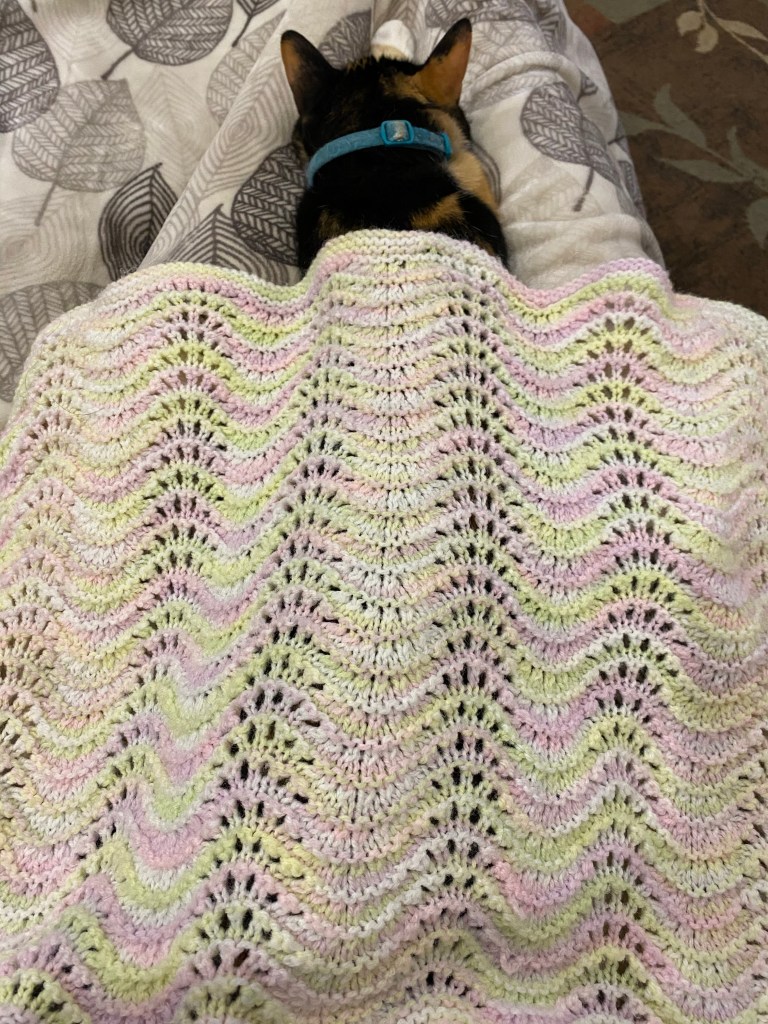
This pattern is my kind of lace! It repeats every four rows, and there is only one row with increases and decreases, otherwise it is knit or purled all the way across. I had the pattern memorized after three sets, and could recognize where I was in the pattern after three more. And such a lovely dynamic result! I realized that I have seen this ripple pattern somewhere else. My daughter’s dolls were tucked in with a rainbow blanket that my grandmother made that used the same stitch! I’ve always admired the ripple and wondered how it was done. Now I know!
Baby blanket knitted by my grandmother
My knitting still can’t be considered speedy, but it will do for a sitting project. I have two other skeins queued up for the next knitting project, and have started a new walking spinning project. We’ll see if I can finish the knit projects before I have more finished yarn!



 Critters and Craft