Mossarium: update

The natural moss that I gathered from the back yard for my mossarium all died in a dramatic going-brown-and-crumbling way, except for one small patch. I bought some cultivated moss to replace it (it came in a multi-pack, ooo).

Photo description: four kinds of moss and the plastic container they were shipped in

I tucked the moss in crevices that I formed in my clay terrarium base, and used the sheet moss on the vertical slopes. To keep the sheet moss in place, I used short sections of a broken toothpick as tiny stakes.

Photo description: using a section of a wood toothpick to stake down sheet moss

I left some open areas of dirt, but not many. I quite enjoyed the placing of the moss, although I’m hoping that this round survives.
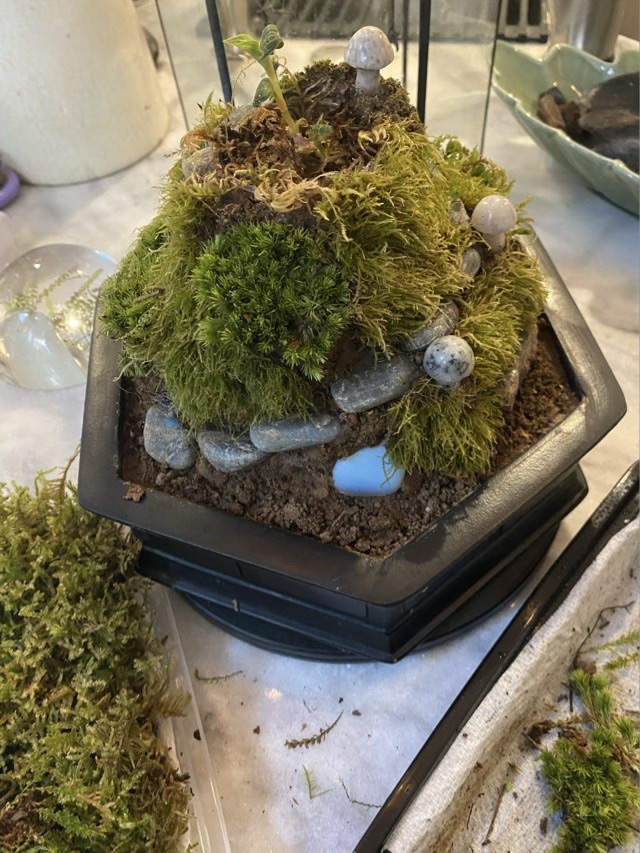
Photo description: mossarium with new moss applied to the small artificial hill with labradorite steps spiraling to the top and jewel orchid at the crown

I do have extra sphagnum moss and another similar looking moss. I put them back in the container and will keep them moist until I figure out something better.

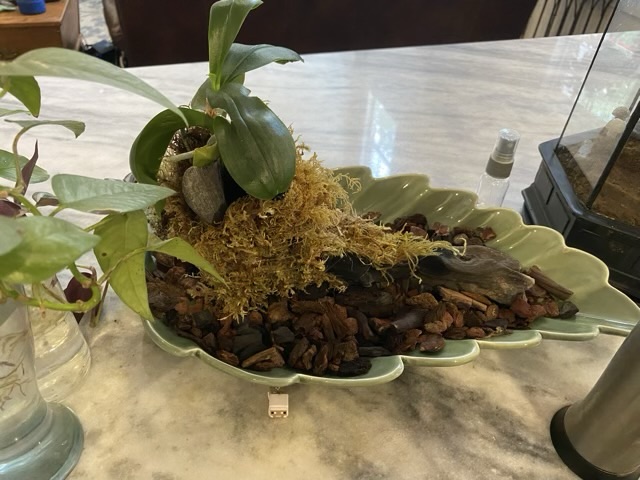
Orchid mount

My orchid count has doubled. I purchased a jewel orchid for my terrarium, and now I have a full size orchid from family. I’m rather fascinated with mounted orchids, despite the daily misting requirements, so I took a piece of lake drift wood that I collected years ago, placed the orchid, and wrapped the roots lightly with sphagnum moss. I secured the whole thing, until the orchid can establish contact, with fishing line wrapped gently around. To catch overspray, I put the mounted orchid in a leaf dish filled with orchid mix.

Photo description: orchid on its new mount with sphagnum moss to help keep the roots moist
Photo description: opposite side of the orchid setup

The center leaf has continued to grow, so I’m hoping the orchid continues to enjoy its new habitat.

Volunteer: Clematis pitcheri

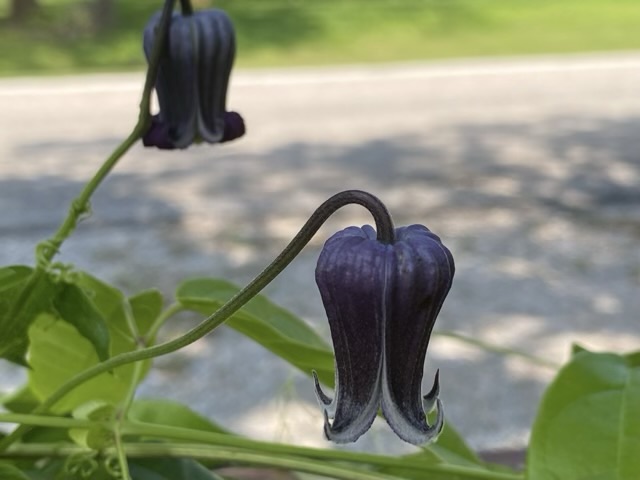
My husband spotted something unusual coming up out of our crossvine, inverted pitcher-like purple flowers that were very different than the crossvine’s peachy-orange vessel flowers. The iNaturalist app gave us the category “clematis and leather flowers”. Searching leatherflowers, the purple leather flower, Clematis pitcheri, was a visual match. We certainly didn’t plant it, but it is quite welcome!

Photo description: two purple leather flowers coming up between crossvine leaves

For those curious, the flower is quite robust, and the curling tips feel very much like leather (as a leather worker, I feel confident in that assessment.) I did not dissect a bloom, but if it continues to do well and produces more than just three flowers, that will be a future project.

Happy Garden Resident

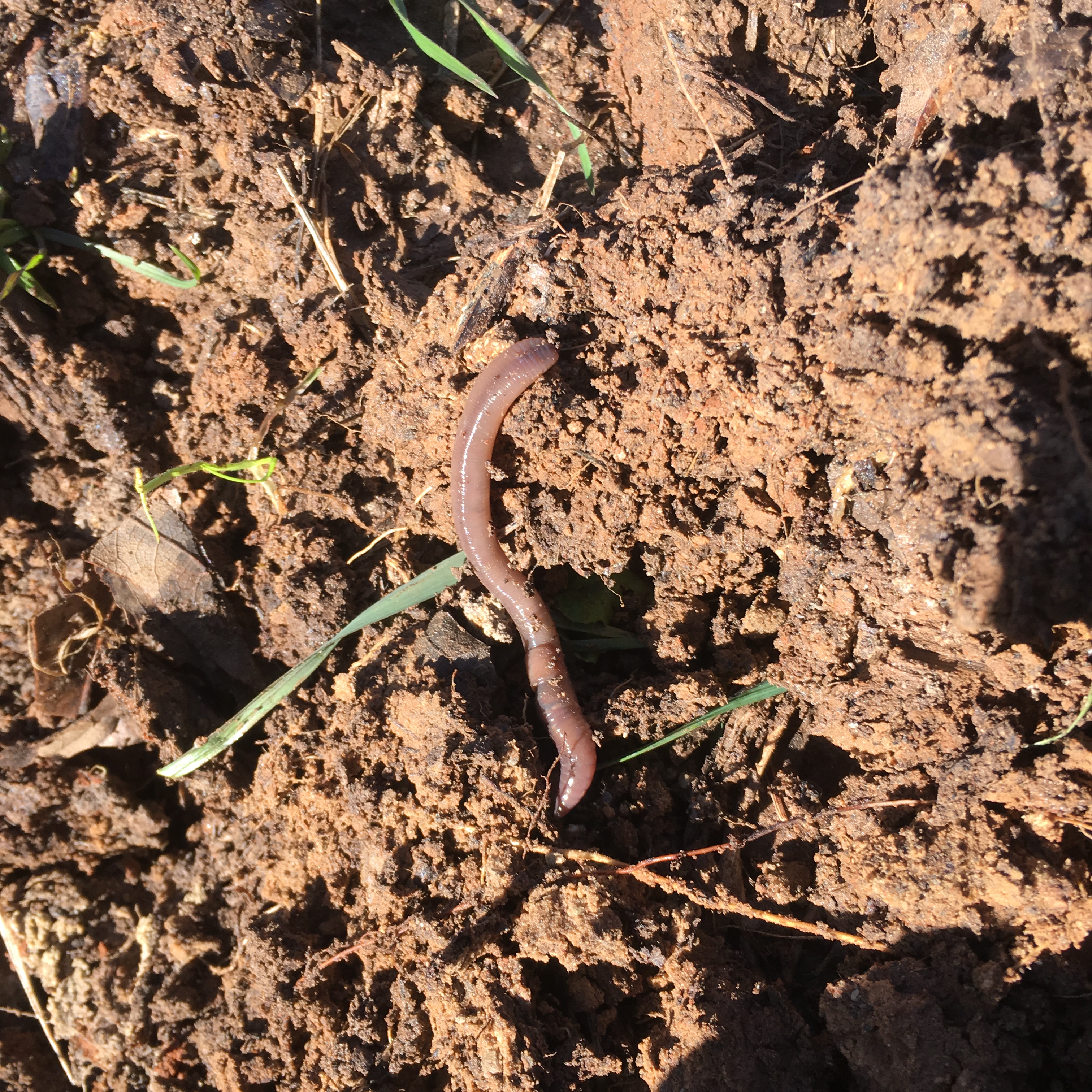
Here is a happy thing to find when you are turning over your garden!

Worm

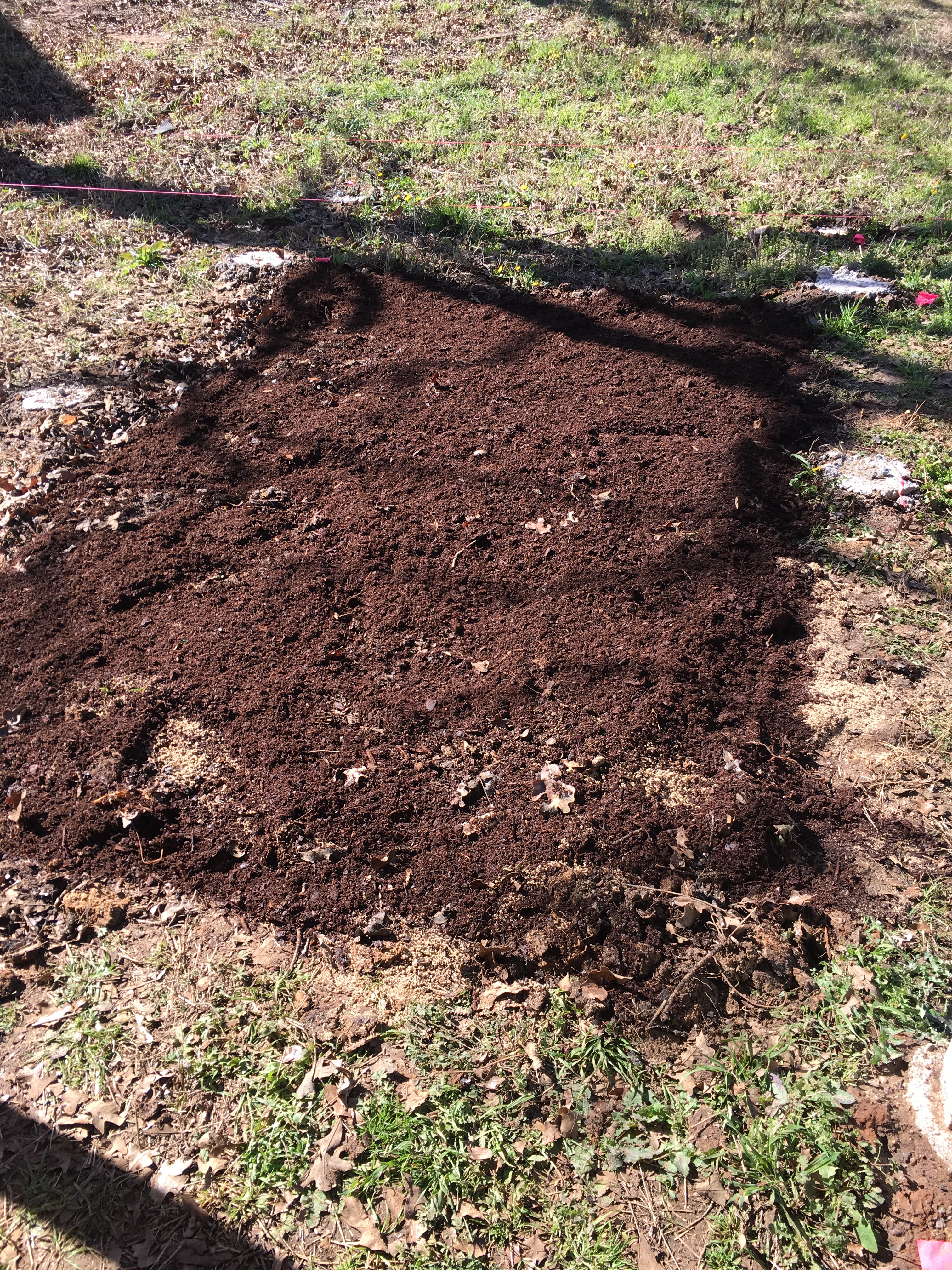
Worms are good for the soil, aerating and fertilizing. I was glad to see a few of these little critters as I took advantage of the nice weather the other day to turn over the garden area. (Turning over a garden with a shovel is also a good workout, but I have to admit I did the digging after a day of rain, so the ground was pretty easy to dig.) I also put down some compost, sand, and a layer of garden soil from the hardware store. Then I covered the whole thing with black plastic until I’m ready to plant (we could still have a freeze or two).

Turned and enriched garden area.
Garden area covered in black plastic to keep the weeds down until I can plant.