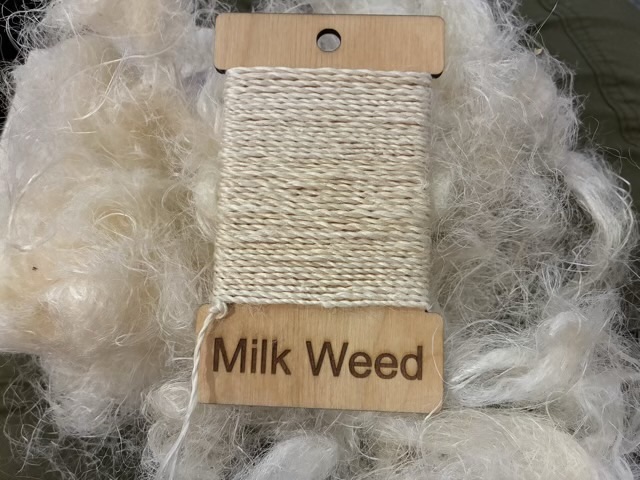
I have spun milkweed seed fiber before, but I have not yet worked with fiber obtained from the plant. I purchased it from Conserving Threads and it came uncombed in a large cloud of fiber. I pulled out long strands to twine, knocking loose many tiny fibers. Combing or hackling the fiber first would remove most of the short bits.
Photo description: laser cut flat wood spool with twine made from milkweed fiber
The milkweed bast fiber is more course than the seed fiber, but it is also stronger.
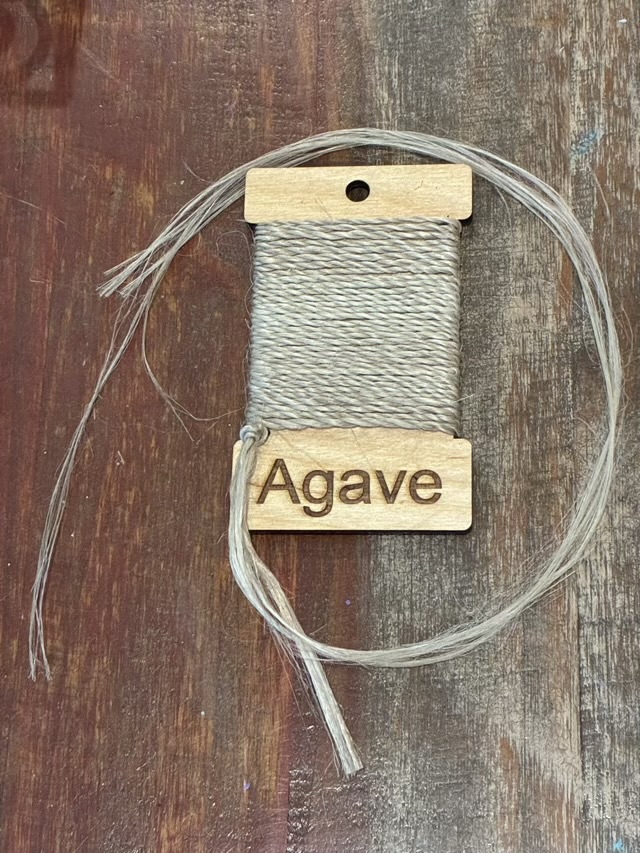
The agave plant, native to Mexico, has many beneficial uses, including providing a strong fiber good for rope and other textiles. It is a long line fiber, like flax, which makes it easy to twine.
Photo description: laser engraved flat wood spool with agave twine wrapped around it and long untwisted fiber hanging from the end
The bundles of fibers I was working with were cut on one end, giving the section a blunt end with many fibers ending at the same place. When twining, all those fibers would pop out of the twine at the same place. I used a small pair of sharp scissors to trim them.
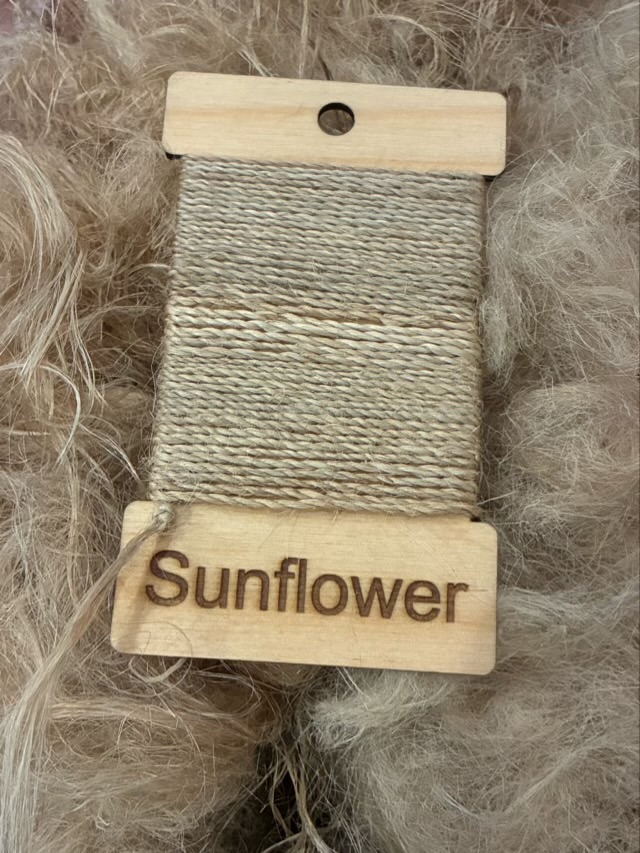
Next up for the twinging example cards is sunflower fiber. This is a long line bast fiber from the stalks of sunflowers. For me, this sunflower fiber feels similar to flax in length, fiber thickness, and when I twine it. It has a beautiful golden luster as well.
Photo description: laser cut flat wood spool with twine made from sunflower bast fiber, laying on a bed of uncombed sunflower fiber
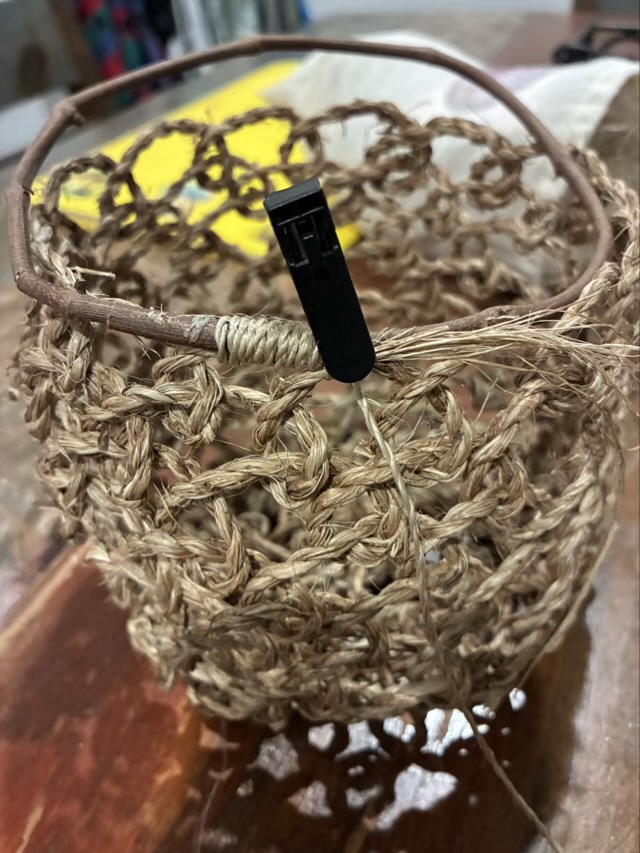
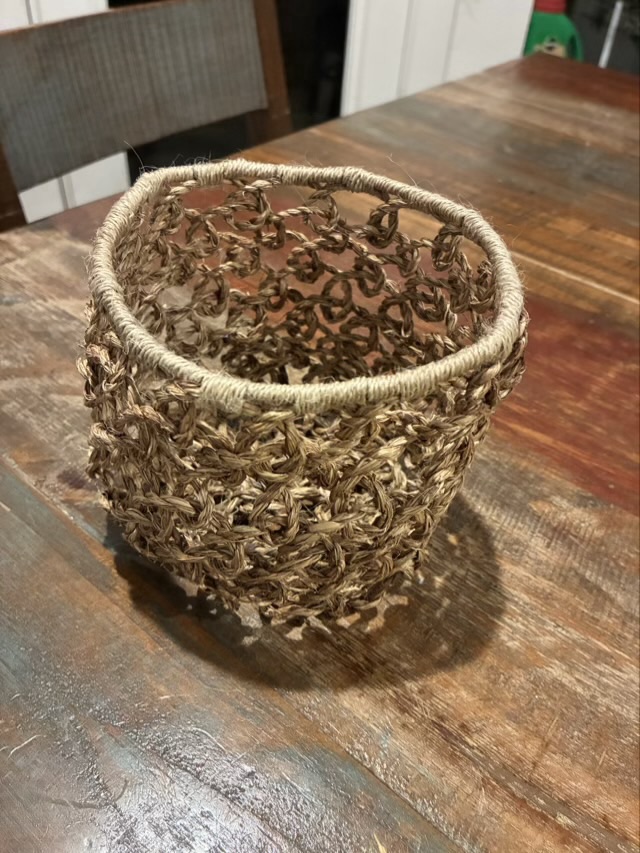
I used this sunflower fiber, along with a length of grape vine, to finish my okra and sugar cane basket.
Photo description: in process: loop of grapevine bound to the top loops of an okra and sugar cane basket with sunflower twinePhoto description: “Crops basket” small looped basket made from okra fiber, sugar cane fiber, grape vine, and sunflower fiber
It is a surprisingly sturdy little basket that does have some flexibility, but can stand on its own. It pleased me that I was able to make it from the discard parts of commercial food crops, hence the name “Crops basket”.
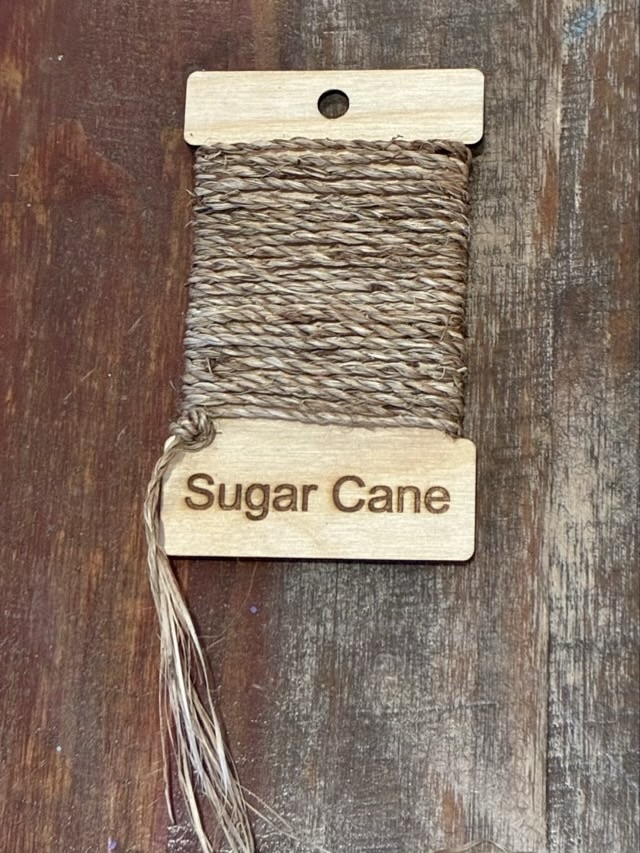
One of the other fibers I purchased from Conserving Threads was sugar cane, which has a very similar look and feel to the okra stalk fiber, but was in finer strands. I let this fiber rehydrate overnight in a damp towel and twined it at the same thickness as I did for the okra stalk.
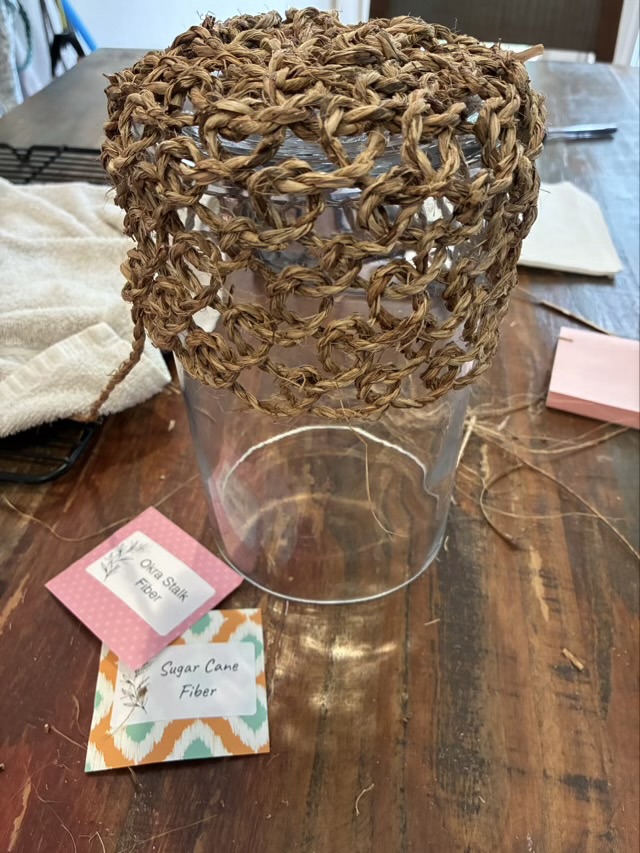
After I finished my twined card for the sugar cane, I twined the rest into the basket I started with okra twine. To keep the sides as even as possible, I used a glass cylindrical vase as a form to guide my loops.
Photo description: twined okra stalk and twined sugar cane stalk used to make a looped basket on a cylindrical vase form
I’m quite pleased with how closely the okra twine and sugar cane twine match in size, color, and sturdiness. Because the twine is robust but flexible, the looped basket holds shape, even when off the form and turned right side up.
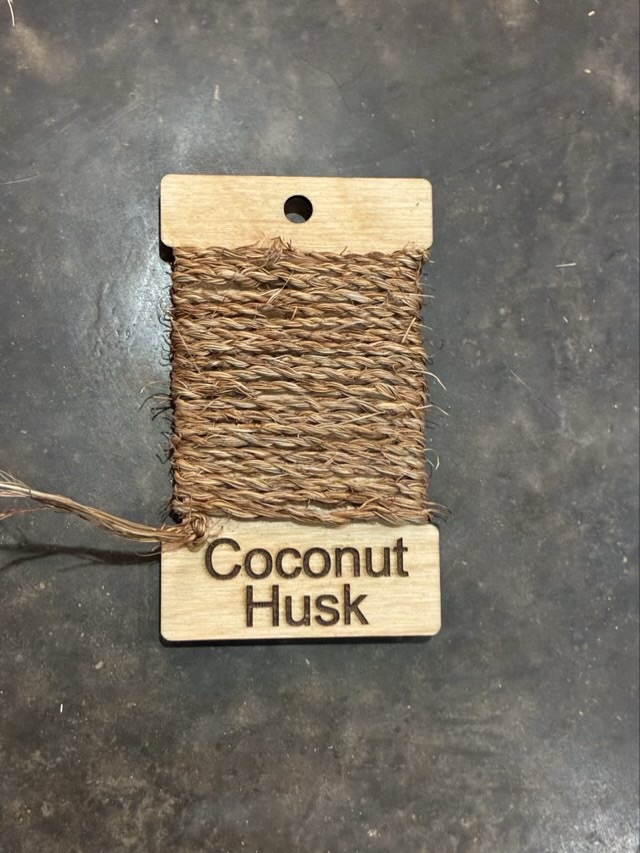
I saw coconuts for sale at the grocery store, with the husk and fibers still attached and had to buy some to experiment. I pulled off and processed the husk, separating the coir fiber from the peat, the began to twine. This is unpleasant fiber to work with. It is rough and short, but it is strong.
Photo description: laser cut flat wooden spool with twine make from coconut husk fibers
I see why the coconut coir fiber is used for thick mats to scrape off shoes, and heavy duty brushes. There are actually many interesting uses for coconut husk, the rest of mine will be used as mulch.