Building a fiber study page

As I spin through as many different fibers as I can get my hands on, I am creating a scrapbook page for each to build a reference book. This is how I build my pages.

Materials:

  • Two 12”x12” sheets of card stock
  • One 8.5”x11” sheet of card stock
  • One 2.5”x12” rectangle of end paper (fancy printed paper with some strength)
  • One 8 3/4” x 11 1/4” heat-sealed laminating pouch (sealed empty)
  • One 3”x5” index card
  • Two 3/16” inside diameter metal grommets
  • Paper brads
  • Hot glue
  • Thread

I use a Cricut electric cutter to score and cut my cardstock, but similar preparations can be done by hand with a craft knife. I make a 1/4” drawer, three “spools” from coordinating cardstock, a drawer sleeve from heat-sealed laminate, and cut one sheet of cardstock with slots to hold each element. Paper brads will hold the swatches onto the page. The Cricut project is available here: https://design.cricut.com/landing/project-detail/630799ca21506d2c4716a4c2
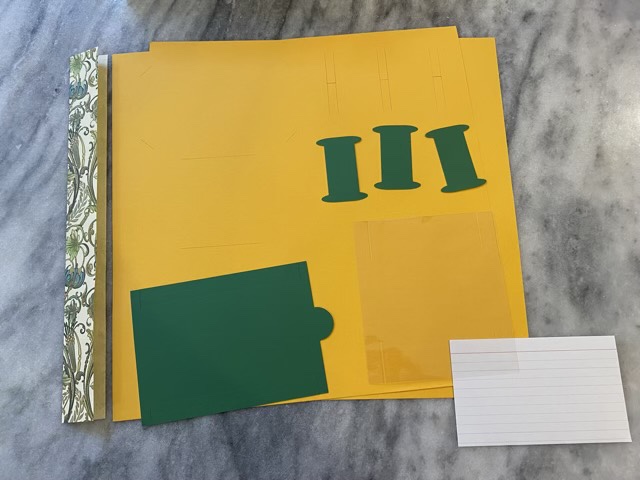
Cut, scored, and folded pieces ready for assembly
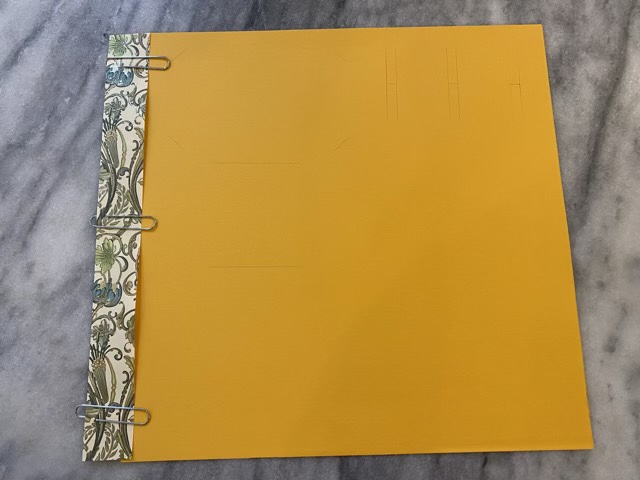
I use paper clips to align and hold the two large pieces of card stock and the folded end paper together with a 1/4” overlap. The back uncut sheet acts to protect the following page, and the end paper forms a spine to make the page large enough to fit in a standard photo book. Sewing, rather than gluing, provides a secure attachment for a longer length of time.
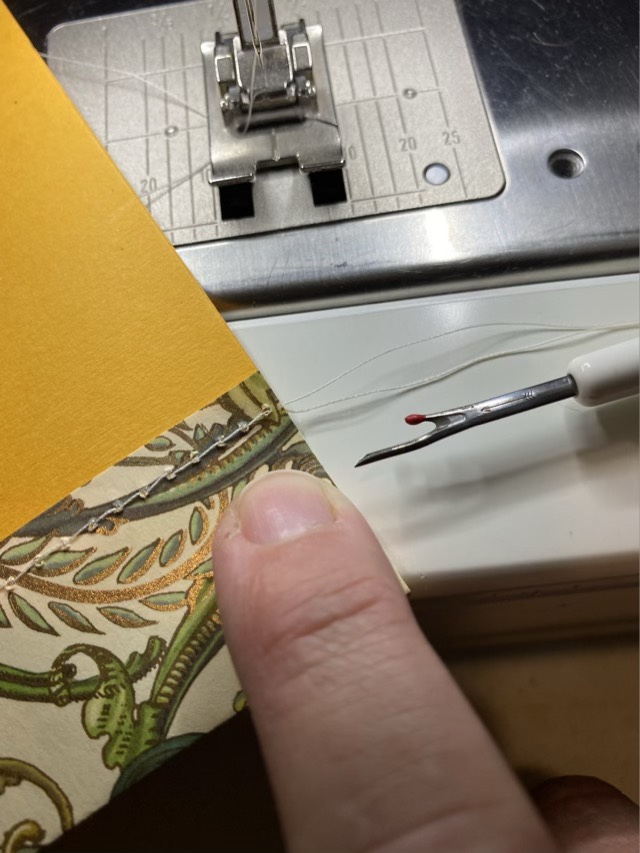
Using a straight stitch I sew the three layers of paper together.
I use a seam ripper to pull the threads to the inside of the layers.
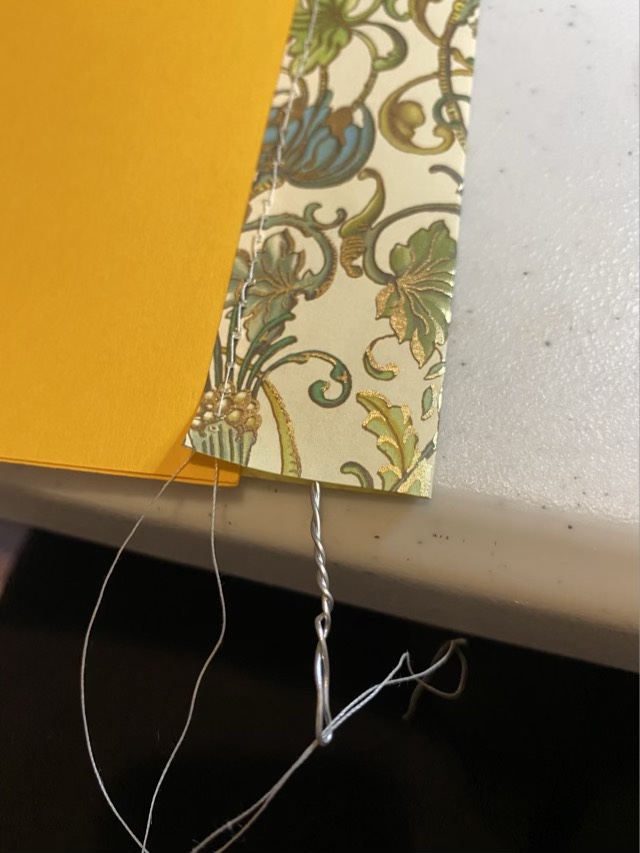
I knot the ends of the threads, then use a long piece of twisted wire to run the threads back inside the spine.
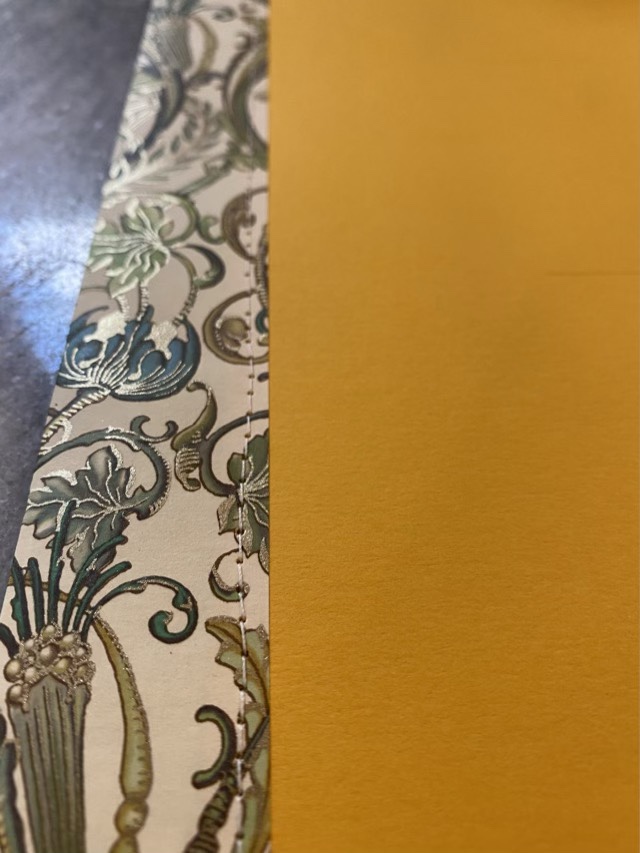
Finished seam.
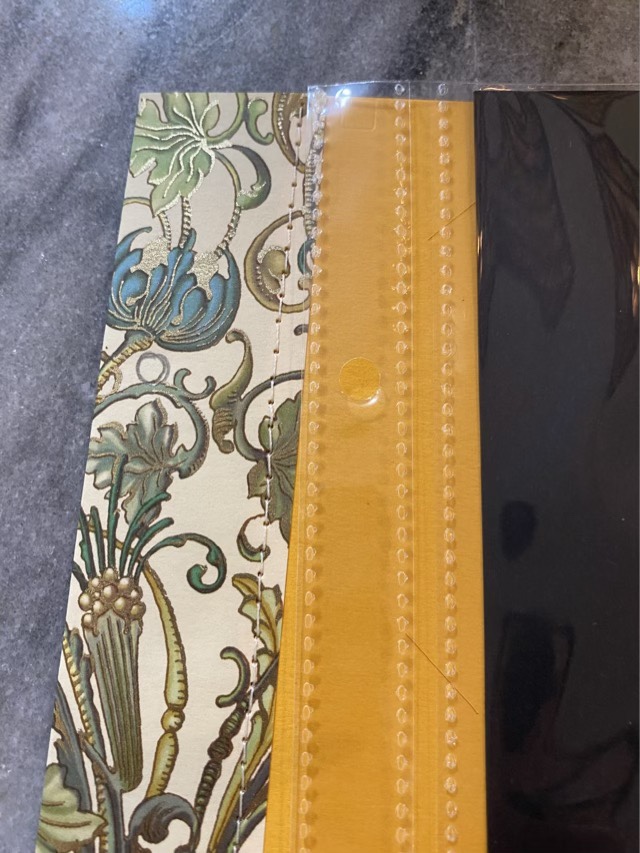
A page from the scrap books works well to mark where the holes should go on the spine.
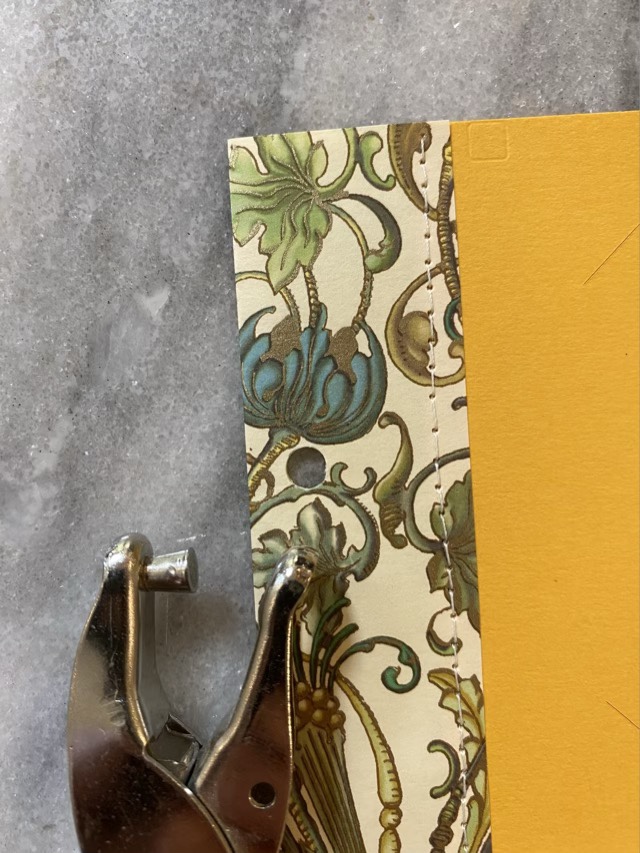
I use a hole punch to cut the holes for the posts of my photo book.
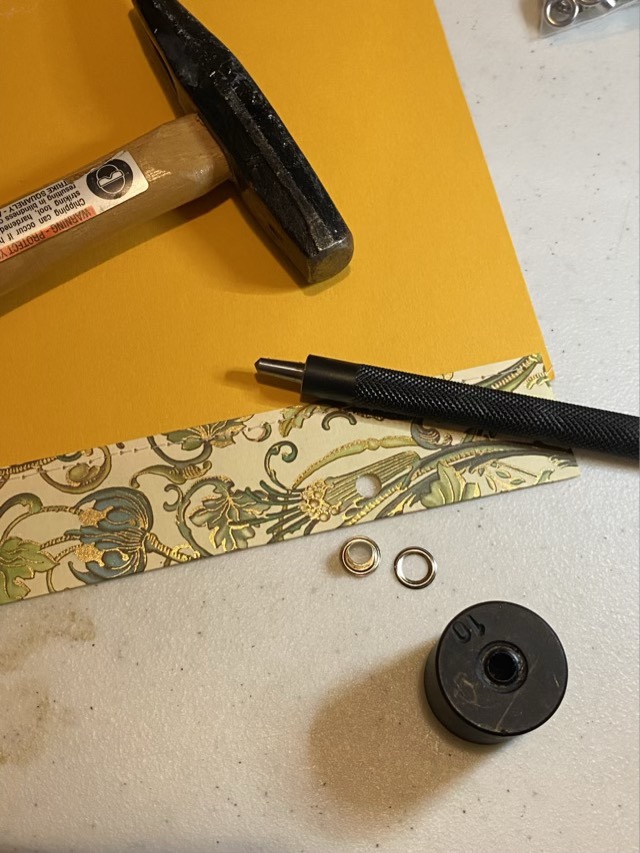
Two part metal grommets help reinforce the holes. These are easy to add with the right tools.
Set grommet.
A heat sealed laminate sheet is remarkably easy to fold. The drawer sleeve needs four creases to create a 1/4” high sleeve, then the tabs on the back fit into the slits on the card stock.
The folded card stock drawer benefits from the ridged hot glue to reinforce the sides. The drawer works without the adhesive, but is studier with it.
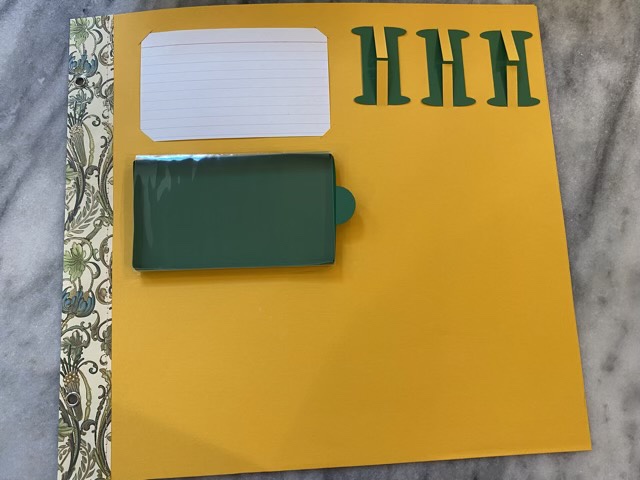
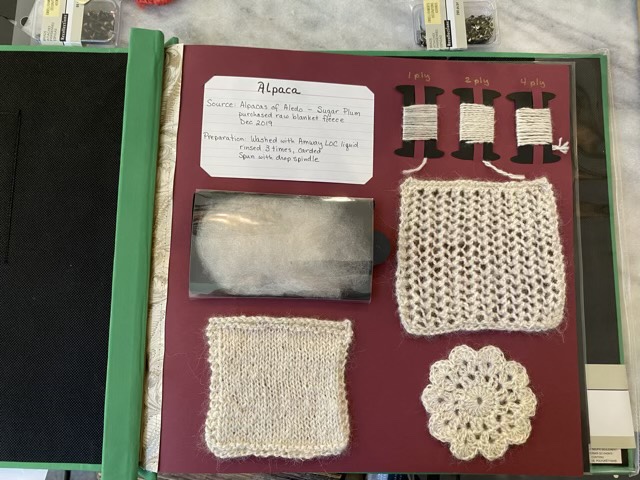
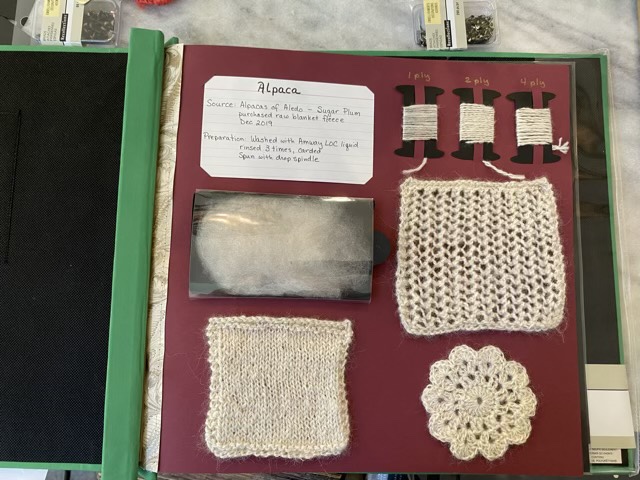
Assembled fiber study page. The spools are held with long tabs that can slide under the yarn once wrapped. Each spool has two slits one inch apart so the yarn’s wraps per inch is easy to see.
A second page with a different color scheme for a lighter colored yarn.

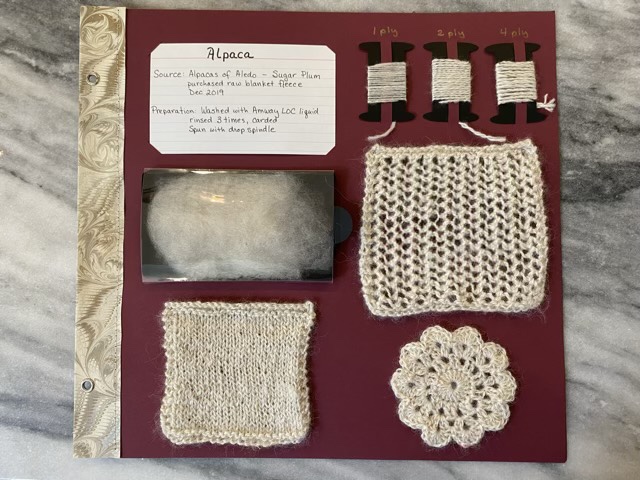
Descriptions of the yarn can go on the index card, unspun fiber can go in the drawer, spun yarn of different plies go on the spools, and knit, crochet, nålbinding, or weaving swatches can be attached with paper brads to the open areas.
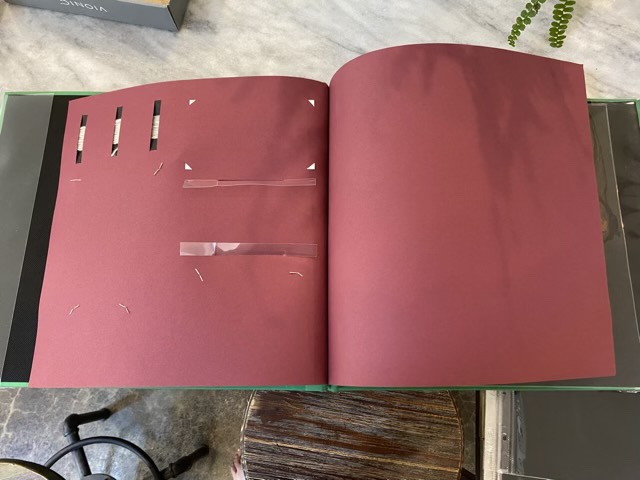
Back of a finished page showing the connections and the protective sheet.
Finished page with alpaca yarn installed in a scrapbook.

Embarking on a new journey

I have been reading from many sources that to improve spinning skills, a spinner should spin many different fibers. Twist my arm. I have also read that keeping a record of each spin is helpful when evaluating fiber for future projects. Writing about fibers isn’t a problem, but putting together what is essentially a scrap book of fiber information is a little more daunting. I tend to think about saving bits only after the project is finished and most of the fiber is gone. That is going to change. I’m starting a fiber spinning book. I’ve designed a standard 12×12 scrap book page to hold a bit of unspun fiber, “spools” of yarn, and swatches of fabric made from the yarn.

Fiber study page made to fit a 12×12 post scrap book

This first page is about the fiber from an alpaca named Sugar Plum. The spine is made from paper my sister bought in Italy (look, I finally found a worthy project!) sewn onto two sheets of card stock and the holes are reinforced with metal grommets. The top sheet has slots cut using an electronic cutter to hold the information card, spools, and fiber drawer. The spools are cut from card stock and have slits one inch apart to make estimating wraps per inch (wpi) easier.

1/4 inch fiber drawer

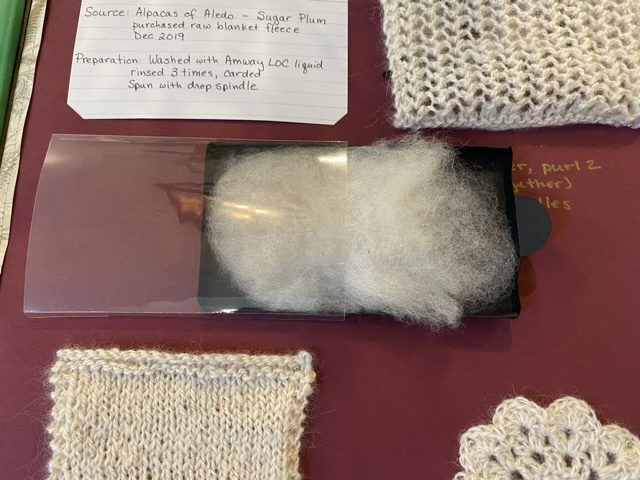
I made a clear fiber drawer so my fibers could be seen and not be flattened down. I used heated laminate sheet and card stock with some hot glue to make the box sturdier. That is the only type of glue in the whole project since adhesives can degrade over time; all the other connections are mechanical.

Fabric swatches lifted up to reveal further information about construction

The fabric swatches are held on with metal brads, and information written beneath.

Protective page of card stock

I used two sheets of card stock so that the back page can protect the next sheet from the exposed brads, but still allow access to the brads.

Page installed in store-bought scrap book

The journey has begun! I’ll blog about fibers as I complete pages, and I’ll do a tutorial on how to make this type of page (I was too excited to get started to properly document this first page.) And that plain scrap book cover needs some ornamentation and improvement. This should keep me busy and blogging for awhile!