
“She’ll prick her finger on a spinning wheel’s spindle and die.” -Maleficent
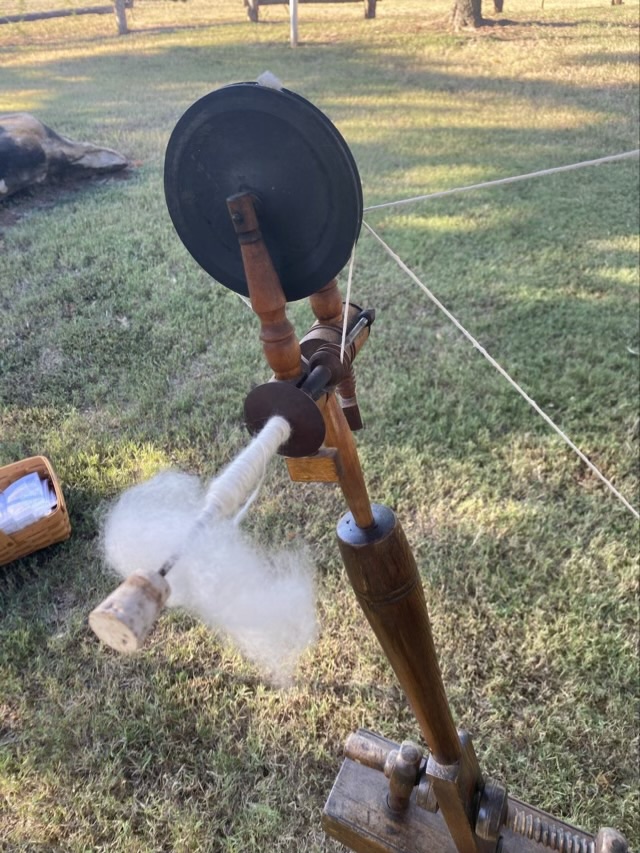
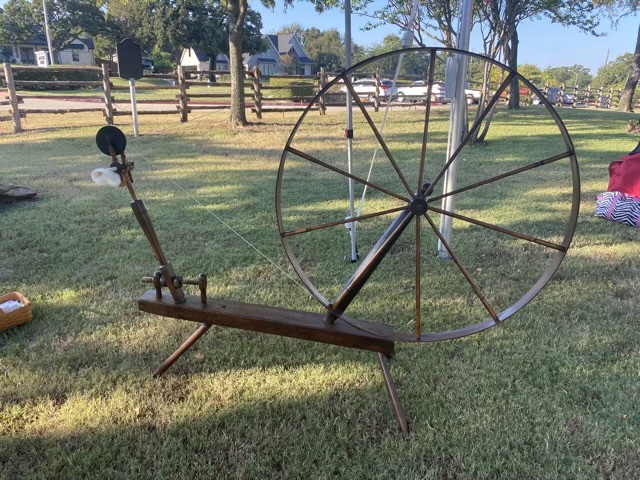
A Great Wheel, or Walking Wheel, does not have a flyer assembly like treadle spinning wheels. The wheel has a drive band that turns a spindle, often made of iron, that is long and thin.
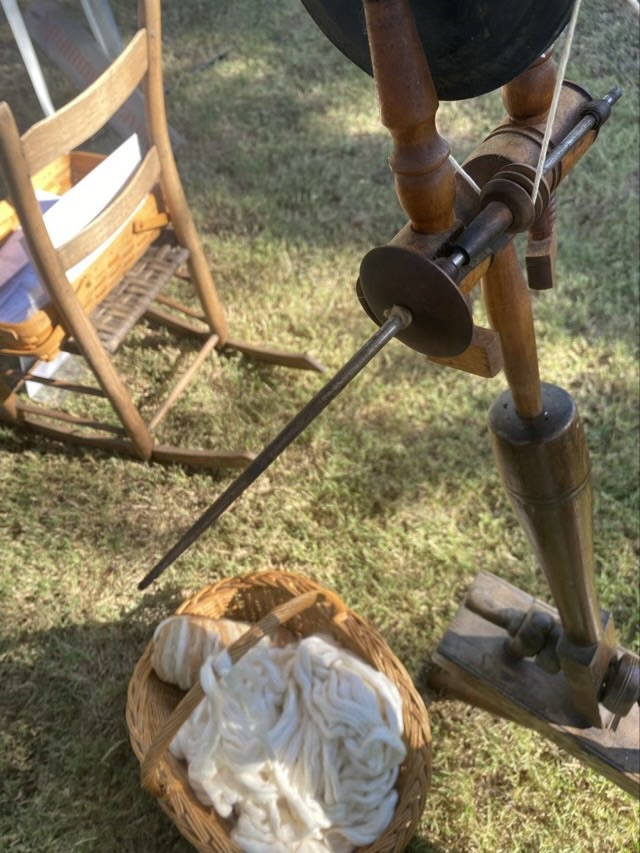
This iron spike, I’ve read, could be quite sharp, although the one on this wheel was not. Out of caution, the museum keeps a cork on the tip of the spindle to avoid the pricking of fingers or impaling of body parts.
The spindle is held to the Mother-of-all assembly with spindle bearings. On this particular wheel the bearings appear to be either carved wood or wrapped thread so old and hardened as to be a solid unit. I have seen pictures of other Great Wheels where the spindle bearings are made from fresh braided fiber and tightened through holes in the Mother-of-all.
I read that spinners would often use a “quill” with this type of spindle, wrapped around the spindle so that the cop of yarn could be easily removed. Historically the quill was a section of corn husk, so I bought dried corn husks from the produce section of my grocery store, and cut rectangles. To keep the husks pliable, I stored a few in a plastic bag with a damp paper towel overnight. Before I started spinning, I wrapped the husk around the spindle with the smooth side in. Corn husks have prominent ribbing on one side, and when the ribs are on the outside of the quill, they help hold the spun yarn in place.
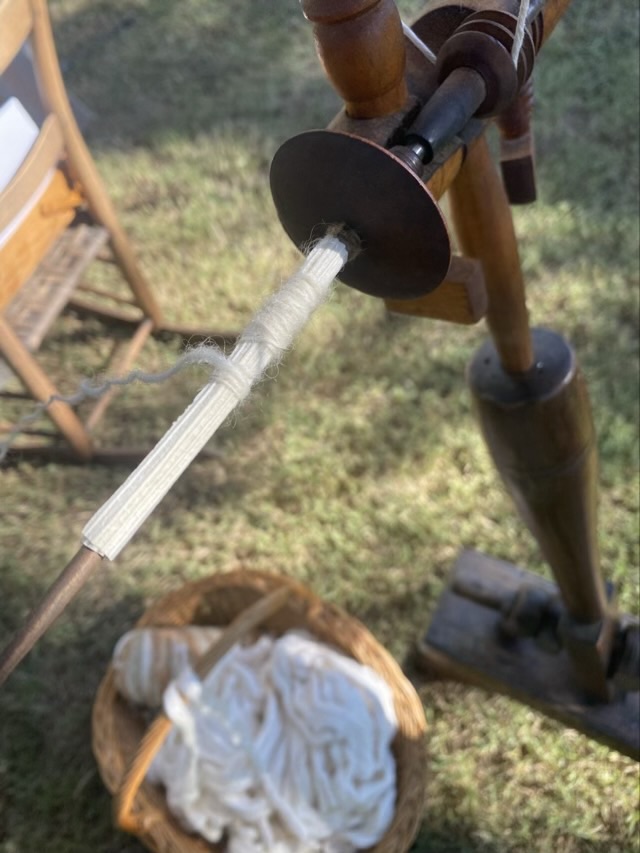
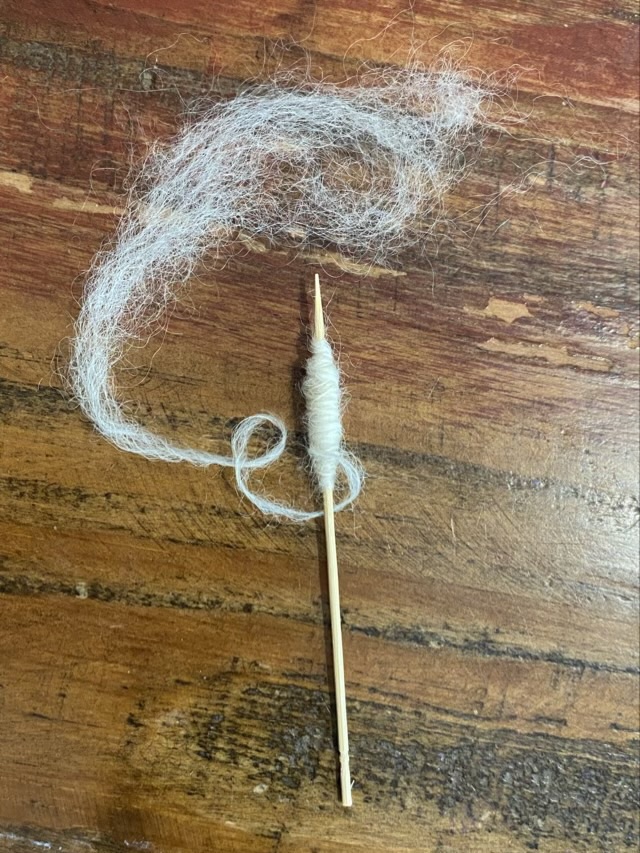
I used a wool yarn leader to start my spinning, because that is what I made when I did my test spin a month before. It was an easy transition to go from the wool to cotton. I built up the cop of cotton yarn by spiraling the yarn back and forth across the quill as I rolled it up. This keeps the yarn from bunching and sliding as the pressure of the wound yarn builds up.

This particular spindle does have a disc and I could have run the yarn right up to the disc without risking tangling the yarn in the spindle bearings, but since I wanted to be able to quickly remove the yarn, the quill worked well.
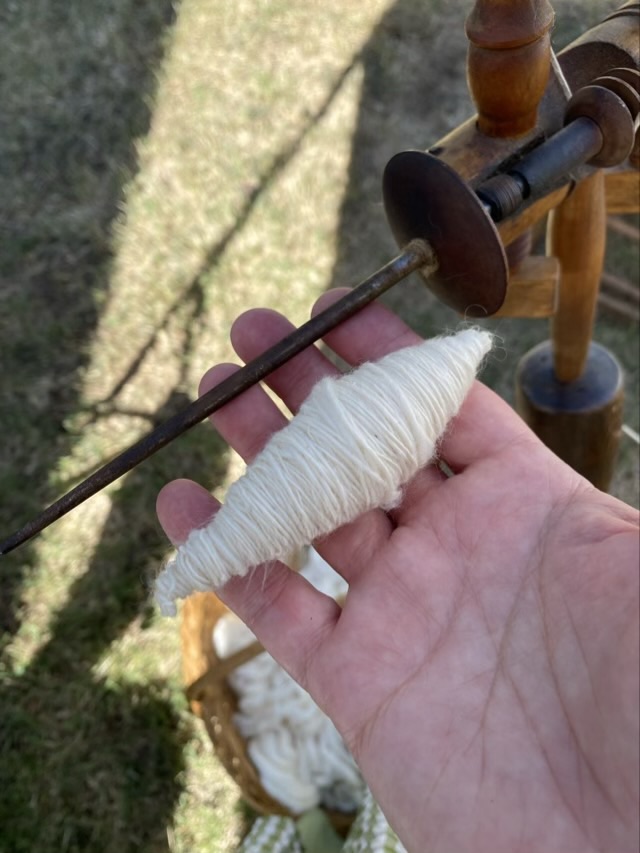
My first cop of yarn went too close to the ends of the quill. For the second I was able to control the yarn better and keep it centered on the quill.
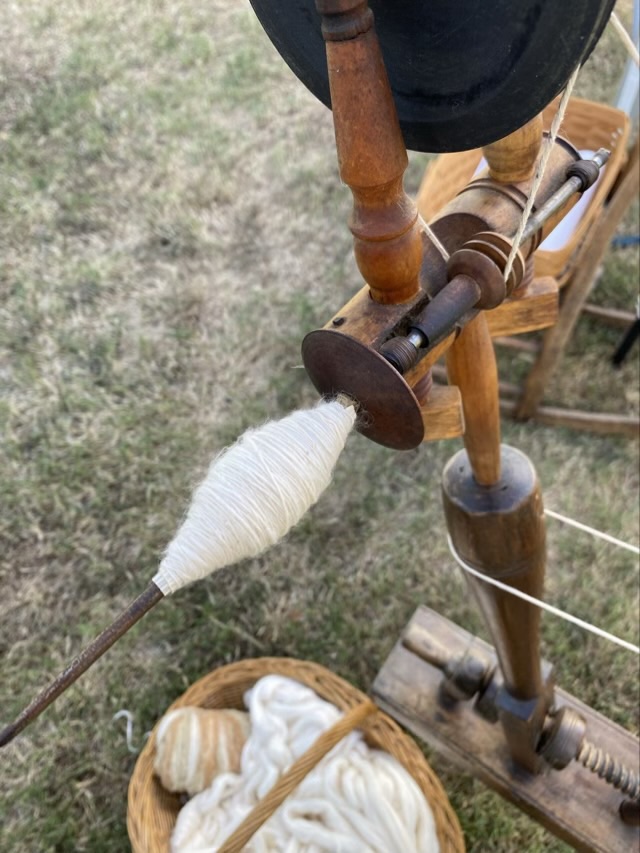
I left a cop of yarn on the spindle when I was done for the day so it could be part of the display when they put the Great Wheel back in the Man House at the museum.
This post is part of a series about my experience demonstrating spinning on a 1860s Great Wheel in Mansfield Texas.





 Critters and Craft