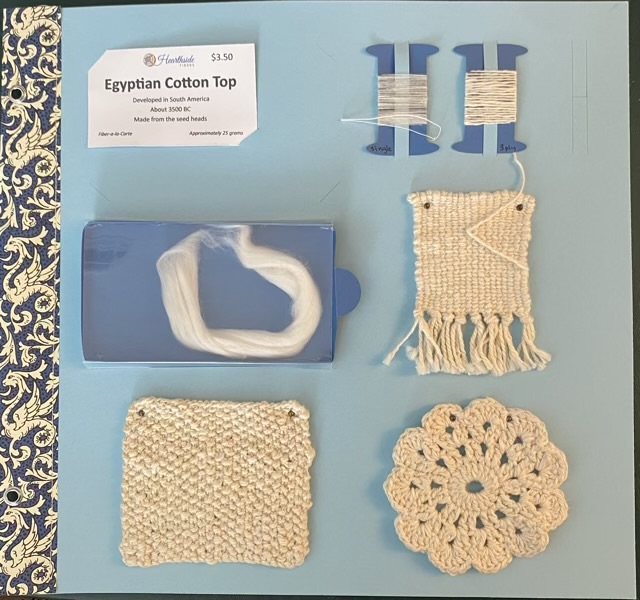
Photo description: scrap book page with an Egyptian cotton card from Hearthside Fibers upper left, single spun and chain ply yarn upper right, unspun fiber middle left, twined weaving swatch middle right, knit moss stitch swatch bottom left, crochet lace round bottom right
I spun this Egyptian cotton sample on an Ashford Traveller spinning wheel fitted with a high speed whorl. Egyptian cotton has a longer staple length so is less inclined to form pills. It was nice to spin and worked up into the swatches well.
I enjoy spinning cotton, but is definitely a sitting activity, either on a wheel, or with a tahkli spindle. I also avoid wearing black, as the small fibers accumulate everywhere.
My youngest’s favorite stretchy jeans developed a couple holes that needed mending. I asked her if she wanted a colorful woven patch, or flowers. She said striped clouds. Um. Ok. Hm. That isn’t in my bank of mending pins on Pinterest, but I’ll give it a go.
Photo description: pin sized hole in knit jeggings, backed by a jar of cream I used as a darning tool
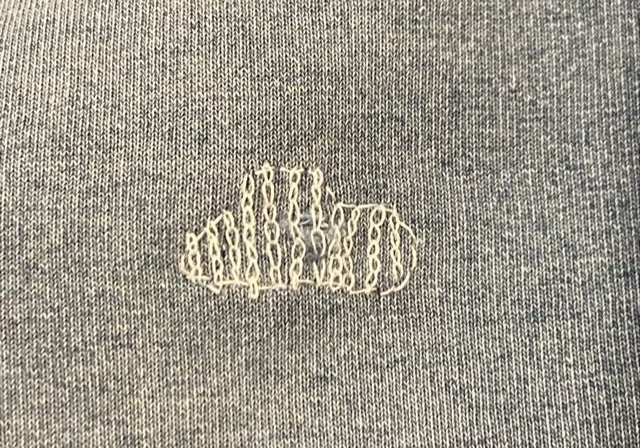
I tried outlining a cloud, then filling it with stripes of chain stitch. The outlining was meh, but the chain stitch was surprisingly well suited to the stretchy material, and it grabbed the edges of the hole and pulled it closed.
Photo description: white thread used to make a striped cloud with outlining
For the second hole, I didn’t bother with the outline.
Photo description: cloud stitched with white thread using a chain stitchPhoto description: picture showing both visible mends on the leg of the pants
The stitches do look better from a distance, more cloud like. I would use a chain stitch again for visible mending on stretchy material. Spirals might be nice.
If you don’t have a swift or a nostepinne (or don’t want to go upstairs then get them), the back of a chair and a roll of paper work fine to take yarn from skein to ball form.
Photo description: skein of hand spun cotton hung on the back of a wood chair, and center pull ball of yarn started on a roll of card stock, black dog looking on in the background
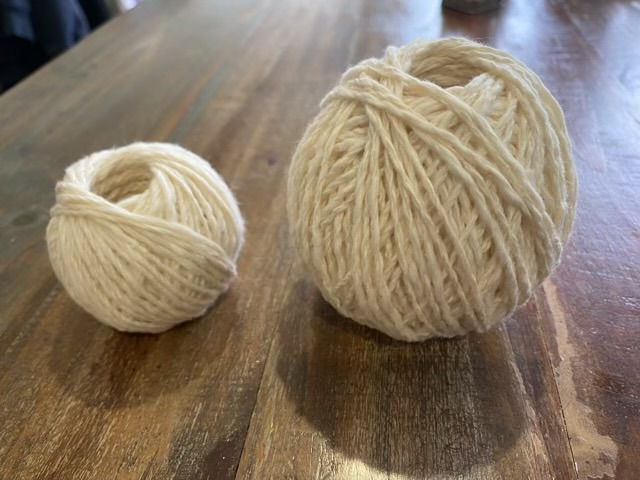
I rolled up two skeins of hand spun cotton this way. This is the cotton that I spun from raw bolls then three plied two ways: crepe and chain ply.
Photo description: two nostepinne style balls of cotton yarn, chain ply on the left, crepe on the right
I’m most interested in how these two preparations knit up. Yes, I’m looking forward to swatching. I’m weird like that.
For our monthly craft day, my neighbor and I reupholstered two dining room chairs.
Photo description: before picture of a claw foot chair with worn velvet seat cushion
The seat was only laid into the chair frame, so lifting it out was easy, then we removed the staples with flathead screwdrivers and serrated needle nose pliers.
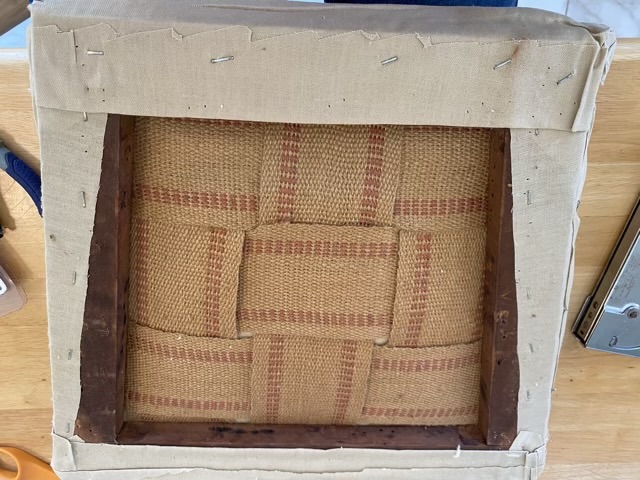
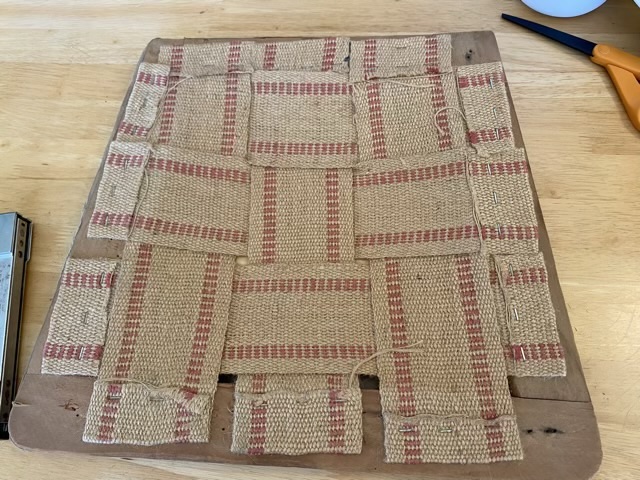
Photo description: underside of the chair pad showing the jute webbing used as support
There were so many staples. The velvet had a set of staples, then there were three layers of thick cotton surrounding cotton filler and each layer had a host of staples.
Photo description: cotton cloth layer with more staplesPhoto description: padding made from raw cotton, which condensed and was no longer comfortable to sit onPhoto description: seat frame with jute webbing
When we got down to just the frame, it was obvious that the seat had been reupholstered many times. The jute webbing was in good condition, so we left it in place. To rebuild the seat, we found a 3” dense foam chair cushion, some upholstery quality heavy cotton, and some beautiful red velvet. The cushion was the same depth and width as the chair seat, it just needed some trimming with an electric knife to match the profile. We secured the pad to the frame with the heavy cotton cloth and heavy duty staples.
Photo description: heavy cotton fabric securing the foam pad to the seat frame
Because we used a foam block, we didn’t need as many layers of cotton as was previously installed. The cotton layer did help to do the initial shaping of the pad and make applying the velvet easier.
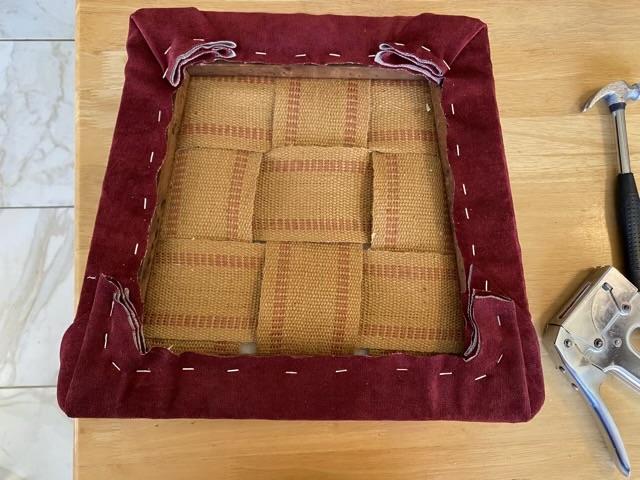
Photo description: underside of seat frame with velvet secured with staples
We did have to switch to longer staples, particularly in the corners, with the velvet. It was good that I brought along a selection.
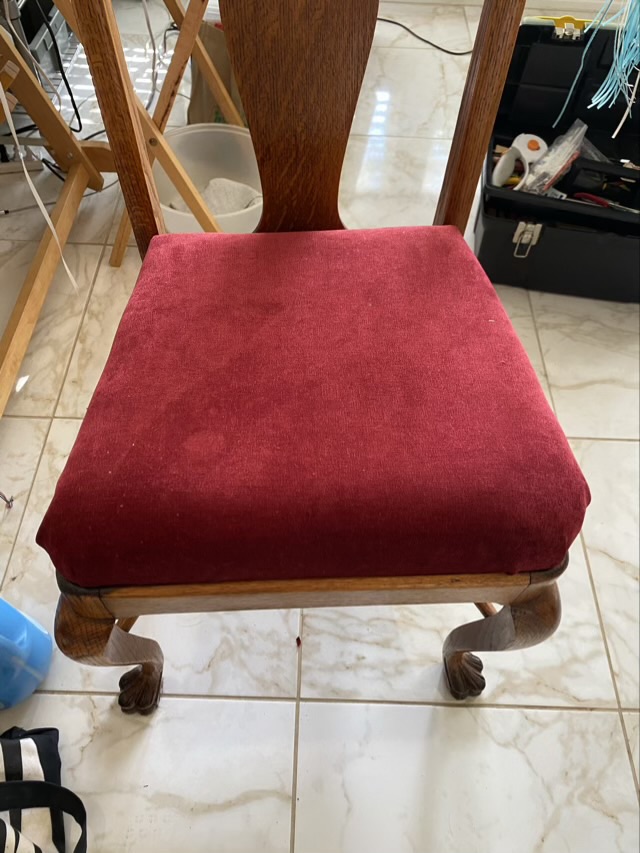
Photo description: after picture of the reupholstered seat of a claw foot chair
We were able to refinish both chairs, including shopping for fabric, in about three hours. Chair seat reupholstery is a very doable project with a good heavy staple gun, selection of staples, and a pair of pliers.
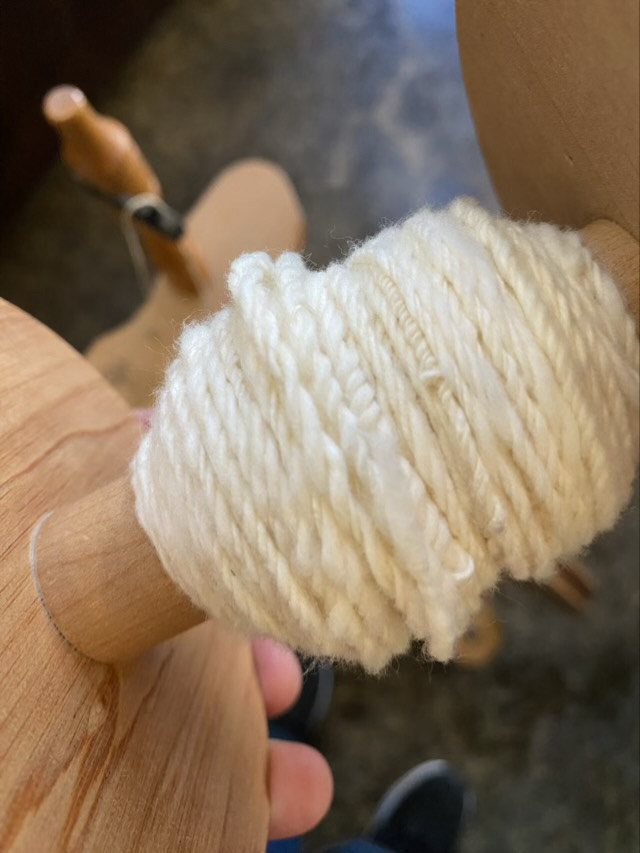
Since I had more spun cotton single than I needed for my crepe yarn, I tried chain plying it to make a three ply yarn sample. It did not go well. The cotton single was difficult to handle and kept breaking if the strands rubbed together. The resulting yarn is very haphazard with sections that coiled mixed in with the smooth ply.
Photo description: three ply cotton yarn on a wood bobbin
The chain ply and the crepe yarn don’t look that different on casual observation because of the irregularity of the single spin. The variations in width cause more visual texture than the plying techniques. I will have to try this comparison with a different fiber preparation.
Photo description: crepe yarn (left) and chain plied yarn (right) on a PVC niddy noddy









 Critters and Craft