Alpaca application

All spun up, it was time to craft my alpaca yarn into… something. I needed something to test the properties of the yarn, something to compare to other fibers, something I’m comfortable making… a hat! (I know, none of you are surprised.) I chose to crochet the hat because it goes quickly, and I was anxious to see how it performs. I have read that alpaca doesn’t have the elasticity of wool. There is something about the differences in the crimp of the fiber; wool has more crimp, alpaca less. I went with a smaller crochet hook to get a tighter fabric, to try to compensate for less elasticity.
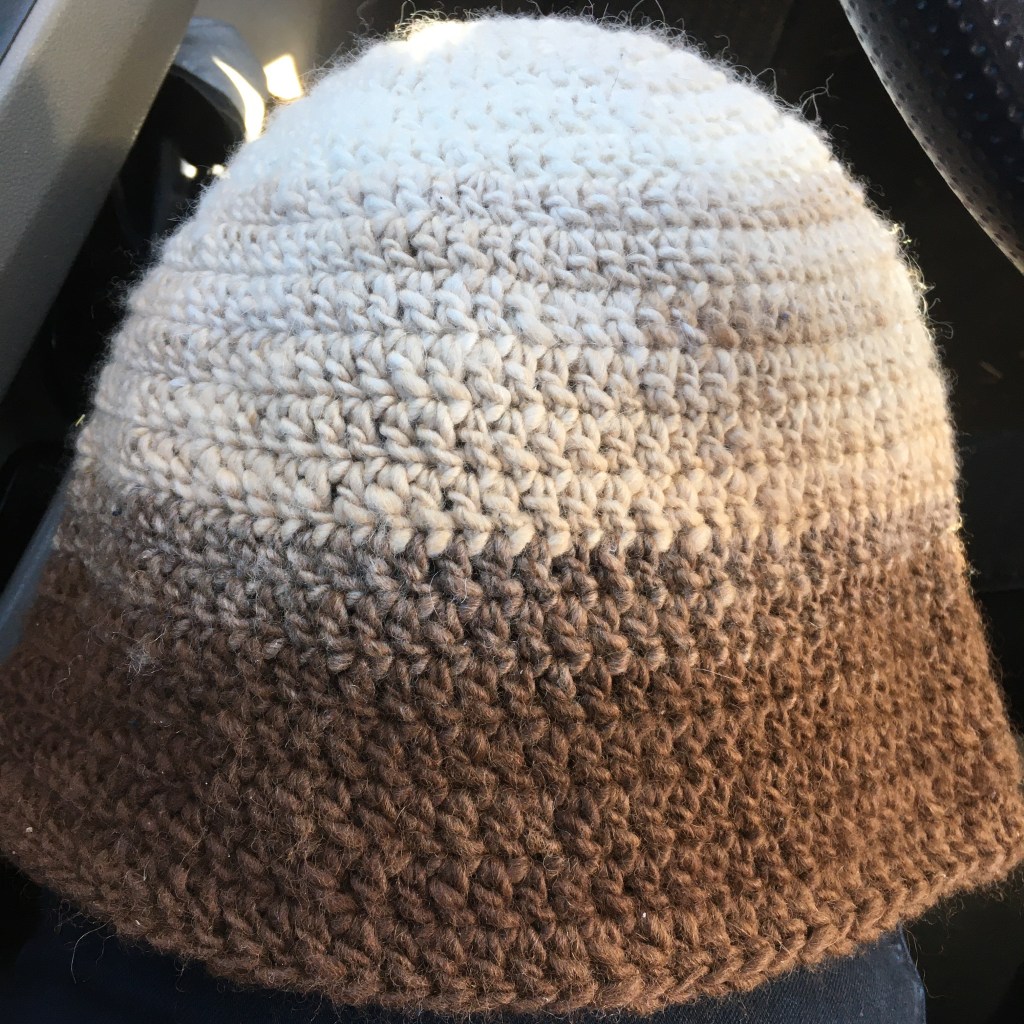
100% undyed alpaca hat, unblocked

The color gradient turned out better than I expected. I would have liked a larger section between the fawn and brown color, but there is more here than I saw in the wound cake, so I’ll take it. The yarn crocheted up nicely. I do like single ply for crochet. The stitches look so much nicer; less like knots.
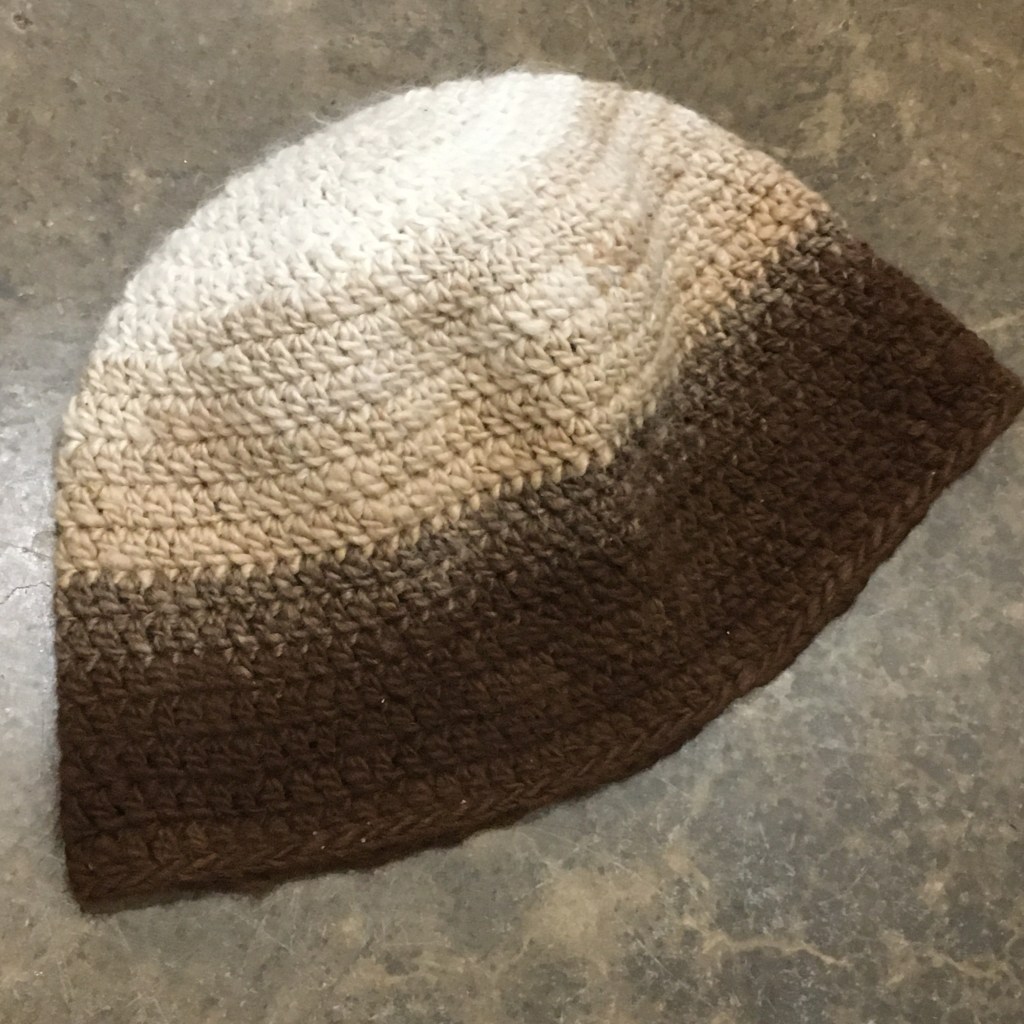
100% undyed alpaca hat, blocked

Interestingly, when I blocked the hat, it was still water resistant. It took some working to actually wet the hat so that I could lay it out to dry.
Spin, spun, almost done

I spindle spun the blend of fawn and dark brown alpaca fiber. My consistency is decent when I am paying attention. If I am watching my youngest play Zelda Breath of the Wind, however, the yarn goes thin then thick pretty quickly. Oops.

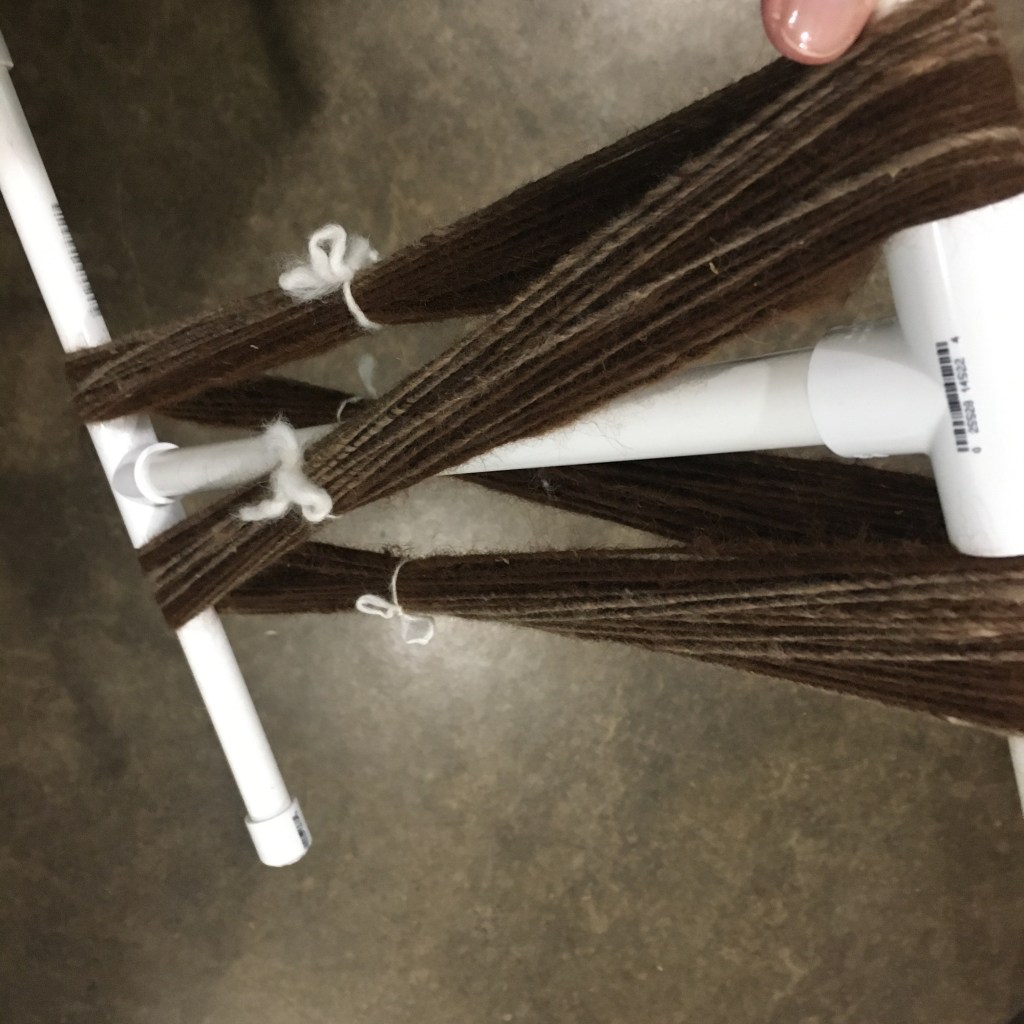
Donabella and Amiee’s fiber spun up and then wrapped on the niddy noddy.

The fawn color really disappeared quickly into the brown. I’m not sure I’m going to get the gradient I was hoping for when I make something with this. We will see!

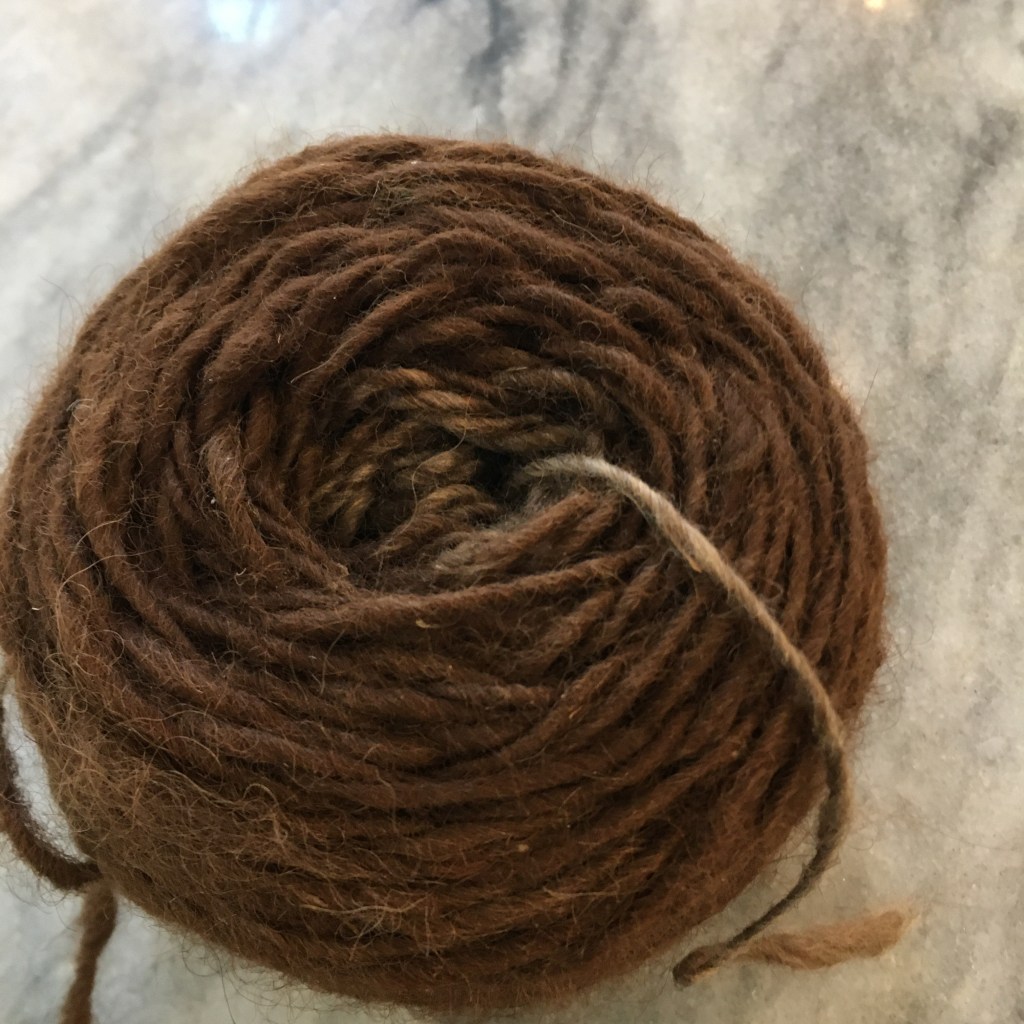
Yarn wound into a cake. The blended part is almost undetectable

Blending part 2

I blended Donnabella and Aimee’s fleece! The color difference is greater between the fawn and dark brown, and it didn’t take much brown to make a significant difference in the blend color.

Fawn and brown alpaca fleece loaded on a carder

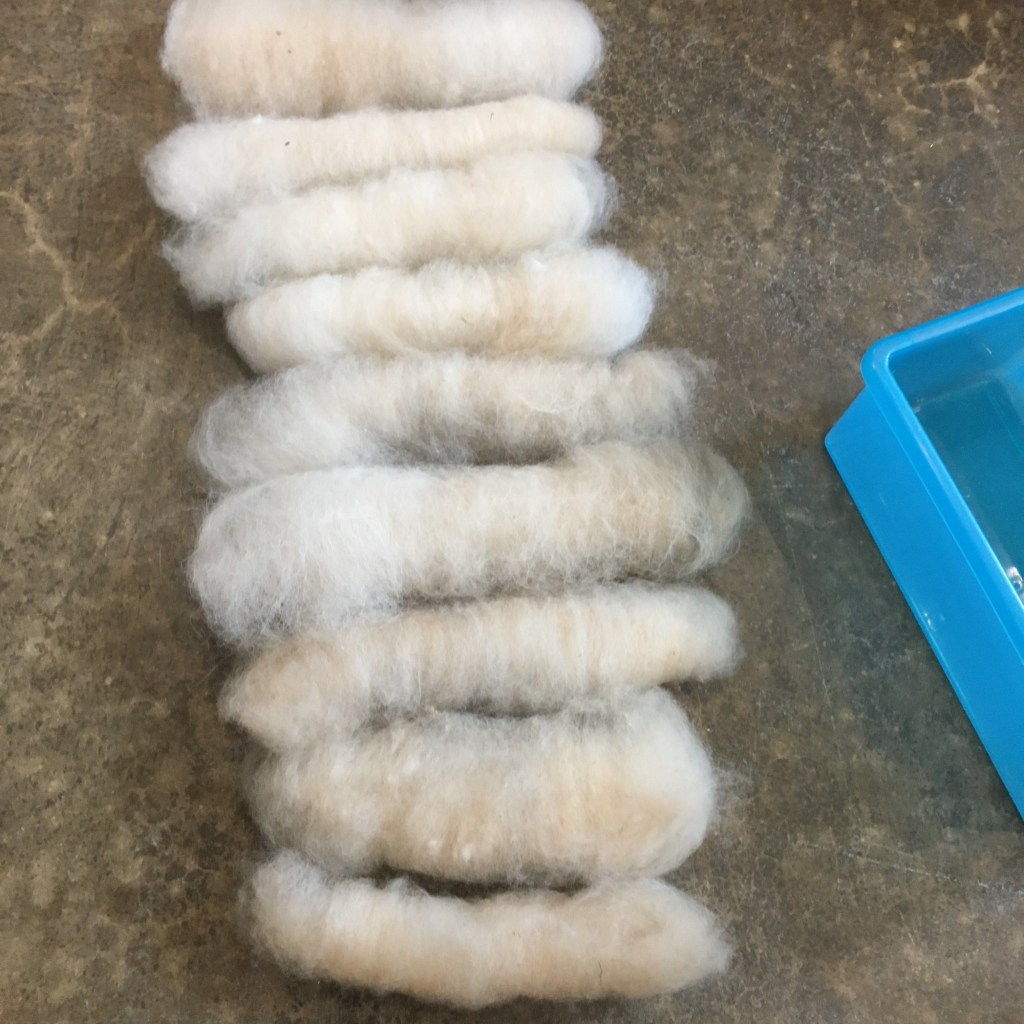
After blending, I color sorted the rolags before spinning.

Color sorted alpaca rolags

I am finding differences in fiber in the fleeces. I’m not sure if I selected raw fiber from different parts of each blanket (the fiber sheared from the back of the alpaca), or if there are differences in fiber diameter between animals (which makes sense), or both. I am pleased that I am learning and noticing the differences!

Spinning as I go

The rolags of alpaca wool I am carding are so light and fluffy, I don’t want to pack down the fibers by storing them until everything is carded. So I decided to spin as I go.

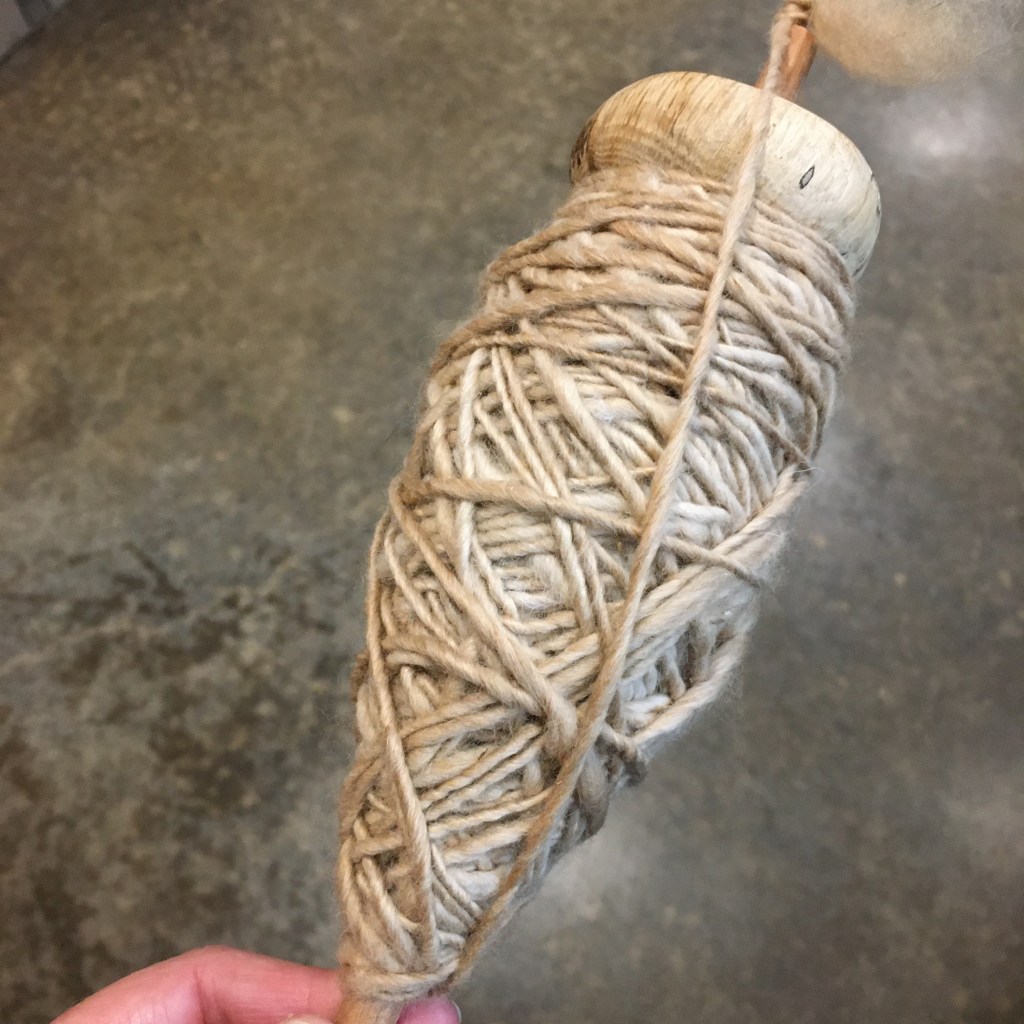
This is as much as I could pack on my spindle!

It is a nice pairing of tasks: card a box full of rolags, spin said rolags, repeat. When my spindle was just as full as I could get it, I did wind the yarn on my niddy noddy, rinsed it, and let it dry. Even though I washed the raw fleece, it still had some water resistance. The dried yarn is balanced and more consistent in thickness than my last spindle full.

Cake of single ply 100% un-dyed alpaca

The color shift from Sugar Plum’s fleece to Donnabella’s came out nicely!

Blending natural colors

I think I mentioned that I purchased three different colors of alpaca wool? Now comes the fun part (who am I kidding it has all been fun): blending! I used my fine carders to blend portions of Sugar Plum’s (white) and Donabella’s (fawn) fleece to make intermediate colors. The idea is to get a gradual change from one color to the next.

Natural alpaca fleece colors before blending
Color graded rolags

The color change is subtle; Donnabella’s fleece is only slightly darker than Sugar Plum’s, but there is a difference. Next I’ll try blending Donnabella’s with Aimee’s (dark brown).