I had a panic moment. My spinning and walking is going well, and my speed is improving, and I realized that once I was done with the current preparation of fiber I didn’t have anything ready to spin. The horror!!
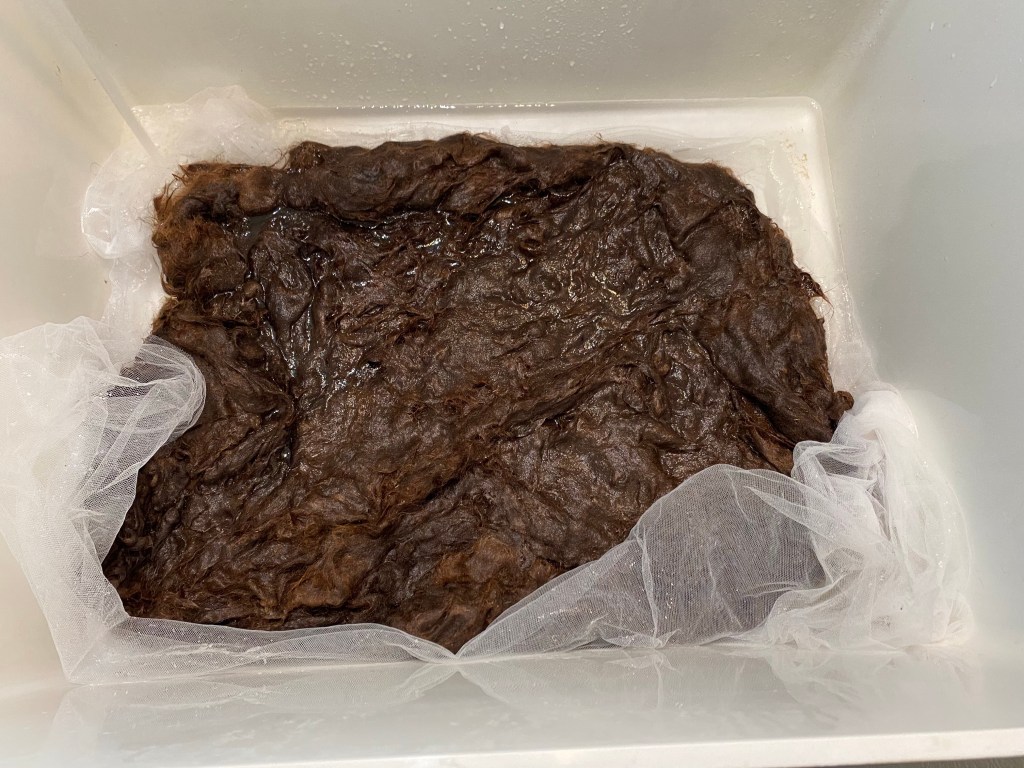
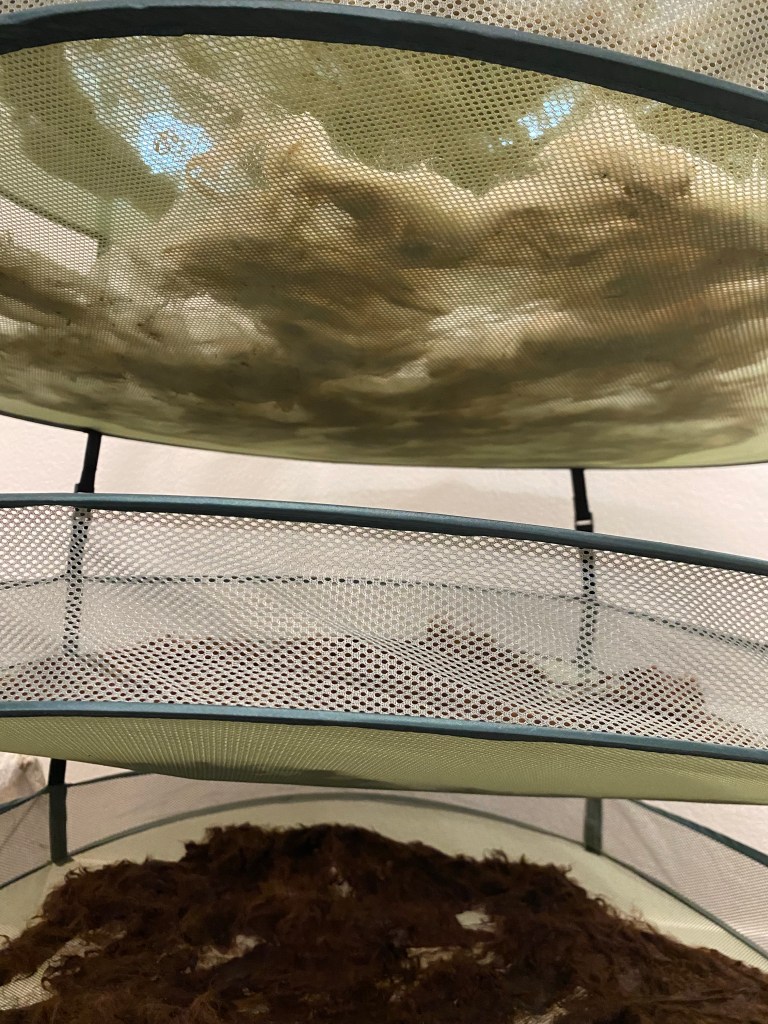
So I washed up some more alpaca fiber, this time using the utility sink and some netting, rather than bowls and towels. Since alpaca does not have heavy lanolin to scour away, I was not concerned about the wash water going down the drain. It was much like washing a dog. To keep the fibers out of the drain, I used a section of netting, which also helped squeeze out the water gently to avoid felting the fleece. I used Amway LOC liquid soap and rinsed each section three times. So much dirt. I laid each section out to dry on my hanging circular trays. There is still some vegetable matter (VM) in the fleece, but I am planning on picking and carding most of that out. I figure the evening activity will be carding and then I can spin in the morning.
Part of Aimee’s fleece after rinsing
I washed the last of Donna Bella’s fleece, and about half each of Sugar Plum’s and Aimee’s. I have five trays full of fiber. That should get me through the summer! Maybe longer.
I have read that some people spin alpaca fiber without washing it. Alpaca fleece does not have heavy deposits of lanolin like the wool from sheep. There seems to be a great debate on whether it needs to be washed, or at least very strong feelings, so I thought I would make up my own mind in the matter with a little experiment.
Singles spun from washed and carded alpaca, washed alpaca, and unwashed alpaca (respectively)
I took three samples from the same fleece (Sugar Plum’s). Two were washed (not scoured, but washed in warm water with mild soap), and third I pulled from the cleanest part of the fleece. One of the washed sections I carded using fine toothed hand carders and made rolags. The second washed section I left uncarded and spun from handfuls. The unwashed section I also spun from handfuls. I did attempt to pull out a rough roving-type bundle of fibers, but after sitting in my bag a couple of minutes, there was little cohesion and it was just easier to spin small sections.
Cabled yarn plied from washed and carded alpaca, washed alpaca, and unwashed alpaca (respectively)
The biggest difference was in spinning the singles. The washed and carded fleece spun smoothly and consistently. The washed uncarded was a little more fiddly to spin especially when I reached clumps of thicker fibers. I had to distribute these sturdier hairs with the finer fibers to keep the yarn from drifting apart. The single also had considerably more halo (fibers sticking out), than the carded sample. It was the same with the unwashed fiber, clumps of fiddly bits and more halo, but in addition, my fingers felt like I had applied lotion. There is definitely some kind of coating on the unwashed alpaca fiber, but it was not unpleasant. I did wrap the unwashed single onto my niddy noddy and gave it a soak in warm water and no-rinse wool wash. Nothing came out of the water. Even though I know the color can change throughout a fleece, I still felt the darker color was due to trapped dirt.
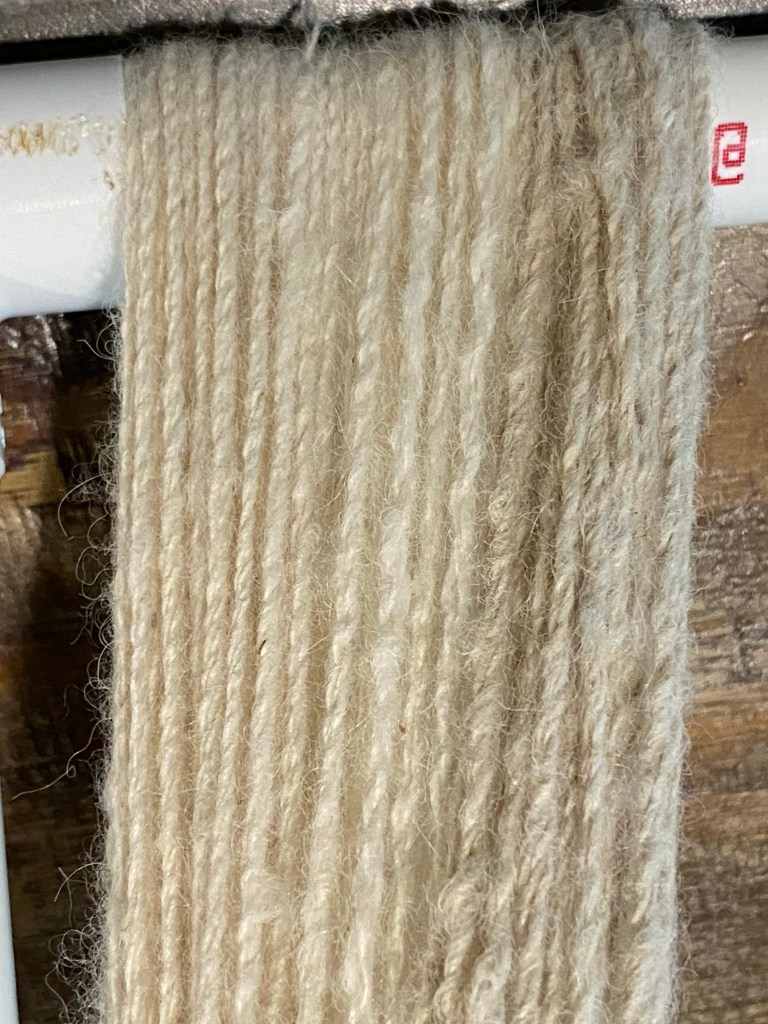
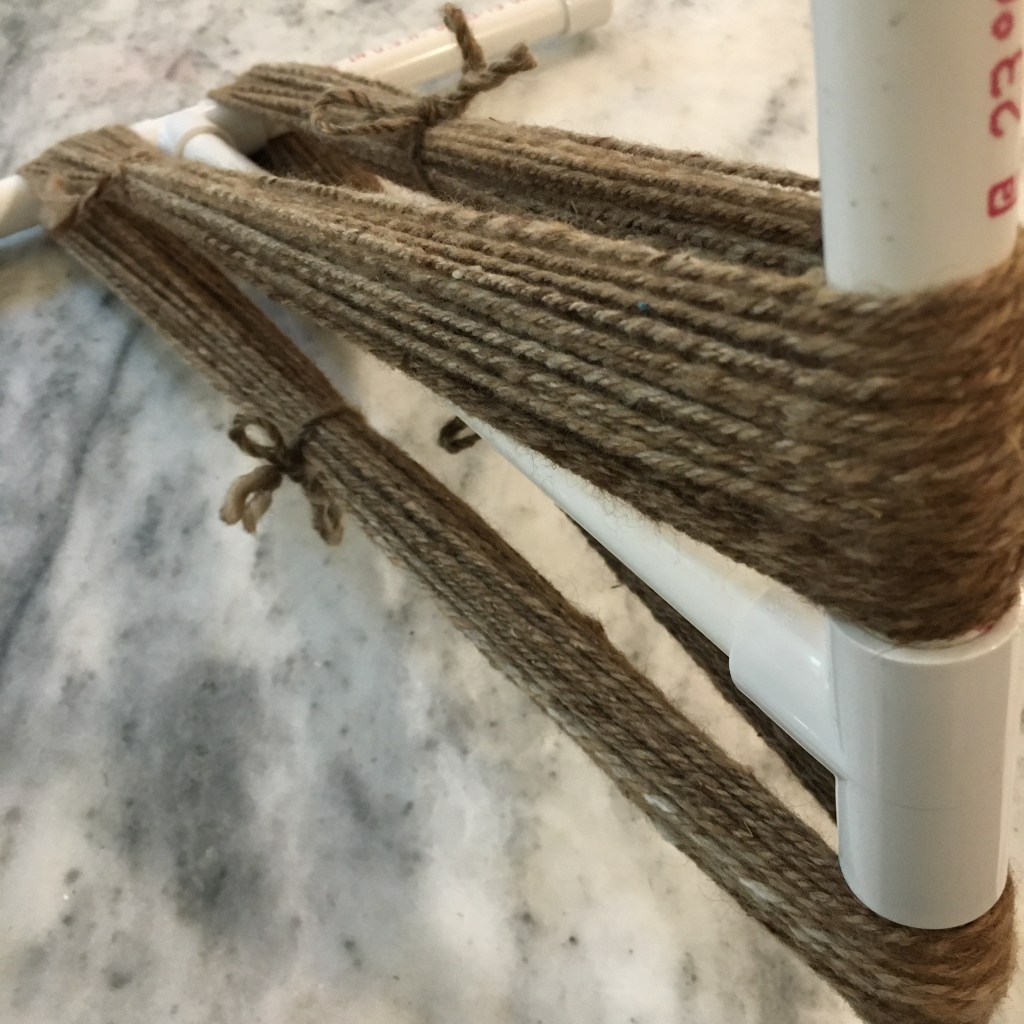
Close up of cabled yarn on the niddy noddy from washed and carded alpaca, washed alpaca, and unwashed alpaca (respectively)
I decided to cable the yarn (ply twice to get a four strand yarn). The differences in fiber preparation made no difference in the mechanics of plying. The uncarded samples still have a more pronounced halo as you can see in the photo above, as well as a less smooth appearance. My plan is to nålbind all the samples with the same stitch (I want to practice a new stitch, so this is a good opportunity).
So how do I stand on the wash or no wash discussion? If I had fleece with very little vegetable matter (VM) and mud, perhaps from a coated animal (the farmer can put coats on to keep the dirt off somewhat, but I don’t know how the animal feels about that), I wouldn’t mind spinning directly from the fleece. The fleeces currently in my possession are not that clean, so I will be washing and carding henceforth.
Sounds more like something to have in the evenings than to do with spinning. Ha. I transferred the first skein of alpaca off the niddy noddy and wound it into a cake so that I could wind the second spindle full onto the niddy noddy and wet it down. The next step is to card some more fleece!
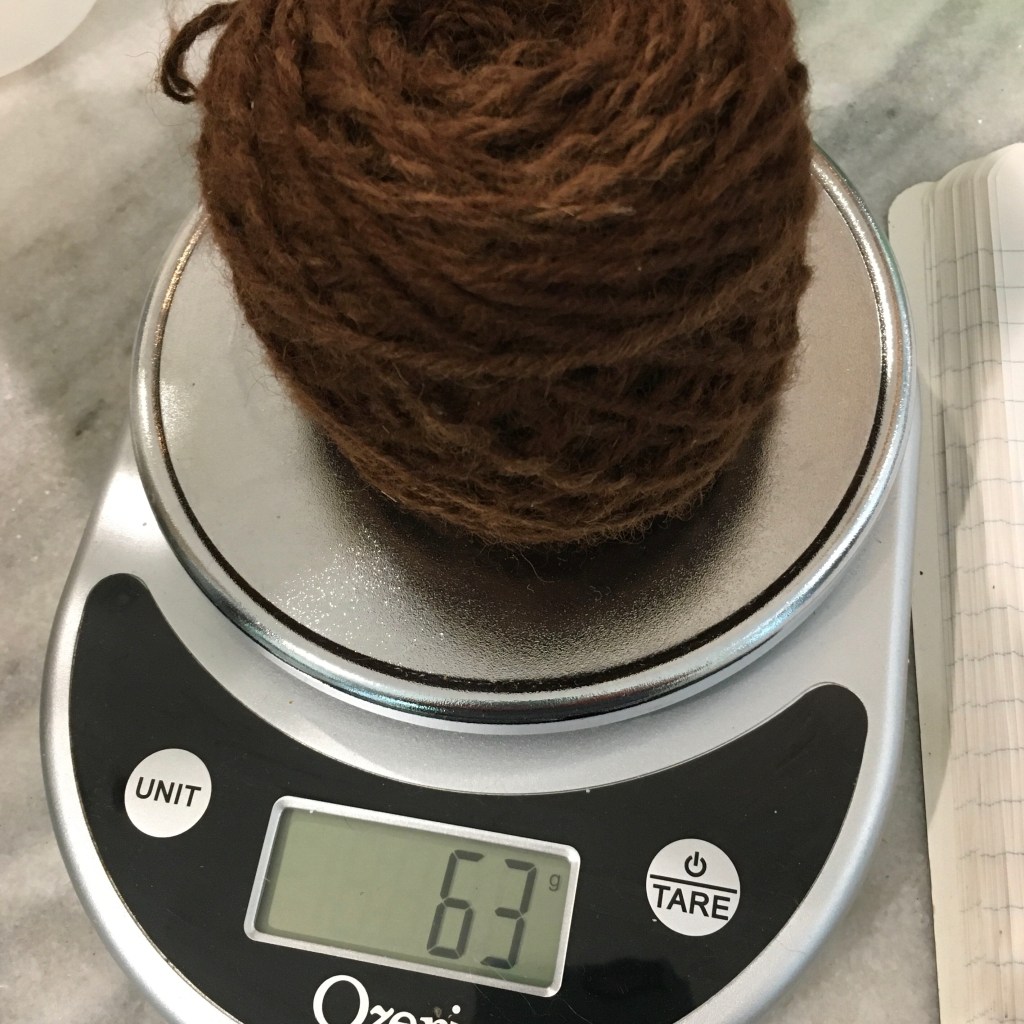
Dark brown alpaca yarn cakeBlended alpaca yarn on a PVC niddy noddy
Oops. I could probably reduce the amount of fiber I spin into singles, that spindle is very full and hard to handle! But I did it. I plied all three singles onto a single spindle! I was pleased also that the singles were nearly all the same length. When the first one ran out, there was very little left of the other two. Neat.
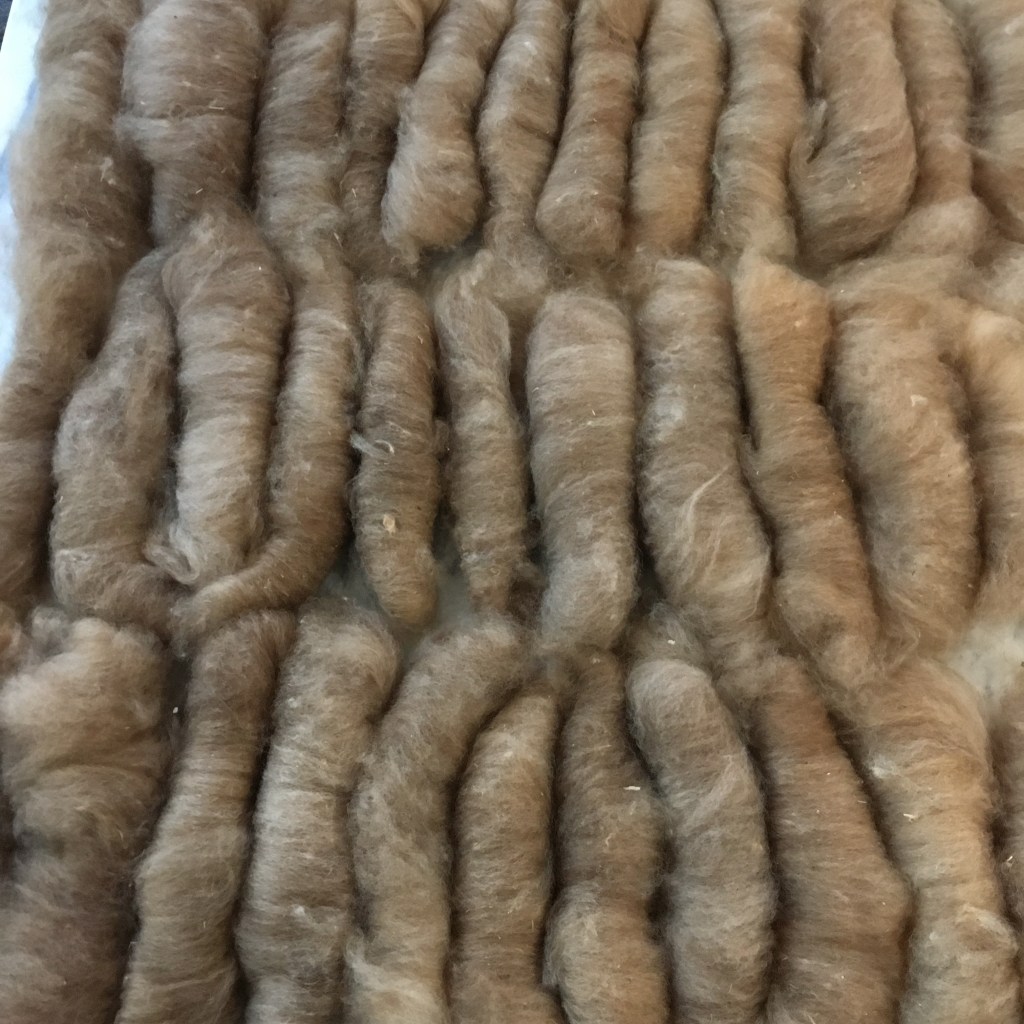
Carded rolags made with Aimee and Donabella’s fleece (alpaca)
I’ve moved on to my next color blend: fawn mixed with dark brown. I loaded the fawn color on my carder first, then added the dark brown so the fawn wouldn’t be overwhelmed by the brown. This worked much better. When all the rolags were prepared (I used a large box to hold them this time), I sorted them by shade in three groups. The idea is that if I spin each group, then ply them together, I will still get a gradual color fade in the final yarn. We’ll see.
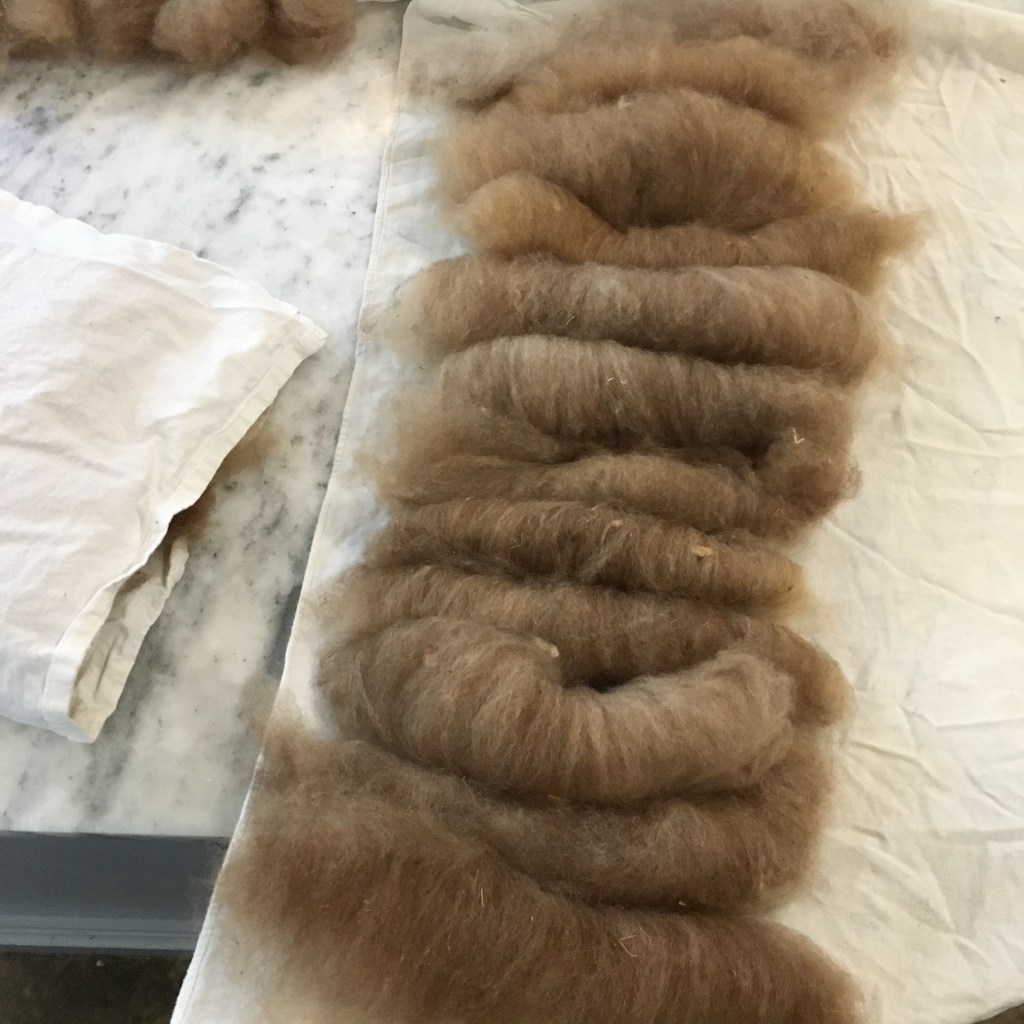
Folding the sorted rolags in dish towels
To keep my colors sorted, I gently folded each group in a dish towel so they stay neat and in order. There is still a fair amount of vegetative matter (VM) in the fiber, even after carding, but I have found that when I spin it is easy to remove most of it by plucking the yarn before I wrap it on the spindle. Some stubborn bits needs to be pulled out, but it is easy to feel and see where they are in the twist.
You would think that with the pandemic I would have more time to spin, but the opposite has been true. The time is being well spent: I’m baking with the kids, we are painting rocks and doing art, playing games, learning states and capitals, reading, and are starting into home schooling. All good things, just different from pre-pandemic. I think being flexible and able to roll with changes is important and I hope I‘m instilling that in my children. “Make hay while the sun shines.”




 Critters and Craft