More African violets!

I told my plant friend (who is also a singing friend) how I’ve been researching the African violets and how well the ones I have are doing, and she sent me home with a new African violet and two leaves from a miniature African violet! The collection grows!
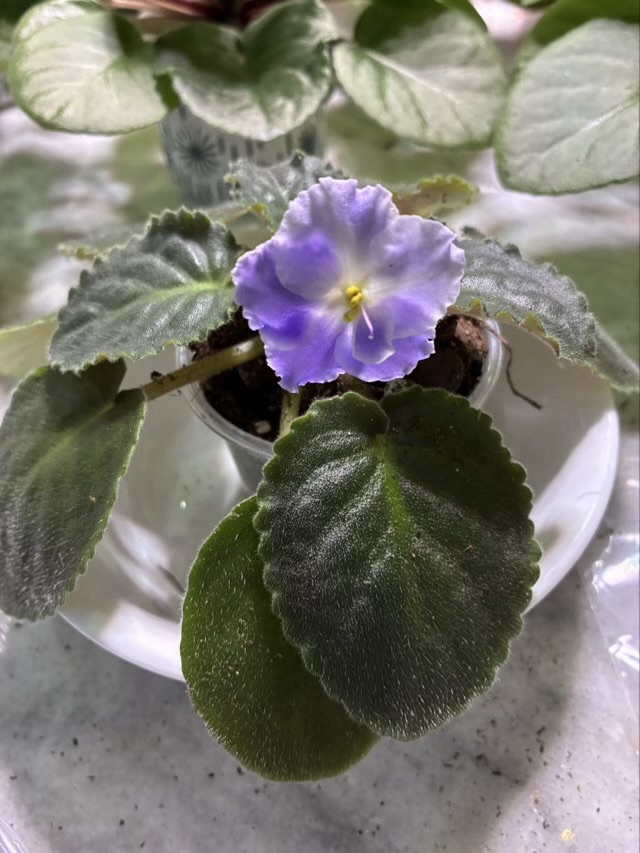
Photo description: African violet with medium dark green leaves and a frilled bloom with purple and white coloration

I also found out that once a plant has lost its identity and name it is called a NOID, or No-ID. There are so many named varieties (16,000 according to the African Violet Society of America FAQ) and African Violets bloom differently under different conditions, which makes identification of a named variety impossible by visual means. A hybrid plant is named if it comes from a traceable named source. Most big box store African violets are not named, according to the AVSA. So I will be learning the descriptive terms and use those to describe my violets. I like that there are so many varieties, and they are growing well for me.
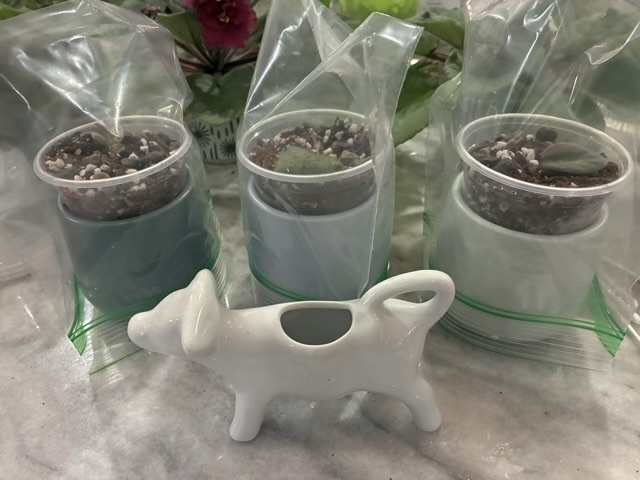
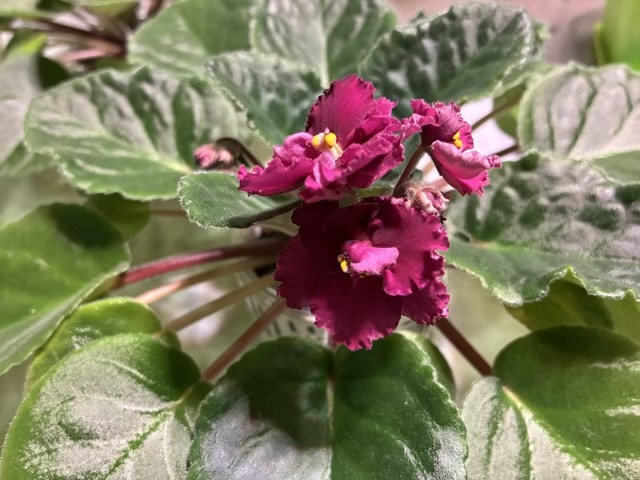
Photo description: tiny makeshift greenhouses made from ceramics cups with plastic liners filled with African violet soil and each pot has a cut leaf from a plant for propagation purposes, small cow creamer being used to carefully apply moisture

African violet bloom

My African violet bloomed! My friend gifted me a mother leaf, which gave rise to six plants, which I put in individual lined pots that I could lift to put water in the bottom. I have been adding AV fertilizer once a month. I have discovered the African Violet Society of America website, and scrolled through their gallery of 3,000 varieties. The maroon color is really quite lovely!

Photo description: first blooms from my African violet showing a dark red semi-double pansy-type frilled edge flower, and medium green plain leaves

This could be a new rabbit hole…

Repotting African violets

I was gifted a sprouting mother leaf of an African violet from a dear friend. Turns out that the mother leaf sprouted six new plants. When they had grown for awhile, I separated them out into individual temporary pots, but was unsure where to go next. When cleaning up the back porch I found six little pots that I loved, but didn’t have a use for, so they were sitting outside. Huzzah! I cleaned them up and bought liners so I could bottom water the violets.

Photo description: clear liners for small white and green ceramic pots

The liners didn’t go all the way to the bottom of the pots, so I found some watering wicking rope to help keep the water from pooling on the bottom.

Photo description: small section of water wick placed in the bottom of the pot liner

Then I repotted all the plants into their new homes.

Photo description: new pot with liner on left, old temporary pot on right, red dots on the counter are a reflection of the grow lights shining above

When it comes time to water, I’ll lift out the liner and put water in the bottom of the pot. The technique has been working well for my snake plant!

Terrarium redo

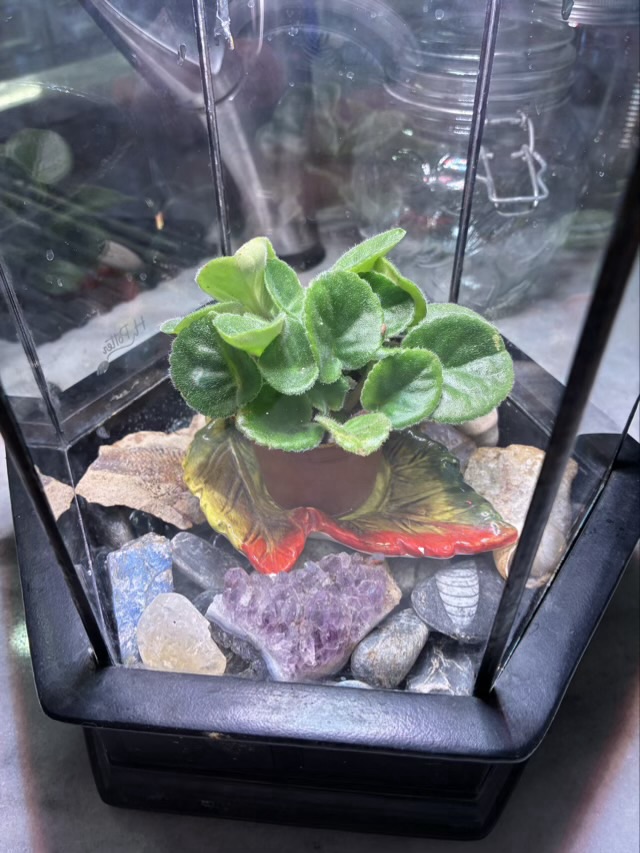
The mossarium I made in a case was not doing well. I tried adding a plant light and it was too much for some of the moss. After six months of steady decline, I decided to clean out the container and put in something else. I have a young African violet that I received from a friend that currently fits.

Photo description: small African violet sitting in a leaf shaped tea light saucer on a variety of rocks and stones inside a closed glass terrarium