I went to rinse and block my small twined cotton bag and was a little shocked when it held water. It wasn’t completely water tight, there was a slow drip, but it didn’t absorb water like I expect cotton to do. My hypothesis is that because I hadn’t washed it at all to this point, there may be some natural water resistance on cotton bolls. Not enough to keep the harvest safe from rain (as this cotton farmer describes), but some. Or the twining is tight enough and thick enough to resist the water for a short time.
Photo description: small twined cotton bag holding water over a sink
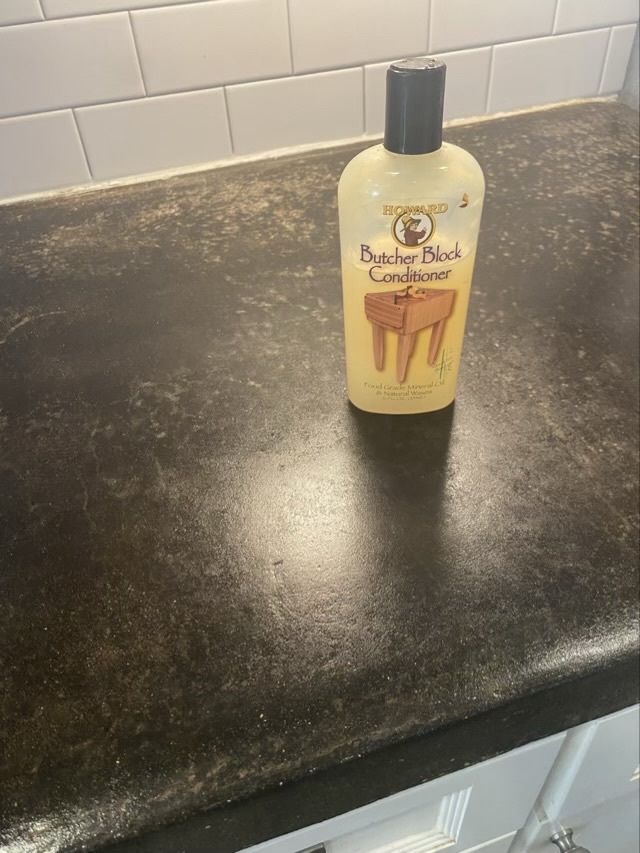
I love the concrete countertops in our house. I don’t have to worry about setting hot dishes on them, and the installers finished them silky smooth. They had started to develop rings and water stains, though. I used a mixture of baking soda and olive oil to rub them down, then added vinegar to the paste before wiping it off. I wiped the whole surface with a wet towel to make sure the vinegar was gone, then applied a sealing product used for butcher blocks. The sealant is made of natural oils and waxes and is food safe. The counter soaked up the mixture, so I did two applications, then buffed it with a dry towel. The counter looks new again, and I tested the water resistance by sprinkling it with water. The water beaded up and did not soak in.
Photo description: brown concrete countertop with a lovely luster, Howard’s Butcher Block Conditioner bottle sitting on the surface
So here is another Howard’s product I can recommend. But no, I’m not paid to do so!
I finally made myself a twining loom, after returning my neighbor’s to her. I tried other shorter methods, but having the warp hang freely makes it so much easier to twine.
Photo description: bag twining loom made from 1×4” boards and two 7/16”dowels
The boards were in my scrap pile and 18.5” long. I used my band saw to cut one board down to 1.3”, then clamped them together and drilled seven 7/16” holes, four on one side, three on the other so I could always tell how the boards line up. The wider board on the bottom gives stability. The multiple holes give me options on bag width. Ironically, the dowels have a slight bend, and line up with nonparallel holes. Hm.
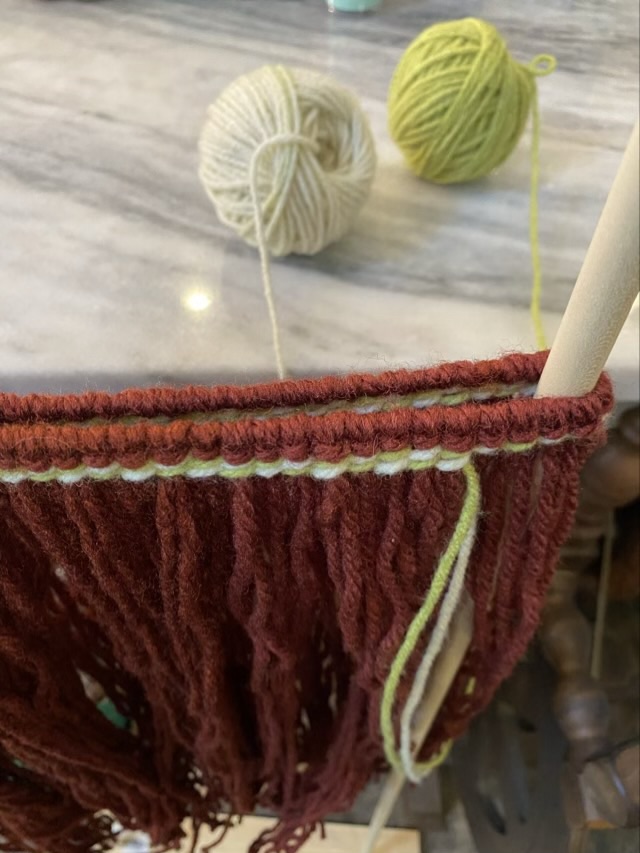
Photo description: twining two colors around free hanging warp threads in twos
My eldest gifted me some pretty green wool blend yarn for Mother’s Day, so I thought it best to make something for myself. I can never have too many project bags, and I like twining, so I just needed a loom. I had some synthetic rug yarn in my stash that was a pretty rich brown, so I used that for the warp to maximize the variegated green yarn available for the twined weft.
This will not be a quick project, but it will still be an enjoyable one.




 Critters and Craft