As a Thank You to Sugar the Samoyed’s family for sharing Sugar’s fur for my fiber study, I sent them a crocheted heart and the remainder of the yarn.
Photo description: small hank of Samoyed yarn and a crocheted heart with a leather center with the name “Sugar”
I designed the leather heart using Adobe Illustrator, then cut it from vegetable tanned tooling leather. Having precision cut holes was awesome to make a blanket stitch around the edge. I then crocheted into the stitches using a single crochet in the back loop.
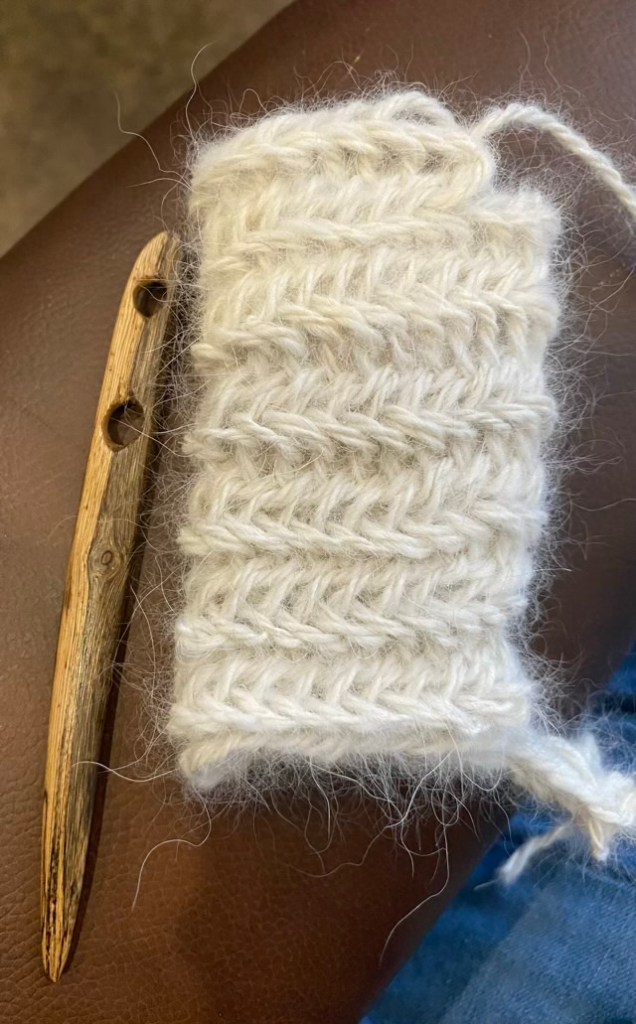
I am happy to report that the Samoyed dog yarn I spun does well in nålbinding. I was afraid the yarn wouldn’t felt, and my favorite way to join in yarn for nålbinding is to unravel a section on each end, trim the ends so I have two sections on one side and one on the other, build up twist in the short end, linearly braid the ends together, let the twist come back into the braided section, then rub it between my hands to lightly felt it. (Hm, that sounds more complicated than it is, I really need to do a blog post on it specifically.) It is a belt and suspenders and sticky tape way to join yarn, but it is strong, and almost undetectable, especially after incorporating it into the work.
Photo description: Nålbound tube using a Finnish 1+2 stitch and Samoyed three-ply yarnPhoto description: tube cut open to make a rectangular swatch
This is one of my favorite nålbinding stitches. It is easy to remember and I feel like I have a connection with my Finnish and Scandinavian DNA.
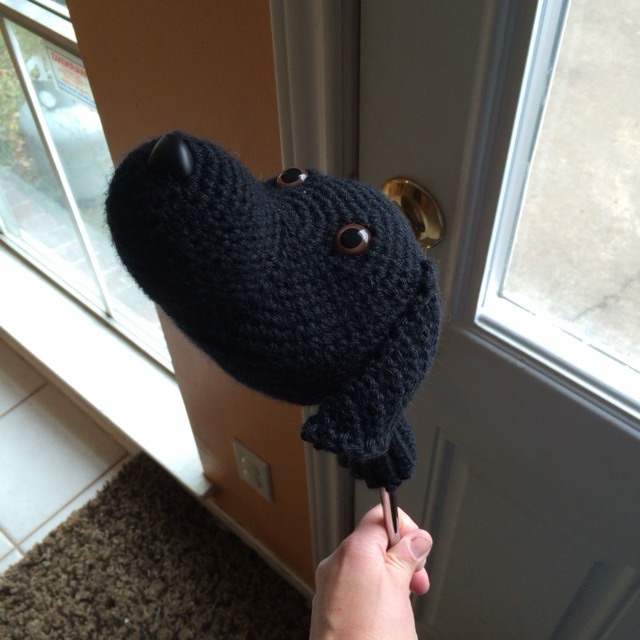
In February 2015 I finished crocheting a driver cover for my Dad, in the shape of a black Labrador head.
Photo description: Crocheted black lab head with safety nose and eyes, on a golf club
The neck is a crocheted rib, the ears are single crochet triangles, and the rest is single crochet in the round with a small hook in the style of amigurumi (although I don’t think I knew that word at the time). The nose is stuffed, but the skull is provided by the head of the golf club.
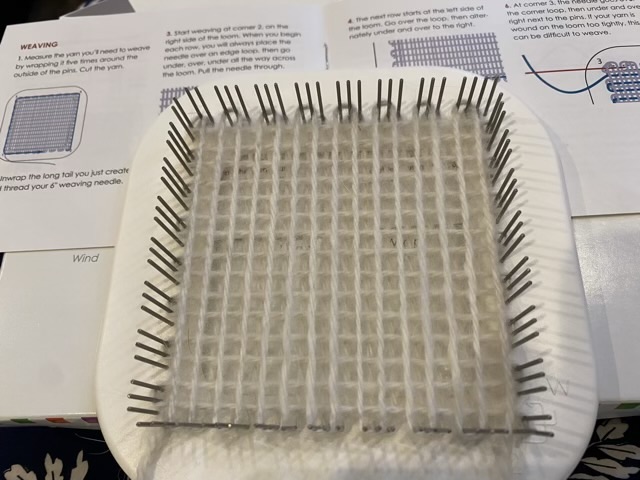
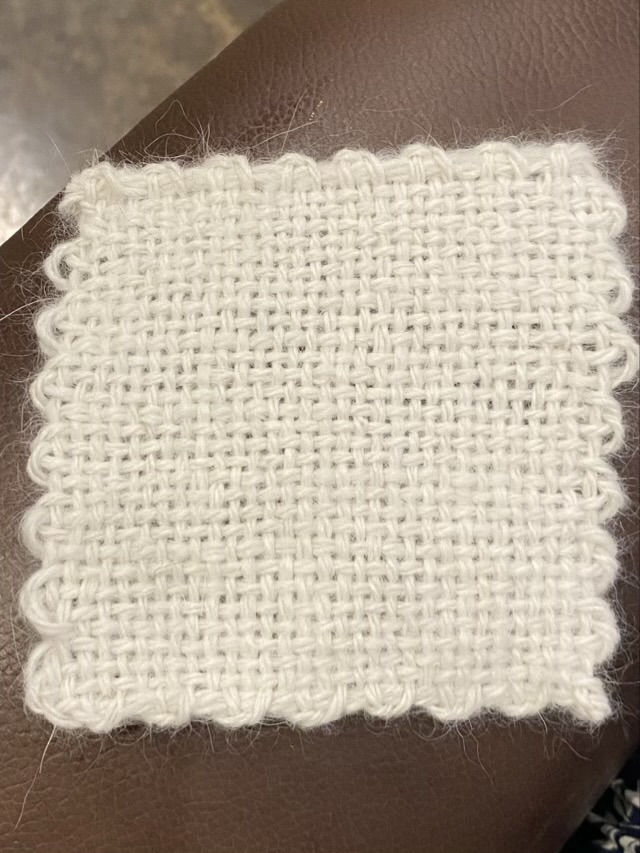
I have had a Zoom Loom on my wish list for a couple years. I finally purchased it and am so glad I did. This is an ingenious little loom that makes a 4 x 4 inch, four selvage woven square by wrapping three layers and weaving a fourth to achieve a plain weave.
Photo description: 4”x4” Zoom Loom by Schacht with the first three layers wrapped with hand spun Samoyed three ply yarnPhoto description: weaving started on the Zoom LoomPhoto description: finished woven square
This just made my weaving swatch the fastest swatch, outpacing both knitting and crochet. I use the swatches for my fiber book pages for each fiber I spin, but this went so fast I’m intrigued by the design possibilities that are now open to me!
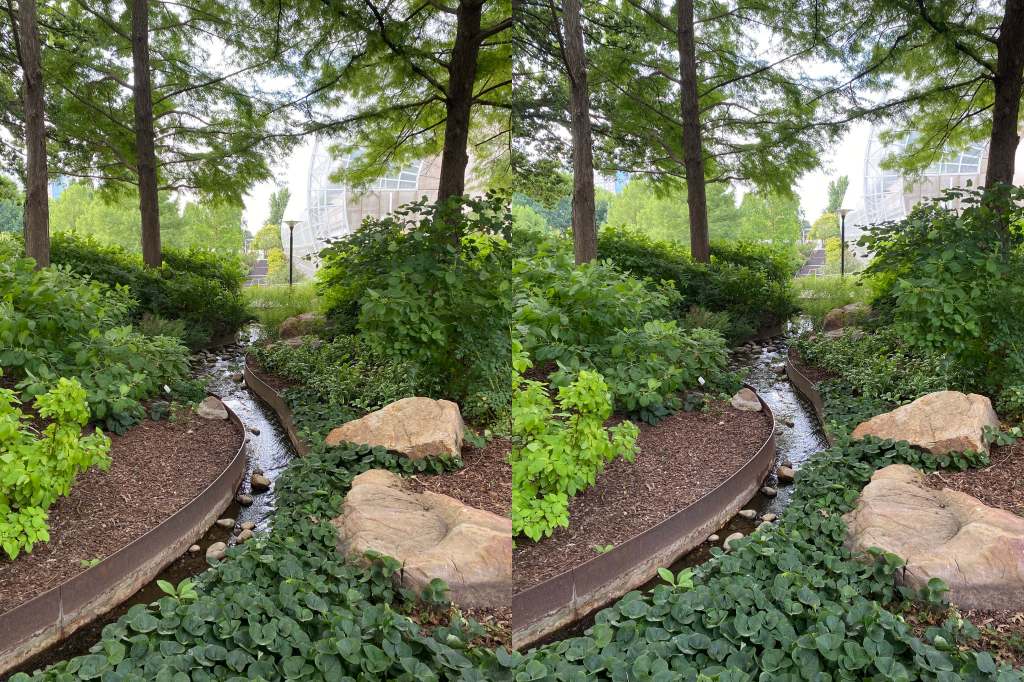
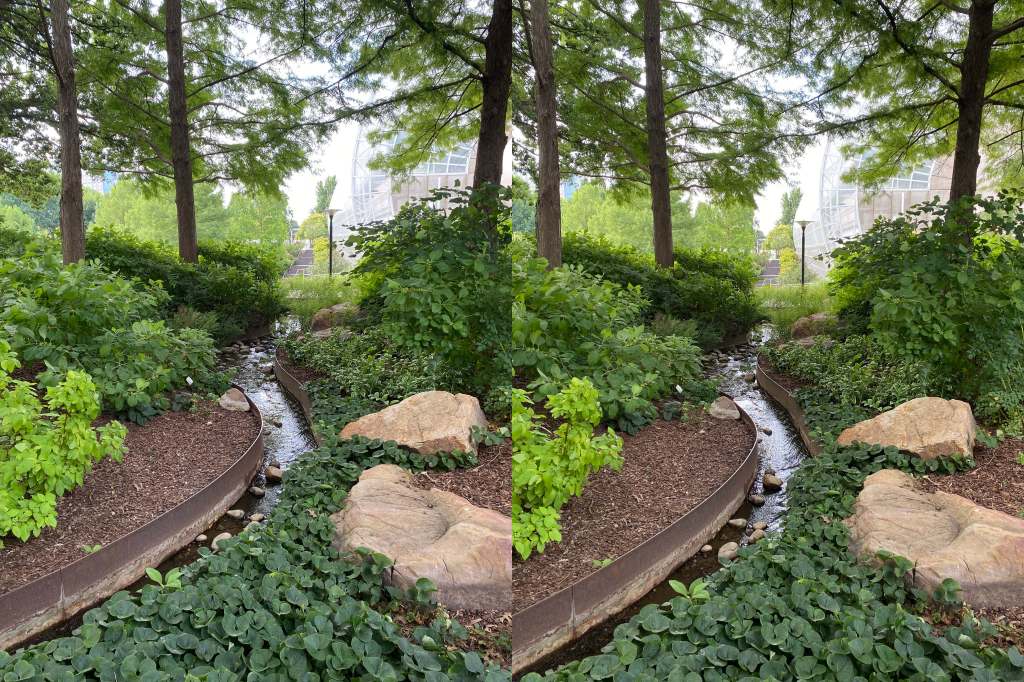
OK, this is the last photo pair that I took at the Myriad Botanical Gardens in Oklahoma City, OK. This one is my favorite.
Photo description: Parallel view, water trench with a view of the conservatory past the treesPhoto description: Cross view, water trench with a view of the conservatory past the trees
The plant in the foreground is centered in the photo, and the side of the trench hits about the same place in each photo, which gives less edge artifacts when viewing the 3D image. I like the way the plants and trees add depth, and more trees and the conservatory are in the background.
That is it for the stereographic photography for now. It is such an easy thing to do when I’m taking pictures, though, that I will absolutely be taking more. I have fun seeing the unexpected depth in the blog feed, so I’ll keep sharing too.
Here is a quick recap of my process: I find a subject with a foreground, mid ground, and background, with little or no moving elements. I plant my feet hip width apart and hold the camera at eye level. I shift my weight to the left, take a portrait picture, then switch my weight to the right and take another portrait picture. At home, I make a file in my photo editor that is twice as wide as my portrait photos and put the photos next to each other. I have to zoom out to see the parallel view and check that I put the photos in the right order. I then switch the photo positions for the cross view. I still can’t view the cross view, which is called a cross view because the left eye looks at the right picture, and the right eye looks at the left picture. It gives me a headache.




 Critters and Craft