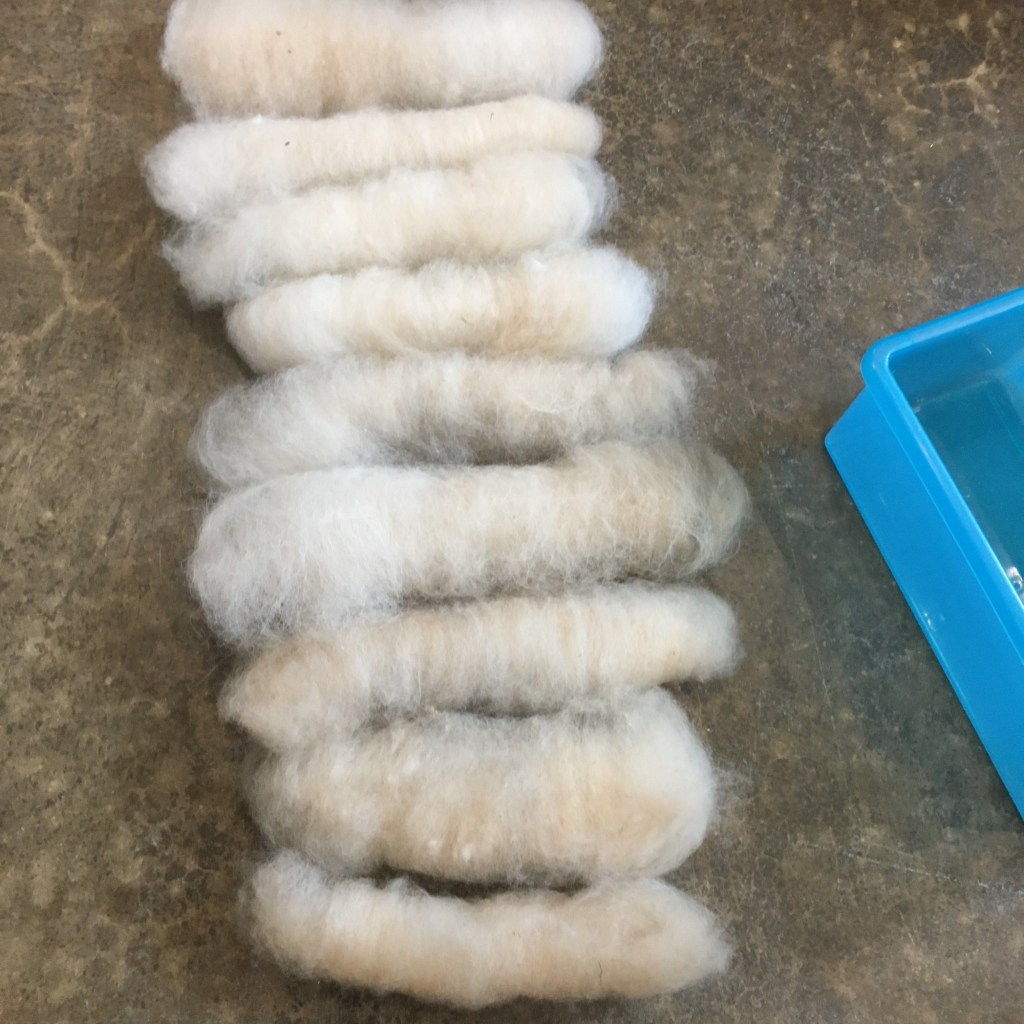
I think I mentioned that I purchased three different colors of alpaca wool? Now comes the fun part (who am I kidding it has all been fun): blending! I used my fine carders to blend portions of Sugar Plum’s (white) and Donabella’s (fawn) fleece to make intermediate colors. The idea is to get a gradual change from one color to the next.
Natural alpaca fleece colors before blendingColor graded rolags
The color change is subtle; Donnabella’s fleece is only slightly darker than Sugar Plum’s, but there is a difference. Next I’ll try blending Donnabella’s with Aimee’s (dark brown).
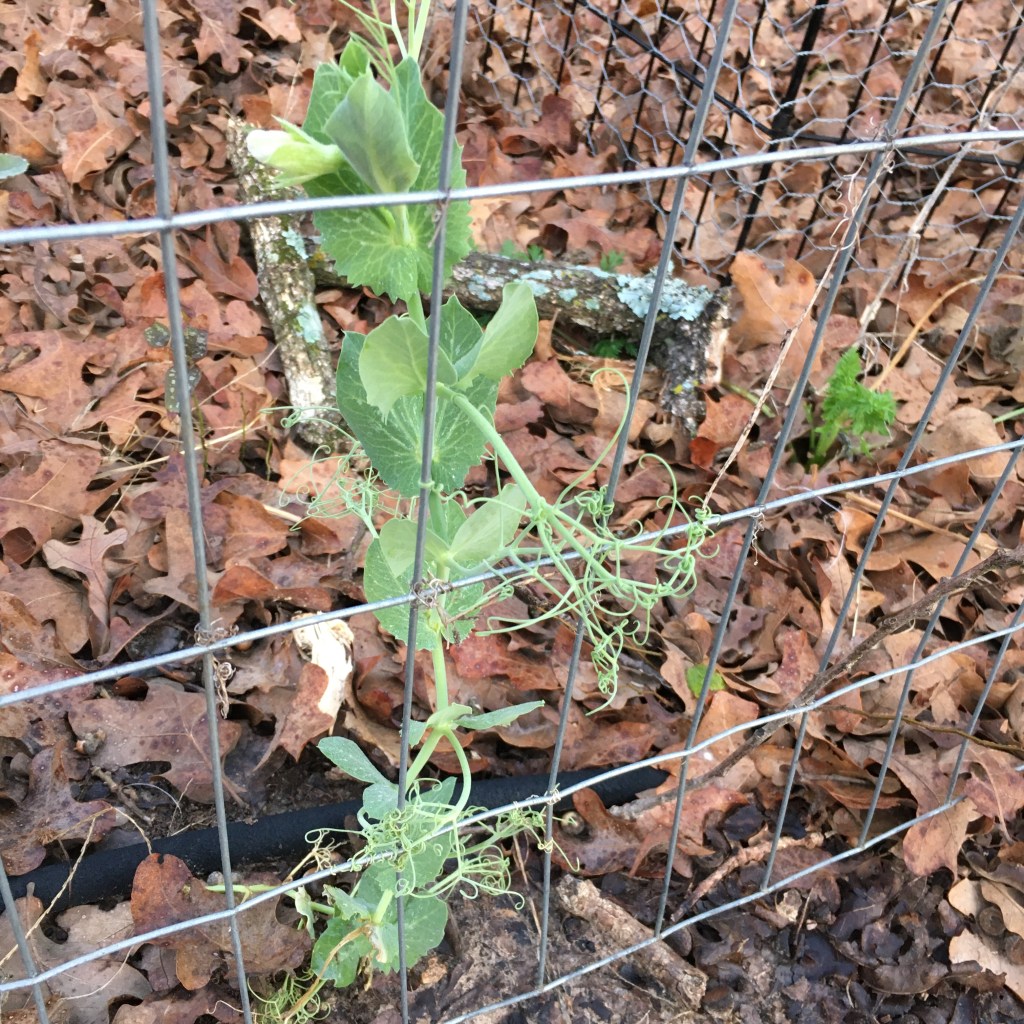
I have contemplated starting the outside garden, but apparently it started itself. I found this thriving pea plant merrily blooming on the side fence. Yes, I have planted peas, but not this season. We’ll see how it does! (I really should plant some of the other dozens of seeds I have stock piled, but it has been dreary and there are still frosts in the forecast.)
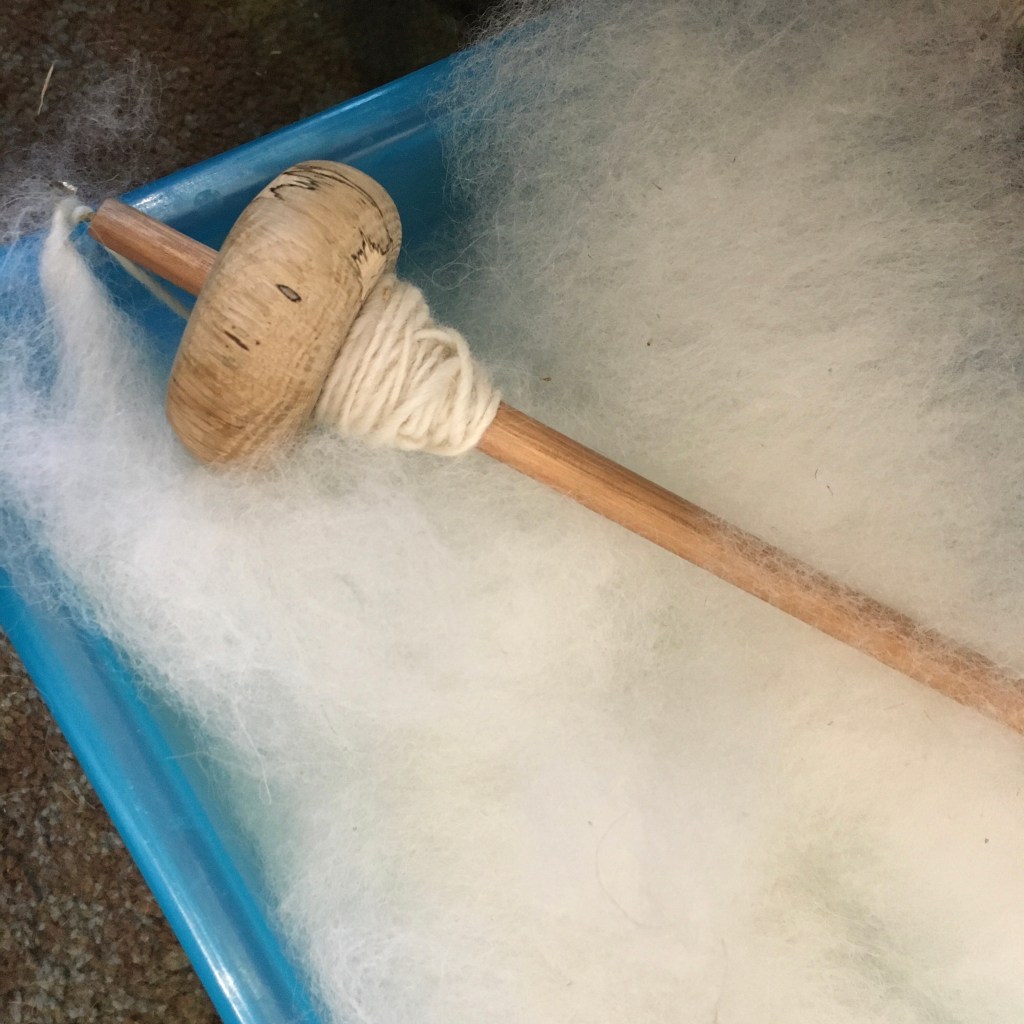
The alpaca fleece is dry and I am starting to card and spin it! My plan was to card it all, grade it by color, then spin, but my rolags (the rolls of carded fiber) are so fluffy that I don’t have room to store them like I did with the merino wool rolags. So I decided to spin as I go. If it were possible to spin clouds, I think this is how it would feel. The soft alpaca rolags are light and airy but are spinning up easily. I’m using my homemade top whorl spindle and planning for spinning everything as Z spun singles (as opposed to the opposite direction referred to as S). What am I planning for the finished yarn? A hat of course. I’ve read that alpaca doesn’t have the same elasticity as wool, so I think testing it on an item I am very comfortable making is a good start.
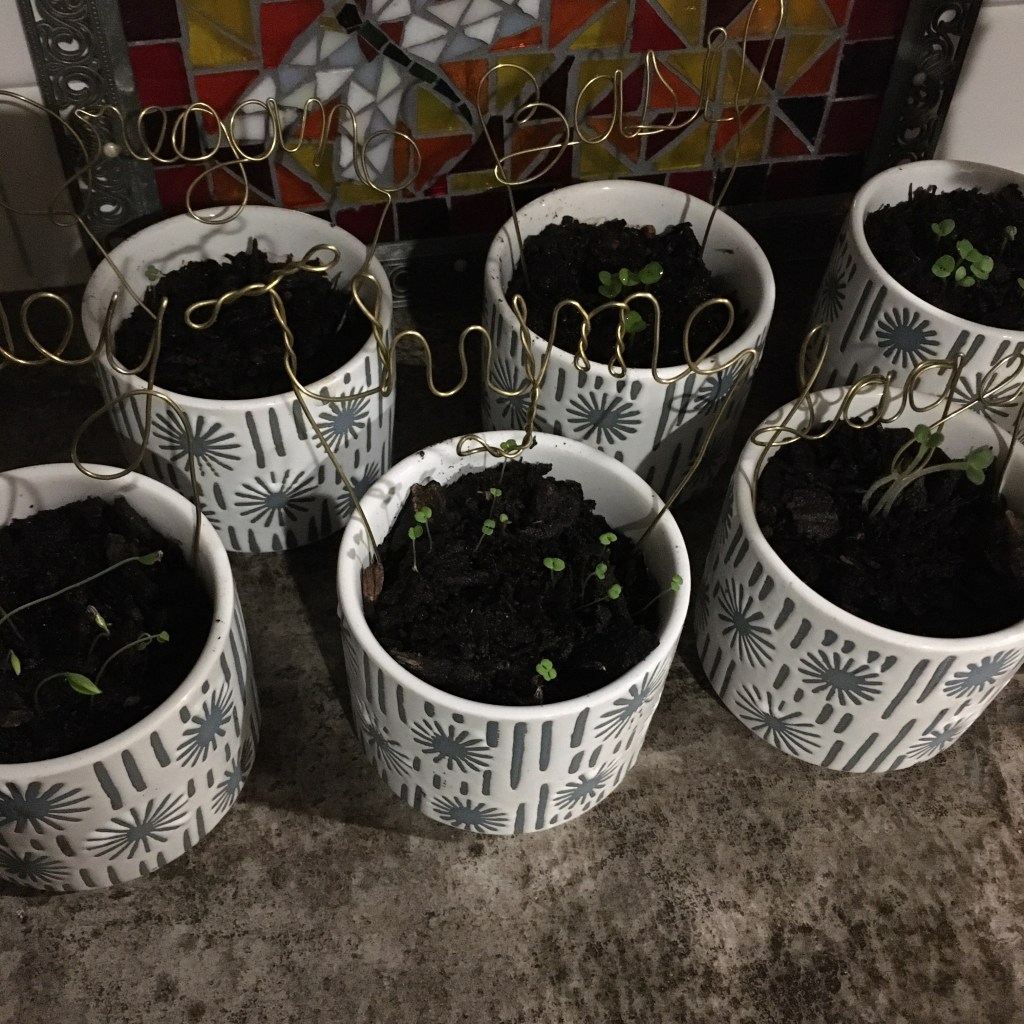
I planted some herb seeds in the tiny pots and they are sprouting! This isn’t usually the part I have issues with; I can usually get sprouts, but then getting the sprouts to harvestable plants has been problematic. I am hoping the grow light will help, and I steeled myself and thinned the seedlings (after this picture). I think that is usually my issue. It bothers me to pull out the cute little seedlings from their cozy bed next to their brothers and sisters. I had to think that none of them would grow well if there aren’t enough resources. The thinned sprouts went to the chickens, so no waste there.
My puppy is getting old. He will be 7 this summer and it will be time to switch to senior food. Wha? I thought his middle aged bones might need a cushy bed. All previous cushy beds died a torn death, so he sleeps on a pile of blankets with no hems (he has a thing against hems and nibbles them off). He will still have blankets in his kennel, but when laying out in the living room with the family, I thought he needed something better than the concrete floor. We have tried the “chew proof” dog beds, but the thick canvas like material made too much noise for him (yes, I have prissy dog). I also didn’t want to spend much in case he rejected it. What I found on sale had a white fluffy top. All the fluffy soft quiet tops of reasonable price were white. I have a black dog. It only took a week to see the dog hair.
Black dog and white beds don’t mix well
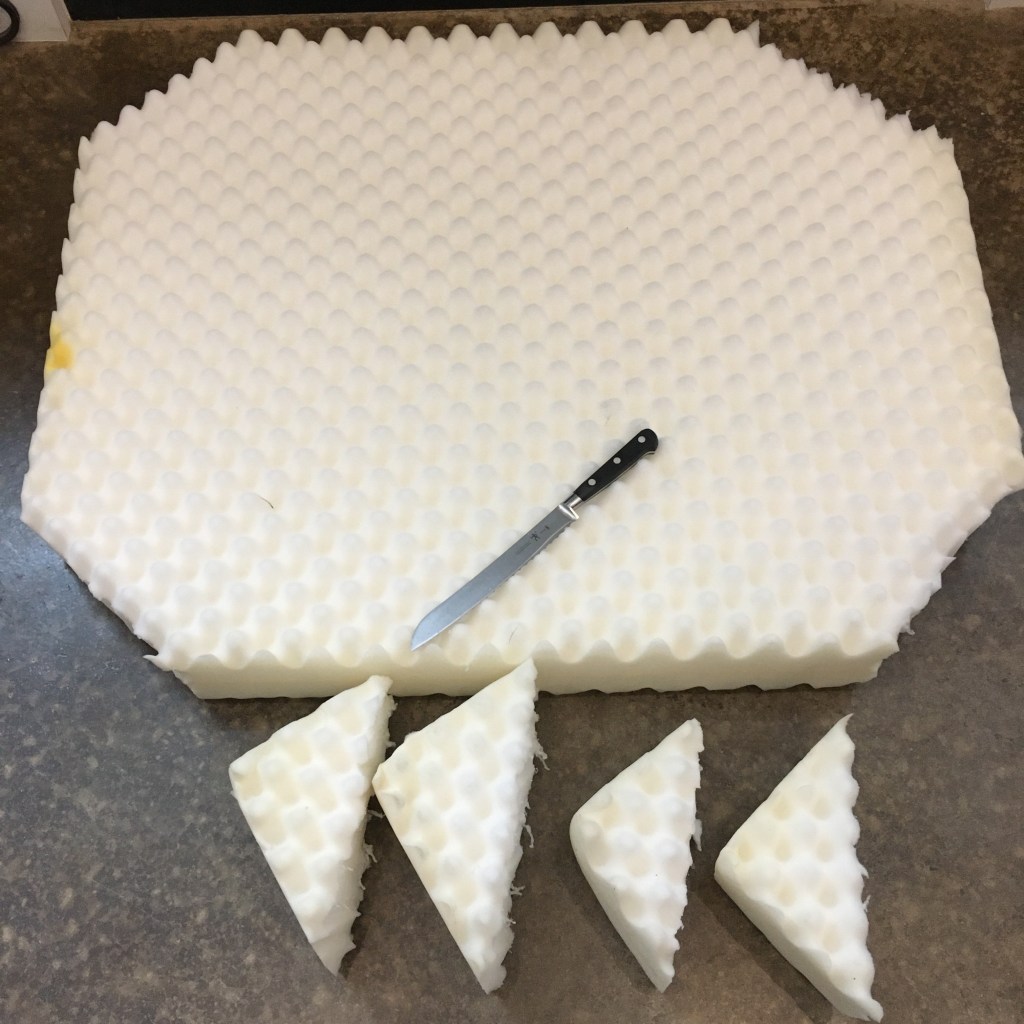
The good news is he likes it. So since he likes it, what do I do about that no longer white top? Recover it, of course. I found some beautiful fake fur fabric at the hobby store, and purchased some less expensive fleece for the bottom. Sewing square corners is not my favorite activity, so I trimmed the corners of the cushion (which is just two layers of egg crate foam glued together). Scissors couldn’t handle the thick foam, but a serrated knife slid through easily.
Trimmed corners on dog bed foam
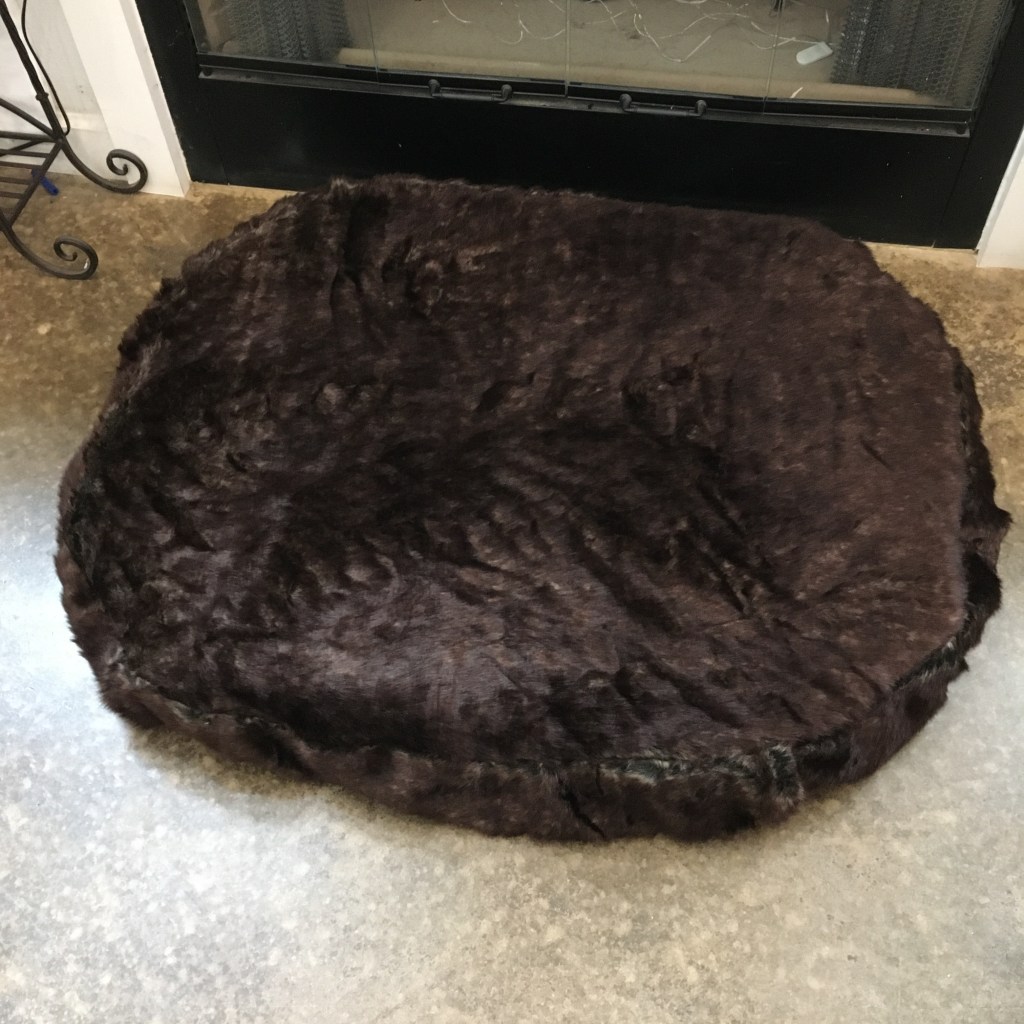
I also literally ripped out the zipper from the old cover and reused it for the new cover because I couldn’t find a zipper longer than 36” at the store. I did pick the stitches on the end of the zipper, but then it ripped out quite nicely (and much faster than using the seam ripper the whole length, ugh). I cut an oval out of the fake fur, and a matching oval out of the fleece, then cut strips for the sides. Sewing fake fur is a tricky business as the thick fur slides and doesn’t like to line up, but I finished sewing it and put it in the foam.
Recovered dog bed
I measured for 1” seams, but ended up with an average 1/2” seam, so the fit of the cover is loose. The fur is forgiving, though, so I think it still looks good. Not neat and crisp, but homey and comfy, which fits our style. And I spent less overall than the high end beds at the store. Phew!
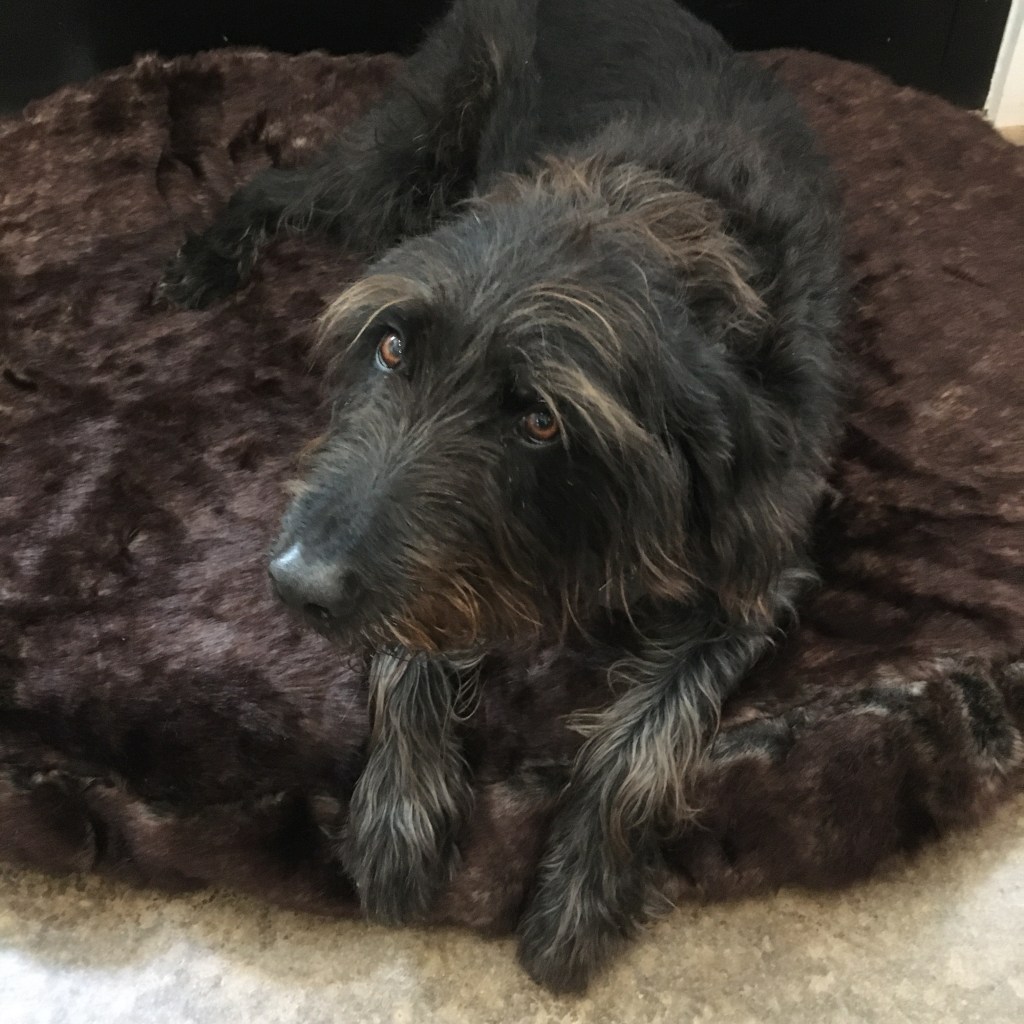
He likes the bed, but doesn’t understand why I am taking a picture