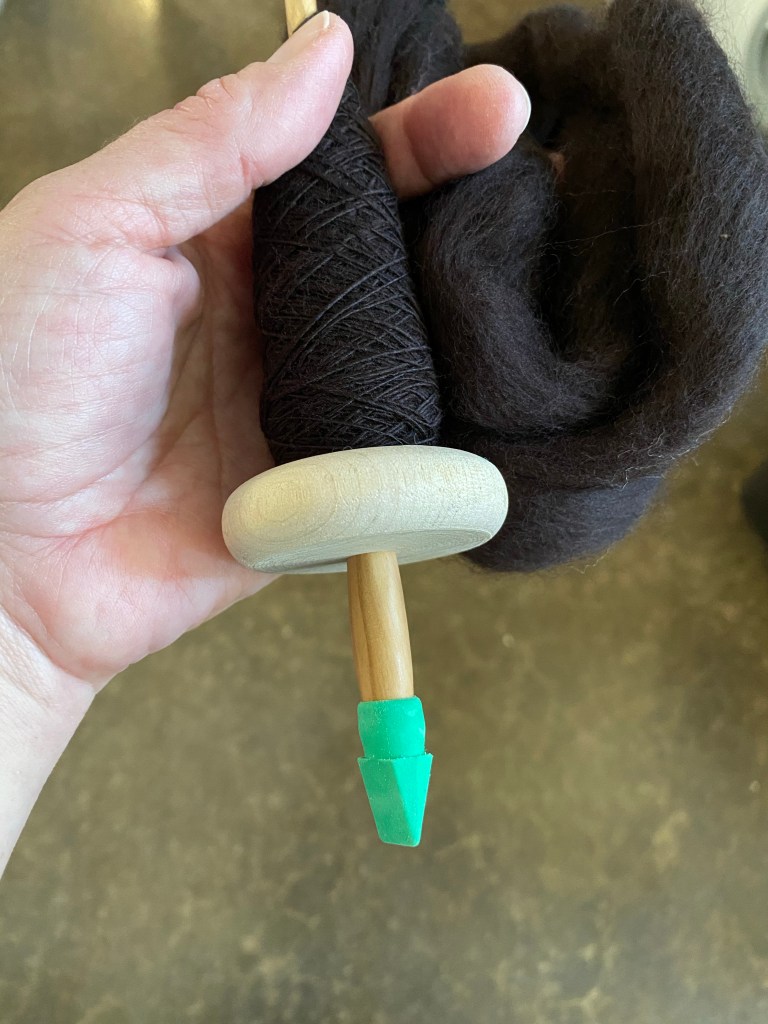
Now that I’m getting more comfortable spinning and walking I tend to drop the spindle more. With any luck, even more practice will reduce my tendency to skitter the spindle down the road, but in the meantime I put a bumper on the bottom of the shaft. A pencil eraser works well to cover the end, and protects the wood from sudden impact!
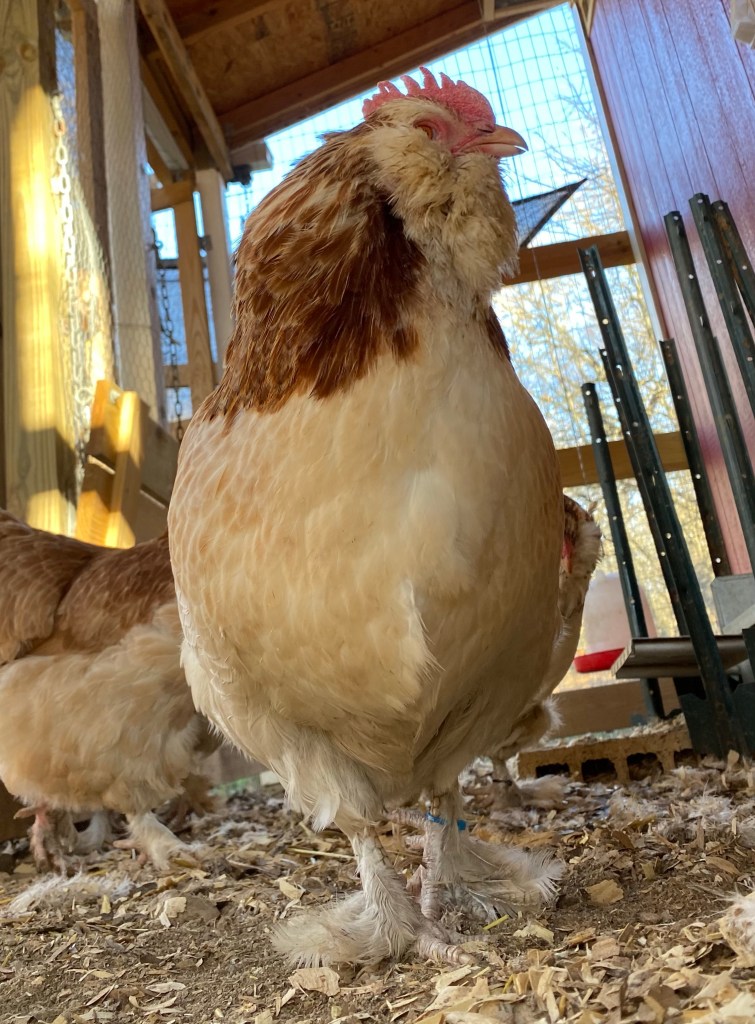
Today is National Poultry Day! Strut your stuff, ladies.
Cloud the hen walkin’ the walk
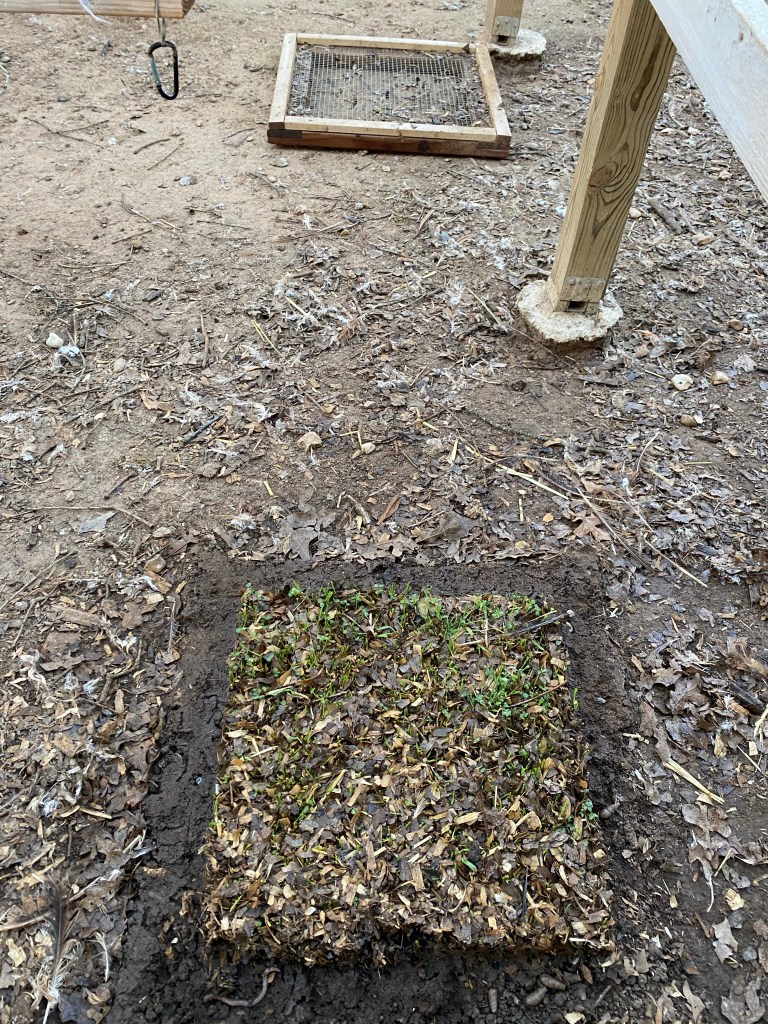
In honor of this day I moved their salad garden to a new spot and let them turn over the old plot (ok, really more of a coincidence, but it worked out well). Happy chickens. Well, except for Magic who is still in isolation unable to walk, but she has been starting to put a little more weight on her left leg and using it to shuffle a little. I suspect a sprained or broken toe, rather than a disease since the leg is not paralyzed. She lets me clean the pine shavings off her beard, like the chickens let the alpha hen do. So there we go.
Salad bar frame moved to a new location (back) and the old patch opened up (front)
Winterpocolypse didn’t kill everything. We have some of the regular wildflowers coming up in the meadow. The clover is loving life and most of the green in the meadow is clover rather than the usual grasses. There are some cut-leaf daisies making a go. We think our Texas sage and cross vine didn’t make it through the week-long freeze, but the honeysuckles are showing signs of life. The iris and daylilies are also stretching their greenery. My husband is putting in an irrigation system in the front yard for the flower beds, but we are only considering low maintenance replacements for the plants that died.
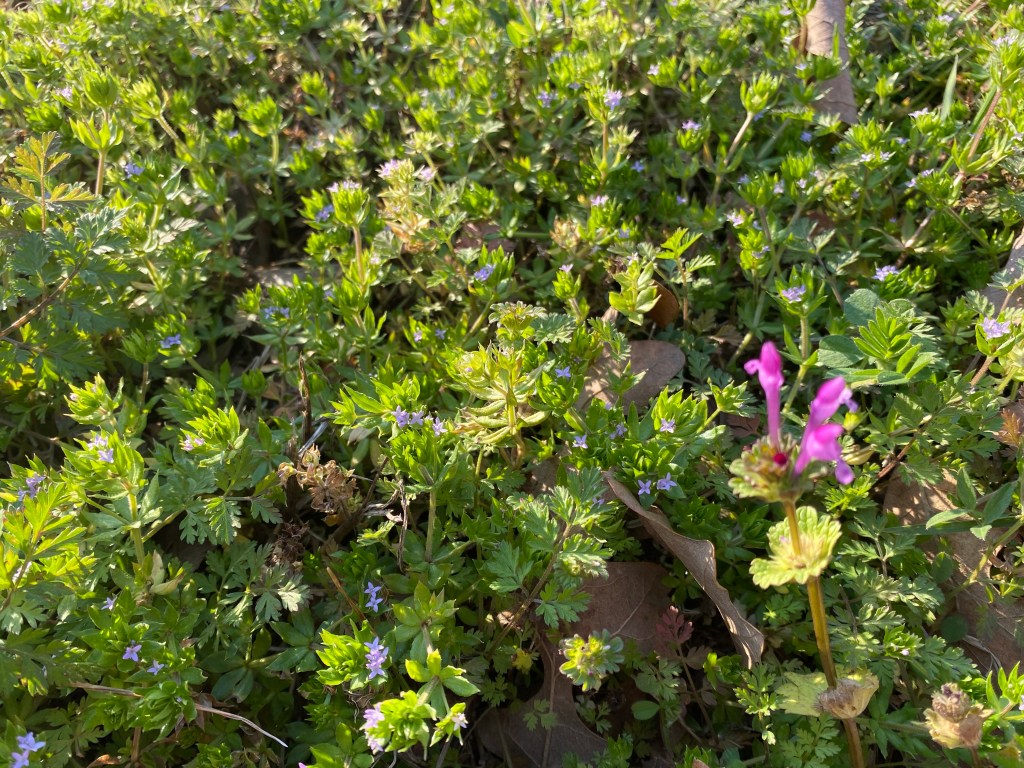
One henbit stalk and a bunch of field madder enjoying the afternoon sunshine
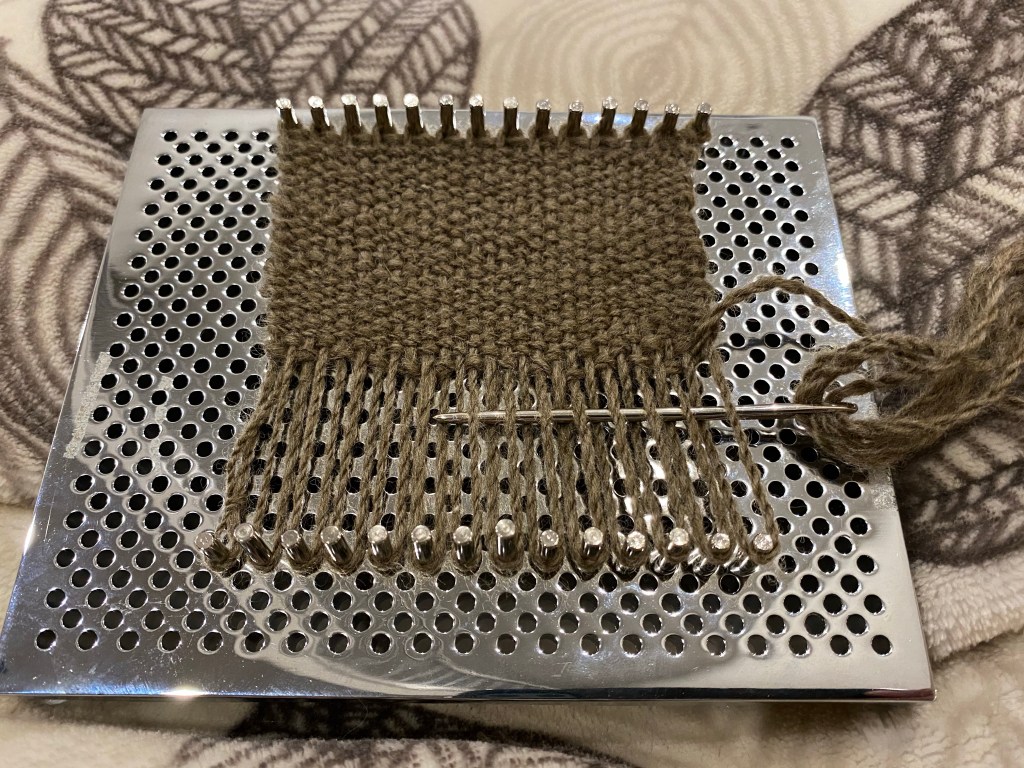
I had a small amount of two-ply hand spun merino wool left. Not enough to weave on my frame loom, but if I could rig something up a little smaller it might work. So I tried weaving on one of my wire jigs.
Weaving set up on a wire jig
I used my smallest pins to hold the warp threads and a tapestry needle to pass the weft through to make a plain weave. As the weaving progressed, I had to hold down the pins as they tended to pop up out of the jig. On the whole, the idea worked, but it wasn’t a pleasant experience since the pins were only loosely set and it was difficult to do the final passes. Mark that up as a nope.
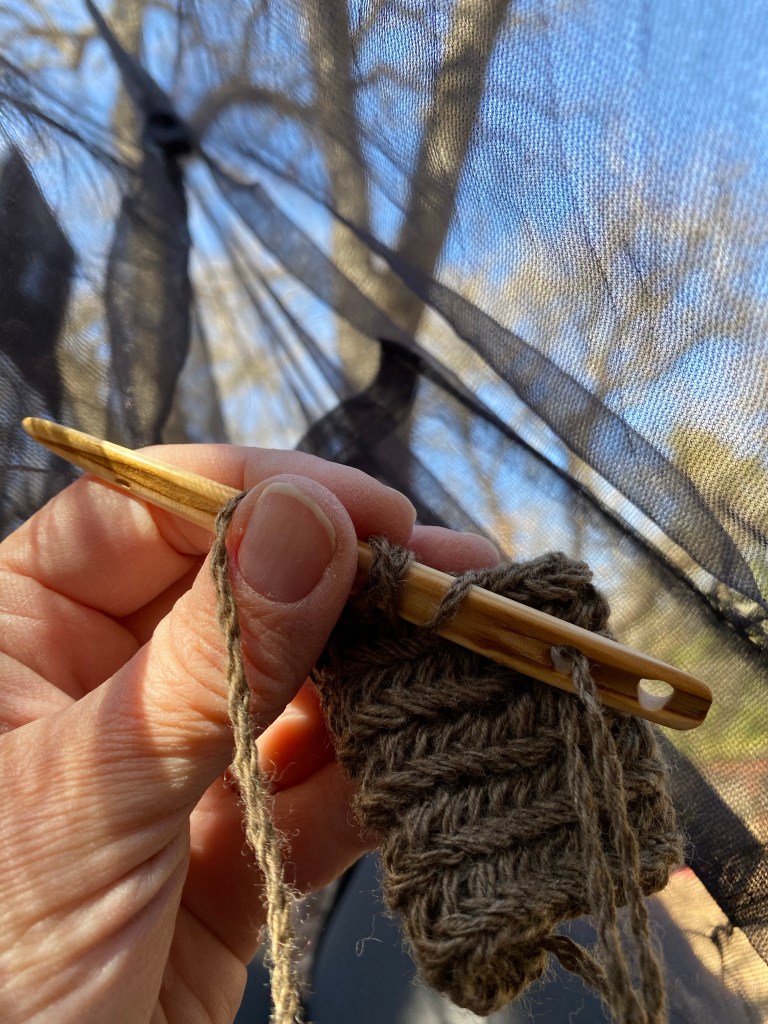
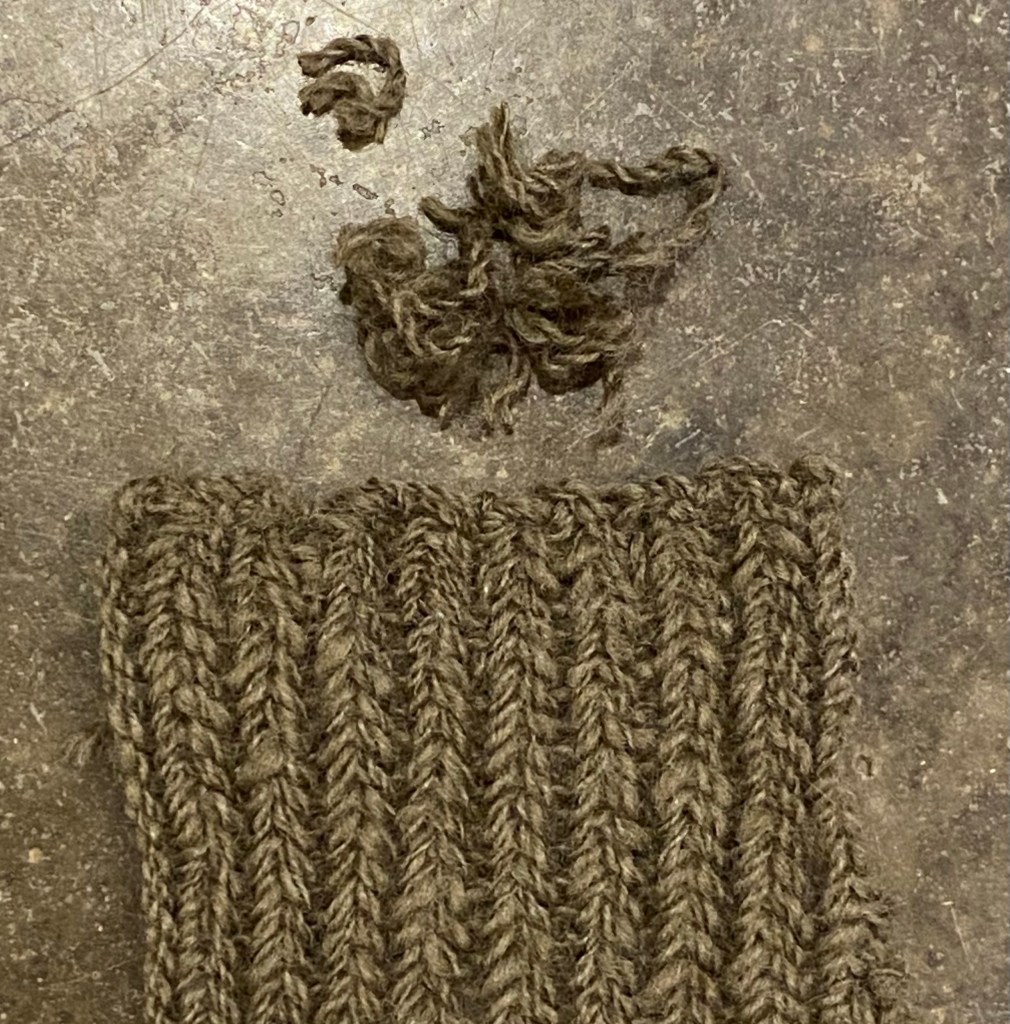
I did some crochet, some knitting, and now it is time for nålbinding! I only had two ply and four ply yarn left, but I tried using a tapestry needle as well as a hand-made nål on the two ply. Sizing the loops to the tapestry needle was much too small and much too tight, but the 25mm diameter nål made a nice fabric for both the two ply and the four strand cable ply. I stitched in the round, then cut the tubes open. The swatch does not unravel when cut! Although a few tiny bits of yarn do fall out. Of the three methods of fabric construction, nålbinding is the slowest, but I enjoy it the most. The process is soothing and the resulting fabric is nicely stretchy (at least with this stitch).
Nålbinding swatches made from hand spun merino woolNålbinding while laying outside in a hammockCleaned up the cut edge by removing the partial threads, snugging up the attached threads and running them down the back of the work