It cracks me up that the cucumbers from my cucumber bush are nearly the same size as the hens’ eggs. I had two small snap peas as well.


It cracks me up that the cucumbers from my cucumber bush are nearly the same size as the hens’ eggs. I had two small snap peas as well.
As I was contemplating what to make with the mini balls of test alpaca that I spun, my youngest announced that her other doll needed a new jacket. Ok, that can be done. I chose to nålbind (because I like it best) and used a Finish 2 + 2 stitch with an F2 connection. Because the three skeins were different colors, I decided to put the darkest in the center. I also tried a different construction technique, working in vertical rounds, rather than horizontal. Making the neck and front slit was just a matter of chaining along, rather than connecting, as long as I needed.
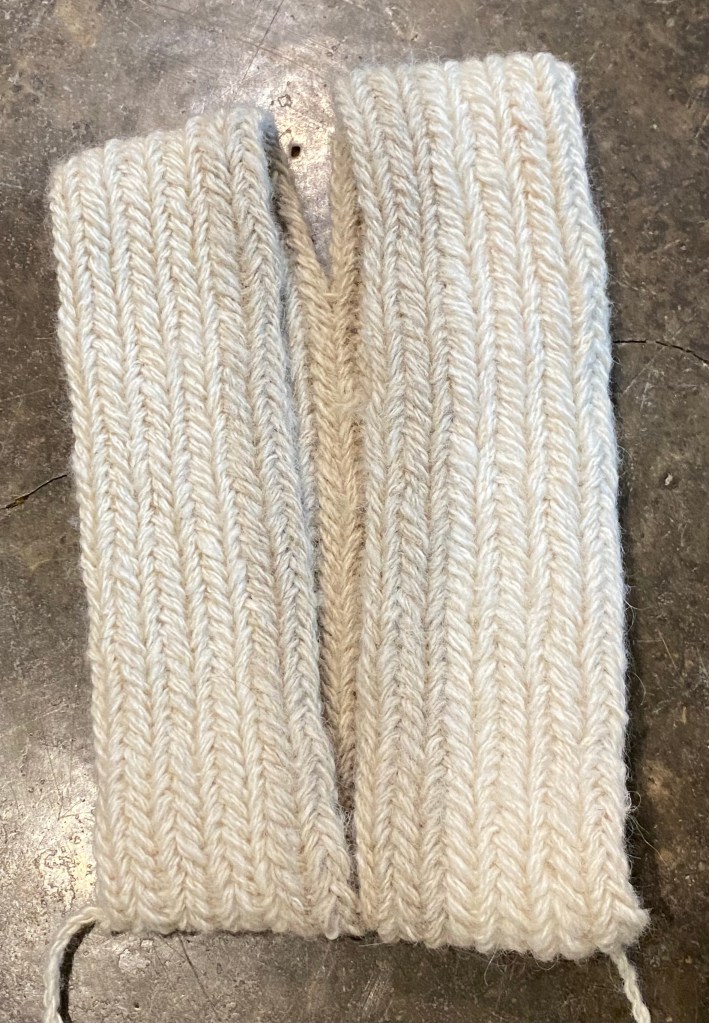
Once I had the sides of the vest even, I cut the bottom, pulled out the loose threads, and tightened and wove in the attached ends. I then sewed up a section of each side to form the arm holes but leave side slits.
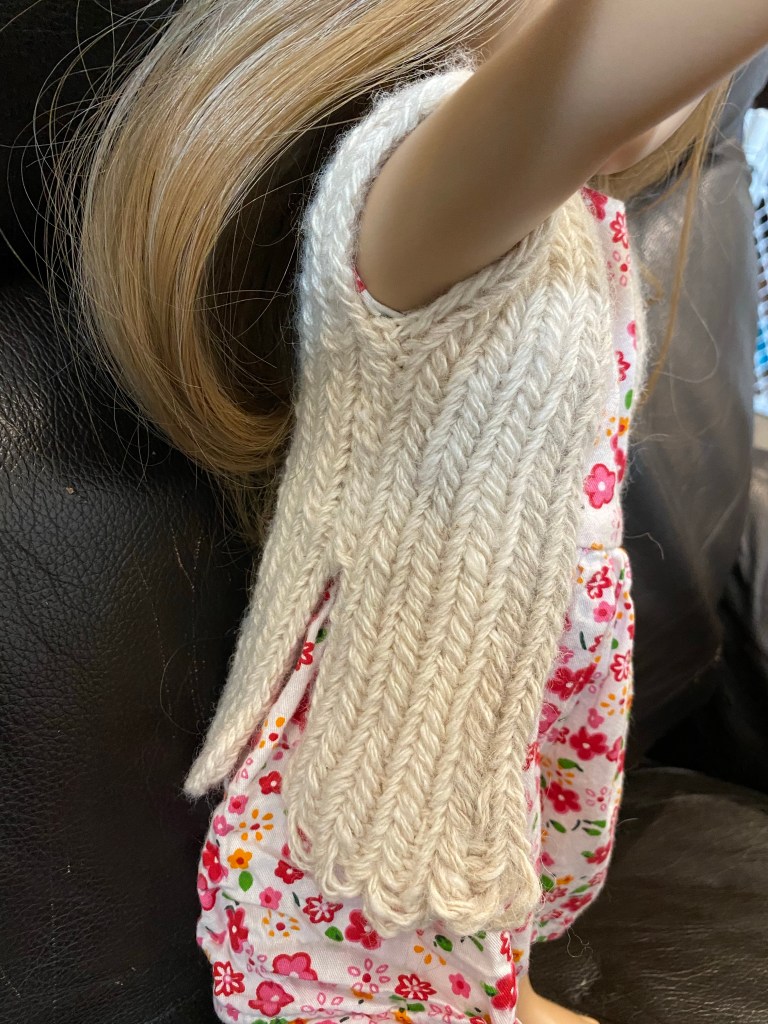
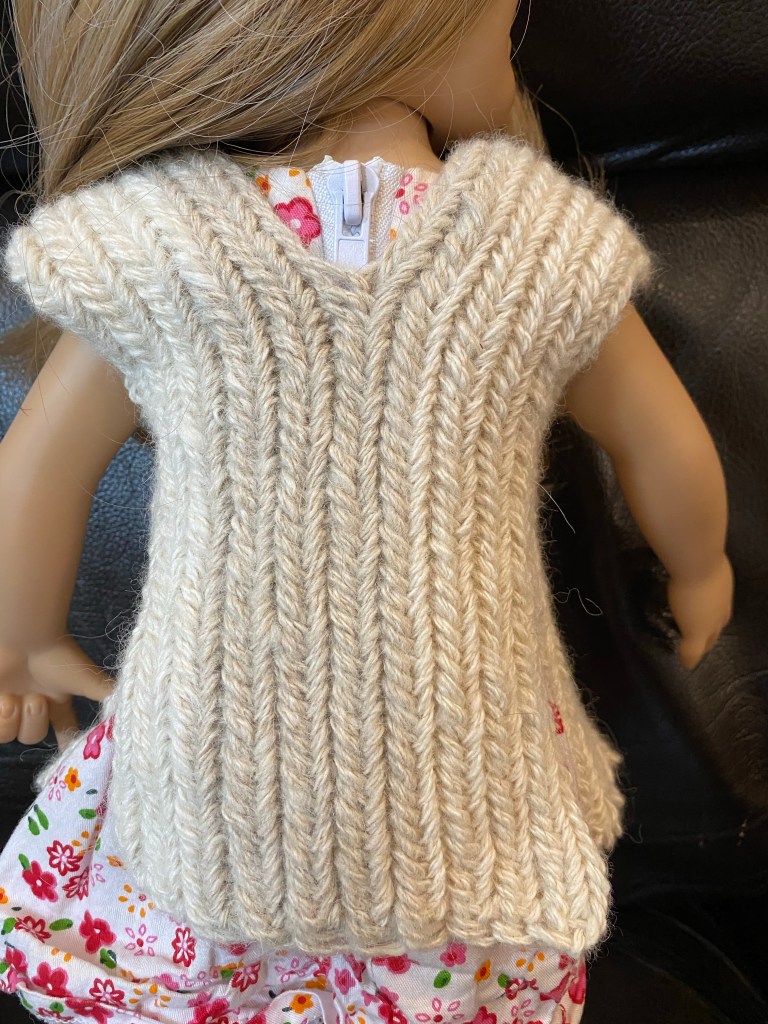
Really there was no difference in the three preparations of fiber after the initial single spinning. Even the finished fabric just has color variations, but is otherwise consistent in texture.
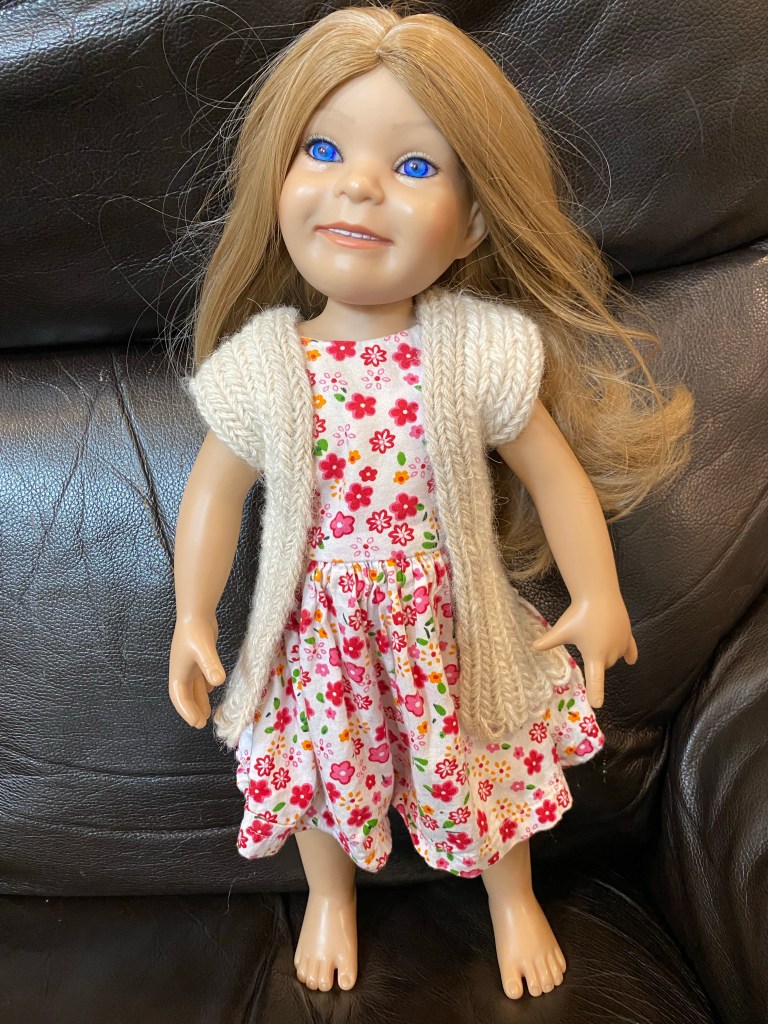
This was an excellent test. The alpaca yarn combined with this stitch made a very dense fabric. I think a human-sized version would be quite heavy.
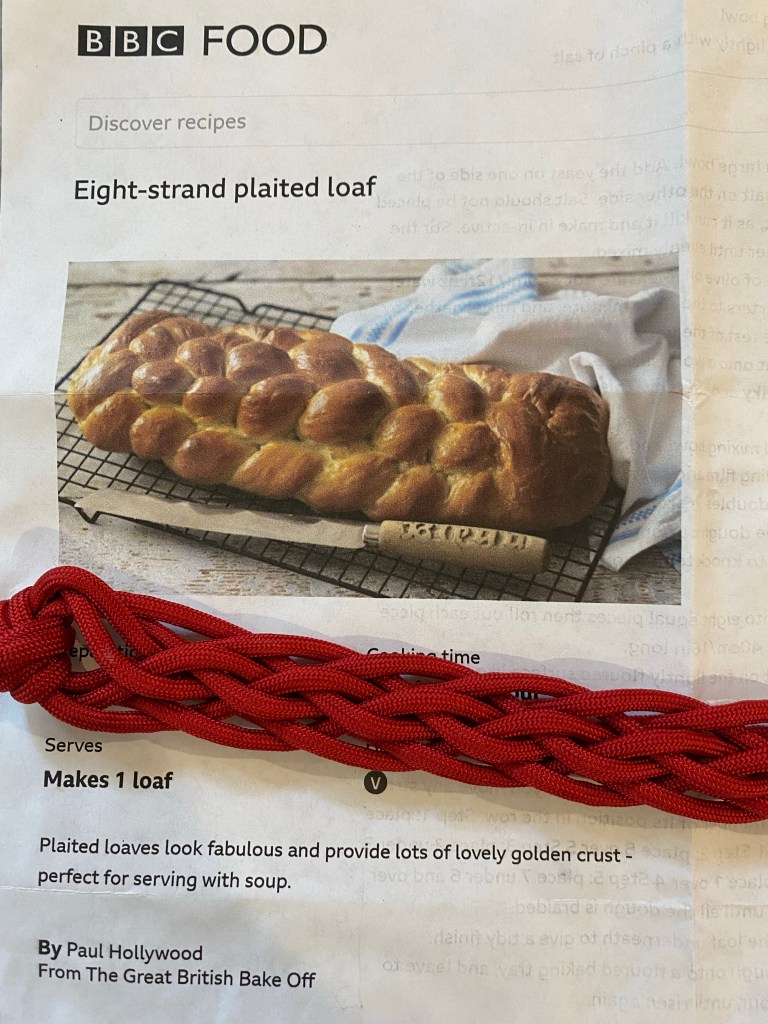
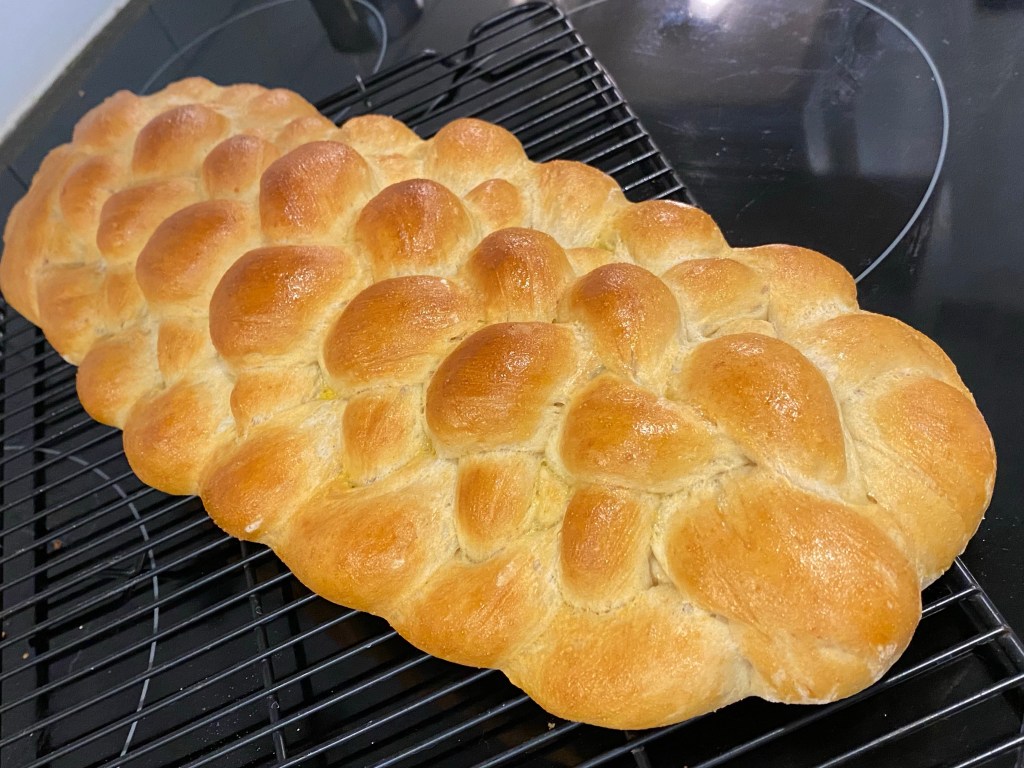
I have been practicing my eight-strand plait using a bundle of paracord until I had the pattern in my head and didn’t need the numbered instructions anymore. This really helped when it came to braid dough. It also helped that I read in a different recipe that if the dough becomes inelastic, to let it sit 10 minutes or so and try again. Game changer. I rolled my strands, did a light coat of flour, let them sit, then rolled them again to get a longer, thinner strand.
I had a panic moment. My spinning and walking is going well, and my speed is improving, and I realized that once I was done with the current preparation of fiber I didn’t have anything ready to spin. The horror!!
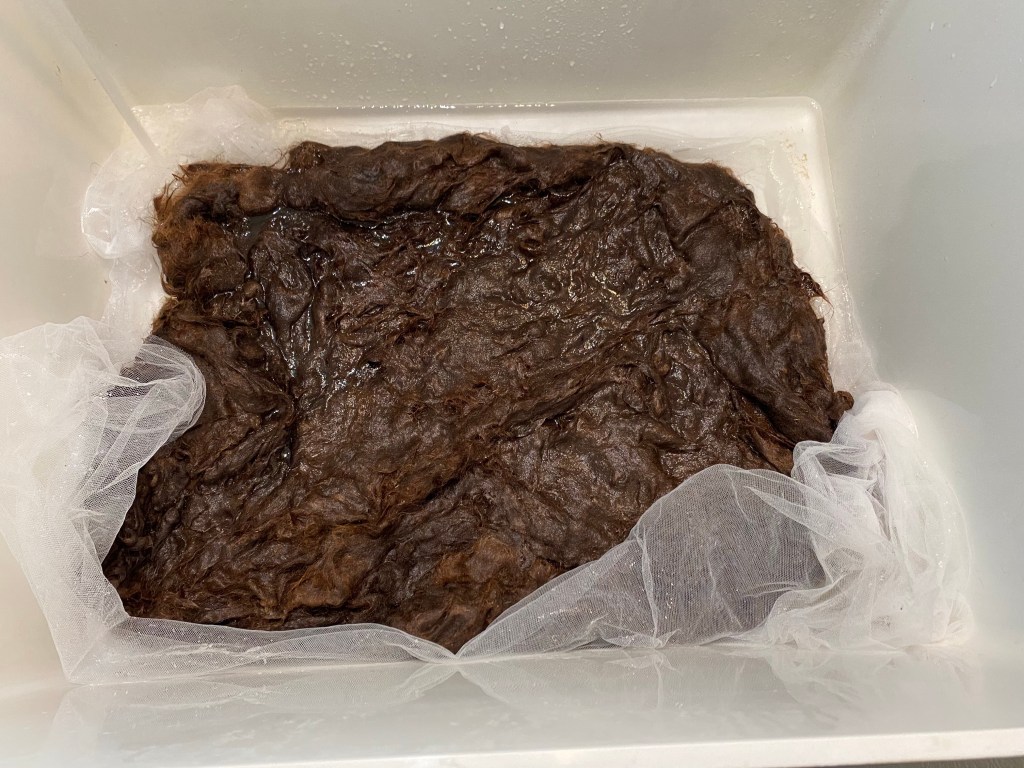
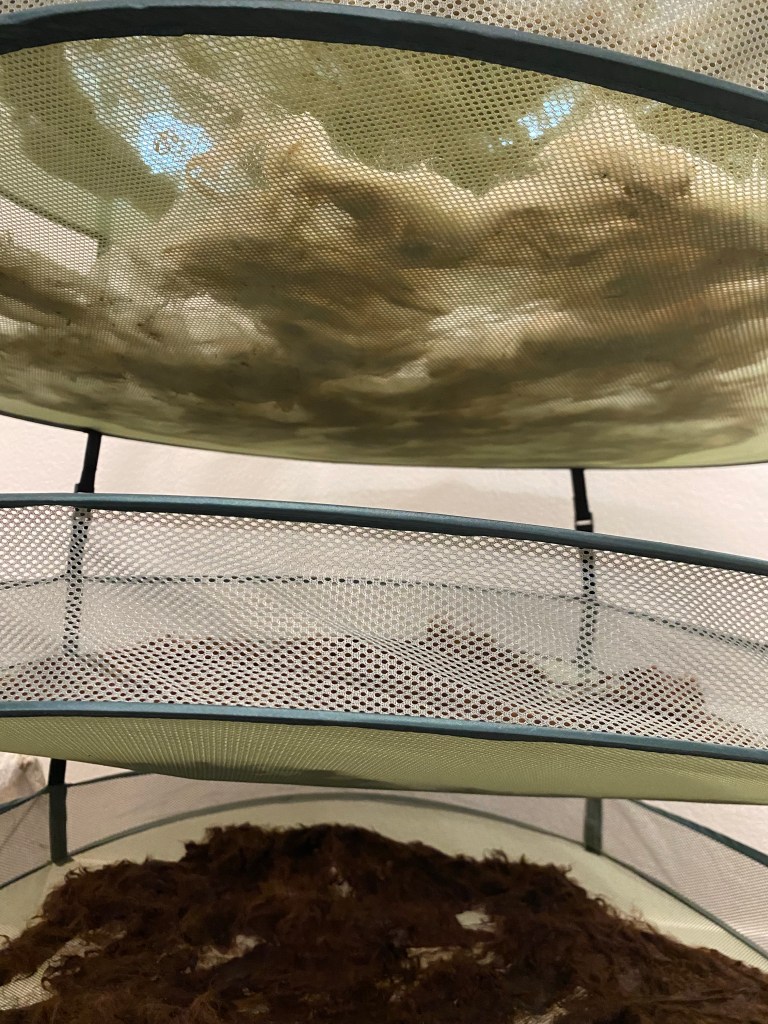
So I washed up some more alpaca fiber, this time using the utility sink and some netting, rather than bowls and towels. Since alpaca does not have heavy lanolin to scour away, I was not concerned about the wash water going down the drain. It was much like washing a dog. To keep the fibers out of the drain, I used a section of netting, which also helped squeeze out the water gently to avoid felting the fleece. I used Amway LOC liquid soap and rinsed each section three times. So much dirt. I laid each section out to dry on my hanging circular trays. There is still some vegetable matter (VM) in the fleece, but I am planning on picking and carding most of that out. I figure the evening activity will be carding and then I can spin in the morning.
I washed the last of Donna Bella’s fleece, and about half each of Sugar Plum’s and Aimee’s. I have five trays full of fiber. That should get me through the summer! Maybe longer.
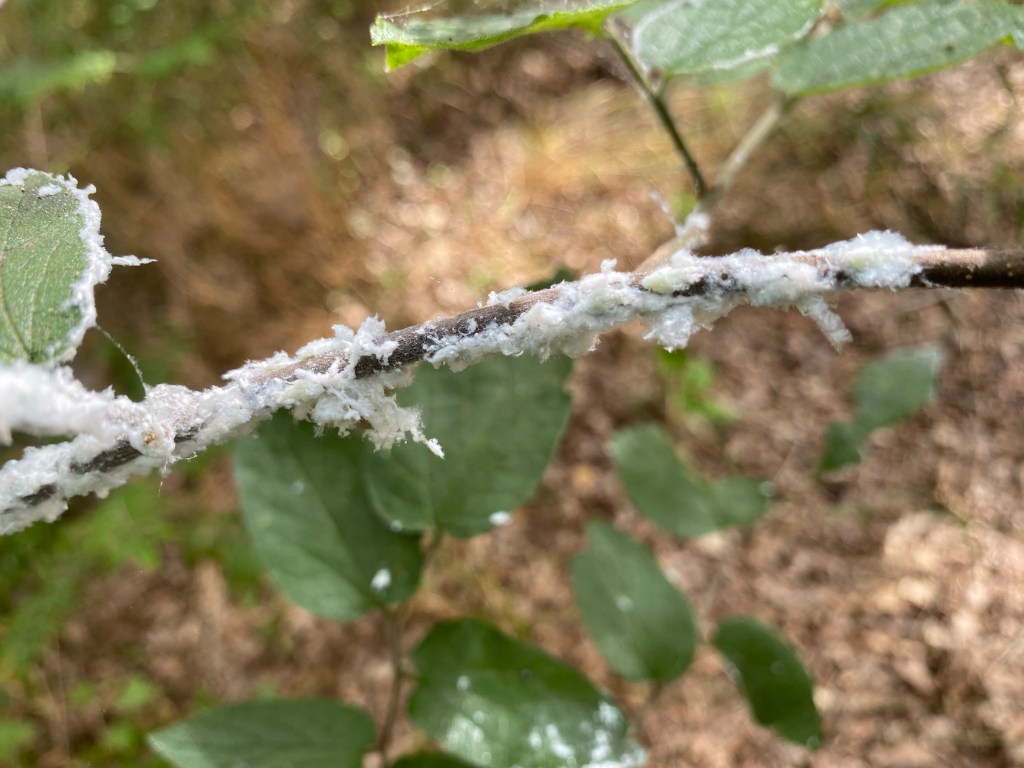
I have seen reference to abundant white deposits on plants in a couple Texas blogs I follow. They seem to be appearing in greater number this summer. One said it was mealy bugs. Another delved a little deeper and with the help of iNaturalist identified them as Citrus Flatid Planthopper larva. (Her blog is here). She had a video of the planthopper moving away from its wooly nest, then going back. So I had to go prod and the ones in our yard to see if there were critters. Yup! Same behavior too, moves away from contact, but then eases back into the cottony camouflage.

