Another way

Here is another way to reduce the likelihood that machine sewn stitches with unravel: tiny stitches. On a sewing machine that doesn’t have a reverse stitch, like my Singer model 66 treadle, turning the knob to the left to make the stitches smaller for a few stitches, then back right to increase the stitch length for the rest of the seam, is a little extra insurance. It also helps work the sewing machine oil (SMO) into the threads of the knob. Bonus.

Photo description: seam stitched on the diagonal of a light colored fabric strip showing smaller stitches at each end of the (wavy) stitch line.

This actually takes about the same time as turning the fabric and making a “reverse” stitch, currently. The stitch regulator knob of the 107-year-old machine is still a little stiff.

Yes, I can sew a straight line. I just need more practice sewing a straight line while turning a regulator knob and controlling the balance wheel so it doesn’t go backwards and break the thread. Goals.

Playtime

Photo description: In the foreground, a calico cat reaching for the thin blue ribbon dangling mid-ground with a gray tabby watching the ribbon sitting next to a green holey roller ball watched by a shaggy black dog.

Thor comes and asks to play and everyone else joins in. The thin ribbon is favorite, but I have to keep close watch for tears and loose bits. Missy doesn’t care for the ribbon, but could I please throw/kick/move her ball? (She has an obsession.)

Undressing

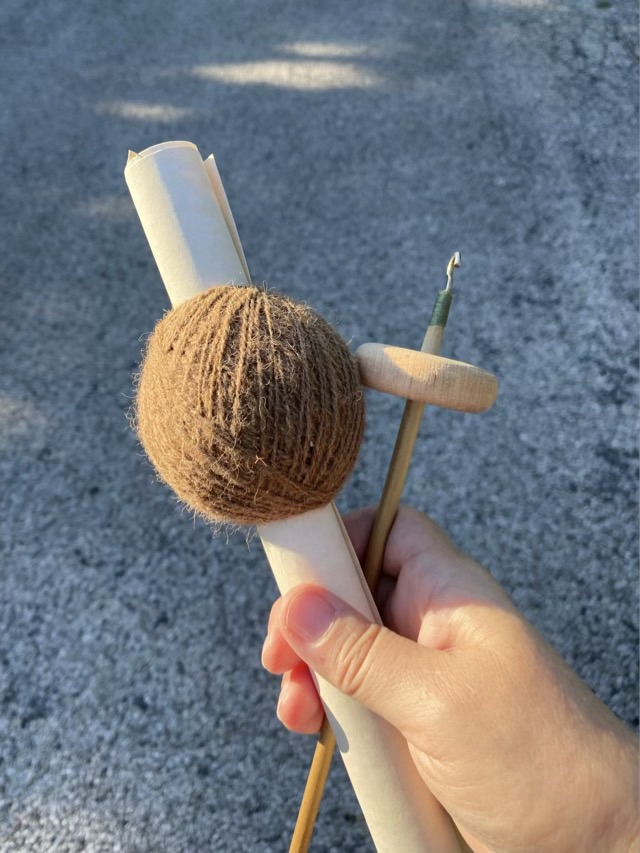
So if putting fiber on a distaff is called “dressing”, then taking it off would be “undressing”? I’ll just file this under: Things that pop into my mind as I spin.

Photo description: 3D printed Turkish-style spindle with a chaotically wound “turtle” or cop of yarn next to a partially undressed distaff. The fiber is gone, but the handkerchief robe and tie are still attached.

Hello?

Photo description: Night vision photo of a deer’s eyes looking into the trail cam.

This is another gem from the recent trail cam collection; a deer peeking into the camera with what I interpret as curiosity. Mostly I get pictures of legs and tails, so this was startling.

Piecing

I bought a grab bag of scraps from the local quilt store because it had fabric that matched what I have in my stash. I set it on the sewing table of the Singer model 66 and later decided to try sewing some squares together. I haven’t pressed the seams yet, but I love the way the machine works. It is the advice from The Treadle Lady to take these old machines on a “Sunday drive”. Using them weekly encourages proper regular maintenance, and keeps everything moving.

Photo description: Four squares of red fabric sewn together on the surface of a Singer model 66.