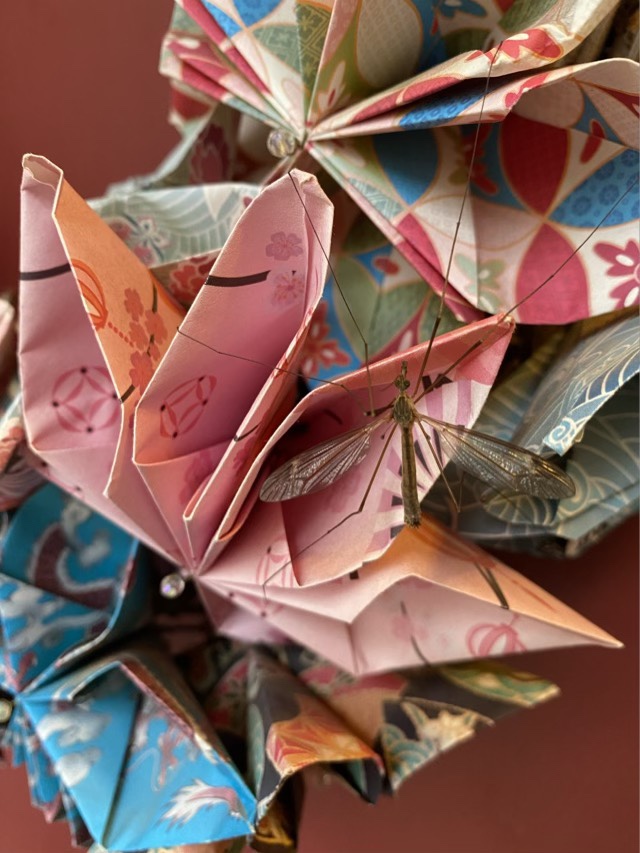
It is spring, so there are crane flies every where. The first year I moved to Texas I was alarmed at the size of the “mosquitos”, until I found out that these long-legged beasties are not blood suckers. Most varieties only live in the adult stage for about a week; long enough to look for a mate to make new crane flies, but not long enough to bother about eating.
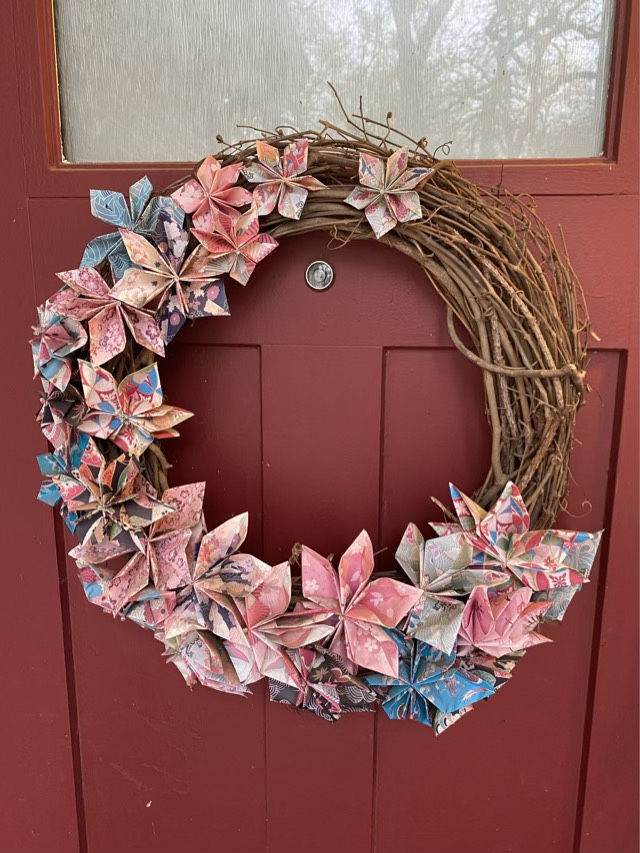
Year 2 on my origami wreath
I am most impressed that the wreath has held up. I made it last year and it stayed on the front door for many months. The paper flowers are just wired in, so I can reuse the grapevine wreath, but it looked so good when I pulled it out of the closer that I just hung it back up. Where it hangs there is no direct sunlight, and it is sheltered from wind and rain.
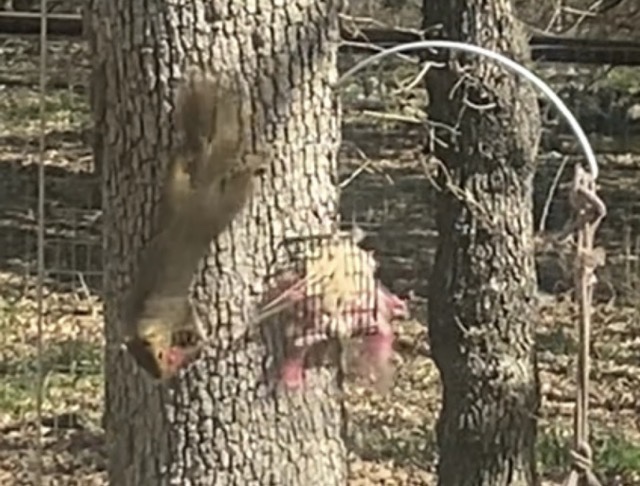
The suet cages I filled with scraps of wool are getting some attention. I caught one of the local squirrels gathering up the fiber and managed to record some video.
Video still of a squirrel wool gathering
Squirrels have kits twice a year, so I imagine this is Momma squirrel lining her nest for the impending babies. Or maybe a secondary nest construction, I’ve read squirrels can built multiple nests. Either way , I’m glad the unspun fiber is an approved squirrel material.
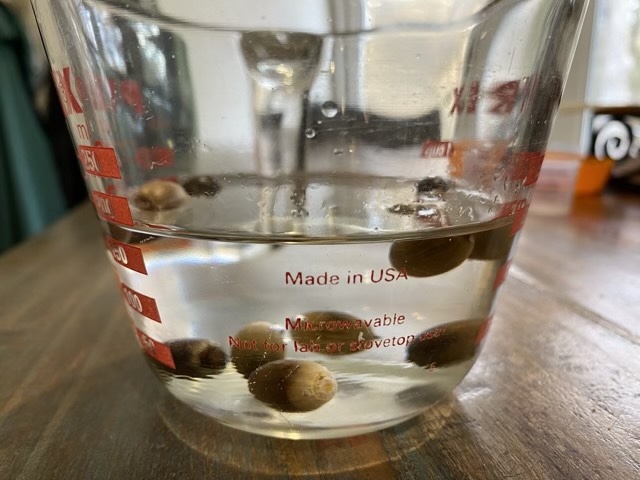
In reading more about acorn weevils, I stumbled across a float test for acorns. If the acorn floats, it most likely has been inhabited by a grub, because the grub eats the nut meat and lessens the acorn density. I took a handful of carefully selected acorns, that I believed were grub free, and put them in a cup of water.
Acorn float test
Half of my acorns floated. I broke one of the floating ones open, and sure enough, there was a grub inside. Hm. I also read that squirrels will leave the grub infested nuts, so when humans are searching the ground it will seem like the weevil infestation is total, but really the whole nuts have already been found and buried. Learn something new everyday.
An industrious spider built a web in front of the coop camera. Although it looks vertical in the picture, the actual web was horizontal, stretched from under the camera to the cable tie end shown in the picture. Unfortunately, when I rotated the camera, the web broke. I generally leave spiders alone in the coop. They provide valuable insect control, especially of the flying type, without toxic chemicals (unless you count the spider bite). The successful arachnids are in the upper part of the coop, since chickens are keen on devouring spiders. Extra protein. A few times a year I do sweep out the old webs that are full of dust to make room for new webs.
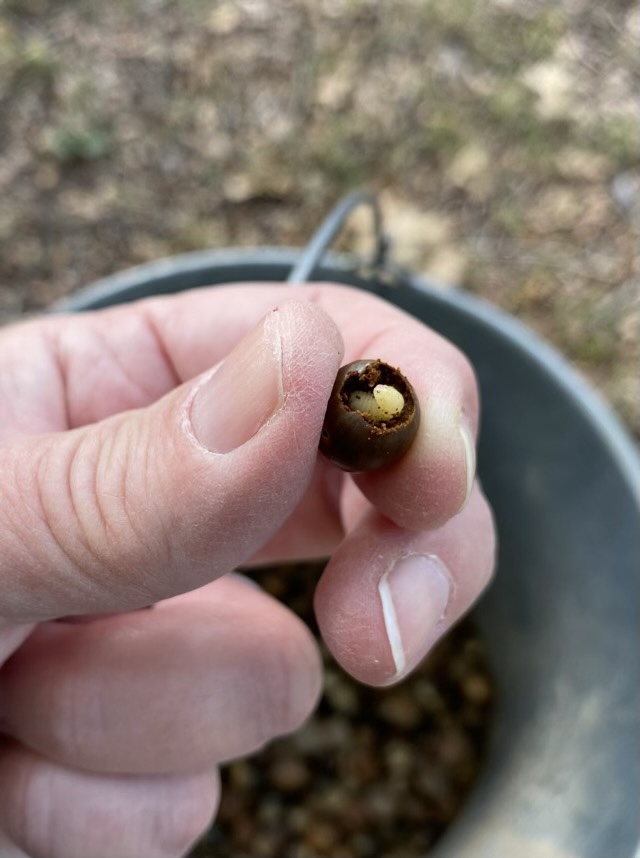
We had a moderate harvest of acorns this year. Some years you can’t step outside without crunching a foot full, but this year it was a hunt to find whole nuts. The squirrels have been busy too, and they leave the grub infested acorns and take the sound ones. As I’m collecting, I check the nuts for grubs. The acorns with a hole have had at least one grub leave, so the nutmeat inside has already been mostly consumed. If there is no hole, I pop off the cap. If the cap end of the nut is whole and solid, I collect it. If it looks like “dirt” collected at the end, I leave it; there is a grub actively at work consuming the nutmeat.
Post Oak acorn with grub
Adult female acorn weevils bore a hole into the developing acorns when they are still on the tree (TAMU). The grub develops inside, feeding on the acorn. When the acorn falls, the grub bores a hole out of the shell then burrows into the dirt to develop into an adult. I don’t need a reference for the second part. When my eldest was about 4, we made an autumn decoration with play dough and acorns. Later I found a grub happily munching through the dried play dough and a hole in one of the acorn. Did we throw it out? No, of course not. We filled a mason jar half full of dirt, put the grub inside, and capped it with a metal screen (for air flow) so we could see what it developed into. The next Spring, there was an adult acorn weevil, which we released back outside.
If you are collecting acorns for decoration, I’ve heard freezing them will kill the grubs, if you don’t want surprise inhabitants.